What Is a Banya? The Complete Guide to the Russian Steam Bath Tradition
What Is a Banya? The Complete Guide to the Russian Steam Bath Tradition
Steam rises from heated stones. The scent of birch leaves fills the air. Somewhere nearby, friends are laughing between rounds of heat and cold. This is the banya — a Russian steam bath tradition that has drawn people together for over a thousand years.
Steam rises from heated stones. The scent of birch leaves fills the air. Somewhere nearby, friends are laughing between rounds of heat and cold. This is the banya — a Russian steam bath tradition that has drawn people together for over a thousand years.
Published on:
Published on:
A banya is a traditional Russian steam bath characterised by high humidity, intense but gentle heat, and the ritual use of leafy branches called venik to massage the body. Unlike the dry heat of a Finnish sauna, the banya envelops you in wet steam, creating a sensation that feels both penetrating and nurturing. But the banya is more than a room with hot rocks. It is a place where social hierarchies dissolve, where strangers become friends, and where the simple act of sweating together becomes something closer to ceremony. For centuries, Russians have gathered in these steam-filled spaces not to optimise their health metrics, but to connect with their bodies, their communities, and traditions far older than any wellness trend. This guide explores the history, rituals, and experience of the Russian banya - and why this ancient practice still resonates in a world obsessed with tracking everything.
What Is a Banya?
The word banya (Russian: баня) comes from the Latin balneum, meaning "something that makes pain and sadness go away." In its simplest form, a banya is a wooden structure where water is poured over heated stones to create steam. But this definition barely scratches the surface.
The banya represents a complete bathing philosophy built around cycles of heat, cold, and rest. It is simultaneously a place for hygiene, healing, socialising, and — in the Russian tradition — even conducting business. The steam room itself is called the parilka, and it forms the heart of the experience.
The Three Rooms of a Traditional Banya
A traditional Russian banya consists of three distinct spaces, each serving a specific purpose in the bathing ritual.
The predbannik (предбанник) is the entrance room. Here, bathers undress, store their belongings, and rest between sessions in the steam room. In many banyas, this space doubles as a social area where tea is served, conversations unfold, and the transition between the outside world and the bathing ritual begins.
The washing room contains hot and cold water taps, allowing bathers to rinse and cleanse themselves. In traditional banyas, this room features a large vessel called a shaika — a basin with two handles used for mixing water to the desired temperature.
The parilka is the steam room itself. Wooden benches line the walls at different heights, with the highest benches receiving the most intense heat. A stone stove called a pechka or kamenka heats large rocks, and water is ladled onto these stones to produce clouds of steam. The humidity in a banya typically reaches 40-70%, creating a wet heat that feels remarkably different from the dry air of a Finnish sauna.
Black Banya vs White Banya
Two historical styles of banya construction exist, distinguished by how smoke is handled.
The black banya (banya po-chyornomu) represents the older, more rustic form. In these structures, smoke from the heating fire escapes through a hole in the ceiling rather than a chimney. Over time, the escaping smoke darkens the interior wood, giving the black banya its name. This style was valued for its natural disinfection properties — the smoke and soot coating the walls helped reduce bacterial growth. Black banyas are rare today but remain prized by traditionalists for their earthy, primal atmosphere.
The white banya (banya po-belomu) uses a chimney to vent smoke away from the bathing area. This cleaner, more modern design became the standard for urban bathhouses and remains the most common form today. The separation of smoke from steam allows white banyas to operate continuously, unlike black banyas which require time to clear smoke before bathing can begin.
The History of the Russian Banya
The banya is not merely old. It predates Russia itself.
Ancient Origins Before Russia
The Greek historian Herodotus, writing around 440 BCE, documented steam bathing practices among the Scythians — nomadic peoples who inhabited the lands north of the Black Sea, in what would later become Ukraine and southern Russia. Herodotus described how the Scythians would erect three poles leaning together, cover them with woollen felt, and place red-hot stones inside. They would then throw seeds onto the stones, creating a vapour that, as Herodotus noted, "no Greek vapour-bath could surpass" (Wikipedia, 2025).
This account reveals that steam bathing in these territories stretches back at least 2,500 years — centuries before the emergence of the first Russian state.
The early banya that eventually developed in Kievan Rus' was not purely Slavic invention. It emerged from a crossroads of bathing traditions: Byzantine bath culture from the south, Finnish sauna practices from the north, and customs from Jewish communities and Khazar tribes to the east (Wikipedia, 2025). The banya, from its very origins, was a place where cultures mingled.
The Banya in Russian Culture
The first written mention of the banya in Russian sources appears in the Primary Chronicle (also called the Radziwiłł Chronicle), dating to the 10th century. The chronicle recounts the story of Princess Olga of Kiev in 945 AD, whose revenge against the Drevlian tribe involved a bathhouse — a testament to how central the banya already was to Slavic social life (Wikipedia, 2025).
Throughout Russian history, the banya served as a great equaliser. Peasants and nobles alike stripped down and sweated together. Social hierarchies dissolved in the steam. A Russian proverb captures this: "In the banya, all are equal."
The banya also played a role in life's most significant moments. Women traditionally gave birth in the banya, where the warm, clean environment was considered ideal. Couples visited the banya before their wedding night. Mourners gathered there after funerals to ensure their loved ones would be warm in the afterlife.
By the 18th century, the banya had attracted international attention. The Portuguese physician António Nunes Ribeiro Sanches, who served at the Russian court, published studies on the therapeutic effects of Russian bathing practices. Peter the Great himself was known to enjoy the banya and encouraged its spread throughout his modernising empire.
The most famous bathhouse in Russia, the Sanduny in Moscow, was established in 1808 and still operates today. Declared an architectural monument in 1992, it remains a living link to centuries of banya tradition (Wikipedia, 2025).
Banya vs Finnish Sauna: Key Differences
People often use "banya" and "sauna" interchangeably, but the experiences differ significantly. Understanding these differences helps explain why each tradition developed its own devoted following.
Heat and Humidity
The most fundamental difference lies in the balance between temperature and moisture.
Factor | Russian Banya | Finnish Sauna |
|---|---|---|
Temperature | 60-70°C (140-158°F) | 80-100°C (176-212°F) |
Humidity | 40-70% | 10-20% |
Heat Character | Wet, enveloping, penetrating | Dry, intense, direct |
The Russian banya operates at lower temperatures but with substantially higher humidity. This combination creates a heat that feels softer yet more penetrating — the moisture-laden air conducts warmth deep into the body. Finnish saunas achieve their intensity through extreme dry heat, which the body tolerates because sweat evaporates rapidly from the skin (Banya No.1, 2025). For a closer look at how heat, humidity, and duration interact across sauna types, see our guide to the best sauna temperature.
Neither approach is superior. They simply offer different pathways to the same fundamental human experience of therapeutic heat.
Ritual and Social Experience
Beyond the physical environment, banya and sauna differ in their cultural character.
The Finnish sauna traditionally emphasises quiet contemplation. It is often a solitary or family experience, a space for internal reflection rather than conversation. The Finnish concept of löyly — the steam that rises when water hits the stones — represents a moment of intensified heat that bathers experience in shared silence.
The Russian banya, by contrast, developed as an explicitly social space. Conversation, laughter, and even singing are common. Groups of friends visit together. Business deals have been negotiated in the steam. The banya is a place where relationships deepen through shared experience and mild collective suffering.
Connection to Other European Heat Traditions
The banya belongs to a broader family of European heat traditions that share common roots and philosophies.
The German Aufguss ceremony, for instance, parallels the banya in its emphasis on guided ritual and aromatic steam. In an Aufguss, a trained practitioner uses a towel to circulate hot air infused with essential oils, creating waves of intensified heat. Like the banya's parenie ritual, the Aufguss transforms passive heat exposure into an active, guided experience.
These traditions remind us that across cultures, humans have recognised something profound in the combination of heat, steam, and community. The banya is one expression of a universal impulse — the desire to sweat together, to strip away pretense, and to emerge cleansed in body and spirit.
Explore the Aufguss tradition →
The Venik Ritual: Heart of the Banya Experience
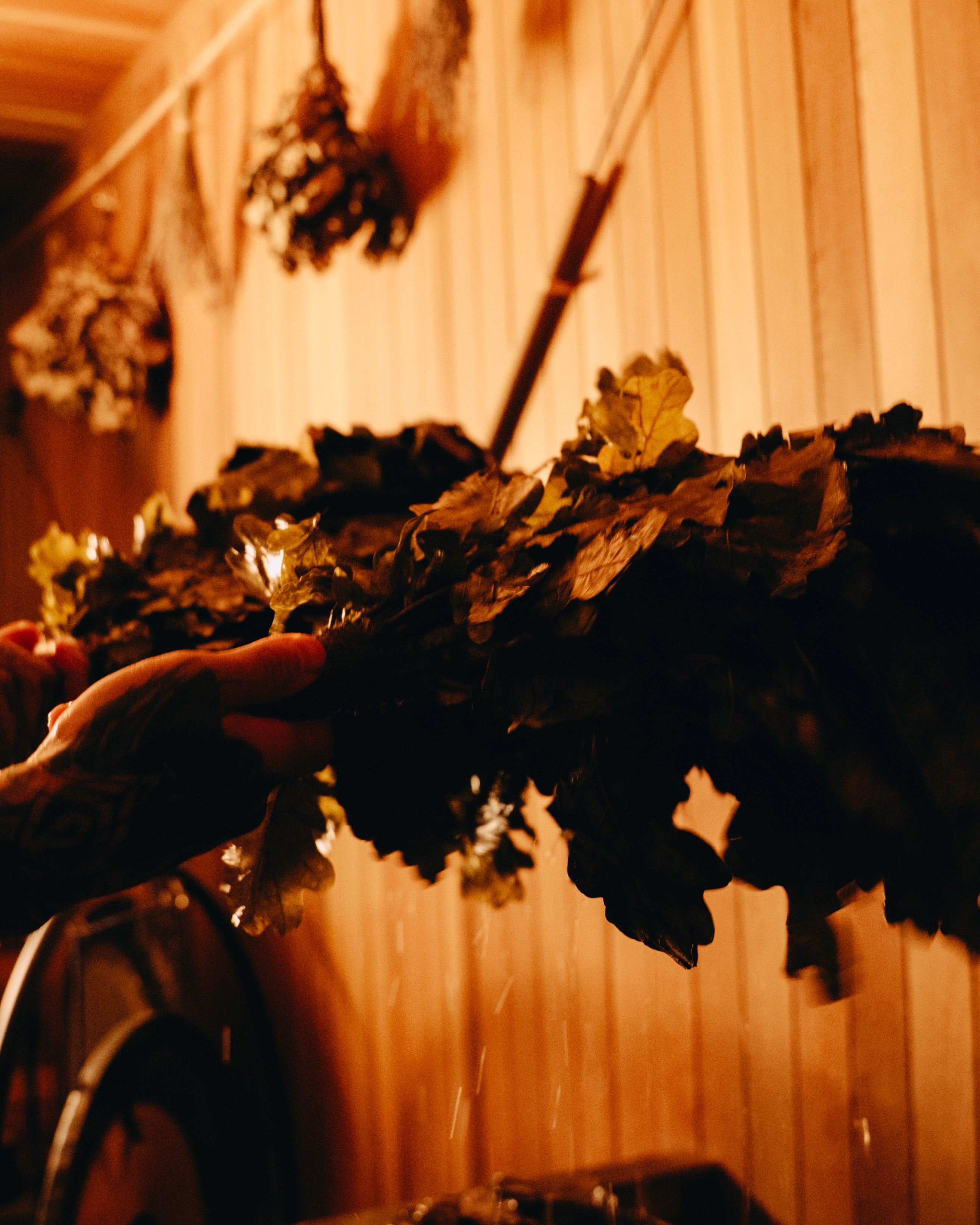
No element distinguishes the Russian banya more clearly than the venik — a bundle of leafy branches used to massage the body and direct steam. The venik ritual, called parenie, transforms the banya from a mere steam room into something approaching ceremony.
What Is a Venik?
A venik (веник) consists of small branches and leaves bound together, traditionally harvested in summer when the leaves are most fragrant and pliable. Before use, the dried venik is soaked in hot water to soften the leaves and release their natural oils. The soaking water itself becomes aromatic and is sometimes poured over the stones to intensify the steam.
The venik serves multiple purposes simultaneously. It acts as a tool for massage, directing blood flow and stimulating the skin. It functions as a fan, wafting hot air and steam across the body. And it delivers aromatherapy, releasing volatile compounds from the leaves that fill the steam room with fragrance.
Types of Venik and Their Properties
Different trees produce veniks with distinct characteristics. Traditional practitioners select their venik based on desired effects.
Birch is the most traditional choice. Birch leaves contain compounds with anti-inflammatory and antibacterial properties. The venik produces a subtle, slightly minty fragrance and is prized for its gentle action on the skin. Birch is considered ideal for general use and for those new to the venik experience.
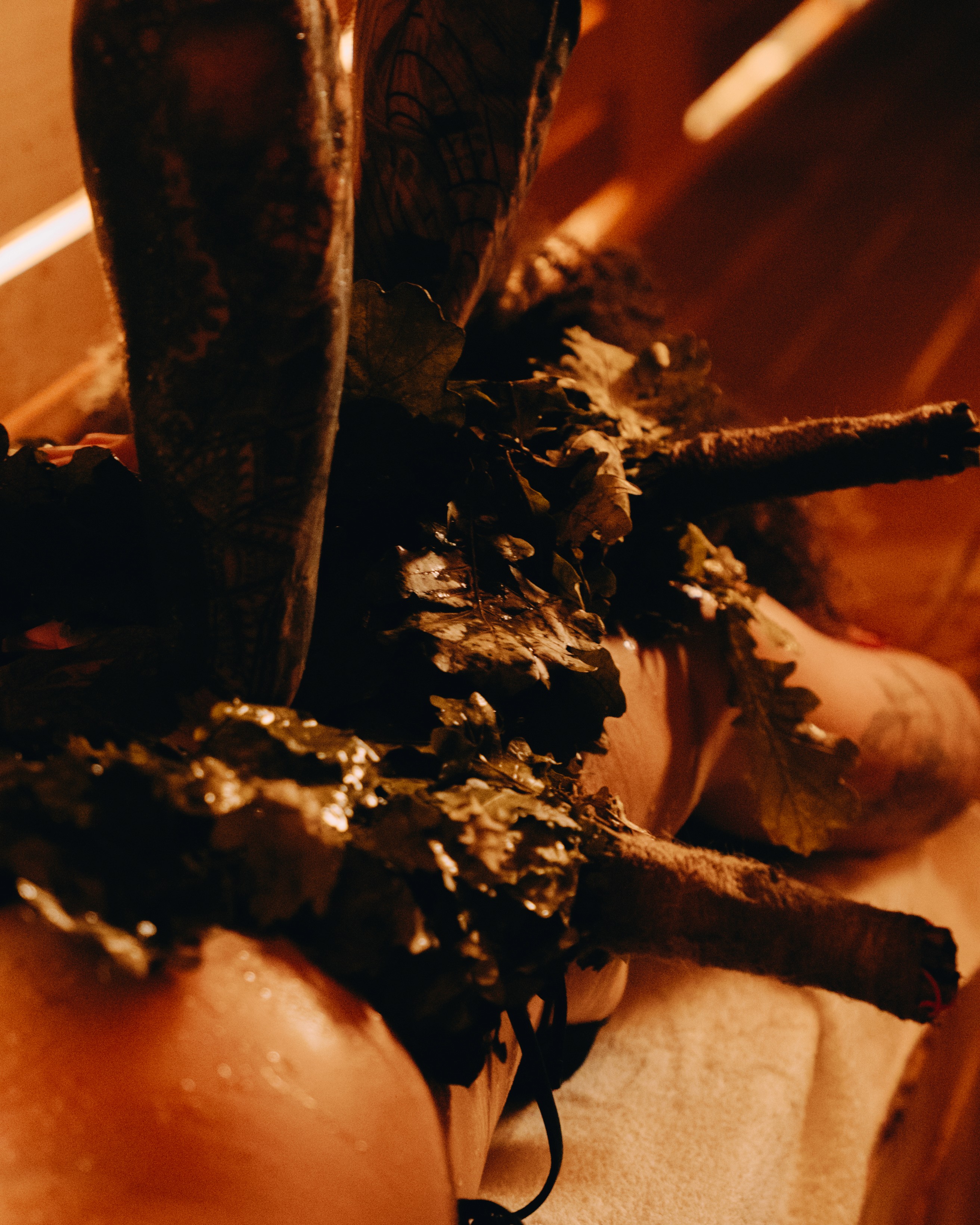
Oak produces a venik with broader, sturdier leaves that hold more heat and moisture. Oak contains tannins that have astringent properties, making it popular for those with oily skin. The aroma is rich and forest-like, and oak veniks are said to have a calming effect on the nervous system (Archimedes Banya, 2023).
Eucalyptus veniks are valued for their respiratory benefits. The volatile oils in eucalyptus leaves help clear the sinuses and airways. Eucalyptus veniks are often used when someone is fighting a cold or simply wants to breathe more deeply.
The Parenie Experience
The parenie is a massage ritual performed by a skilled practitioner called a banshik (or parillshik). The bather lies on a high bench while the banshik uses the venik in a choreographed sequence of movements.
First, the banshik wafts the venik through the air, drawing the hottest steam down toward the body. This creates waves of intensified heat that can feel almost liquid in their intensity. Then comes the massage itself — a rhythmic patting and pressing of the leaves against the skin. Despite appearances, this is not painful. The softened leaves compress gently, stimulating circulation and exfoliating the skin while releasing their aromatic oils.
The parenie concludes with the banshik pressing the venik firmly against different areas of the body, allowing the leaves to deliver a final dose of their beneficial compounds. Following the treatment, the bather typically immerses in cold water — a bucket shower, plunge pool, or in traditional settings, a roll in the snow.
The parenie is not something to endure or optimise. It is an invitation to surrender to sensation and trust the practitioner's guidance. There is no correct response except presence.
What Happens in Your Body During a Banya Session
The banya creates conditions that prompt a cascade of physiological responses. While these responses have attracted scientific interest, understanding them does not require turning the banya into a laboratory.
Cardiovascular Response
When you enter a heated environment, your body immediately begins working to regulate its core temperature. Blood vessels near the skin's surface dilate (vasodilation), allowing more blood to flow to the skin where heat can dissipate. Your heart rate increases to support this enhanced circulation — a response similar to moderate physical exertion.
Research from the University of Eastern Finland, following participants over decades, suggests that regular heat exposure may support long-term cardiovascular health. Studies have found associations between consistent sauna use and markers of cardiovascular function, including blood pressure and arterial flexibility (Laukkanen et al., Mayo Clinic Proceedings, 2018).
These findings describe associations rather than prescriptions. The body responds to heat according to its own wisdom. The research simply confirms what banya practitioners have intuited for centuries: regular time in the steam appears to do the body good.
Immune Function
Heat exposure triggers responses that overlap with the body's natural defence mechanisms. When core temperature rises, the body behaves as though fighting a mild fever — a state that may enhance certain immune functions.
Research published in the Journal of Human Kinetics found that sauna sessions prompted increases in white blood cell counts, including lymphocytes, neutrophils, and basophils — cells involved in immune response (Pilch et al., 2013). Subsequent research suggests these immune effects may be more pronounced with regular practice rather than occasional use.
The traditional Russian intuition — that the banya helps ward off illness — finds some support in these findings. But the banya was never about optimising immune markers. It was about feeling vital, connected, and alive.
The Role of Cold Immersion
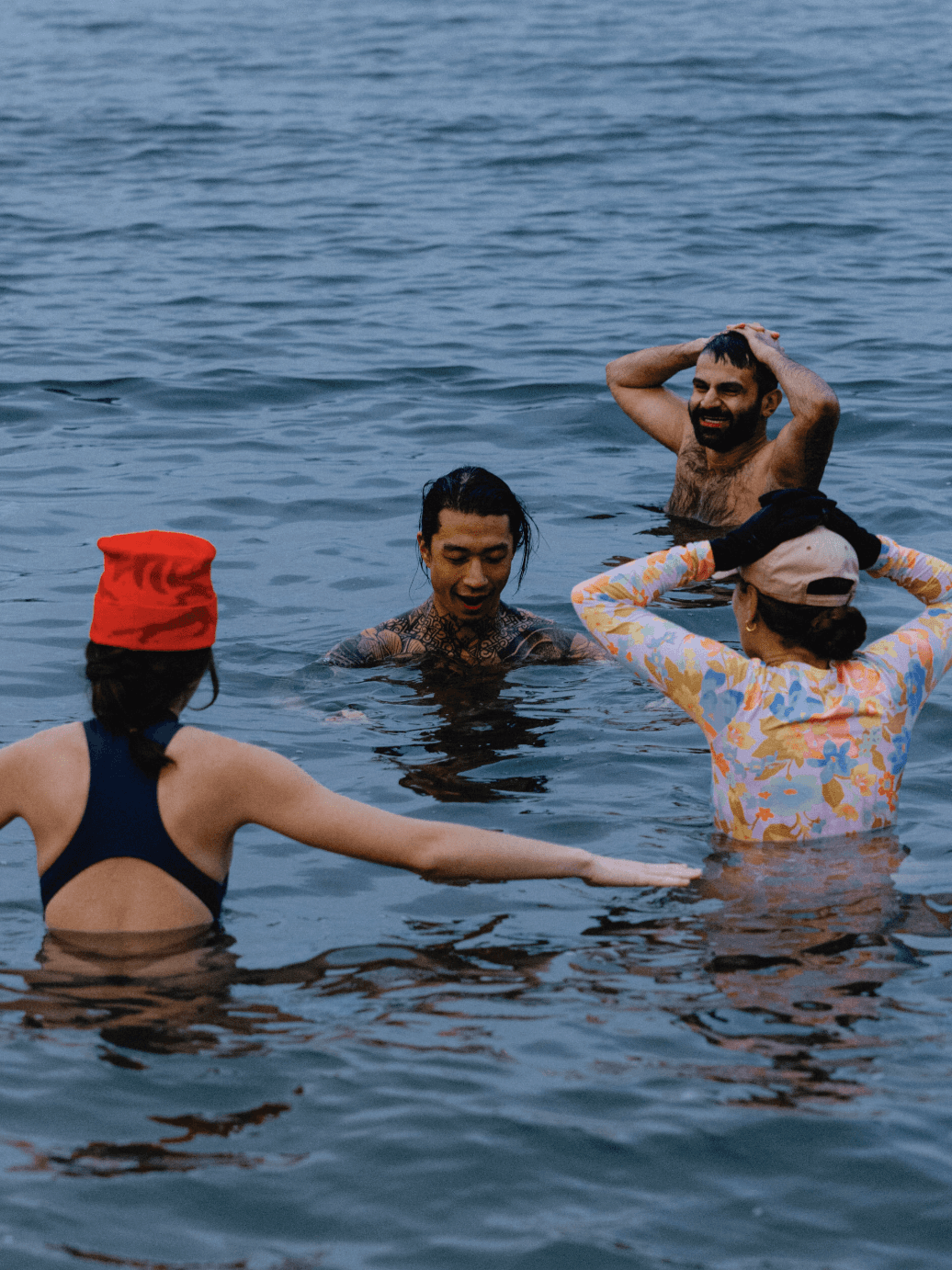
The banya tradition has always included cold exposure as an essential counterpoint to heat. After the steam room, bathers plunge into cold water, pour buckets of ice water over themselves, or — in winter — roll in the snow.
This contrast between heat and cold creates a powerful circulatory response. Where heat causes blood vessels to dilate, cold causes them to constrict (vasoconstriction). Alternating between these states exercises the vascular system and may support circulation and recovery.
The practice of moving between heat and cold is sometimes called contrast therapy, and it represents one of the oldest and most universal approaches to physical renewal. The banya simply embeds this contrast into its traditional rhythm.
These responses do not require measurement or tracking. The body knows how to respond to heat and cold — the practice simply creates conditions for that wisdom to emerge.
Learn about your first cold plunge →
Your First Banya Visit: What to Expect
If you have never visited a banya, the experience may feel unfamiliar at first. A little preparation helps you relax into the ritual rather than worrying about logistics.
What to Bring
Most banyas provide the essentials, but it helps to know what to expect:
Swimsuit — Required for public or mixed-gender sessions. Traditional single-gender banyas may allow nude bathing, but swimsuits are always acceptable.
Flip-flops or sandals — The floors can be hot, and footwear maintains hygiene in shared spaces.
Reusable water bottle — Hydration matters. You will sweat significantly.
Felt hat — Many banyas provide these. The wool or felt protects your head from overheating, allowing you to remain in the steam room comfortably.
Towels, robes, and other amenities are typically provided, though practices vary by facility.
Basic Etiquette
Banya etiquette exists to ensure everyone can relax and enjoy the experience.
Shower before entering the steam room. This is not optional. Arriving clean respects other bathers and prepares your skin for the heat.
Keep voices low in the steam room. While the banya is social, it is not a nightclub. Conversation happens, but screaming does not.
Enter and exit quickly. When you open the steam room door, heat escapes. Move efficiently and close the door promptly behind you.
Sit or lie on your towel. This maintains hygiene and protects you from the hot wood of the benches.
Respect the venik ritual. If a parenie session is underway, do not disturb it. If you are offered a venik treatment, it is a gift — receive it graciously (Banya No.1, 2024).
Listening to Your Body
Here is the most important guidance for your first banya visit: there is no schedule to follow.
You do not need to watch the clock or count rounds. You do not need to push through discomfort to prove anything. The banya has no leaderboard, no personal bests, no optimal protocols.
Leave the steam room when your body signals readiness — when the heat becomes uncomfortable rather than challenging, when you feel the urge to cool down. Rest as long as feels right before returning. Some visits may involve many cycles between heat and cold. Others may involve just one or two. Both are correct.
Your only task is to notice what you feel. The practice is about presence, not performance.
Banya as Communal Ritual
In an age of isolation and digital overwhelm, the banya offers something increasingly rare: shared physical experience in real time, with real people, in the same room.
More Than a Spa Treatment
Modern wellness culture often frames heat therapy as an individual optimisation tool — something to schedule between workouts and productivity sessions, something to track in an app. The banya resists this framing.
Historically, the banya was where communities gathered. It was where conversations happened that could not happen elsewhere — where the vulnerability of shared nakedness created conditions for honesty. Business deals were struck. Marriages were negotiated. Friendships deepened.
The steam strips away more than toxins. It strips away the armour of professional presentation, the masks we wear in daily life. In the banya, you are just a body among bodies, sweating together.
Ritual Over Routine
The ancient practitioners who developed banya traditions were not biohackers. They did not track their heart rate variability or measure their post-session cortisol levels. They simply noticed that time in the steam made them feel better — more connected to their bodies, more present, more alive.
The banya asks nothing of you except presence. There are no metrics to optimise, no protocols to follow perfectly, no achievements to unlock. The heat does not care about your productivity goals.
This is not a rejection of science or evidence. The research on heat therapy is compelling. But the banya reminds us that some things matter beyond what can be measured — the laughter echoing off wooden walls, the shock of cold water, the particular quality of silence that settles over a group of people sweating together.
These practices do not need to become another thing you are "doing right" or tracking in an app. They simply need to be experienced.
Experience the ritual at Aetherhaus →
Frequently Asked Questions
What is the difference between a banya and a sauna?
The main differences are humidity and ritual. A Russian banya operates at lower temperatures (60-70°C) with high humidity (40-70%), creating wet, enveloping heat. A Finnish sauna uses higher temperatures (80-100°C) with low humidity (10-20%), producing dry, intense heat. The banya also traditionally includes the venik massage ritual, which has no equivalent in Finnish sauna culture.
Is banya better than sauna?
Neither is objectively better — they offer different experiences. The banya's wet heat feels more penetrating and gentler, while the dry sauna's intense heat suits those who prefer sharper sensations. The banya tends to be more social, while Finnish sauna culture emphasises quiet contemplation. The best choice depends on what kind of experience you seek.
What do you wear in a banya?
In public or mixed-gender banyas, swimsuits are standard. Traditional single-gender sessions may allow nude bathing, following the historical practice. Most facilities provide felt hats to protect the head from heat, and towels for sitting on the benches. When in doubt, bring a swimsuit and follow the lead of other bathers.
What is a venik massage?
A venik is a bundle of leafy branches — typically birch, oak, or eucalyptus — used in the traditional parenie massage ritual. A practitioner soaks the venik, then uses it to waft steam and gently massage the bather's body. Despite its appearance, the treatment is not painful. The leaves stimulate circulation, exfoliate the skin, and release aromatic compounds.
Is banya good for you?
Research suggests that regular heat exposure may support cardiovascular health, immune function, and stress reduction. However, the banya is not a medical treatment. People with cardiovascular conditions, pregnant women, and those with certain health concerns should consult a healthcare provider before using a banya. For most healthy adults, the banya is a safe and enjoyable practice.
What temperature is a Russian banya?
Traditional Russian banyas typically maintain temperatures between 60-70°C (140-158°F), though some may reach higher. The high humidity (40-70%) makes the heat feel more intense than the temperature alone would suggest. This contrasts with Finnish saunas, which often reach 80-100°C but with much lower humidity. For a fuller breakdown of sauna temperature ranges by type, including infrared and Himalayan salt, see our dedicated guide.
Conclusion
The banya is a thread connecting us to ancestors who understood something essential about heat, water, and human connection. For over a thousand years — likely far longer — people have gathered in steam-filled rooms to sweat, to talk, to be present with one another in a way that modern life rarely permits.
This is not a practice that needs to be optimised or tracked. The banya does not care about your wellness goals. It offers something simpler and perhaps more valuable: a space to feel your body, to breathe deeply, to experience warmth and cold and the company of others.
Whether you seek the historical traditions of the Russian parilka, the guided intensity of a German Aufguss, or simply a place to pause and reset, the invitation is the same. Step into the steam. Let the heat do its work. Trust your body to know when to stay and when to go.
The banya has been waiting for you for a very long time.
Aetherhaus offers traditional sauna experiences, contrast therapy, and guided heat rituals in Vancouver's West End. Explore our experiences →
A banya is a traditional Russian steam bath characterised by high humidity, intense but gentle heat, and the ritual use of leafy branches called venik to massage the body. Unlike the dry heat of a Finnish sauna, the banya envelops you in wet steam, creating a sensation that feels both penetrating and nurturing. But the banya is more than a room with hot rocks. It is a place where social hierarchies dissolve, where strangers become friends, and where the simple act of sweating together becomes something closer to ceremony. For centuries, Russians have gathered in these steam-filled spaces not to optimise their health metrics, but to connect with their bodies, their communities, and traditions far older than any wellness trend. This guide explores the history, rituals, and experience of the Russian banya - and why this ancient practice still resonates in a world obsessed with tracking everything.
What Is a Banya?
The word banya (Russian: баня) comes from the Latin balneum, meaning "something that makes pain and sadness go away." In its simplest form, a banya is a wooden structure where water is poured over heated stones to create steam. But this definition barely scratches the surface.
The banya represents a complete bathing philosophy built around cycles of heat, cold, and rest. It is simultaneously a place for hygiene, healing, socialising, and — in the Russian tradition — even conducting business. The steam room itself is called the parilka, and it forms the heart of the experience.
The Three Rooms of a Traditional Banya
A traditional Russian banya consists of three distinct spaces, each serving a specific purpose in the bathing ritual.
The predbannik (предбанник) is the entrance room. Here, bathers undress, store their belongings, and rest between sessions in the steam room. In many banyas, this space doubles as a social area where tea is served, conversations unfold, and the transition between the outside world and the bathing ritual begins.
The washing room contains hot and cold water taps, allowing bathers to rinse and cleanse themselves. In traditional banyas, this room features a large vessel called a shaika — a basin with two handles used for mixing water to the desired temperature.
The parilka is the steam room itself. Wooden benches line the walls at different heights, with the highest benches receiving the most intense heat. A stone stove called a pechka or kamenka heats large rocks, and water is ladled onto these stones to produce clouds of steam. The humidity in a banya typically reaches 40-70%, creating a wet heat that feels remarkably different from the dry air of a Finnish sauna.
Black Banya vs White Banya
Two historical styles of banya construction exist, distinguished by how smoke is handled.
The black banya (banya po-chyornomu) represents the older, more rustic form. In these structures, smoke from the heating fire escapes through a hole in the ceiling rather than a chimney. Over time, the escaping smoke darkens the interior wood, giving the black banya its name. This style was valued for its natural disinfection properties — the smoke and soot coating the walls helped reduce bacterial growth. Black banyas are rare today but remain prized by traditionalists for their earthy, primal atmosphere.
The white banya (banya po-belomu) uses a chimney to vent smoke away from the bathing area. This cleaner, more modern design became the standard for urban bathhouses and remains the most common form today. The separation of smoke from steam allows white banyas to operate continuously, unlike black banyas which require time to clear smoke before bathing can begin.
The History of the Russian Banya
The banya is not merely old. It predates Russia itself.
Ancient Origins Before Russia
The Greek historian Herodotus, writing around 440 BCE, documented steam bathing practices among the Scythians — nomadic peoples who inhabited the lands north of the Black Sea, in what would later become Ukraine and southern Russia. Herodotus described how the Scythians would erect three poles leaning together, cover them with woollen felt, and place red-hot stones inside. They would then throw seeds onto the stones, creating a vapour that, as Herodotus noted, "no Greek vapour-bath could surpass" (Wikipedia, 2025).
This account reveals that steam bathing in these territories stretches back at least 2,500 years — centuries before the emergence of the first Russian state.
The early banya that eventually developed in Kievan Rus' was not purely Slavic invention. It emerged from a crossroads of bathing traditions: Byzantine bath culture from the south, Finnish sauna practices from the north, and customs from Jewish communities and Khazar tribes to the east (Wikipedia, 2025). The banya, from its very origins, was a place where cultures mingled.
The Banya in Russian Culture
The first written mention of the banya in Russian sources appears in the Primary Chronicle (also called the Radziwiłł Chronicle), dating to the 10th century. The chronicle recounts the story of Princess Olga of Kiev in 945 AD, whose revenge against the Drevlian tribe involved a bathhouse — a testament to how central the banya already was to Slavic social life (Wikipedia, 2025).
Throughout Russian history, the banya served as a great equaliser. Peasants and nobles alike stripped down and sweated together. Social hierarchies dissolved in the steam. A Russian proverb captures this: "In the banya, all are equal."
The banya also played a role in life's most significant moments. Women traditionally gave birth in the banya, where the warm, clean environment was considered ideal. Couples visited the banya before their wedding night. Mourners gathered there after funerals to ensure their loved ones would be warm in the afterlife.
By the 18th century, the banya had attracted international attention. The Portuguese physician António Nunes Ribeiro Sanches, who served at the Russian court, published studies on the therapeutic effects of Russian bathing practices. Peter the Great himself was known to enjoy the banya and encouraged its spread throughout his modernising empire.
The most famous bathhouse in Russia, the Sanduny in Moscow, was established in 1808 and still operates today. Declared an architectural monument in 1992, it remains a living link to centuries of banya tradition (Wikipedia, 2025).
Banya vs Finnish Sauna: Key Differences
People often use "banya" and "sauna" interchangeably, but the experiences differ significantly. Understanding these differences helps explain why each tradition developed its own devoted following.
Heat and Humidity
The most fundamental difference lies in the balance between temperature and moisture.
Factor | Russian Banya | Finnish Sauna |
|---|---|---|
Temperature | 60-70°C (140-158°F) | 80-100°C (176-212°F) |
Humidity | 40-70% | 10-20% |
Heat Character | Wet, enveloping, penetrating | Dry, intense, direct |
The Russian banya operates at lower temperatures but with substantially higher humidity. This combination creates a heat that feels softer yet more penetrating — the moisture-laden air conducts warmth deep into the body. Finnish saunas achieve their intensity through extreme dry heat, which the body tolerates because sweat evaporates rapidly from the skin (Banya No.1, 2025). For a closer look at how heat, humidity, and duration interact across sauna types, see our guide to the best sauna temperature.
Neither approach is superior. They simply offer different pathways to the same fundamental human experience of therapeutic heat.
Ritual and Social Experience
Beyond the physical environment, banya and sauna differ in their cultural character.
The Finnish sauna traditionally emphasises quiet contemplation. It is often a solitary or family experience, a space for internal reflection rather than conversation. The Finnish concept of löyly — the steam that rises when water hits the stones — represents a moment of intensified heat that bathers experience in shared silence.
The Russian banya, by contrast, developed as an explicitly social space. Conversation, laughter, and even singing are common. Groups of friends visit together. Business deals have been negotiated in the steam. The banya is a place where relationships deepen through shared experience and mild collective suffering.
Connection to Other European Heat Traditions
The banya belongs to a broader family of European heat traditions that share common roots and philosophies.
The German Aufguss ceremony, for instance, parallels the banya in its emphasis on guided ritual and aromatic steam. In an Aufguss, a trained practitioner uses a towel to circulate hot air infused with essential oils, creating waves of intensified heat. Like the banya's parenie ritual, the Aufguss transforms passive heat exposure into an active, guided experience.
These traditions remind us that across cultures, humans have recognised something profound in the combination of heat, steam, and community. The banya is one expression of a universal impulse — the desire to sweat together, to strip away pretense, and to emerge cleansed in body and spirit.
Explore the Aufguss tradition →
The Venik Ritual: Heart of the Banya Experience
No element distinguishes the Russian banya more clearly than the venik — a bundle of leafy branches used to massage the body and direct steam. The venik ritual, called parenie, transforms the banya from a mere steam room into something approaching ceremony.
What Is a Venik?
A venik (веник) consists of small branches and leaves bound together, traditionally harvested in summer when the leaves are most fragrant and pliable. Before use, the dried venik is soaked in hot water to soften the leaves and release their natural oils. The soaking water itself becomes aromatic and is sometimes poured over the stones to intensify the steam.
The venik serves multiple purposes simultaneously. It acts as a tool for massage, directing blood flow and stimulating the skin. It functions as a fan, wafting hot air and steam across the body. And it delivers aromatherapy, releasing volatile compounds from the leaves that fill the steam room with fragrance.
Types of Venik and Their Properties
Different trees produce veniks with distinct characteristics. Traditional practitioners select their venik based on desired effects.
Birch is the most traditional choice. Birch leaves contain compounds with anti-inflammatory and antibacterial properties. The venik produces a subtle, slightly minty fragrance and is prized for its gentle action on the skin. Birch is considered ideal for general use and for those new to the venik experience.
Oak produces a venik with broader, sturdier leaves that hold more heat and moisture. Oak contains tannins that have astringent properties, making it popular for those with oily skin. The aroma is rich and forest-like, and oak veniks are said to have a calming effect on the nervous system (Archimedes Banya, 2023).
Eucalyptus veniks are valued for their respiratory benefits. The volatile oils in eucalyptus leaves help clear the sinuses and airways. Eucalyptus veniks are often used when someone is fighting a cold or simply wants to breathe more deeply.
The Parenie Experience
The parenie is a massage ritual performed by a skilled practitioner called a banshik (or parillshik). The bather lies on a high bench while the banshik uses the venik in a choreographed sequence of movements.
First, the banshik wafts the venik through the air, drawing the hottest steam down toward the body. This creates waves of intensified heat that can feel almost liquid in their intensity. Then comes the massage itself — a rhythmic patting and pressing of the leaves against the skin. Despite appearances, this is not painful. The softened leaves compress gently, stimulating circulation and exfoliating the skin while releasing their aromatic oils.
The parenie concludes with the banshik pressing the venik firmly against different areas of the body, allowing the leaves to deliver a final dose of their beneficial compounds. Following the treatment, the bather typically immerses in cold water — a bucket shower, plunge pool, or in traditional settings, a roll in the snow.
The parenie is not something to endure or optimise. It is an invitation to surrender to sensation and trust the practitioner's guidance. There is no correct response except presence.
What Happens in Your Body During a Banya Session
The banya creates conditions that prompt a cascade of physiological responses. While these responses have attracted scientific interest, understanding them does not require turning the banya into a laboratory.
Cardiovascular Response
When you enter a heated environment, your body immediately begins working to regulate its core temperature. Blood vessels near the skin's surface dilate (vasodilation), allowing more blood to flow to the skin where heat can dissipate. Your heart rate increases to support this enhanced circulation — a response similar to moderate physical exertion.
Research from the University of Eastern Finland, following participants over decades, suggests that regular heat exposure may support long-term cardiovascular health. Studies have found associations between consistent sauna use and markers of cardiovascular function, including blood pressure and arterial flexibility (Laukkanen et al., Mayo Clinic Proceedings, 2018).
These findings describe associations rather than prescriptions. The body responds to heat according to its own wisdom. The research simply confirms what banya practitioners have intuited for centuries: regular time in the steam appears to do the body good.
Immune Function
Heat exposure triggers responses that overlap with the body's natural defence mechanisms. When core temperature rises, the body behaves as though fighting a mild fever — a state that may enhance certain immune functions.
Research published in the Journal of Human Kinetics found that sauna sessions prompted increases in white blood cell counts, including lymphocytes, neutrophils, and basophils — cells involved in immune response (Pilch et al., 2013). Subsequent research suggests these immune effects may be more pronounced with regular practice rather than occasional use.
The traditional Russian intuition — that the banya helps ward off illness — finds some support in these findings. But the banya was never about optimising immune markers. It was about feeling vital, connected, and alive.
The Role of Cold Immersion
The banya tradition has always included cold exposure as an essential counterpoint to heat. After the steam room, bathers plunge into cold water, pour buckets of ice water over themselves, or — in winter — roll in the snow.
This contrast between heat and cold creates a powerful circulatory response. Where heat causes blood vessels to dilate, cold causes them to constrict (vasoconstriction). Alternating between these states exercises the vascular system and may support circulation and recovery.
The practice of moving between heat and cold is sometimes called contrast therapy, and it represents one of the oldest and most universal approaches to physical renewal. The banya simply embeds this contrast into its traditional rhythm.
These responses do not require measurement or tracking. The body knows how to respond to heat and cold — the practice simply creates conditions for that wisdom to emerge.
Learn about your first cold plunge →
Your First Banya Visit: What to Expect
If you have never visited a banya, the experience may feel unfamiliar at first. A little preparation helps you relax into the ritual rather than worrying about logistics.
What to Bring
Most banyas provide the essentials, but it helps to know what to expect:
Swimsuit — Required for public or mixed-gender sessions. Traditional single-gender banyas may allow nude bathing, but swimsuits are always acceptable.
Flip-flops or sandals — The floors can be hot, and footwear maintains hygiene in shared spaces.
Reusable water bottle — Hydration matters. You will sweat significantly.
Felt hat — Many banyas provide these. The wool or felt protects your head from overheating, allowing you to remain in the steam room comfortably.
Towels, robes, and other amenities are typically provided, though practices vary by facility.
Basic Etiquette
Banya etiquette exists to ensure everyone can relax and enjoy the experience.
Shower before entering the steam room. This is not optional. Arriving clean respects other bathers and prepares your skin for the heat.
Keep voices low in the steam room. While the banya is social, it is not a nightclub. Conversation happens, but screaming does not.
Enter and exit quickly. When you open the steam room door, heat escapes. Move efficiently and close the door promptly behind you.
Sit or lie on your towel. This maintains hygiene and protects you from the hot wood of the benches.
Respect the venik ritual. If a parenie session is underway, do not disturb it. If you are offered a venik treatment, it is a gift — receive it graciously (Banya No.1, 2024).
Listening to Your Body
Here is the most important guidance for your first banya visit: there is no schedule to follow.
You do not need to watch the clock or count rounds. You do not need to push through discomfort to prove anything. The banya has no leaderboard, no personal bests, no optimal protocols.
Leave the steam room when your body signals readiness — when the heat becomes uncomfortable rather than challenging, when you feel the urge to cool down. Rest as long as feels right before returning. Some visits may involve many cycles between heat and cold. Others may involve just one or two. Both are correct.
Your only task is to notice what you feel. The practice is about presence, not performance.
Banya as Communal Ritual
In an age of isolation and digital overwhelm, the banya offers something increasingly rare: shared physical experience in real time, with real people, in the same room.
More Than a Spa Treatment
Modern wellness culture often frames heat therapy as an individual optimisation tool — something to schedule between workouts and productivity sessions, something to track in an app. The banya resists this framing.
Historically, the banya was where communities gathered. It was where conversations happened that could not happen elsewhere — where the vulnerability of shared nakedness created conditions for honesty. Business deals were struck. Marriages were negotiated. Friendships deepened.
The steam strips away more than toxins. It strips away the armour of professional presentation, the masks we wear in daily life. In the banya, you are just a body among bodies, sweating together.
Ritual Over Routine
The ancient practitioners who developed banya traditions were not biohackers. They did not track their heart rate variability or measure their post-session cortisol levels. They simply noticed that time in the steam made them feel better — more connected to their bodies, more present, more alive.
The banya asks nothing of you except presence. There are no metrics to optimise, no protocols to follow perfectly, no achievements to unlock. The heat does not care about your productivity goals.
This is not a rejection of science or evidence. The research on heat therapy is compelling. But the banya reminds us that some things matter beyond what can be measured — the laughter echoing off wooden walls, the shock of cold water, the particular quality of silence that settles over a group of people sweating together.
These practices do not need to become another thing you are "doing right" or tracking in an app. They simply need to be experienced.
Experience the ritual at Aetherhaus →
Frequently Asked Questions
What is the difference between a banya and a sauna?
The main differences are humidity and ritual. A Russian banya operates at lower temperatures (60-70°C) with high humidity (40-70%), creating wet, enveloping heat. A Finnish sauna uses higher temperatures (80-100°C) with low humidity (10-20%), producing dry, intense heat. The banya also traditionally includes the venik massage ritual, which has no equivalent in Finnish sauna culture.
Is banya better than sauna?
Neither is objectively better — they offer different experiences. The banya's wet heat feels more penetrating and gentler, while the dry sauna's intense heat suits those who prefer sharper sensations. The banya tends to be more social, while Finnish sauna culture emphasises quiet contemplation. The best choice depends on what kind of experience you seek.
What do you wear in a banya?
In public or mixed-gender banyas, swimsuits are standard. Traditional single-gender sessions may allow nude bathing, following the historical practice. Most facilities provide felt hats to protect the head from heat, and towels for sitting on the benches. When in doubt, bring a swimsuit and follow the lead of other bathers.
What is a venik massage?
A venik is a bundle of leafy branches — typically birch, oak, or eucalyptus — used in the traditional parenie massage ritual. A practitioner soaks the venik, then uses it to waft steam and gently massage the bather's body. Despite its appearance, the treatment is not painful. The leaves stimulate circulation, exfoliate the skin, and release aromatic compounds.
Is banya good for you?
Research suggests that regular heat exposure may support cardiovascular health, immune function, and stress reduction. However, the banya is not a medical treatment. People with cardiovascular conditions, pregnant women, and those with certain health concerns should consult a healthcare provider before using a banya. For most healthy adults, the banya is a safe and enjoyable practice.
What temperature is a Russian banya?
Traditional Russian banyas typically maintain temperatures between 60-70°C (140-158°F), though some may reach higher. The high humidity (40-70%) makes the heat feel more intense than the temperature alone would suggest. This contrasts with Finnish saunas, which often reach 80-100°C but with much lower humidity. For a fuller breakdown of sauna temperature ranges by type, including infrared and Himalayan salt, see our dedicated guide.
Conclusion
The banya is a thread connecting us to ancestors who understood something essential about heat, water, and human connection. For over a thousand years — likely far longer — people have gathered in steam-filled rooms to sweat, to talk, to be present with one another in a way that modern life rarely permits.
This is not a practice that needs to be optimised or tracked. The banya does not care about your wellness goals. It offers something simpler and perhaps more valuable: a space to feel your body, to breathe deeply, to experience warmth and cold and the company of others.
Whether you seek the historical traditions of the Russian parilka, the guided intensity of a German Aufguss, or simply a place to pause and reset, the invitation is the same. Step into the steam. Let the heat do its work. Trust your body to know when to stay and when to go.
The banya has been waiting for you for a very long time.
Aetherhaus offers traditional sauna experiences, contrast therapy, and guided heat rituals in Vancouver's West End. Explore our experiences →
our Blog
our Blog
More insights
More insights
Explore more reflections, guidance, and practical tools to support you.
Explore more reflections, guidance, and practical tools to support you.

A wave of heat rolls over you. The scent of eucalyptus fills the air. In the darkness, you hear the rhythmic whoosh of a towel cutting through steam. This is Aufguss.
Contrast therapy is the practice of alternating between heat exposure - such as a sauna or hot water immersion - and cold exposure, like a cold plunge or ice bath. This intentional shift between temperature extremes stimulates your circulatory system, supports muscle recovery, and offers a structured way to reset both body and mind. While the term sounds clinical, the practice itself traces back thousands of years to communal bathhouses, Nordic saunas, and Russian banyas.
Contrast therapy is the practice of alternating between heat exposure - such as a sauna or hot water immersion - and cold exposure, like a cold plunge or ice bath. This intentional shift between temperature extremes stimulates your circulatory system, supports muscle recovery, and offers a structured way to reset both body and mind. While the term sounds clinical, the practice itself traces back thousands of years to communal bathhouses, Nordic saunas, and Russian banyas.
Your questions.
Answered.
Not sure what to expect? These answers might help you feel more confident as you begin.
Didn’t find your answer? Send us a message, we’ll respond with care and clarity.
What is a modern bathhouse?
A modern bathhouse keeps the architecture of the old idea, hot room, cold water, somewhere to rest, and lets the rhythm of the city around it shape the rest. Ours is built for Vancouver, on Davie Street, in the West End.
What is a modern bathhouse?
A modern bathhouse keeps the architecture of the old idea, hot room, cold water, somewhere to rest, and lets the rhythm of the city around it shape the rest. Ours is built for Vancouver, on Davie Street, in the West End.
Is the cold plunge at your bathhouse communal?
Is the cold plunge at your bathhouse communal?
Yes. Our cold pools are shared, with multiple temperature options so you can find one that meets you where you are. Communal plunging is part of what makes a bathhouse a bathhouse.
Is the bathhouse a welcoming space for the queer community?
Is the bathhouse a welcoming space for the queer community?
Yes. The West End is home to us and to our queer neighbours, and the bathhouse is built for everyone who walks in. We also host queer nights on a regular rotation, which you can find on the Classes calendar.
What's the etiquette inside the bathhouse?
What's the etiquette inside the bathhouse?
Phones stay in lockers. Voices stay low. Sit or lie on a towel inside the sauna, move at your own pace between rooms, and leave the space the way you'd want to find it. The room works because everyone in it is paying a little attention.
Do you offer Russian Banya at the bathhouse?
Do you offer Russian Banya at the bathhouse?
We run banya-inspired programming including venik work on select dates. The full ritual has its own page if you want to read about it before you book.
Do I need to book ahead, or can I walk in?
Do I need to book ahead, or can I walk in?
Walk-ins are welcome based on availability, but most guests book ahead through our app or website to lock in their preferred session time.
Your questions.
Answered.
Not sure what to expect? These answers might help you feel more confident as you begin.
What do I need to bring?
Please bring a bathing suit and a reusable water bottle. We provide two towels per guest, shower products, and secure lockers.
What do I need to bring?
Please bring a bathing suit and a reusable water bottle. We provide two towels per guest, shower products, and secure lockers.
Do I need a reservation?
Do I need a reservation?
Walk-ins are welcome, but we recommend booking through our app or website to check availability and join the waitlist.
Where can I park?
Where can I park?
Street parking is limited. We offer valet parking behind AetherHaus from 11:00–23:00. There is also some street parking available on Davie and nearby side streets.
What is Open Haus?
What is Open Haus?
Open Haus is a self-guided circuit through our saunas, plunge pools, and tea lounge. Our guides add essential oils to the stove throughout the day. The atmosphere shifts between silent, casual, and social, depending on the session.
What is your Haus Etiquette?
What is your Haus Etiquette?
Phones must be stored away. Please keep conversation soft, sit or lie on a towel, and move mindfully through the space. We ask that guests respect others’ experience and refrain from bringing outside food or drinks - complimentary tea is provided.
Can I visit if I am pregnant?
Can I visit if I am pregnant?
We advise against hot and cold therapy during pregnancy unless approved by your healthcare provider.
Didn’t find your answer? Send us a message, we’ll respond with care and clarity.
Your questions.
Answered.
Not sure what to expect? These answers might help you feel more confident as you begin.
Didn’t find your answer? Send us a message, we’ll respond with care and clarity.
What is a modern bathhouse?
A modern bathhouse keeps the architecture of the old idea, hot room, cold water, somewhere to rest, and lets the rhythm of the city around it shape the rest. Ours is built for Vancouver, on Davie Street, in the West End.
What is a modern bathhouse?
A modern bathhouse keeps the architecture of the old idea, hot room, cold water, somewhere to rest, and lets the rhythm of the city around it shape the rest. Ours is built for Vancouver, on Davie Street, in the West End.
Is the cold plunge at your bathhouse communal?
Is the cold plunge at your bathhouse communal?
Yes. Our cold pools are shared, with multiple temperature options so you can find one that meets you where you are. Communal plunging is part of what makes a bathhouse a bathhouse.
Is the bathhouse a welcoming space for the queer community?
Is the bathhouse a welcoming space for the queer community?
Yes. The West End is home to us and to our queer neighbours, and the bathhouse is built for everyone who walks in. We also host queer nights on a regular rotation, which you can find on the Classes calendar.
What's the etiquette inside the bathhouse?
What's the etiquette inside the bathhouse?
Phones stay in lockers. Voices stay low. Sit or lie on a towel inside the sauna, move at your own pace between rooms, and leave the space the way you'd want to find it. The room works because everyone in it is paying a little attention.
Do you offer Russian Banya at the bathhouse?
Do you offer Russian Banya at the bathhouse?
We run banya-inspired programming including venik work on select dates. The full ritual has its own page if you want to read about it before you book.
Do I need to book ahead, or can I walk in?
Do I need to book ahead, or can I walk in?
Walk-ins are welcome based on availability, but most guests book ahead through our app or website to lock in their preferred session time.