
Meditation for Beginners: You Cannot Do It Wrong
Meditation for Beginners: You Cannot Do It Wrong
The first thing you need to know about meditation is that you will want to quit.
The first thing you need to know about meditation is that you will want to quit.
Published on:
Published on:
Not because you are doing it incorrectly. Not because you lack discipline or focus or the right cushion or app subscription. You will want to quit because meditation confronts you with exactly what you have been avoiding.
Most beginner guides skip this part. They offer cushion recommendations and breath counts and promises of blissful calm. They describe meditation as stress relief, as an optimization tool, as a life hack for peak performance.
But meditation is not what you think. Literally.
It is not about clearing your mind or achieving transcendent states or becoming perpetually serene. Cleveland Clinic researchers note that "these techniques were not necessarily created to make us feel better—there really is not a desired outcome in the true sense" (Cleveland Clinic, 2023).
Meditation is about meeting yourself as you are. And that meeting is rarely comfortable.
What Meditation Actually Is (And Is Not)
The Commercial Myth
The meditation industry has packaged an ancient practice into something digestible for modern consumption. Apps promise calm in your pocket. Studios market bliss states. Influencers demonstrate perfect posture against aesthetically pleasing backgrounds.
This creates what researchers identify as "unrealistic expectations" that cause people to quit shortly after beginning practice (Wanderlust, 2016). The gap between marketed serenity and actual experience becomes insurmountable.
Meditation is not a quick-fix happy pill, not the silver bullet to instantly solve dilemmas, nor a magic wand to take you to another world (Wanderlust, 2016). It is a daily practice to reveal your truest self, which includes the parts you have been working hard to ignore.
What Actually Happens When You Sit
Mount Sinai researchers found changes in deep brain regions; specifically the amygdala and hippocampus; even during first-time meditation, affecting memory and emotional regulation (Mount Sinai, 2025).
Your brain begins changing immediately. Harvard researchers using fMRI showed that brains of subjects thickened after practice (Harvard Gazette, 2023). Binghamton University found that practice enhanced brain connection in dorsal attention networks, indicating faster switching between mind wandering and focused attention (Binghamton University).
But these changes come through uncomfortable territory. Research participants reported that meditating can intensify difficult emotions like anxiety, creating a barrier to practice (PMC Mindfulness Journal, 2021). You are not imagining the discomfort. You are experiencing exactly what meditation reveals.
One experienced practitioner stated: "You are coming face to face with your own heart and mind, fear, anger, hatred, confusion" (PMC Mindfulness Journal, 2021). This confrontation with painful internal states presents the primary barrier that causes people to abandon practice.
Why This Matters for Beginners
If you sit down expecting instant peace, you will quit when you encounter restlessness, anxiety, boredom, physical pain, or the endless loop of your own thoughts. These are not signs of failure. These are the practice working.
A meditation teacher with twenty years of experience notes: "Discomfort will show up, usually very quickly - but instead of seeing this as a problem, work with it as part of the process" (Rob Phillips Yoga, 2024).
Dave Gu, Aetherhaus' program director stated, "When I started working with cold exposure after my ankylosing spondylitis diagnosis, my entire body screamed at me to exit the water. The pain I was trying to escape through the practice initially intensified. But staying present with that sensation; not trying to change it, just witnessing it, changed my relationship with chronic pain entirely."
The same principle applies to seated meditation. You cannot think your way past discomfort. You can only stay present with it until it reveals what it needs to teach you.
How to Begin: Sitting With What Shows Up
The Basic Mechanics
The instructions are deceptively simple. Sit somewhere comfortable where you will not be disturbed. Close your eyes or soften your gaze downward. Bring attention to your breath.
Notice the sensation of air moving in and out. The rise and fall of your chest or belly. The temperature of breath at your nostrils. You are not controlling your breath, you are observing what it already does naturally.
Your mind will wander. This is not failure. This is what minds do.
When you notice your attention has drifted to thoughts, sounds, physical sensations, or anything other than breath, gently bring it back. No judgment. No self-criticism. Just return.
That is the practice.
Posture Without Perfection
Your spine should be relatively straight but not rigid. Think upright enough to stay awake, relaxed enough to breathe naturally. If tension builds, adjust. Meditation is not a test of how still you can remain.
Discomfort will appear regardless of posture. Cushions and chairs do not eliminate it. They simply change how it shows up. Physical sensation is not something to correct. It is something to notice.
If you need to move, move consciously. Notice the urge before acting on it. Sometimes movement is care. Sometimes it is avoidance. Learning the difference is part of the practice.
There is no ideal posture. There is only the posture you are in right now.
What to Think About (And Why That Question Misses the Point)
One of the most common questions beginners ask is what they are supposed to think about during meditation.
The answer is uncomfortable but liberating: you will think about everything.
Plans. Memories. Annoyance. Boredom. Sensations. The urge to quit. The urge to check the time. This is not a problem. This is the landscape.
Research consistently shows that mind-wandering is not a failure of meditation. Mindful.org explains that each moment you notice your attention has drifted and gently return it, you are strengthening attentional capacity through repetition (Mindful.org, 2024).
This is supported neurologically. A study from Binghamton University found that meditation improves the brain’s ability to switch between mind-wandering and focused attention by strengthening dorsal attention networks (Binghamton University).
If you are noticing thoughts, you are meditating.
If you are frustrated by thoughts, you are meditating.
If you are judging yourself for thinking too much, you are meditating - and learning something important about how you relate to yourself under pressure.
Why the Body Is Often a Better Entry Point Than the Mind
Many beginners try to meditate from the neck up.
They attempt to manage thought with thought, analyzing distraction while distracted. This often creates frustration rather than clarity.
Body-based practices offer a different doorway.
Body scan meditation, which originates from Buddhist vipassana traditions and was later introduced to Western clinical settings through Jon Kabat-Zinn’s Mindfulness-Based Stress Reduction program, directs attention toward physical sensation rather than mental content (Wayne State University, 2023).
Research from UC Berkeley’s Greater Good Science Center shows that body-based awareness can reduce stress and tension by changing how we relate to discomfort rather than attempting to eliminate it (UC Berkeley).
This matters because resistance amplifies suffering. When pain or discomfort is met with fear or frustration, distress increases. When sensation is noticed without immediately trying to change it, the relationship shifts (UC Berkeley).
This is also why heat can become such a powerful teacher.
Heat Teaches What Sitting Cannot
Heat removes abstraction.
In a sauna, sensation is unavoidable. There is no need to search for an object of focus. The body is already present.
This is not about pushing limits or cultivating toughness. It is about learning to stay with intensity without immediately escaping it.
For many people, this embodied immediacy makes seated meditation more accessible. The nervous system learns what presence feels like before the mind tries to conceptualise it.
At AetherHaus, silent heat experiences are paired with meditation sessions not as an enhancement, but as a bridge. For those who struggle to “just sit,” the body provides the entry point the mind cannot.
Why You Will Want to Quit (And Why You Will Not)
You will want to quit when meditation stops performing for you.
When it stops delivering calm on demand. When it shows you impatience, grief, anger, boredom, or doubt instead.
Research confirms this. Studies published in the Mindfulness Journal found that contacting painful internal states is the primary reason people abandon meditation practice (PMC, 2021).
Jon Kabat-Zinn himself acknowledged that while meditation instructions are simple, the practice is “not for the faint-hearted” (PMC, 2021).
The urge to quit is not evidence of failure.
It is evidence that the practice has reached something real.
You cannot do it wrong.
But you can walk away when it stops being comfortable.
Frequently Asked Questions
How do beginners start meditating?
Start by sitting somewhere you will not be disturbed and placing attention on a simple anchor, such as the sensation of breathing. When you notice your mind has wandered, gently return without judging yourself. That noticing-and-returning cycle is the practice, and it is normal for it to happen repeatedly (Mindful.org, 2024).
What is the best meditation for beginners?
The best beginner meditation is the one you can actually return to, even when it feels inconvenient. Breath awareness and body scan practices tend to be accessible because they anchor attention in sensation rather than in “thinking about thinking,” which can spiral into frustration. Body scan meditation is also widely used in mainstream settings because it builds somatic awareness without requiring special beliefs or complex technique (Cleveland Clinic, 2023; UC Berkeley).
How long should a beginner meditate?
There is no ideal duration that applies to every nervous system, and treating meditation like a timed protocol can turn it into another performance task. A more honest approach is to stay until your attention or body signals it is time to stop, then end deliberately rather than pushing into endurance. This aligns with the reality that these techniques were not created around chasing a desired outcome or “feeling better on schedule” (Cleveland Clinic, 2023).
Can I teach myself to meditate?
Yes. Meditation is fundamentally experiential, which means you learn it by doing it, not by collecting perfect instructions. Guidance can help normalise what you are experiencing and prevent common misunderstandings, but you do not need an app subscription or a teacher to begin. What matters is returning to the practice often enough that your mind and body recognise it as familiar terrain (Mindful.org, 2024).
How do I know if I’m meditating correctly?
If you are noticing what is happening—breath, thought, sensation—and returning when you drift, you are doing it correctly. The mind wandering is not proof you failed; it is the moment you notice wandering that proves you are practicing. Over time, this repetition strengthens your capacity to relate to distraction without becoming it (Mindful.org, 2024).
Is it normal to feel uncomfortable while meditating?
Yes, and this is one of the most important things beginner guides often avoid saying plainly. Research shows meditation can intensify difficult emotions and bring people into contact with painful internal states, which becomes a major barrier to continuing (PMC, 2021). Discomfort does not mean something is wrong, it often means you have stopped avoiding what is real.
Is it okay to meditate lying down or in bed?
It can be, but it changes the practice because the body associates bed with sleep and the “sleepiness” hindrance becomes more likely. If your goal is wakeful attention, try a posture that supports alertness, even if it is simple and imperfect. If you do lie down, treat it as a deliberate choice and notice whether you are practicing awareness or drifting into unconsciousness (Mindful.org, 2024).
What happens to your brain when you meditate?
Research suggests meditation can affect brain regions involved in emotional regulation and memory, even in first-time meditators (Mount Sinai, 2025). Other studies indicate meditation training can improve attentional switching—how quickly you move from mind-wandering back to focus—which matches what beginners experience as “getting better at returning” over time (Binghamton University).
Key Takeaways
Meditation is not designed as an outcome machine (Cleveland Clinic, 2023).
Beginners can experience measurable brain effects and attentional changes (Mount Sinai, 2025; Binghamton).
Mind-wandering is normal; returning is the core repetition (Mindful.org, 2024).
The urge to quit often appears when you contact difficult internal states (PMC – Mindfulness Journal, 2021).
Expectations drive abandonment; meditation marketing sets people up to leave (Wanderlust, 2016).
Experience guided meditation and embodied stillness in a space designed to support presence. Visit AetherHaus' classes in Vancouver’s West End.
Not because you are doing it incorrectly. Not because you lack discipline or focus or the right cushion or app subscription. You will want to quit because meditation confronts you with exactly what you have been avoiding.
Most beginner guides skip this part. They offer cushion recommendations and breath counts and promises of blissful calm. They describe meditation as stress relief, as an optimization tool, as a life hack for peak performance.
But meditation is not what you think. Literally.
It is not about clearing your mind or achieving transcendent states or becoming perpetually serene. Cleveland Clinic researchers note that "these techniques were not necessarily created to make us feel better—there really is not a desired outcome in the true sense" (Cleveland Clinic, 2023).
Meditation is about meeting yourself as you are. And that meeting is rarely comfortable.
What Meditation Actually Is (And Is Not)
The Commercial Myth
The meditation industry has packaged an ancient practice into something digestible for modern consumption. Apps promise calm in your pocket. Studios market bliss states. Influencers demonstrate perfect posture against aesthetically pleasing backgrounds.
This creates what researchers identify as "unrealistic expectations" that cause people to quit shortly after beginning practice (Wanderlust, 2016). The gap between marketed serenity and actual experience becomes insurmountable.
Meditation is not a quick-fix happy pill, not the silver bullet to instantly solve dilemmas, nor a magic wand to take you to another world (Wanderlust, 2016). It is a daily practice to reveal your truest self, which includes the parts you have been working hard to ignore.
What Actually Happens When You Sit
Mount Sinai researchers found changes in deep brain regions; specifically the amygdala and hippocampus; even during first-time meditation, affecting memory and emotional regulation (Mount Sinai, 2025).
Your brain begins changing immediately. Harvard researchers using fMRI showed that brains of subjects thickened after practice (Harvard Gazette, 2023). Binghamton University found that practice enhanced brain connection in dorsal attention networks, indicating faster switching between mind wandering and focused attention (Binghamton University).
But these changes come through uncomfortable territory. Research participants reported that meditating can intensify difficult emotions like anxiety, creating a barrier to practice (PMC Mindfulness Journal, 2021). You are not imagining the discomfort. You are experiencing exactly what meditation reveals.
One experienced practitioner stated: "You are coming face to face with your own heart and mind, fear, anger, hatred, confusion" (PMC Mindfulness Journal, 2021). This confrontation with painful internal states presents the primary barrier that causes people to abandon practice.
Why This Matters for Beginners
If you sit down expecting instant peace, you will quit when you encounter restlessness, anxiety, boredom, physical pain, or the endless loop of your own thoughts. These are not signs of failure. These are the practice working.
A meditation teacher with twenty years of experience notes: "Discomfort will show up, usually very quickly - but instead of seeing this as a problem, work with it as part of the process" (Rob Phillips Yoga, 2024).
Dave Gu, Aetherhaus' program director stated, "When I started working with cold exposure after my ankylosing spondylitis diagnosis, my entire body screamed at me to exit the water. The pain I was trying to escape through the practice initially intensified. But staying present with that sensation; not trying to change it, just witnessing it, changed my relationship with chronic pain entirely."
The same principle applies to seated meditation. You cannot think your way past discomfort. You can only stay present with it until it reveals what it needs to teach you.
How to Begin: Sitting With What Shows Up
The Basic Mechanics
The instructions are deceptively simple. Sit somewhere comfortable where you will not be disturbed. Close your eyes or soften your gaze downward. Bring attention to your breath.
Notice the sensation of air moving in and out. The rise and fall of your chest or belly. The temperature of breath at your nostrils. You are not controlling your breath, you are observing what it already does naturally.
Your mind will wander. This is not failure. This is what minds do.
When you notice your attention has drifted to thoughts, sounds, physical sensations, or anything other than breath, gently bring it back. No judgment. No self-criticism. Just return.
That is the practice.
Posture Without Perfection
Your spine should be relatively straight but not rigid. Think upright enough to stay awake, relaxed enough to breathe naturally. If tension builds, adjust. Meditation is not a test of how still you can remain.
Discomfort will appear regardless of posture. Cushions and chairs do not eliminate it. They simply change how it shows up. Physical sensation is not something to correct. It is something to notice.
If you need to move, move consciously. Notice the urge before acting on it. Sometimes movement is care. Sometimes it is avoidance. Learning the difference is part of the practice.
There is no ideal posture. There is only the posture you are in right now.
What to Think About (And Why That Question Misses the Point)
One of the most common questions beginners ask is what they are supposed to think about during meditation.
The answer is uncomfortable but liberating: you will think about everything.
Plans. Memories. Annoyance. Boredom. Sensations. The urge to quit. The urge to check the time. This is not a problem. This is the landscape.
Research consistently shows that mind-wandering is not a failure of meditation. Mindful.org explains that each moment you notice your attention has drifted and gently return it, you are strengthening attentional capacity through repetition (Mindful.org, 2024).
This is supported neurologically. A study from Binghamton University found that meditation improves the brain’s ability to switch between mind-wandering and focused attention by strengthening dorsal attention networks (Binghamton University).
If you are noticing thoughts, you are meditating.
If you are frustrated by thoughts, you are meditating.
If you are judging yourself for thinking too much, you are meditating - and learning something important about how you relate to yourself under pressure.
Why the Body Is Often a Better Entry Point Than the Mind
Many beginners try to meditate from the neck up.
They attempt to manage thought with thought, analyzing distraction while distracted. This often creates frustration rather than clarity.
Body-based practices offer a different doorway.
Body scan meditation, which originates from Buddhist vipassana traditions and was later introduced to Western clinical settings through Jon Kabat-Zinn’s Mindfulness-Based Stress Reduction program, directs attention toward physical sensation rather than mental content (Wayne State University, 2023).
Research from UC Berkeley’s Greater Good Science Center shows that body-based awareness can reduce stress and tension by changing how we relate to discomfort rather than attempting to eliminate it (UC Berkeley).
This matters because resistance amplifies suffering. When pain or discomfort is met with fear or frustration, distress increases. When sensation is noticed without immediately trying to change it, the relationship shifts (UC Berkeley).
This is also why heat can become such a powerful teacher.
Heat Teaches What Sitting Cannot
Heat removes abstraction.
In a sauna, sensation is unavoidable. There is no need to search for an object of focus. The body is already present.
This is not about pushing limits or cultivating toughness. It is about learning to stay with intensity without immediately escaping it.
For many people, this embodied immediacy makes seated meditation more accessible. The nervous system learns what presence feels like before the mind tries to conceptualise it.
At AetherHaus, silent heat experiences are paired with meditation sessions not as an enhancement, but as a bridge. For those who struggle to “just sit,” the body provides the entry point the mind cannot.
Why You Will Want to Quit (And Why You Will Not)
You will want to quit when meditation stops performing for you.
When it stops delivering calm on demand. When it shows you impatience, grief, anger, boredom, or doubt instead.
Research confirms this. Studies published in the Mindfulness Journal found that contacting painful internal states is the primary reason people abandon meditation practice (PMC, 2021).
Jon Kabat-Zinn himself acknowledged that while meditation instructions are simple, the practice is “not for the faint-hearted” (PMC, 2021).
The urge to quit is not evidence of failure.
It is evidence that the practice has reached something real.
You cannot do it wrong.
But you can walk away when it stops being comfortable.
Frequently Asked Questions
How do beginners start meditating?
Start by sitting somewhere you will not be disturbed and placing attention on a simple anchor, such as the sensation of breathing. When you notice your mind has wandered, gently return without judging yourself. That noticing-and-returning cycle is the practice, and it is normal for it to happen repeatedly (Mindful.org, 2024).
What is the best meditation for beginners?
The best beginner meditation is the one you can actually return to, even when it feels inconvenient. Breath awareness and body scan practices tend to be accessible because they anchor attention in sensation rather than in “thinking about thinking,” which can spiral into frustration. Body scan meditation is also widely used in mainstream settings because it builds somatic awareness without requiring special beliefs or complex technique (Cleveland Clinic, 2023; UC Berkeley).
How long should a beginner meditate?
There is no ideal duration that applies to every nervous system, and treating meditation like a timed protocol can turn it into another performance task. A more honest approach is to stay until your attention or body signals it is time to stop, then end deliberately rather than pushing into endurance. This aligns with the reality that these techniques were not created around chasing a desired outcome or “feeling better on schedule” (Cleveland Clinic, 2023).
Can I teach myself to meditate?
Yes. Meditation is fundamentally experiential, which means you learn it by doing it, not by collecting perfect instructions. Guidance can help normalise what you are experiencing and prevent common misunderstandings, but you do not need an app subscription or a teacher to begin. What matters is returning to the practice often enough that your mind and body recognise it as familiar terrain (Mindful.org, 2024).
How do I know if I’m meditating correctly?
If you are noticing what is happening—breath, thought, sensation—and returning when you drift, you are doing it correctly. The mind wandering is not proof you failed; it is the moment you notice wandering that proves you are practicing. Over time, this repetition strengthens your capacity to relate to distraction without becoming it (Mindful.org, 2024).
Is it normal to feel uncomfortable while meditating?
Yes, and this is one of the most important things beginner guides often avoid saying plainly. Research shows meditation can intensify difficult emotions and bring people into contact with painful internal states, which becomes a major barrier to continuing (PMC, 2021). Discomfort does not mean something is wrong, it often means you have stopped avoiding what is real.
Is it okay to meditate lying down or in bed?
It can be, but it changes the practice because the body associates bed with sleep and the “sleepiness” hindrance becomes more likely. If your goal is wakeful attention, try a posture that supports alertness, even if it is simple and imperfect. If you do lie down, treat it as a deliberate choice and notice whether you are practicing awareness or drifting into unconsciousness (Mindful.org, 2024).
What happens to your brain when you meditate?
Research suggests meditation can affect brain regions involved in emotional regulation and memory, even in first-time meditators (Mount Sinai, 2025). Other studies indicate meditation training can improve attentional switching—how quickly you move from mind-wandering back to focus—which matches what beginners experience as “getting better at returning” over time (Binghamton University).
Key Takeaways
Meditation is not designed as an outcome machine (Cleveland Clinic, 2023).
Beginners can experience measurable brain effects and attentional changes (Mount Sinai, 2025; Binghamton).
Mind-wandering is normal; returning is the core repetition (Mindful.org, 2024).
The urge to quit often appears when you contact difficult internal states (PMC – Mindfulness Journal, 2021).
Expectations drive abandonment; meditation marketing sets people up to leave (Wanderlust, 2016).
Experience guided meditation and embodied stillness in a space designed to support presence. Visit AetherHaus' classes in Vancouver’s West End.
our Blog
our Blog
More insights
More insights
Explore more reflections, guidance, and practical tools to support you.
Explore more reflections, guidance, and practical tools to support you.

You are about to enter someone else's ritual. A thousand-year-old tradition where the rules are unspoken, the heat is extreme, and you have no idea whether that person approaching with birch branches intends comfort or assault.
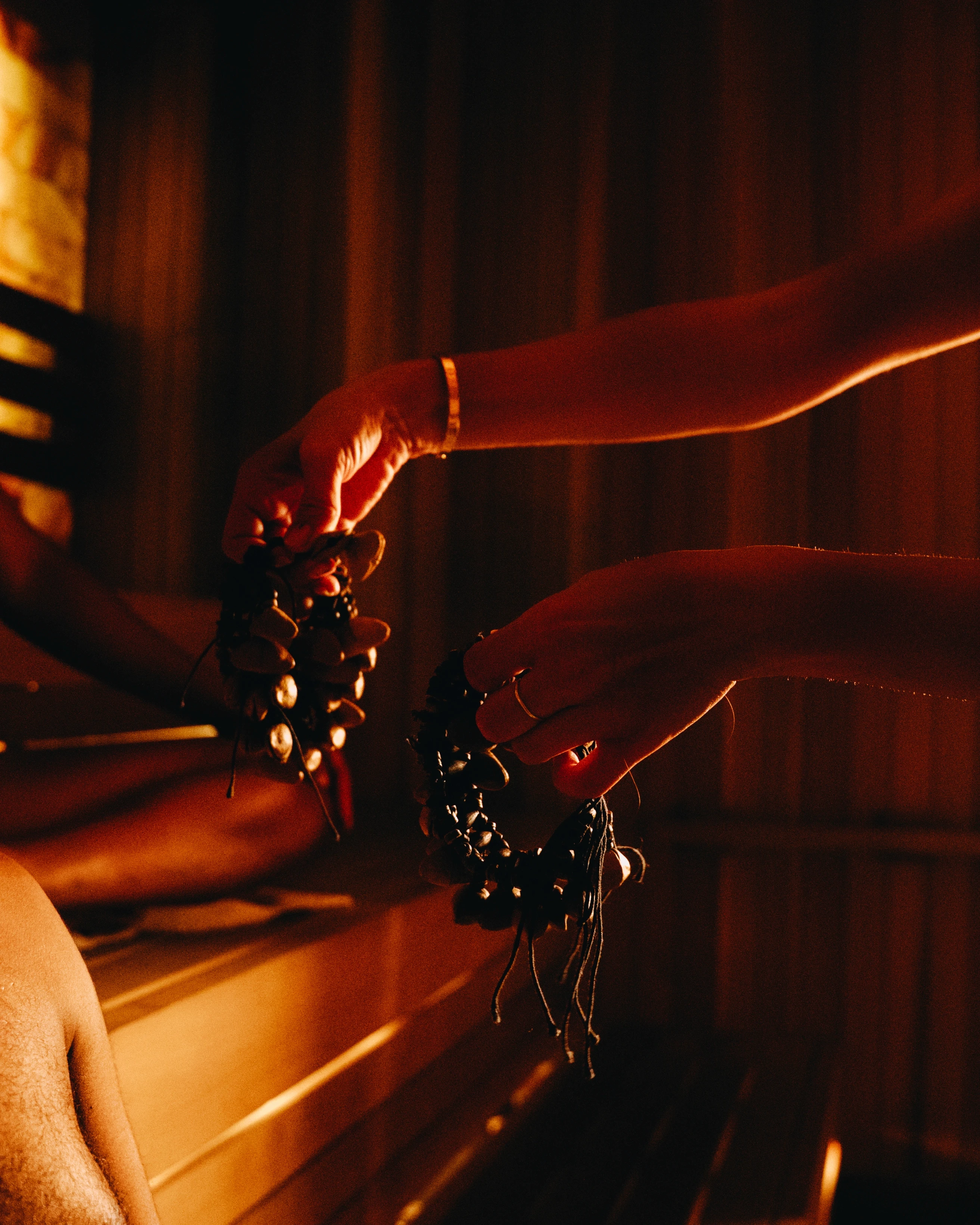
The question is not which is better. The question is: what are you looking for when you step into heat?
The question is not which is better. The question is: what are you looking for when you step into heat?
Your questions.
Answered.
Not sure what to expect? These answers might help you feel more confident as you begin.
Didn’t find your answer? Send us a message, we’ll respond with care and clarity.
What is a modern bathhouse?
A modern bathhouse keeps the architecture of the old idea, hot room, cold water, somewhere to rest, and lets the rhythm of the city around it shape the rest. Ours is built for Vancouver, on Davie Street, in the West End.
What is a modern bathhouse?
A modern bathhouse keeps the architecture of the old idea, hot room, cold water, somewhere to rest, and lets the rhythm of the city around it shape the rest. Ours is built for Vancouver, on Davie Street, in the West End.
Is the cold plunge at your bathhouse communal?
Is the cold plunge at your bathhouse communal?
Yes. Our cold pools are shared, with multiple temperature options so you can find one that meets you where you are. Communal plunging is part of what makes a bathhouse a bathhouse.
Is the bathhouse a welcoming space for the queer community?
Is the bathhouse a welcoming space for the queer community?
Yes. The West End is home to us and to our queer neighbours, and the bathhouse is built for everyone who walks in. We also host queer nights on a regular rotation, which you can find on the Classes calendar.
What's the etiquette inside the bathhouse?
What's the etiquette inside the bathhouse?
Phones stay in lockers. Voices stay low. Sit or lie on a towel inside the sauna, move at your own pace between rooms, and leave the space the way you'd want to find it. The room works because everyone in it is paying a little attention.
Do you offer Russian Banya at the bathhouse?
Do you offer Russian Banya at the bathhouse?
We run banya-inspired programming including venik work on select dates. The full ritual has its own page if you want to read about it before you book.
Do I need to book ahead, or can I walk in?
Do I need to book ahead, or can I walk in?
Walk-ins are welcome based on availability, but most guests book ahead through our app or website to lock in their preferred session time.
Your questions.
Answered.
Not sure what to expect? These answers might help you feel more confident as you begin.
What do I need to bring?
Please bring a bathing suit and a reusable water bottle. We provide two towels per guest, shower products, and secure lockers.
What do I need to bring?
Please bring a bathing suit and a reusable water bottle. We provide two towels per guest, shower products, and secure lockers.
Do I need a reservation?
Do I need a reservation?
Walk-ins are welcome, but we recommend booking through our app or website to check availability and join the waitlist.
Where can I park?
Where can I park?
Street parking is limited. We offer valet parking behind AetherHaus from 11:00–23:00. There is also some street parking available on Davie and nearby side streets.
What is Open Haus?
What is Open Haus?
Open Haus is a self-guided circuit through our saunas, plunge pools, and tea lounge. Our guides add essential oils to the stove throughout the day. The atmosphere shifts between silent, casual, and social, depending on the session.
What is your Haus Etiquette?
What is your Haus Etiquette?
Phones must be stored away. Please keep conversation soft, sit or lie on a towel, and move mindfully through the space. We ask that guests respect others’ experience and refrain from bringing outside food or drinks - complimentary tea is provided.
Can I visit if I am pregnant?
Can I visit if I am pregnant?
We advise against hot and cold therapy during pregnancy unless approved by your healthcare provider.
Didn’t find your answer? Send us a message, we’ll respond with care and clarity.
Your questions.
Answered.
Not sure what to expect? These answers might help you feel more confident as you begin.
Didn’t find your answer? Send us a message, we’ll respond with care and clarity.
What is a modern bathhouse?
A modern bathhouse keeps the architecture of the old idea, hot room, cold water, somewhere to rest, and lets the rhythm of the city around it shape the rest. Ours is built for Vancouver, on Davie Street, in the West End.
What is a modern bathhouse?
A modern bathhouse keeps the architecture of the old idea, hot room, cold water, somewhere to rest, and lets the rhythm of the city around it shape the rest. Ours is built for Vancouver, on Davie Street, in the West End.
Is the cold plunge at your bathhouse communal?
Is the cold plunge at your bathhouse communal?
Yes. Our cold pools are shared, with multiple temperature options so you can find one that meets you where you are. Communal plunging is part of what makes a bathhouse a bathhouse.
Is the bathhouse a welcoming space for the queer community?
Is the bathhouse a welcoming space for the queer community?
Yes. The West End is home to us and to our queer neighbours, and the bathhouse is built for everyone who walks in. We also host queer nights on a regular rotation, which you can find on the Classes calendar.
What's the etiquette inside the bathhouse?
What's the etiquette inside the bathhouse?
Phones stay in lockers. Voices stay low. Sit or lie on a towel inside the sauna, move at your own pace between rooms, and leave the space the way you'd want to find it. The room works because everyone in it is paying a little attention.
Do you offer Russian Banya at the bathhouse?
Do you offer Russian Banya at the bathhouse?
We run banya-inspired programming including venik work on select dates. The full ritual has its own page if you want to read about it before you book.
Do I need to book ahead, or can I walk in?
Do I need to book ahead, or can I walk in?
Walk-ins are welcome based on availability, but most guests book ahead through our app or website to lock in their preferred session time.