What to Expect at Your First Banya: When Birch Branches and Wet Heat Meet Your Beginner Anxiety
What to Expect at Your First Banya: When Birch Branches and Wet Heat Meet Your Beginner Anxiety
You are about to enter someone else's ritual. A thousand-year-old tradition where the rules are unspoken, the heat is extreme, and you have no idea whether that person approaching with birch branches intends comfort or assault.
You are about to enter someone else's ritual. A thousand-year-old tradition where the rules are unspoken, the heat is extreme, and you have no idea whether that person approaching with birch branches intends comfort or assault.
Published on:
Published on:
This is your first banya.
The anxiety is real. The not knowing what happens next. The nakedness question nobody directly answers. The temperature that exceeds boiling water. The venik treatment that looks violent until you understand it as medicine.
Russian banya is deeply rooted tradition of Eastern Europe and Asia where entire families enjoy experience that goes beyond usual heat bath; actual ritual of purification and well-being (Starpool, 2024). Temperature sits between 60-70°C in humid environment, but can even exceed 100 degrees Celsius (Vegan Trekker, 2019).
Since ancient times, banya has been considered important bonding place in Russian culture, used by all social classes including peasants and nobles (Wikipedia, 2025). With Russian banya, main stages of person's life were associated; there people were born, there they washed before wedding and after death, and warriors went to banya before battles (Morzh).
Most guides tell you what to bring and how hot it gets. They describe the three rooms and explain the venik. What they skip is the emotional reality: walking into cultural space where you feel like the only person who does not know what they are doing.
At AetherHaus in Vancouver, we honor Russian banya traditions while removing the gatekeeping. No performance anxiety. No cultural prerequisites. Just willingness to feel heat, cold, and vulnerability as they arrive.
Before You Step Into Steam: What Actually Matters
What to Bring (And What to Leave Behind)
The practical list is short. Swimsuit. Reusable water bottle. Flip-flops or shower shoes. That is it.
At AetherHaus, we provide towels, robes, and all amenities. Traditional Russian public banyas often require you to bring your own towel, felt hat, and sometimes even venik.
Temperature inside the steam room (parilka) is very high, about 70-80°C, therefore you need to take off all metal jewelry and not wear any clothes with metal elements (Learn Russian in EU, 2024).
Leave your phone behind entirely. Not on silent. Not in a locker nearby. Gone. Banya is not only about recreation but also about socializing in a relaxed way, invite only close friends with whom you are comfortable sitting in silence (Russia Beyond, 2017).
The Nakedness Question Everyone Avoids
Traditional Russian public banyas are gender-segregated and clothing-optional. Men enter the men's side. Women enter the women's side. Nakedness is expected, normal, unremarkable.
This creates anxiety for many Western visitors who did not grow up in communal bathing culture. The question becomes: do I have to be naked?
At AetherHaus, we adapted the tradition for North American comfort: swimsuits required, co-ed space. This honors the communal spirit of banya while removing a significant barrier for first-timers.
If you visit a traditional Russian banya, yes, nakedness is a cultural norm. But that norm exists within single-gender spaces with cultural context that makes it feel different than it sounds from outside.
The vulnerability of nakedness in banya is not sexual. It is human. Everyone sweats. Everyone turns red. Everyone moves awkwardly between extreme temperatures. The shared physical reality creates unexpected equality.
Eating, Hydration, and Preparation
Though often violated, this is uncontested banya rule: eat prior to banya, abstain thereafter; one must not feel hungry in banya, but feeling stuffed is also no-no (Russia Beyond, 2017).
Eat lightly an hour or two before your session. Your body will be working hard to regulate temperature. Digesting a heavy meal while managing thermal stress creates unnecessary challenge.
Hydration matters significantly. Drink water steadily before entering. Your body will lose substantial fluid through sweating, air temperature and humidity make Russian banya one of most efficient ways to intensify sweating, with number of sweat glands in human body amounting to around 200 per square inch (Archimedes Banya, 2023).
Take a shower without soap or any other cleaner before the first round, this is extremely important because soap clogs pores and diminishes banya's healing effect (Russia Beyond, 2017).
The Three Rooms: From Changing to Steam
The Predbannik (Entrance Room)
Russian banyas usually have three rooms: steam room, washing room and entrance room (Wikipedia, 2025). The entrance room, called predbannik, has pegs to hang clothing and benches to rest.
This is where you transition. You change. You prepare mentally. You sit between rounds later.
The predbannik serves as buffer zone between ordinary reality and the ritual space. It holds conversation, tea, and rest. Some traditional banyas feature elaborate predbannik spaces with tables for meals, card games, and extended socializing.
At AetherHaus, our tea lounge serves this function. Books. Comfortable seating. Space to decompress before and after heat exposure.
The Washing Room (Moechnaya)
The washing room contains showers, buckets, and sometimes a small pool. This is where you rinse before entering steam. This is where you wash between rounds if needed.
In traditional banyas, the washing room might include wooden buckets that you fill with water, then pour over yourself. Some have pull-chain buckets suspended from ceiling that release waterfall when triggered.
The ritual of pouring cold water over your head after extreme heat creates dramatic temperature contrast. Your skin tingles. Your breath catches. Your nervous system recalibrates instantly.
The Parilka (Steam Room)
The parilka is where transformation happens.
Temperature is about 80 degrees balanced by moisture; typically kept around 70°C with humidity of 40-60% (Banya No.1 Hoxton and Chiswick, 2024).
But exact temperature inside banya is highly debated issue among experienced banya-goers, with preferences varying from 65°C to 120°C, essentially depends on how well you take heat, as you are not seeking to impress anyone with endurance to extreme climate but rather to relax and enjoy (Russia Beyond, 2017).
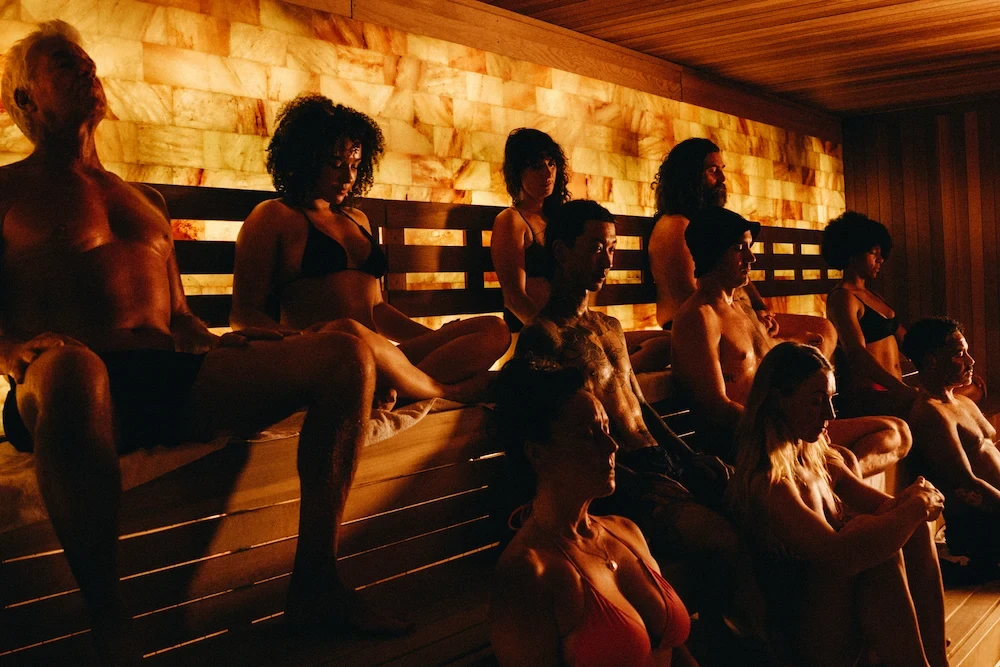
The parilka features tiered wooden benches. Lower benches receive less intense heat. Upper benches sit in the hottest zone where steam accumulates. Heat rises, creating dramatic temperature differential between floor and ceiling.
Your first time, start low. The instinct to prove something by climbing to highest bench immediately will teach you nothing except that pride precedes nausea.
The First Wave of Wet Heat: What Your Body Experiences
Why Banya Feels Different Than Dry Sauna
The humidity changes everything.
In our comparison of banya and sauna, we explored how dry Finnish sauna allows sweat to evaporate quickly, cooling your skin efficiently. Banya's moisture prevents that evaporation. Steam wraps around you. Sweat stays on your skin. Heat penetrates deeper.
Your body must work harder to regulate temperature when evaporative cooling is limited. This creates more intense cardiovascular demand and often faster onset of sweating.
The wet heat feels enveloping rather than sharp. Less like being surrounded by hot air, more like being held by warm humidity that refuses to let go.
What Happens in Your First Minutes
You enter the parilka. The heat finds you immediately. Your breath quickens as your body calculates the thermal load.
Within moments, your skin flushes. Blood vessels near your surface dilate, sending blood toward your skin to release heat. Your heart rate increases to support enhanced circulation.
Body surface temperature can go up to almost 115°F, while temperature of internal organs increases by not more than 6°F; enough to achieve benefits of "healing fever" that, according to Hippocrates, will cure any disease (Archimedes Banya, 2023).
Artificial fever created by banya induces intensified production of lymphocytes and blood interferon, an anti-viral protein (Archimedes Banya, 2023).
But knowing the physiology does not prepare you for the sensation. The heat that feels pleasant initially begins feeling insistent. Then demanding. Then overwhelming.
The Felt Hat (And Why Everyone Wears One)
If you see people wearing what looks like oversized wool hats in intense heat, you are not hallucinating from thermal stress.
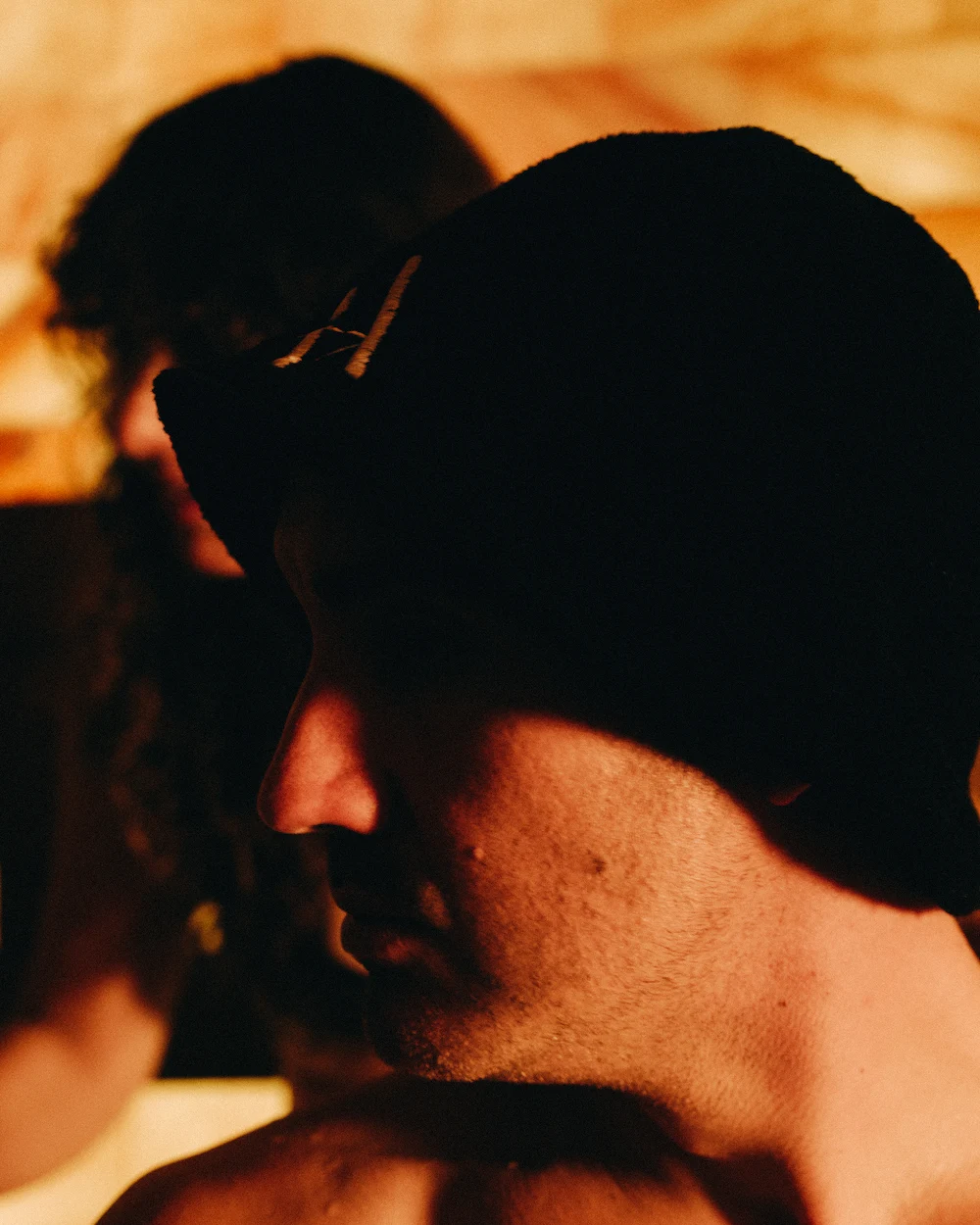
Banya hat protects head from overheating and can also protect from heat effects on skin and hair; made from wool or felt, can be dipped in cold water, and helps wearer to remain in steam room (Banya No.1 Chiswick, 2024).
Heat rises. Your head experiences the most extreme temperatures. The hat creates insulating barrier that keeps your core temperature from spiking too quickly.
This is not a fashion statement or cultural costume. This is a practical tool that makes the practice sustainable.
When Birch Branches Stop Being Weird and Start Being Necessary
What the Venik Actually Is
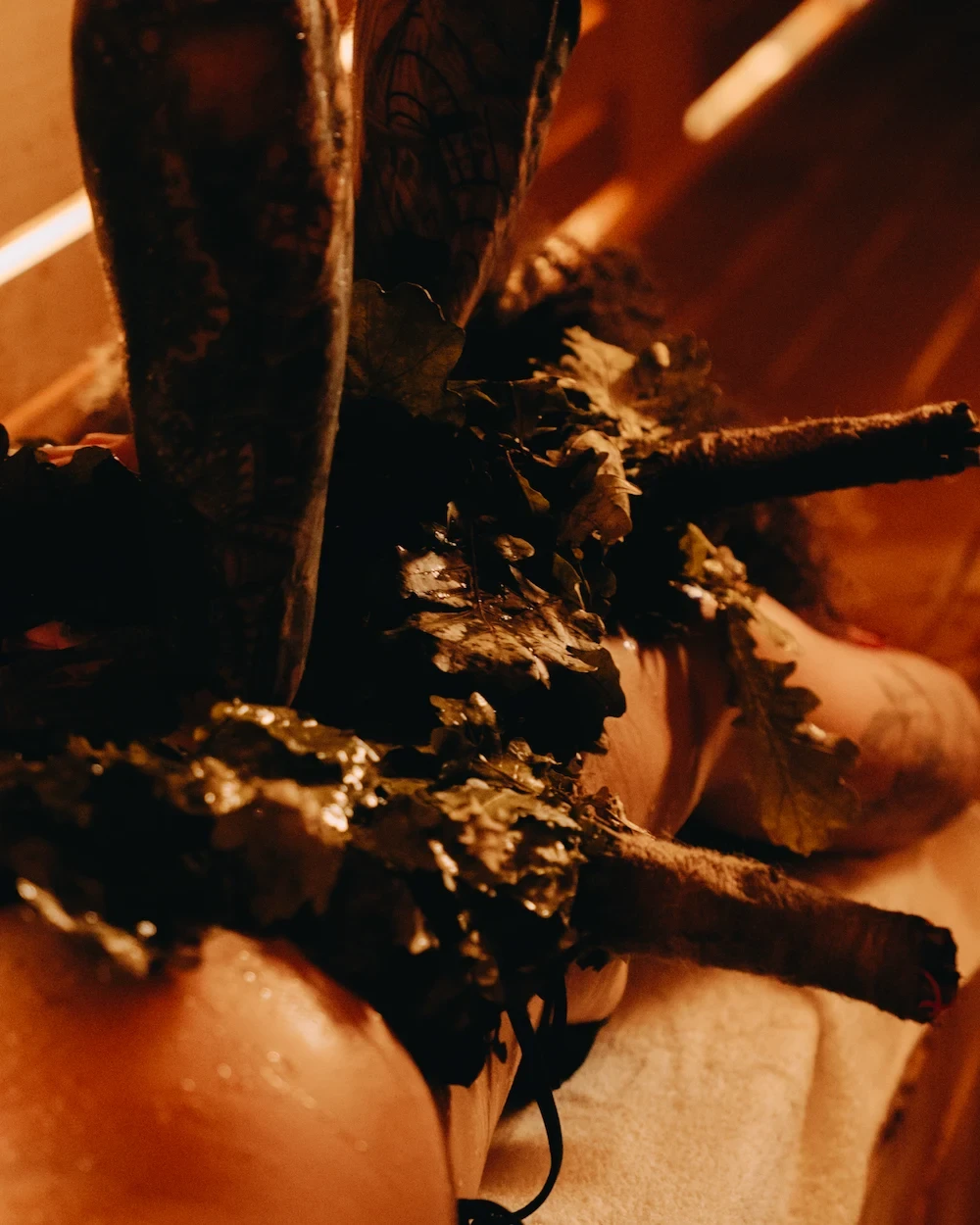
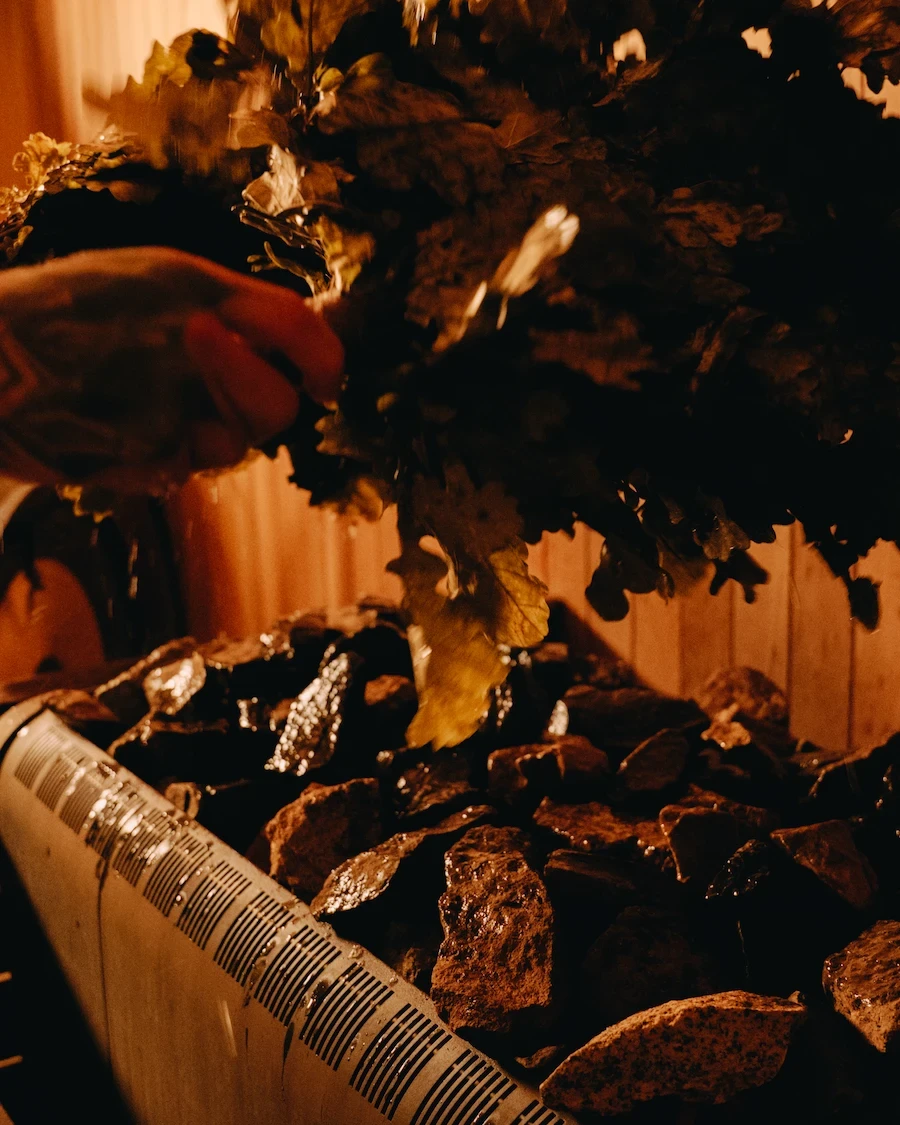
The venik looks strange if you have never seen one. A bundle of birch, oak, or eucalyptus branches tied together at one end, soaked in water until the leaves soften.
In your first banya, you will likely see someone wielding one. Possibly approaching you. Possibly making gestures you cannot interpret because the heat has already compromised your cognitive function.
Parenie is one of oldest bathhouse massage treatments; takes place in steam rooms and predominantly massages of hot steam, and venik makes this possible (Banya No.1 Chiswick, 2024).
This is not whipping or beating, it is steam massage in which leaves are used to drive steam down onto body and to massage skin, at times gently and at times harshly (Banya London, 2025).
The First Time Someone Uses Venik on You
You lie on the bench. The banshchik (banya attendant) or friend begins moving the venik above your body, creating waves of concentrated heat that push steam toward your skin.
The first contact feels shocking. Not painful, but intensely stimulating. The leaves are wet, hot, aromatic. They tap your back in rhythmic patterns. Sometimes soft as whispers. Sometimes sharp enough to make you gasp.
Venik massage stimulates blood flow through rhythmic tapping and heat from steam, enhanced circulation helps deliver more oxygen and nutrients to muscles and tissues, promoting overall vitality (Healthypedia, 2024).
Rhythmic tapping improves circulation, opens pores, and stimulates skin; beyond physical benefits, whisking ritual is deeply symbolic, representing renewal, shedding old energies, and embracing vitality (Salus Saunas, 2025).
The sensation is not relaxing in the conventional sense. It is activating. Your skin tingles. Your breath deepens involuntarily. You become acutely aware of every surface of your body simultaneously.
The Properties Nobody Warned You About
The venik is not just wet branches creating sensation. The leaves themselves carry medicinal properties.
Birch volatile oils containing over 50 constituents have antibacterial, antispasmodic, astringent and anti-fungal properties; hyperoside, the most abundant flavonoid in birch, has anti-inflammatory, anti-viral and anti-oxidative properties (Banya No.1 Hoxton, 2024).
Birch venik has a subtle minty fragrance with anti-inflammatory and anti-bacterial properties, contains vitamin C, and smaller leaves of birch tree promote exfoliation during massage (Banya London, 2025).
Oak leaves contain tannin and flavonoids, both with anti-inflammatory qualities, with aroma prized for rich and deep scent (Banya London, 2025).
Eucalyptus venik has wonderful medicinal aroma and can be used as decongestant during venik treatment (Banya London, 2025).
The combination of heat, massage and aromatherapy from leaves of venik has a calming effect on nervous system, reducing stress and promoting a sense of well-being (Healthypedia, 2024).
Your skin absorbs these compounds. Your lungs inhale the aromatic steam. The physical stimulation combined with medicinal properties creates effects that accumulate across rounds.
Why It Feels Like Too Much (And Then Becomes Essential)
Your first venik treatment might feel overwhelming. The heat alone demands full attention. Adding vigorous stimulation with aromatic branches pushes you past what feels manageable.
You might want it to stop. You might not understand why anyone subjects themselves to this voluntarily.
Then you exit the steam room. You cool off. You rest. And you notice: your skin tingles with heightened sensitivity. Your muscles feel looser. Your breathing comes easier. Something shifted.
By your second or third round, you might find yourself seeking the venik. What felt like assault became an invitation. What seemed excessive becomes exactly what your overstimulated nervous system needed to finally release.
Your Body Knows When: Trusting the Signal to Stay or Leave
What Your Body Tells You Before It Becomes Emergency
Lightheadedness appears first. A subtle floating sensation. Your vision might narrow slightly at the edges. This is blood pressure dropping as vessels dilate.
Nausea follows if you stay past lightheadedness. Your stomach signals that your core is working too hard to manage heat.
Confusion, difficulty focusing, feeling disconnected; these indicate your brain temperature is rising enough to affect cognitive function.
None of these are failures. These are your body's language saying: time to cool off now.
When I worked with cold exposure after my ankylosing spondylitis diagnosis, I learned that sensation teaches what thought cannot. My body knew its capacity each day better than any protocol could predict.
How to Exit Without Shame
You stand. You move toward the door. You exit quietly without announcement.
That is the entire protocol.
No one judges your exit. Experienced banya-goers respect body wisdom. They have all been beginners. They have all miscalculated and stayed too long and learned from nausea or dizziness that their body's signals were accurate.
The only shame in banya comes from ignoring your limits to prove something that needs no proving.
Cold After Heat: The Invitation You Did Not Expect
Why Contrast Matters (And Why It Feels Impossible)
After the first sweat is induced, it is customary to cool off in the breeze outdoors or splash around in cold water in a lake or river; in winter, people may roll in snow with no clothes on or dip in lakes where holes have been cut into ice (Wikipedia, 2025).
The transition from extreme heat to cold water sounds masochistic to people who have not experienced it. You are already overwhelmed by heat. Now you are supposed to voluntarily subject yourself to the opposite extreme?
Only in Russia you can heat yourself up till you can hardly bear it and then jump to plunge pool or go outside and douse yourself with snow when temperature is 10-15 degrees below zero; alternating between hot air and ice-cold water is very stimulating as it makes blood vessels expand and contract, keeping them elastic (Banya No.1 Hoxton, 2024).
Sudden change in temperature kicks start blood circulation in body, increases metabolism and tones body (Vegan Trekker, 2019).
The First Plunge (What Actually Happens)
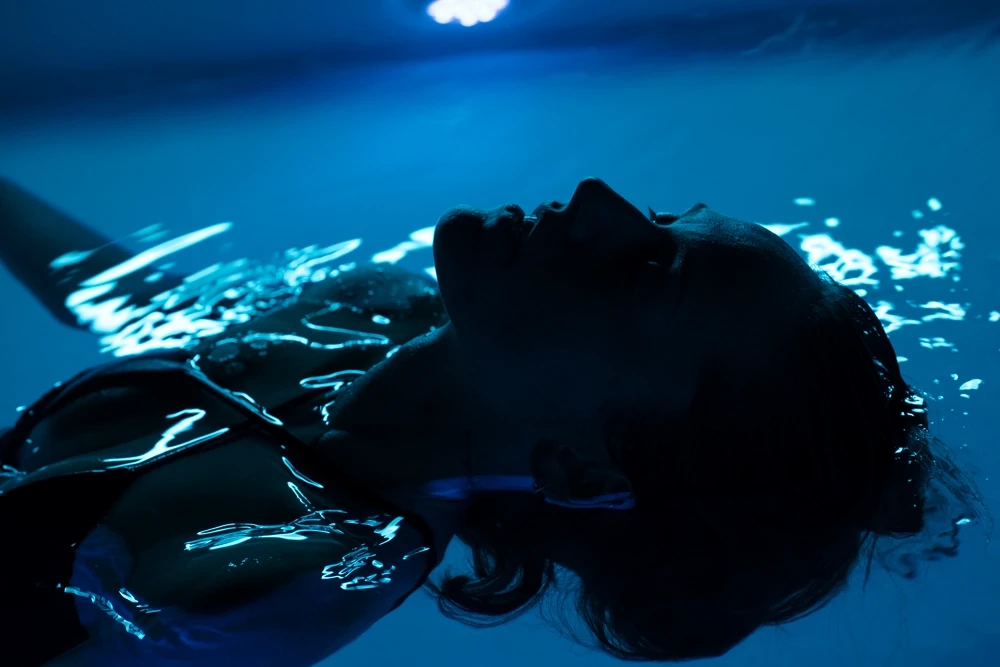
You exit the parilka. Your skin radiates heat. Every nerve ending feels alive. You approach the cold water with dread mixed with curiosity.
The cold hits like electricity. Not painful. Shocking. Your breath catches. Your body contracts. Every muscle tightens simultaneously.
Then something releases. Your breath deepens. A wave of calm washes through you. The heat that felt oppressive moments ago now feels like pleasant warmth radiating from your core.
This is not endurance. This is nervous system recalibration.
Our guide to your first cold plunge safely explores this process in depth. The cold after heat feels fundamentally different than cold alone. Your body already learned it can stay present with intensity. The cold becomes confirmation rather than threat.
Why Rest Between Rounds Is Not Optional
The banya cycle is not complete without rest. Heat, cold, rest; this sequence allows your body to integrate the thermal stress.
Between rounds, you sit in the predbannik or tea lounge. You drink water or tea. You talk quietly with companions or sit in silence.
This rest period is when physiological changes solidify. Your blood pressure stabilizes. Your heart rate returns to baseline. Your nervous system processes what just happened.
Rushing back into heat before integration completes misses the point. The pause is not intermission. The pause is part of the ritual.
The Community You Find in Steam
Banya as Social Ritual (Not Just Individual Practice)
Venik is a way to increase perspiration, but also a ritual of physical and spiritual purification; regarded as a moment of connection not only with oneself, but also with other people in experience of mutual care that strengthens family and community bonds (Starpool, 2024).
Early banya was born in Kievan Rus' and mixed bathing traditions from Byzantium to south, Finns to the north, Jews who lived among them and Khazar tribes to east (Wikipedia, 2025). This cultural crossroads nature created practice that always centered communal experience.
Shared vulnerability in heat creates unexpected intimacy. Everyone is red-faced, sweating profusely, moving awkwardly. Status markers disappear. You are all just humans navigating intensity together.
What Happens When Strangers Become Companions
In traditional Russian banyas, regulars form communities. They know each other's preferences, health conditions, and tolerance levels. They watch out for each other. They share veniks and advice and sometimes meals afterward.
As a first-timer, you might feel like an outsider initially. But the culture of banya includes welcome for beginners. Someone will offer guidance if you look lost. Someone will adjust their venik technique if you signal overwhelm.
This generosity comes from understanding that everyone was a beginner once. The ritual continues because experienced practitioners pass knowledge to newcomers.
At AetherHaus, our social open haus sessions honor this communal spirit while removing linguistic and cultural barriers that can make traditional Russian banyas intimidating for first-timers.
The Silence That Holds Everything
Not all banya socializing involves conversation. Sometimes the deepest connection happens in shared silence.
You sit in a steam room with others. No one speaks. The only sounds are breathing, water hitting hot stones, the occasional movement of bodies adjusting position.
This silence is not awkward. It is full. Everyone is present with their own experience while held by collective space.
The silence allows intensity to speak. Your body's responses. The heat's effects. The gradual softening of resistance. All of this unfolds better without verbal interpretation.
Frequently Asked Questions
What do you wear to a banya?
At traditional Russian public banyas, clothing norms vary: gender-segregated spaces typically involve nakedness, though some allow swimsuits. At AetherHaus, swimsuits are required in our co-ed space. Bring flip-flops or shower shoes. Remove all metal jewelry before entering the steam room as metal conducts heat and can burn skin. Most importantly, consider bringing or renting a felt hat to protect your head from extreme temperatures in upper bench levels.
What is the etiquette in a Russian banya?
Shower without soap before the first round to avoid clogging pores. Start on lower benches where heat is less intense. Eat lightly beforehand but abstain after sessions. Maintain a quiet, respectful atmosphere; loud conversation disrupts others' experience. Exit when your body signals you need to, without announcement. Between rounds, rest adequately before returning to heat. Traditional banya is about socializing in a relaxed way with close friends you are comfortable sitting with in silence.
How hot does a Russian banya get?
Temperature typically ranges from 70-80°C with humidity of 40-60%, though temperatures can exceed 100°C in some traditional banyas. Heat varies by bench level, lower benches receive less intense heat while upper benches sit in the hottest zone. Exact temperature preferences vary among experienced banya-goers from 65°C to 120°C, depending on tolerance. The goal is not impressing anyone with endurance to extreme climate but rather relaxing and enjoying the experience.
What is a venik and how is it used?
Venik is a bundle of birch, oak, or eucalyptus branches tied together and soaked in water until leaves soften. Used in parenie (steam massage), it is not whipping but technique where leaves drive steam onto the body and massage skin rhythmically. Birch venik contains anti-inflammatory, antibacterial properties and vitamin C. Oak venik is rich in tannins with anti-inflammatory qualities. The rhythmic tapping stimulates circulation, opens pores, and represents symbolic renewal beyond physical benefits.
Do you have to be naked in a banya?
Traditional Russian public banyas are gender-segregated with nakedness as cultural norm, men's and women's sides operate separately. However, North American adaptations like AetherHaus require swimsuits and offer co-ed spaces. If visiting traditional Russian banya, expect nakedness within a single-gender context where it feels cultural rather than sexual. The shared physical reality of everyone sweating and managing heat creates unexpected equality regardless of attire.
What should I bring to a banya?
Bring a swimsuit, reusable water bottle, and flip-flops or shower shoes. Remove all metal jewelry and accessories before entering. AetherHaus provides towels, robes, and amenities. Traditional Russian banyas may require you to bring a towel, felt hat, and sometimes venik. Most importantly, bring willingness to feel vulnerable, uncomfortable, and eventually transformed. Leave the phone entirely behind—not silent, actually absent from experience.
Is banya good for you?
Research shows sweating efficiency of banya promotes detoxification. Artificial fever induces production of lymphocytes and blood interferon (anti-viral protein). Alternating between heat and cold makes blood vessels expand and contract, keeping them elastic while kick-starting circulation and metabolism. Venik massage provides anti-inflammatory, antibacterial benefits while calming nervous system. Benefits accumulate with regular practice rather than single visits.
What happens during a banya session?
Sessions cycle through three phases: intense heat in parilka (steam room), cold water immersion or shower, rest in predbannik (changing room). Heat phase includes optional venik treatment where birch branches create steam massage. You typically complete 2-3 full cycles, though some prefer fewer rounds. Each phase serves a distinct purpose; heat activates detoxification and circulation, cold creates vascular contrast, rest allows integration. The complete cycle addresses physical, mental, and social dimensions simultaneously.
Key Takeaways
Russian banya combines 70-80°C humid heat with venik (birch branch) massage that contains anti-inflammatory compounds, antibacterial properties, and vitamin C for therapeutic effects (Banya No.1 Hoxton, 2024)
Alternating between extreme heat and cold water makes blood vessels expand and contract, keeping them elastic while kick-starting circulation and metabolism (Banya No.1 Hoxton, 2024)
Parenie (venik treatment) is not whipping but steam massage where leaves drive concentrated heat onto skin while stimulating circulation and representing symbolic renewal (Banya London, 2025)
Thousand-year tradition associated with major life events (birth, death, weddings, battles) creates communal bonding space where shared vulnerability transcends cultural and social barriers (Starpool, 2024)
Experience mindful fusion of Russian banya, German aufguss, and Nordic sauna traditions. Book your session at AetherHaus in Vancouver's West End.
This is your first banya.
The anxiety is real. The not knowing what happens next. The nakedness question nobody directly answers. The temperature that exceeds boiling water. The venik treatment that looks violent until you understand it as medicine.
Russian banya is deeply rooted tradition of Eastern Europe and Asia where entire families enjoy experience that goes beyond usual heat bath; actual ritual of purification and well-being (Starpool, 2024). Temperature sits between 60-70°C in humid environment, but can even exceed 100 degrees Celsius (Vegan Trekker, 2019).
Since ancient times, banya has been considered important bonding place in Russian culture, used by all social classes including peasants and nobles (Wikipedia, 2025). With Russian banya, main stages of person's life were associated; there people were born, there they washed before wedding and after death, and warriors went to banya before battles (Morzh).
Most guides tell you what to bring and how hot it gets. They describe the three rooms and explain the venik. What they skip is the emotional reality: walking into cultural space where you feel like the only person who does not know what they are doing.
At AetherHaus in Vancouver, we honor Russian banya traditions while removing the gatekeeping. No performance anxiety. No cultural prerequisites. Just willingness to feel heat, cold, and vulnerability as they arrive.
Before You Step Into Steam: What Actually Matters
What to Bring (And What to Leave Behind)
The practical list is short. Swimsuit. Reusable water bottle. Flip-flops or shower shoes. That is it.
At AetherHaus, we provide towels, robes, and all amenities. Traditional Russian public banyas often require you to bring your own towel, felt hat, and sometimes even venik.
Temperature inside the steam room (parilka) is very high, about 70-80°C, therefore you need to take off all metal jewelry and not wear any clothes with metal elements (Learn Russian in EU, 2024).
Leave your phone behind entirely. Not on silent. Not in a locker nearby. Gone. Banya is not only about recreation but also about socializing in a relaxed way, invite only close friends with whom you are comfortable sitting in silence (Russia Beyond, 2017).
The Nakedness Question Everyone Avoids
Traditional Russian public banyas are gender-segregated and clothing-optional. Men enter the men's side. Women enter the women's side. Nakedness is expected, normal, unremarkable.
This creates anxiety for many Western visitors who did not grow up in communal bathing culture. The question becomes: do I have to be naked?
At AetherHaus, we adapted the tradition for North American comfort: swimsuits required, co-ed space. This honors the communal spirit of banya while removing a significant barrier for first-timers.
If you visit a traditional Russian banya, yes, nakedness is a cultural norm. But that norm exists within single-gender spaces with cultural context that makes it feel different than it sounds from outside.
The vulnerability of nakedness in banya is not sexual. It is human. Everyone sweats. Everyone turns red. Everyone moves awkwardly between extreme temperatures. The shared physical reality creates unexpected equality.
Eating, Hydration, and Preparation
Though often violated, this is uncontested banya rule: eat prior to banya, abstain thereafter; one must not feel hungry in banya, but feeling stuffed is also no-no (Russia Beyond, 2017).
Eat lightly an hour or two before your session. Your body will be working hard to regulate temperature. Digesting a heavy meal while managing thermal stress creates unnecessary challenge.
Hydration matters significantly. Drink water steadily before entering. Your body will lose substantial fluid through sweating, air temperature and humidity make Russian banya one of most efficient ways to intensify sweating, with number of sweat glands in human body amounting to around 200 per square inch (Archimedes Banya, 2023).
Take a shower without soap or any other cleaner before the first round, this is extremely important because soap clogs pores and diminishes banya's healing effect (Russia Beyond, 2017).
The Three Rooms: From Changing to Steam
The Predbannik (Entrance Room)
Russian banyas usually have three rooms: steam room, washing room and entrance room (Wikipedia, 2025). The entrance room, called predbannik, has pegs to hang clothing and benches to rest.
This is where you transition. You change. You prepare mentally. You sit between rounds later.
The predbannik serves as buffer zone between ordinary reality and the ritual space. It holds conversation, tea, and rest. Some traditional banyas feature elaborate predbannik spaces with tables for meals, card games, and extended socializing.
At AetherHaus, our tea lounge serves this function. Books. Comfortable seating. Space to decompress before and after heat exposure.
The Washing Room (Moechnaya)
The washing room contains showers, buckets, and sometimes a small pool. This is where you rinse before entering steam. This is where you wash between rounds if needed.
In traditional banyas, the washing room might include wooden buckets that you fill with water, then pour over yourself. Some have pull-chain buckets suspended from ceiling that release waterfall when triggered.
The ritual of pouring cold water over your head after extreme heat creates dramatic temperature contrast. Your skin tingles. Your breath catches. Your nervous system recalibrates instantly.
The Parilka (Steam Room)
The parilka is where transformation happens.
Temperature is about 80 degrees balanced by moisture; typically kept around 70°C with humidity of 40-60% (Banya No.1 Hoxton and Chiswick, 2024).
But exact temperature inside banya is highly debated issue among experienced banya-goers, with preferences varying from 65°C to 120°C, essentially depends on how well you take heat, as you are not seeking to impress anyone with endurance to extreme climate but rather to relax and enjoy (Russia Beyond, 2017).
The parilka features tiered wooden benches. Lower benches receive less intense heat. Upper benches sit in the hottest zone where steam accumulates. Heat rises, creating dramatic temperature differential between floor and ceiling.
Your first time, start low. The instinct to prove something by climbing to highest bench immediately will teach you nothing except that pride precedes nausea.
The First Wave of Wet Heat: What Your Body Experiences
Why Banya Feels Different Than Dry Sauna
The humidity changes everything.
In our comparison of banya and sauna, we explored how dry Finnish sauna allows sweat to evaporate quickly, cooling your skin efficiently. Banya's moisture prevents that evaporation. Steam wraps around you. Sweat stays on your skin. Heat penetrates deeper.
Your body must work harder to regulate temperature when evaporative cooling is limited. This creates more intense cardiovascular demand and often faster onset of sweating.
The wet heat feels enveloping rather than sharp. Less like being surrounded by hot air, more like being held by warm humidity that refuses to let go.
What Happens in Your First Minutes
You enter the parilka. The heat finds you immediately. Your breath quickens as your body calculates the thermal load.
Within moments, your skin flushes. Blood vessels near your surface dilate, sending blood toward your skin to release heat. Your heart rate increases to support enhanced circulation.
Body surface temperature can go up to almost 115°F, while temperature of internal organs increases by not more than 6°F; enough to achieve benefits of "healing fever" that, according to Hippocrates, will cure any disease (Archimedes Banya, 2023).
Artificial fever created by banya induces intensified production of lymphocytes and blood interferon, an anti-viral protein (Archimedes Banya, 2023).
But knowing the physiology does not prepare you for the sensation. The heat that feels pleasant initially begins feeling insistent. Then demanding. Then overwhelming.
The Felt Hat (And Why Everyone Wears One)
If you see people wearing what looks like oversized wool hats in intense heat, you are not hallucinating from thermal stress.
Banya hat protects head from overheating and can also protect from heat effects on skin and hair; made from wool or felt, can be dipped in cold water, and helps wearer to remain in steam room (Banya No.1 Chiswick, 2024).
Heat rises. Your head experiences the most extreme temperatures. The hat creates insulating barrier that keeps your core temperature from spiking too quickly.
This is not a fashion statement or cultural costume. This is a practical tool that makes the practice sustainable.
When Birch Branches Stop Being Weird and Start Being Necessary
What the Venik Actually Is
The venik looks strange if you have never seen one. A bundle of birch, oak, or eucalyptus branches tied together at one end, soaked in water until the leaves soften.
In your first banya, you will likely see someone wielding one. Possibly approaching you. Possibly making gestures you cannot interpret because the heat has already compromised your cognitive function.
Parenie is one of oldest bathhouse massage treatments; takes place in steam rooms and predominantly massages of hot steam, and venik makes this possible (Banya No.1 Chiswick, 2024).
This is not whipping or beating, it is steam massage in which leaves are used to drive steam down onto body and to massage skin, at times gently and at times harshly (Banya London, 2025).
The First Time Someone Uses Venik on You
You lie on the bench. The banshchik (banya attendant) or friend begins moving the venik above your body, creating waves of concentrated heat that push steam toward your skin.
The first contact feels shocking. Not painful, but intensely stimulating. The leaves are wet, hot, aromatic. They tap your back in rhythmic patterns. Sometimes soft as whispers. Sometimes sharp enough to make you gasp.
Venik massage stimulates blood flow through rhythmic tapping and heat from steam, enhanced circulation helps deliver more oxygen and nutrients to muscles and tissues, promoting overall vitality (Healthypedia, 2024).
Rhythmic tapping improves circulation, opens pores, and stimulates skin; beyond physical benefits, whisking ritual is deeply symbolic, representing renewal, shedding old energies, and embracing vitality (Salus Saunas, 2025).
The sensation is not relaxing in the conventional sense. It is activating. Your skin tingles. Your breath deepens involuntarily. You become acutely aware of every surface of your body simultaneously.
The Properties Nobody Warned You About
The venik is not just wet branches creating sensation. The leaves themselves carry medicinal properties.
Birch volatile oils containing over 50 constituents have antibacterial, antispasmodic, astringent and anti-fungal properties; hyperoside, the most abundant flavonoid in birch, has anti-inflammatory, anti-viral and anti-oxidative properties (Banya No.1 Hoxton, 2024).
Birch venik has a subtle minty fragrance with anti-inflammatory and anti-bacterial properties, contains vitamin C, and smaller leaves of birch tree promote exfoliation during massage (Banya London, 2025).
Oak leaves contain tannin and flavonoids, both with anti-inflammatory qualities, with aroma prized for rich and deep scent (Banya London, 2025).
Eucalyptus venik has wonderful medicinal aroma and can be used as decongestant during venik treatment (Banya London, 2025).
The combination of heat, massage and aromatherapy from leaves of venik has a calming effect on nervous system, reducing stress and promoting a sense of well-being (Healthypedia, 2024).
Your skin absorbs these compounds. Your lungs inhale the aromatic steam. The physical stimulation combined with medicinal properties creates effects that accumulate across rounds.
Why It Feels Like Too Much (And Then Becomes Essential)
Your first venik treatment might feel overwhelming. The heat alone demands full attention. Adding vigorous stimulation with aromatic branches pushes you past what feels manageable.
You might want it to stop. You might not understand why anyone subjects themselves to this voluntarily.
Then you exit the steam room. You cool off. You rest. And you notice: your skin tingles with heightened sensitivity. Your muscles feel looser. Your breathing comes easier. Something shifted.
By your second or third round, you might find yourself seeking the venik. What felt like assault became an invitation. What seemed excessive becomes exactly what your overstimulated nervous system needed to finally release.
Your Body Knows When: Trusting the Signal to Stay or Leave
What Your Body Tells You Before It Becomes Emergency
Lightheadedness appears first. A subtle floating sensation. Your vision might narrow slightly at the edges. This is blood pressure dropping as vessels dilate.
Nausea follows if you stay past lightheadedness. Your stomach signals that your core is working too hard to manage heat.
Confusion, difficulty focusing, feeling disconnected; these indicate your brain temperature is rising enough to affect cognitive function.
None of these are failures. These are your body's language saying: time to cool off now.
When I worked with cold exposure after my ankylosing spondylitis diagnosis, I learned that sensation teaches what thought cannot. My body knew its capacity each day better than any protocol could predict.
How to Exit Without Shame
You stand. You move toward the door. You exit quietly without announcement.
That is the entire protocol.
No one judges your exit. Experienced banya-goers respect body wisdom. They have all been beginners. They have all miscalculated and stayed too long and learned from nausea or dizziness that their body's signals were accurate.
The only shame in banya comes from ignoring your limits to prove something that needs no proving.
Cold After Heat: The Invitation You Did Not Expect
Why Contrast Matters (And Why It Feels Impossible)
After the first sweat is induced, it is customary to cool off in the breeze outdoors or splash around in cold water in a lake or river; in winter, people may roll in snow with no clothes on or dip in lakes where holes have been cut into ice (Wikipedia, 2025).
The transition from extreme heat to cold water sounds masochistic to people who have not experienced it. You are already overwhelmed by heat. Now you are supposed to voluntarily subject yourself to the opposite extreme?
Only in Russia you can heat yourself up till you can hardly bear it and then jump to plunge pool or go outside and douse yourself with snow when temperature is 10-15 degrees below zero; alternating between hot air and ice-cold water is very stimulating as it makes blood vessels expand and contract, keeping them elastic (Banya No.1 Hoxton, 2024).
Sudden change in temperature kicks start blood circulation in body, increases metabolism and tones body (Vegan Trekker, 2019).
The First Plunge (What Actually Happens)
You exit the parilka. Your skin radiates heat. Every nerve ending feels alive. You approach the cold water with dread mixed with curiosity.
The cold hits like electricity. Not painful. Shocking. Your breath catches. Your body contracts. Every muscle tightens simultaneously.
Then something releases. Your breath deepens. A wave of calm washes through you. The heat that felt oppressive moments ago now feels like pleasant warmth radiating from your core.
This is not endurance. This is nervous system recalibration.
Our guide to your first cold plunge safely explores this process in depth. The cold after heat feels fundamentally different than cold alone. Your body already learned it can stay present with intensity. The cold becomes confirmation rather than threat.
Why Rest Between Rounds Is Not Optional
The banya cycle is not complete without rest. Heat, cold, rest; this sequence allows your body to integrate the thermal stress.
Between rounds, you sit in the predbannik or tea lounge. You drink water or tea. You talk quietly with companions or sit in silence.
This rest period is when physiological changes solidify. Your blood pressure stabilizes. Your heart rate returns to baseline. Your nervous system processes what just happened.
Rushing back into heat before integration completes misses the point. The pause is not intermission. The pause is part of the ritual.
The Community You Find in Steam
Banya as Social Ritual (Not Just Individual Practice)
Venik is a way to increase perspiration, but also a ritual of physical and spiritual purification; regarded as a moment of connection not only with oneself, but also with other people in experience of mutual care that strengthens family and community bonds (Starpool, 2024).
Early banya was born in Kievan Rus' and mixed bathing traditions from Byzantium to south, Finns to the north, Jews who lived among them and Khazar tribes to east (Wikipedia, 2025). This cultural crossroads nature created practice that always centered communal experience.
Shared vulnerability in heat creates unexpected intimacy. Everyone is red-faced, sweating profusely, moving awkwardly. Status markers disappear. You are all just humans navigating intensity together.
What Happens When Strangers Become Companions
In traditional Russian banyas, regulars form communities. They know each other's preferences, health conditions, and tolerance levels. They watch out for each other. They share veniks and advice and sometimes meals afterward.
As a first-timer, you might feel like an outsider initially. But the culture of banya includes welcome for beginners. Someone will offer guidance if you look lost. Someone will adjust their venik technique if you signal overwhelm.
This generosity comes from understanding that everyone was a beginner once. The ritual continues because experienced practitioners pass knowledge to newcomers.
At AetherHaus, our social open haus sessions honor this communal spirit while removing linguistic and cultural barriers that can make traditional Russian banyas intimidating for first-timers.
The Silence That Holds Everything
Not all banya socializing involves conversation. Sometimes the deepest connection happens in shared silence.
You sit in a steam room with others. No one speaks. The only sounds are breathing, water hitting hot stones, the occasional movement of bodies adjusting position.
This silence is not awkward. It is full. Everyone is present with their own experience while held by collective space.
The silence allows intensity to speak. Your body's responses. The heat's effects. The gradual softening of resistance. All of this unfolds better without verbal interpretation.
Frequently Asked Questions
What do you wear to a banya?
At traditional Russian public banyas, clothing norms vary: gender-segregated spaces typically involve nakedness, though some allow swimsuits. At AetherHaus, swimsuits are required in our co-ed space. Bring flip-flops or shower shoes. Remove all metal jewelry before entering the steam room as metal conducts heat and can burn skin. Most importantly, consider bringing or renting a felt hat to protect your head from extreme temperatures in upper bench levels.
What is the etiquette in a Russian banya?
Shower without soap before the first round to avoid clogging pores. Start on lower benches where heat is less intense. Eat lightly beforehand but abstain after sessions. Maintain a quiet, respectful atmosphere; loud conversation disrupts others' experience. Exit when your body signals you need to, without announcement. Between rounds, rest adequately before returning to heat. Traditional banya is about socializing in a relaxed way with close friends you are comfortable sitting with in silence.
How hot does a Russian banya get?
Temperature typically ranges from 70-80°C with humidity of 40-60%, though temperatures can exceed 100°C in some traditional banyas. Heat varies by bench level, lower benches receive less intense heat while upper benches sit in the hottest zone. Exact temperature preferences vary among experienced banya-goers from 65°C to 120°C, depending on tolerance. The goal is not impressing anyone with endurance to extreme climate but rather relaxing and enjoying the experience.
What is a venik and how is it used?
Venik is a bundle of birch, oak, or eucalyptus branches tied together and soaked in water until leaves soften. Used in parenie (steam massage), it is not whipping but technique where leaves drive steam onto the body and massage skin rhythmically. Birch venik contains anti-inflammatory, antibacterial properties and vitamin C. Oak venik is rich in tannins with anti-inflammatory qualities. The rhythmic tapping stimulates circulation, opens pores, and represents symbolic renewal beyond physical benefits.
Do you have to be naked in a banya?
Traditional Russian public banyas are gender-segregated with nakedness as cultural norm, men's and women's sides operate separately. However, North American adaptations like AetherHaus require swimsuits and offer co-ed spaces. If visiting traditional Russian banya, expect nakedness within a single-gender context where it feels cultural rather than sexual. The shared physical reality of everyone sweating and managing heat creates unexpected equality regardless of attire.
What should I bring to a banya?
Bring a swimsuit, reusable water bottle, and flip-flops or shower shoes. Remove all metal jewelry and accessories before entering. AetherHaus provides towels, robes, and amenities. Traditional Russian banyas may require you to bring a towel, felt hat, and sometimes venik. Most importantly, bring willingness to feel vulnerable, uncomfortable, and eventually transformed. Leave the phone entirely behind—not silent, actually absent from experience.
Is banya good for you?
Research shows sweating efficiency of banya promotes detoxification. Artificial fever induces production of lymphocytes and blood interferon (anti-viral protein). Alternating between heat and cold makes blood vessels expand and contract, keeping them elastic while kick-starting circulation and metabolism. Venik massage provides anti-inflammatory, antibacterial benefits while calming nervous system. Benefits accumulate with regular practice rather than single visits.
What happens during a banya session?
Sessions cycle through three phases: intense heat in parilka (steam room), cold water immersion or shower, rest in predbannik (changing room). Heat phase includes optional venik treatment where birch branches create steam massage. You typically complete 2-3 full cycles, though some prefer fewer rounds. Each phase serves a distinct purpose; heat activates detoxification and circulation, cold creates vascular contrast, rest allows integration. The complete cycle addresses physical, mental, and social dimensions simultaneously.
Key Takeaways
Russian banya combines 70-80°C humid heat with venik (birch branch) massage that contains anti-inflammatory compounds, antibacterial properties, and vitamin C for therapeutic effects (Banya No.1 Hoxton, 2024)
Alternating between extreme heat and cold water makes blood vessels expand and contract, keeping them elastic while kick-starting circulation and metabolism (Banya No.1 Hoxton, 2024)
Parenie (venik treatment) is not whipping but steam massage where leaves drive concentrated heat onto skin while stimulating circulation and representing symbolic renewal (Banya London, 2025)
Thousand-year tradition associated with major life events (birth, death, weddings, battles) creates communal bonding space where shared vulnerability transcends cultural and social barriers (Starpool, 2024)
Experience mindful fusion of Russian banya, German aufguss, and Nordic sauna traditions. Book your session at AetherHaus in Vancouver's West End.
our Blog
our Blog
More insights
More insights
Explore more reflections, guidance, and practical tools to support you.
Explore more reflections, guidance, and practical tools to support you.
Before there was Russia, there was the banya. Before the Mongol invasion, before Moscow united the Russian lands, before the Soviet Union rose and fell; people gathered in steam to sweat together, to mark births and deaths, to negotiate power and find renewal.
The first thing you need to know about meditation is that you will want to quit.
The first thing you need to know about meditation is that you will want to quit.
Your questions.
Answered.
Not sure what to expect? These answers might help you feel more confident as you begin.
Didn’t find your answer? Send us a message, we’ll respond with care and clarity.
What is a modern bathhouse?
A modern bathhouse keeps the architecture of the old idea, hot room, cold water, somewhere to rest, and lets the rhythm of the city around it shape the rest. Ours is built for Vancouver, on Davie Street, in the West End.
What is a modern bathhouse?
A modern bathhouse keeps the architecture of the old idea, hot room, cold water, somewhere to rest, and lets the rhythm of the city around it shape the rest. Ours is built for Vancouver, on Davie Street, in the West End.
Is the cold plunge at your bathhouse communal?
Is the cold plunge at your bathhouse communal?
Yes. Our cold pools are shared, with multiple temperature options so you can find one that meets you where you are. Communal plunging is part of what makes a bathhouse a bathhouse.
Is the bathhouse a welcoming space for the queer community?
Is the bathhouse a welcoming space for the queer community?
Yes. The West End is home to us and to our queer neighbours, and the bathhouse is built for everyone who walks in. We also host queer nights on a regular rotation, which you can find on the Classes calendar.
What's the etiquette inside the bathhouse?
What's the etiquette inside the bathhouse?
Phones stay in lockers. Voices stay low. Sit or lie on a towel inside the sauna, move at your own pace between rooms, and leave the space the way you'd want to find it. The room works because everyone in it is paying a little attention.
Do you offer Russian Banya at the bathhouse?
Do you offer Russian Banya at the bathhouse?
We run banya-inspired programming including venik work on select dates. The full ritual has its own page if you want to read about it before you book.
Do I need to book ahead, or can I walk in?
Do I need to book ahead, or can I walk in?
Walk-ins are welcome based on availability, but most guests book ahead through our app or website to lock in their preferred session time.
Your questions.
Answered.
Not sure what to expect? These answers might help you feel more confident as you begin.
What do I need to bring?
Please bring a bathing suit and a reusable water bottle. We provide two towels per guest, shower products, and secure lockers.
What do I need to bring?
Please bring a bathing suit and a reusable water bottle. We provide two towels per guest, shower products, and secure lockers.
Do I need a reservation?
Do I need a reservation?
Walk-ins are welcome, but we recommend booking through our app or website to check availability and join the waitlist.
Where can I park?
Where can I park?
Street parking is limited. We offer valet parking behind AetherHaus from 11:00–23:00. There is also some street parking available on Davie and nearby side streets.
What is Open Haus?
What is Open Haus?
Open Haus is a self-guided circuit through our saunas, plunge pools, and tea lounge. Our guides add essential oils to the stove throughout the day. The atmosphere shifts between silent, casual, and social, depending on the session.
What is your Haus Etiquette?
What is your Haus Etiquette?
Phones must be stored away. Please keep conversation soft, sit or lie on a towel, and move mindfully through the space. We ask that guests respect others’ experience and refrain from bringing outside food or drinks - complimentary tea is provided.
Can I visit if I am pregnant?
Can I visit if I am pregnant?
We advise against hot and cold therapy during pregnancy unless approved by your healthcare provider.
Didn’t find your answer? Send us a message, we’ll respond with care and clarity.
Your questions.
Answered.
Not sure what to expect? These answers might help you feel more confident as you begin.
Didn’t find your answer? Send us a message, we’ll respond with care and clarity.
What is a modern bathhouse?
A modern bathhouse keeps the architecture of the old idea, hot room, cold water, somewhere to rest, and lets the rhythm of the city around it shape the rest. Ours is built for Vancouver, on Davie Street, in the West End.
What is a modern bathhouse?
A modern bathhouse keeps the architecture of the old idea, hot room, cold water, somewhere to rest, and lets the rhythm of the city around it shape the rest. Ours is built for Vancouver, on Davie Street, in the West End.
Is the cold plunge at your bathhouse communal?
Is the cold plunge at your bathhouse communal?
Yes. Our cold pools are shared, with multiple temperature options so you can find one that meets you where you are. Communal plunging is part of what makes a bathhouse a bathhouse.
Is the bathhouse a welcoming space for the queer community?
Is the bathhouse a welcoming space for the queer community?
Yes. The West End is home to us and to our queer neighbours, and the bathhouse is built for everyone who walks in. We also host queer nights on a regular rotation, which you can find on the Classes calendar.
What's the etiquette inside the bathhouse?
What's the etiquette inside the bathhouse?
Phones stay in lockers. Voices stay low. Sit or lie on a towel inside the sauna, move at your own pace between rooms, and leave the space the way you'd want to find it. The room works because everyone in it is paying a little attention.
Do you offer Russian Banya at the bathhouse?
Do you offer Russian Banya at the bathhouse?
We run banya-inspired programming including venik work on select dates. The full ritual has its own page if you want to read about it before you book.
Do I need to book ahead, or can I walk in?
Do I need to book ahead, or can I walk in?
Walk-ins are welcome based on availability, but most guests book ahead through our app or website to lock in their preferred session time.