Does a Sauna Help You Sleep? What the Research Shows
Does a Sauna Help You Sleep? What the Research Shows
The mechanism is well understood. The direct evidence on saunas is thinner than the headlines suggest. Here is what the research shows, and how to time an evening session.
The mechanism is well understood. The direct evidence on saunas is thinner than the headlines suggest. Here is what the research shows, and how to time an evening session.
Published on:
Published on:
Most people who use a sauna in the evening notice something that night. Sleep arrives faster, or it holds longer, or it simply feels heavier than usual.
That experience is common enough to have been studied, though less directly than you might expect. What follows is the evidence as it currently stands, including the parts that are still open.

What Heat Does to Your Temperature
The rise, and the drop that follows
Your core temperature climbs while you are in the heat. When you leave, it falls.
That fall is the interesting part. Core temperature declines naturally in the evening, and that decline is one of the signals your body reads as the day ending. Thermal conditions and sleep are closely linked, with temperature measurably affecting how much deep sleep and REM sleep you get (Journal of Physiological Anthropology, 2012).
A sauna session creates a version of that decline on purpose, at a time you choose.
What the bedtime research shows, and what it does not
The strongest evidence for heat before bed comes from a systematic review that screened 5,322 studies and pooled results from thirteen of them.
It found that passive body heating at 40 to 42.5 degrees Celsius, scheduled one to two hours before bed for as little as ten minutes, improved self-rated sleep quality and sleep efficiency, and shortened the time taken to fall asleep (Sleep Medicine Reviews, 2019).
One detail gets left out almost everywhere this study is cited. It tested warm baths and showers. It did not test saunas.
The underlying mechanism is the same, which is why the finding is relevant here. Applying it to dry heat is still an extension of the evidence rather than a direct reading of it, and that is worth saying plainly.
What Sauna Bathers Report
Direct evidence on saunas and sleep comes mainly from one place.
The survey, described accurately
A cross-sectional survey of sauna users collected 482 valid responses. Of those, 83.5 percent reported sleep benefits after bathing, with most describing improvement that lasted one to two nights (Complementary Therapies in Medicine, 2019).
That percentage circulates widely, often attached to a sample of several thousand people. The published paper reports 482.
The same survey found that people bathing five to fifteen times monthly scored higher on measures of mental well-being than less frequent bathers, which ties the effect to how often you come more than to any single session.
Two things follow from this. The reported experience is consistent across a real sample of bathers. It is also self-reported and cross-sectional, which evidences what people notice rather than what heat causes.
Timing an Evening Session
How long before bed
Around ninety minutes to two hours before you intend to sleep.
That window lets your temperature rise and then fall, so the decline lands while you are settling rather than while you are still in the change room. Going straight from heat to bed works against the effect you are after.
Length and heat
Moderate sessions suit this better than maximal ones.
A very long or very hot session places more load on the body, which can leave you alert instead of settled. Several shorter rounds with rest between them is the traditional structure, and it suits an evening well. Our guides to sauna temperature and cold plunge order cover how to arrange the rounds.
Drink water before and after. Alcohol works against everything described here.
The Hour Without a Screen
There is a part of this that has nothing to do with temperature, and it may account for more of the effect than anyone can currently measure.
What a phone-free room changes
Screen exposure in the evening is one of the better-established disruptors of sleep. Most advice on the subject asks you to put your phone down voluntarily, in a house where it is sitting right there on the arm of the sofa.
A bathhouse removes the choice. At AetherHaus, phones stay in lockers for the whole session. There is no notification to check because there is no phone to check it on.
Ninety minutes is a long stretch to spend without a screen. For a lot of guests it is the only one that happens all day.
Evenings on Davie Street
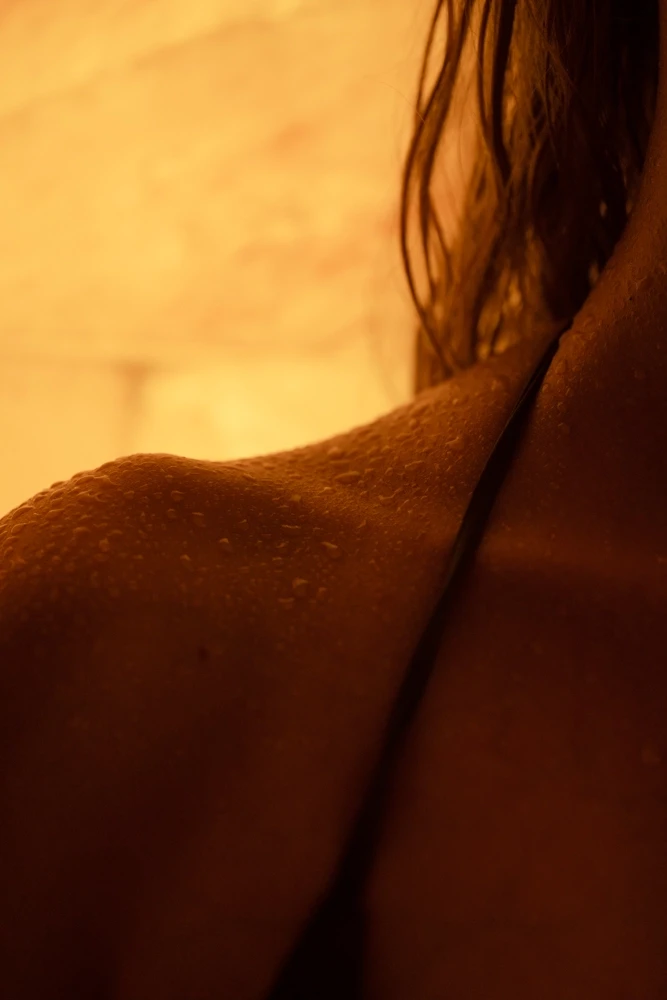
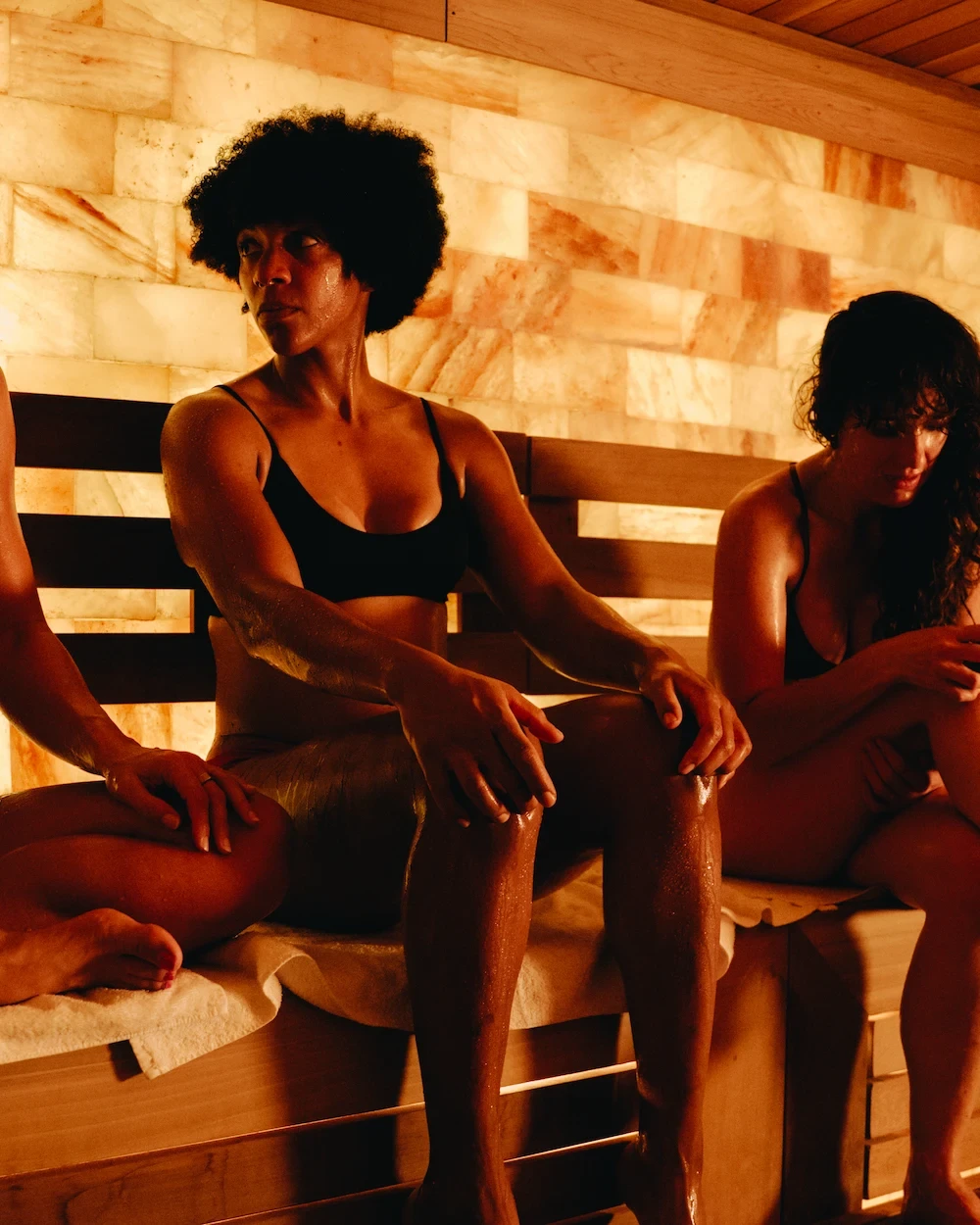
The rooms are dark by design. Lighting stays low, conversation is quiet in the casual sessions and absent in the silent sessions, and there are no clocks asking anything of you.
Whatever the heat is doing, an hour and a half of dim light and no screen is a reasonable way to finish a day. Our evening sessions are scheduled with that in mind.
Building the Evening Around It
The session is one part of the evening. What surrounds it decides how much of the effect survives until bedtime.
Cooling down properly
Give yourself time between the last round and the door. The temperature drop you are after happens during cooling, so leaving in a rush and stepping straight into a car cuts it short.
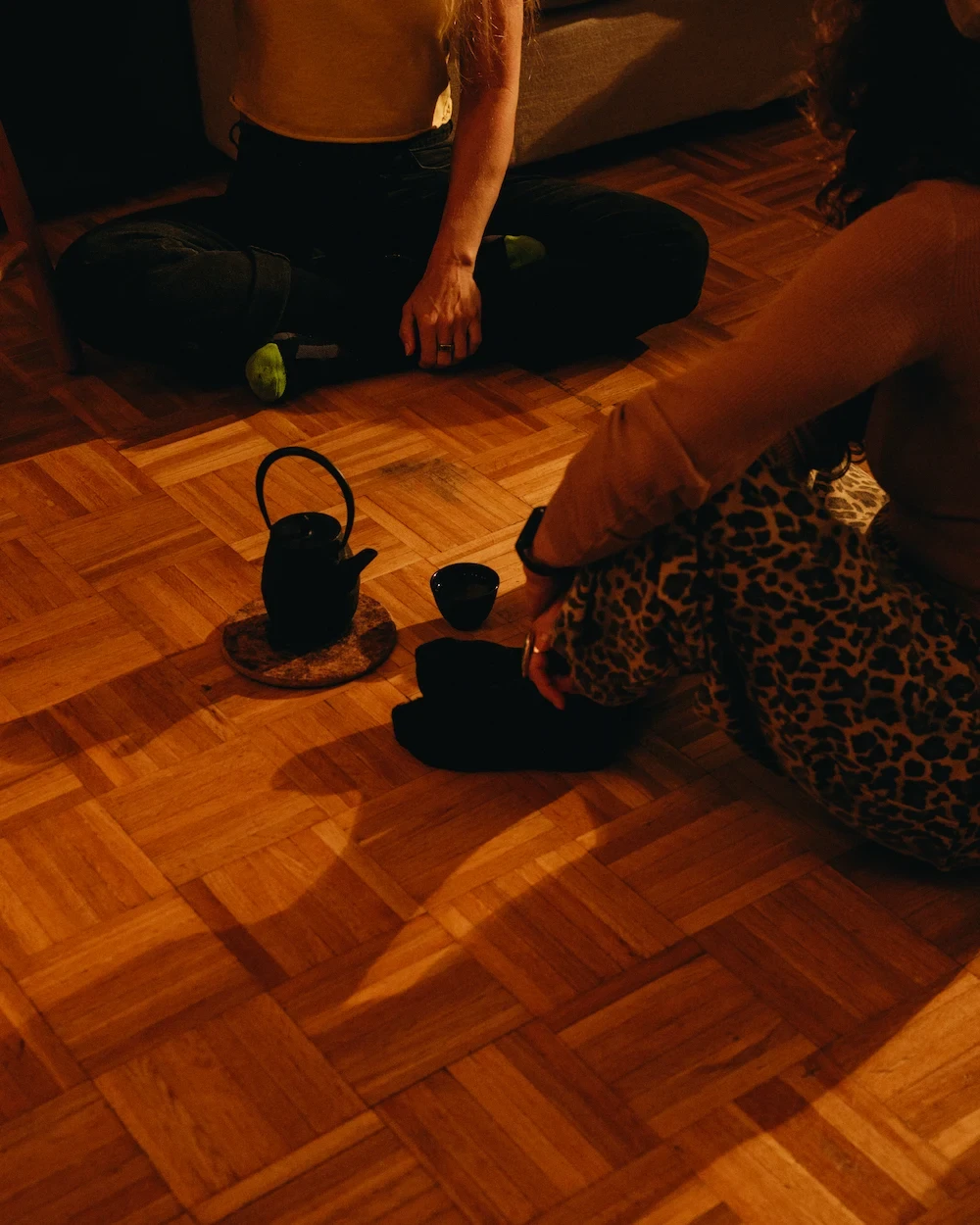
Sit in the lounge for a while. Have tea. Let your breathing settle and your skin cool on its own before you dress.
Water, and what to leave alone
Heat bathing produces real fluid loss, and dehydration disturbs sleep on its own. Drink water before the session and after it.
Alcohol undoes most of what is described here. It degrades sleep quality through the second half of the night, and combined with heat it also raises the risk of light-headedness during the session itself.
The hour after you leave
Keep the lighting low once you are home. The value of a phone-free session weakens considerably if the first thing you do afterwards is read messages in a bright kitchen.
Most people find the settling holds for a couple of hours. Getting into bed inside that window is the practical version of the timing described above.
Where the Evidence Runs Out
Most articles on this subject stop before this part.
The sauna and sleep evidence available today is self-reported and observational. Survey data tells us what bathers experience. The temperature mechanism is well described in the wider sleep literature. Neither establishes cause with the confidence a randomized trial would.
Randomized work is underway and remains unpublished. Until it arrives, the accurate framing is that a sauna may support better sleep, and that a substantial number of people who bathe regularly report exactly that.
That is a weaker claim than the one usually made. It is the one the evidence currently carries.
Who Should Be Cautious
Heat does not suit everyone.
Speak with a healthcare provider before using a sauna if you have a cardiovascular condition, high or low blood pressure, or take medication that affects how your body handles heat. The same applies with a seizure disorder or a history of fainting.
AetherHaus advises against hot and cold therapy during pregnancy unless a healthcare provider has approved it.
Persistent insomnia is a medical matter and belongs with a doctor. A sauna can sit alongside proper treatment. For stress specifically, our guide to sauna for stress relief covers related ground.
Frequently Asked Questions
How long before bed should I use a sauna?
Roughly ninety minutes to two hours before you intend to sleep. This allows your core temperature to rise and then fall, so the decline coincides with settling into bed. Going directly from heat to bed can delay sleep rather than support it.
How long should an evening sauna session be?
Moderate sessions work better than maximal ones for this purpose. Several rounds of ten to twenty minutes with rest between them suits an evening well. Very long or very hot sessions can leave you alert when you want the opposite.
How often do I need to go to notice a difference?
Many people report better sleep after a single session, typically lasting one to two nights. Survey data suggests regular bathers report more consistent benefit than occasional ones. The evidence on frequency here is observational.
Does the type of sauna matter?
Published research on sauna and health has been conducted mostly on traditional Finnish saunas, which run hotter and drier than infrared. The temperature mechanism should apply to any sufficient heat exposure. Direct comparisons between sauna types for sleep specifically have not been done.
Will a sauna help with insomnia?
Persistent insomnia is a medical matter and should be discussed with a doctor. A sauna may form part of an evening routine alongside proper treatment. It does not function as a treatment for a sleep disorder.
Is a sauna better than a hot bath before bed?
The strongest published evidence is on warm baths and showers rather than saunas, so a bath has the more direct support behind it. Both work through the same temperature mechanism. A sauna adds the shared room and the time away from screens, which a bath at home does not.
Key Takeaways
Core temperature rises in the heat and falls afterwards, and that decline is one of the signals your body reads as the day ending.
The strongest published evidence tested warm baths and showers at 40 to 42.5 degrees Celsius, one to two hours before bed.
In a survey of 482 sauna users, 83.5 percent reported sleep benefits, most lasting one to two nights.
Around ninety minutes to two hours before bed is the window most consistently supported by the research.
Current evidence on saunas and sleep is self-reported and observational, and randomized trials are still underway.
Most people who use a sauna in the evening notice something that night. Sleep arrives faster, or it holds longer, or it simply feels heavier than usual.
That experience is common enough to have been studied, though less directly than you might expect. What follows is the evidence as it currently stands, including the parts that are still open.
What Heat Does to Your Temperature
The rise, and the drop that follows
Your core temperature climbs while you are in the heat. When you leave, it falls.
That fall is the interesting part. Core temperature declines naturally in the evening, and that decline is one of the signals your body reads as the day ending. Thermal conditions and sleep are closely linked, with temperature measurably affecting how much deep sleep and REM sleep you get (Journal of Physiological Anthropology, 2012).
A sauna session creates a version of that decline on purpose, at a time you choose.
What the bedtime research shows, and what it does not
The strongest evidence for heat before bed comes from a systematic review that screened 5,322 studies and pooled results from thirteen of them.
It found that passive body heating at 40 to 42.5 degrees Celsius, scheduled one to two hours before bed for as little as ten minutes, improved self-rated sleep quality and sleep efficiency, and shortened the time taken to fall asleep (Sleep Medicine Reviews, 2019).
One detail gets left out almost everywhere this study is cited. It tested warm baths and showers. It did not test saunas.
The underlying mechanism is the same, which is why the finding is relevant here. Applying it to dry heat is still an extension of the evidence rather than a direct reading of it, and that is worth saying plainly.
What Sauna Bathers Report
Direct evidence on saunas and sleep comes mainly from one place.
The survey, described accurately
A cross-sectional survey of sauna users collected 482 valid responses. Of those, 83.5 percent reported sleep benefits after bathing, with most describing improvement that lasted one to two nights (Complementary Therapies in Medicine, 2019).
That percentage circulates widely, often attached to a sample of several thousand people. The published paper reports 482.
The same survey found that people bathing five to fifteen times monthly scored higher on measures of mental well-being than less frequent bathers, which ties the effect to how often you come more than to any single session.
Two things follow from this. The reported experience is consistent across a real sample of bathers. It is also self-reported and cross-sectional, which evidences what people notice rather than what heat causes.
Timing an Evening Session
How long before bed
Around ninety minutes to two hours before you intend to sleep.
That window lets your temperature rise and then fall, so the decline lands while you are settling rather than while you are still in the change room. Going straight from heat to bed works against the effect you are after.
Length and heat
Moderate sessions suit this better than maximal ones.
A very long or very hot session places more load on the body, which can leave you alert instead of settled. Several shorter rounds with rest between them is the traditional structure, and it suits an evening well. Our guides to sauna temperature and cold plunge order cover how to arrange the rounds.
Drink water before and after. Alcohol works against everything described here.
The Hour Without a Screen
There is a part of this that has nothing to do with temperature, and it may account for more of the effect than anyone can currently measure.
What a phone-free room changes
Screen exposure in the evening is one of the better-established disruptors of sleep. Most advice on the subject asks you to put your phone down voluntarily, in a house where it is sitting right there on the arm of the sofa.
A bathhouse removes the choice. At AetherHaus, phones stay in lockers for the whole session. There is no notification to check because there is no phone to check it on.
Ninety minutes is a long stretch to spend without a screen. For a lot of guests it is the only one that happens all day.
Evenings on Davie Street
The rooms are dark by design. Lighting stays low, conversation is quiet in the casual sessions and absent in the silent sessions, and there are no clocks asking anything of you.
Whatever the heat is doing, an hour and a half of dim light and no screen is a reasonable way to finish a day. Our evening sessions are scheduled with that in mind.
Building the Evening Around It
The session is one part of the evening. What surrounds it decides how much of the effect survives until bedtime.
Cooling down properly
Give yourself time between the last round and the door. The temperature drop you are after happens during cooling, so leaving in a rush and stepping straight into a car cuts it short.
Sit in the lounge for a while. Have tea. Let your breathing settle and your skin cool on its own before you dress.
Water, and what to leave alone
Heat bathing produces real fluid loss, and dehydration disturbs sleep on its own. Drink water before the session and after it.
Alcohol undoes most of what is described here. It degrades sleep quality through the second half of the night, and combined with heat it also raises the risk of light-headedness during the session itself.
The hour after you leave
Keep the lighting low once you are home. The value of a phone-free session weakens considerably if the first thing you do afterwards is read messages in a bright kitchen.
Most people find the settling holds for a couple of hours. Getting into bed inside that window is the practical version of the timing described above.
Where the Evidence Runs Out
Most articles on this subject stop before this part.
The sauna and sleep evidence available today is self-reported and observational. Survey data tells us what bathers experience. The temperature mechanism is well described in the wider sleep literature. Neither establishes cause with the confidence a randomized trial would.
Randomized work is underway and remains unpublished. Until it arrives, the accurate framing is that a sauna may support better sleep, and that a substantial number of people who bathe regularly report exactly that.
That is a weaker claim than the one usually made. It is the one the evidence currently carries.
Who Should Be Cautious
Heat does not suit everyone.
Speak with a healthcare provider before using a sauna if you have a cardiovascular condition, high or low blood pressure, or take medication that affects how your body handles heat. The same applies with a seizure disorder or a history of fainting.
AetherHaus advises against hot and cold therapy during pregnancy unless a healthcare provider has approved it.
Persistent insomnia is a medical matter and belongs with a doctor. A sauna can sit alongside proper treatment. For stress specifically, our guide to sauna for stress relief covers related ground.
Frequently Asked Questions
How long before bed should I use a sauna?
Roughly ninety minutes to two hours before you intend to sleep. This allows your core temperature to rise and then fall, so the decline coincides with settling into bed. Going directly from heat to bed can delay sleep rather than support it.
How long should an evening sauna session be?
Moderate sessions work better than maximal ones for this purpose. Several rounds of ten to twenty minutes with rest between them suits an evening well. Very long or very hot sessions can leave you alert when you want the opposite.
How often do I need to go to notice a difference?
Many people report better sleep after a single session, typically lasting one to two nights. Survey data suggests regular bathers report more consistent benefit than occasional ones. The evidence on frequency here is observational.
Does the type of sauna matter?
Published research on sauna and health has been conducted mostly on traditional Finnish saunas, which run hotter and drier than infrared. The temperature mechanism should apply to any sufficient heat exposure. Direct comparisons between sauna types for sleep specifically have not been done.
Will a sauna help with insomnia?
Persistent insomnia is a medical matter and should be discussed with a doctor. A sauna may form part of an evening routine alongside proper treatment. It does not function as a treatment for a sleep disorder.
Is a sauna better than a hot bath before bed?
The strongest published evidence is on warm baths and showers rather than saunas, so a bath has the more direct support behind it. Both work through the same temperature mechanism. A sauna adds the shared room and the time away from screens, which a bath at home does not.
Key Takeaways
Core temperature rises in the heat and falls afterwards, and that decline is one of the signals your body reads as the day ending.
The strongest published evidence tested warm baths and showers at 40 to 42.5 degrees Celsius, one to two hours before bed.
In a survey of 482 sauna users, 83.5 percent reported sleep benefits, most lasting one to two nights.
Around ninety minutes to two hours before bed is the window most consistently supported by the research.
Current evidence on saunas and sleep is self-reported and observational, and randomized trials are still underway.
our Blog
our Blog
More insights
More insights
Explore more reflections, guidance, and practical tools to support you.
Explore more reflections, guidance, and practical tools to support you.
Most first-visit guides tell you to pack a bag. Yours needs a swimsuit and a water bottle. Here is what the 90 minutes looks like, from the front door to the tea at the end.
Most sauna frequency advice is written for people who own one. Here is what the research found, and how to build a practice you can hold for a year.
Most sauna frequency advice is written for people who own one. Here is what the research found, and how to build a practice you can hold for a year.
Your questions.
Answered.
Not sure what to expect? These answers might help you feel more confident as you begin.
Didn’t find your answer? Send us a message, we’ll respond with care and clarity.
What is a modern bathhouse?
A modern bathhouse keeps the architecture of the old idea, hot room, cold water, somewhere to rest, and lets the rhythm of the city around it shape the rest. Ours is built for Vancouver, on Davie Street, in the West End.
What is a modern bathhouse?
A modern bathhouse keeps the architecture of the old idea, hot room, cold water, somewhere to rest, and lets the rhythm of the city around it shape the rest. Ours is built for Vancouver, on Davie Street, in the West End.
Is the cold plunge at your bathhouse communal?
Is the cold plunge at your bathhouse communal?
Yes. Our cold pools are shared, with multiple temperature options so you can find one that meets you where you are. Communal plunging is part of what makes a bathhouse a bathhouse.
Is the bathhouse a welcoming space for the queer community?
Is the bathhouse a welcoming space for the queer community?
Yes. The West End is home to us and to our queer neighbours, and the bathhouse is built for everyone who walks in. We also host queer nights on a regular rotation, which you can find on the Classes calendar.
What's the etiquette inside the bathhouse?
What's the etiquette inside the bathhouse?
Phones stay in lockers. Voices stay low. Sit or lie on a towel inside the sauna, move at your own pace between rooms, and leave the space the way you'd want to find it. The room works because everyone in it is paying a little attention.
Do you offer Russian Banya at the bathhouse?
Do you offer Russian Banya at the bathhouse?
We run banya-inspired programming including venik work on select dates. The full ritual has its own page if you want to read about it before you book.
Do I need to book ahead, or can I walk in?
Do I need to book ahead, or can I walk in?
Walk-ins are welcome based on availability, but most guests book ahead through our app or website to lock in their preferred session time.
Your questions.
Answered.
Not sure what to expect? These answers might help you feel more confident as you begin.
What do I need to bring?
Please bring a bathing suit and a reusable water bottle. We provide two towels per guest, shower products, and secure lockers.
What do I need to bring?
Please bring a bathing suit and a reusable water bottle. We provide two towels per guest, shower products, and secure lockers.
Do I need a reservation?
Do I need a reservation?
Walk-ins are welcome, but we recommend booking through our app or website to check availability and join the waitlist.
Where can I park?
Where can I park?
Street parking is limited. We offer valet parking behind AetherHaus from 11:00–23:00. There is also some street parking available on Davie and nearby side streets.
What is Open Haus?
What is Open Haus?
Open Haus is a self-guided circuit through our saunas, plunge pools, and tea lounge. Our guides add essential oils to the stove throughout the day. The atmosphere shifts between silent, casual, and social, depending on the session.
What is your Haus Etiquette?
What is your Haus Etiquette?
Phones must be stored away. Please keep conversation soft, sit or lie on a towel, and move mindfully through the space. We ask that guests respect others’ experience and refrain from bringing outside food or drinks - complimentary tea is provided.
Can I visit if I am pregnant?
Can I visit if I am pregnant?
We advise against hot and cold therapy during pregnancy unless approved by your healthcare provider.
Didn’t find your answer? Send us a message, we’ll respond with care and clarity.
Your questions.
Answered.
Not sure what to expect? These answers might help you feel more confident as you begin.
Didn’t find your answer? Send us a message, we’ll respond with care and clarity.
What is a modern bathhouse?
A modern bathhouse keeps the architecture of the old idea, hot room, cold water, somewhere to rest, and lets the rhythm of the city around it shape the rest. Ours is built for Vancouver, on Davie Street, in the West End.
What is a modern bathhouse?
A modern bathhouse keeps the architecture of the old idea, hot room, cold water, somewhere to rest, and lets the rhythm of the city around it shape the rest. Ours is built for Vancouver, on Davie Street, in the West End.
Is the cold plunge at your bathhouse communal?
Is the cold plunge at your bathhouse communal?
Yes. Our cold pools are shared, with multiple temperature options so you can find one that meets you where you are. Communal plunging is part of what makes a bathhouse a bathhouse.
Is the bathhouse a welcoming space for the queer community?
Is the bathhouse a welcoming space for the queer community?
Yes. The West End is home to us and to our queer neighbours, and the bathhouse is built for everyone who walks in. We also host queer nights on a regular rotation, which you can find on the Classes calendar.
What's the etiquette inside the bathhouse?
What's the etiquette inside the bathhouse?
Phones stay in lockers. Voices stay low. Sit or lie on a towel inside the sauna, move at your own pace between rooms, and leave the space the way you'd want to find it. The room works because everyone in it is paying a little attention.
Do you offer Russian Banya at the bathhouse?
Do you offer Russian Banya at the bathhouse?
We run banya-inspired programming including venik work on select dates. The full ritual has its own page if you want to read about it before you book.
Do I need to book ahead, or can I walk in?
Do I need to book ahead, or can I walk in?
Walk-ins are welcome based on availability, but most guests book ahead through our app or website to lock in their preferred session time.