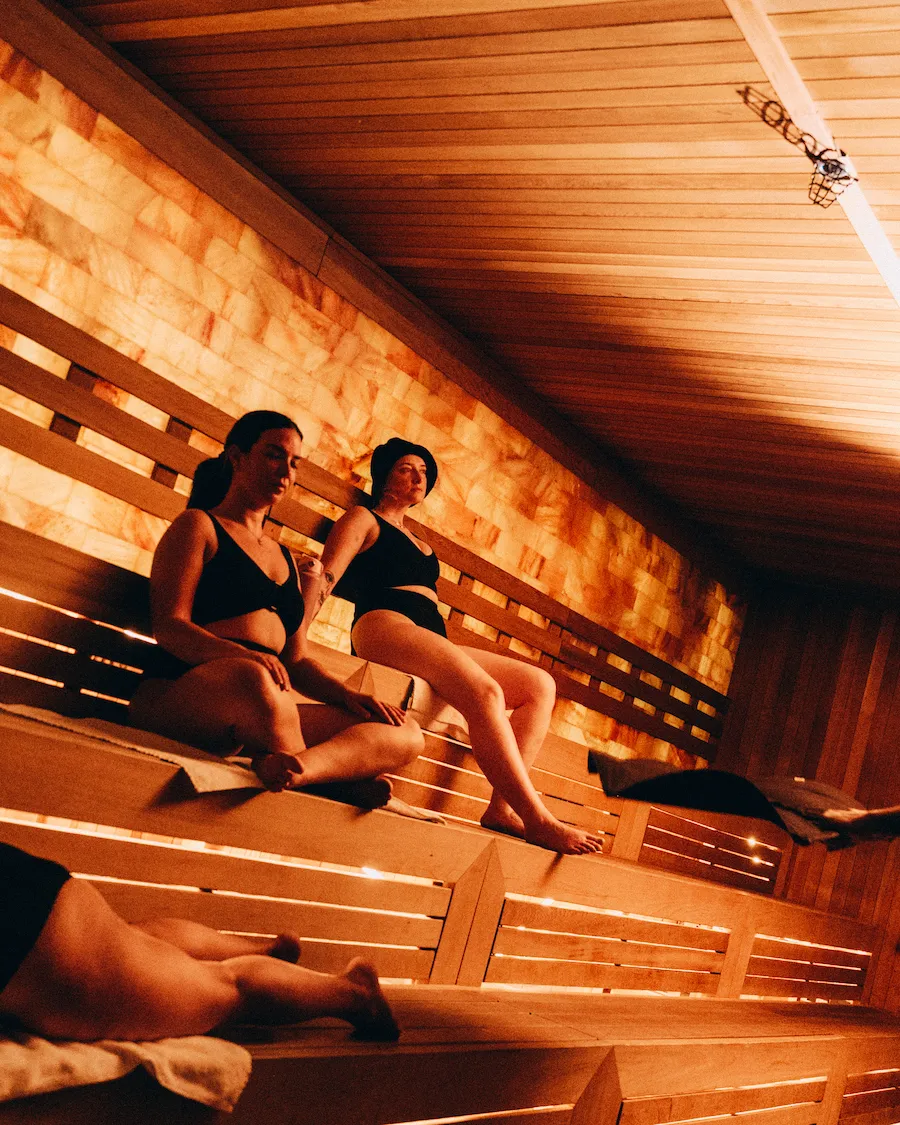
Sauna for Stress Relief: Research, Ritual, and What Your Body Already Knows
Sauna for Stress Relief: Research, Ritual, and What Your Body Already Knows
Stress does not just live in your thoughts. It settles into your shoulders, your jaw, the shallow rhythm of your breathing. It rewires your nervous system so that rest feels foreign and alertness becomes your default.
Stress does not just live in your thoughts. It settles into your shoulders, your jaw, the shallow rhythm of your breathing. It rewires your nervous system so that rest feels foreign and alertness becomes your default.
Published on:
Published on:
Sauna bathing helps relieve stress through measurable biological pathways. Heat exposure lowers cortisol, triggers the release of beta-endorphins, activates the parasympathetic nervous system, and improves sleep quality. Research published in journals including JAMA Psychiatry, Mayo Clinic Proceedings, and Frontiers in Public Health supports these findings.
The science is clear. But after a decade of guiding people through heat and cold practice, I have learned that the deepest stress relief does not come from following a protocol. It comes from learning to listen.
My name is Dave, and I am the Program Director at AetherHaus in Vancouver. When I was 15, I was diagnosed with ankylosing spondylitis, the same autoimmune condition that fused my father's spine into a permanent hunchback position. I spent the next 15 years navigating chronic pain, never knowing if tomorrow would be a day I could walk. Heat and cold practice gave me my life back. Not because I followed the perfect protocol. Because I learned to feel what my body needed.
Here is what the research shows about sauna and cold plunge for stress. And here is why we think the most important thing you can do in the sauna is put the timer away.
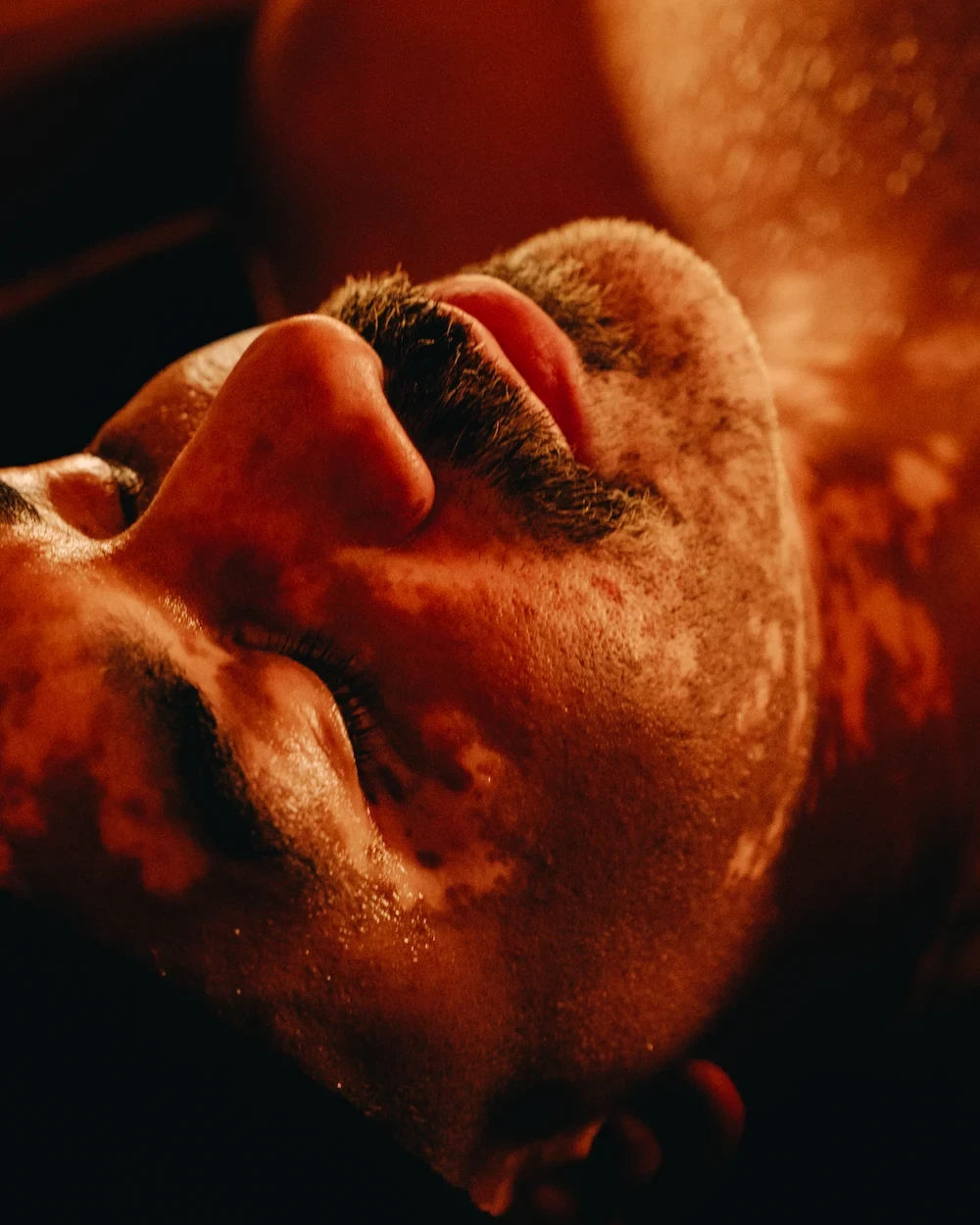
How Sauna Bathing Helps Your Body Release Stress
Stress is not just a feeling. It is a physiological state your body gets locked into. Your heart rate stays elevated. Your muscles stay tight. Your hormones stay primed for a threat that may have passed hours ago.
Sauna bathing interrupts that cycle through three primary pathways.
Cortisol and the Stress Hormone Response
Cortisol is your body's primary stress hormone. In short bursts, it is useful. It sharpens your focus and mobilizes energy. But when cortisol stays elevated for days, weeks, or months, it erodes sleep, digestion, immune function, and emotional resilience.
Research shows that sauna bathing, particularly when combined with cold water immersion, can significantly reduce cortisol levels. A study of 30 healthy men found that serum cortisol decreased significantly during a sauna session with cold water immersion between rounds (SAGE Journals, 2021). The higher a person's baseline cortisol was, the greater the reduction.
A separate review in Frontiers in Public Health confirmed that in regular sauna users, the relaxing effects of sauna therapy combined with cold water immersion typically lead to a decrease in serum cortisol levels (Frontiers in Public Health, 2024).
There is an important nuance here. These studies measured cortisol at specific intervals under controlled conditions. Your body does not operate on a lab schedule. The reduction happens as part of a broader physiological shift, not because you stayed in for a precise number of minutes.
Endorphins and the Body's Natural Calm
Beta-endorphins are neuropeptides your body produces in response to stress and pain. They bind to the same receptors as morphine, creating a sense of calm, reduced pain perception, and elevated mood.
Sauna exposure triggers a substantial release of these compounds. According to the North American Sauna Society, endorphin levels during sauna bathing can reach approximately three times their normal level, comparable to the release during a moderate-intensity run (North American Sauna Society, 2015). A study published in Stress Medicine confirmed that sauna-induced hyperthermia increased plasma beta-endorphin and ACTH levels, while cold exposure alone did not produce the same hormonal response (Wiley Online Library, 1992).
This is part of why so many people describe a "natural high" after sauna. It is not imagined. It is chemistry.
I have watched hundreds of guests walk out of the sauna with a softness in their face that was not there when they arrived. That shift is not performance. It is your body doing what it was designed to do when you give it the right conditions.
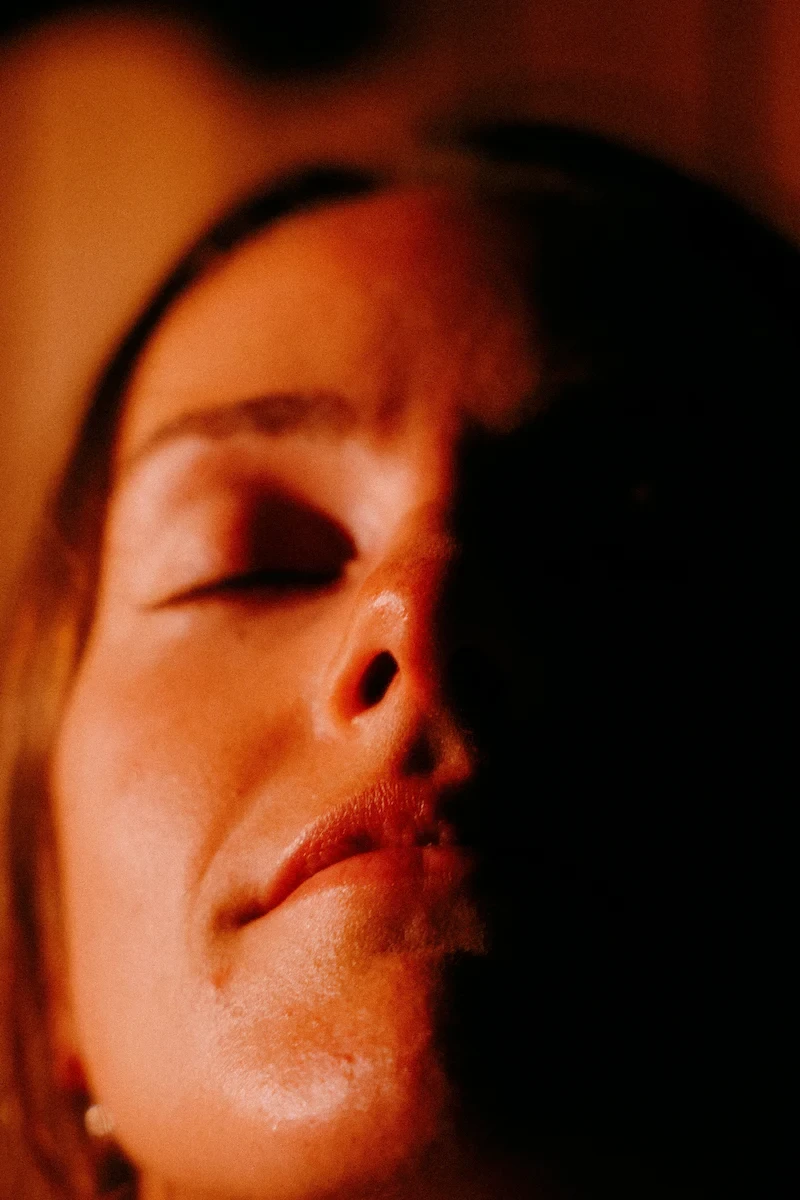
Parasympathetic Activation: Shifting Out of Fight-or-Flight
Your autonomic nervous system has two modes. The sympathetic branch is your accelerator: heart rate up, muscles tense, pupils dilated. The parasympathetic branch is your brake: heart rate down, digestion restored, breathing deepened.
Chronic stress keeps the accelerator pressed. Sauna bathing helps your body find the brake.
Emerging research suggests that sauna use may help activate the parasympathetic nervous system, the part of your body responsible for rest and relaxation (LifeStance Health, 2026). This activation slows heart rate, lowers blood pressure, and promotes a sense of calm that supports emotional regulation.
This is also why we remove phones and clocks from our space at AetherHaus. The nervous system cannot fully shift into rest mode while scanning for notifications. When the external noise disappears, the body has permission to soften. You can experience this for yourself when you book a session.
Sauna, Anxiety, and Depression: What the Research Shows
The connection between heat and mood is ancient. Cultures around the world have used heated spaces for emotional and spiritual restoration for centuries. Banya traditions in Russia. Aufguss ceremonies in Germany. Sweat lodges across Indigenous nations. Modern research is now confirming what tradition already understood.
The Whole-Body Hyperthermia Study
One of the most compelling pieces of evidence comes from a landmark study published in JAMA Psychiatry.
Researchers at the University of Wisconsin-Madison conducted a randomized, double-blind trial with participants diagnosed with major depressive disorder. A single session of whole-body hyperthermia (raising core body temperature to the equivalent of a mild fever) produced significant reductions in depression scores compared to a sham treatment. The antidepressant effect persisted for up to six weeks after that single session (JAMA Psychiatry, 2016).
One session. Not a 12-week programme. Not a daily protocol. One experience of deep, intentional heat was enough to shift something meaningful.
Subsequent research has explored why this happens. A 2023 study published in Translational Psychiatry found that the antidepressant effect was associated with activation of anti-inflammatory signaling pathways, suggesting that heat may help the body resolve the chronic, low-grade inflammation that often accompanies depression (Nature, 2023).
Sleep, Mood, and the Ripple Effect
Stress, sleep, and mood do not exist in isolation. They feed each other.
Sauna bathing has been shown to improve sleep quality through body temperature regulation. When your core temperature rises during a sauna session and then drops afterward, it signals your body to produce melatonin and enter deeper stages of sleep. A medical provider at the Cleveland Clinic confirmed that sauna use shows improvement in anxiety and helps mitigate stress, depression, and burnout (Cleveland Clinic, 2024).
Better sleep improves mood regulation. Improved mood reduces the physiological stress response. Reduced stress improves sleep. The cycle works in your favour instead of against you.
When I was on immunosuppressants, I was exhausted constantly. My energy levels were unpredictable. A consistent heat and cold practice stabilized not just my pain but my mood, my sleep, and my overall capacity for life. I share this not as a prescription but as an honest account of what happened when I committed to showing up for myself through this practice.
If you are interested in how breath supports this process, our guide to healing meditation explores the contemplative side of heat practice.

Why Contrast Therapy Deepens the Stress Response
Sauna alone is powerful. But when you pair it with cold exposure and rest, something shifts at a deeper level. This is the foundation of contrast therapy, and it is central to what we offer at AetherHaus.
What Happens in the Brain During Hot-Cold-Rest Cycles
Researchers in Japan recently studied what happens in the brain during alternating cycles of sauna, cold water immersion, and rest. The study, published in PLOS ONE, measured EEG brain activity and found significant increases in theta and alpha brain waves during and after the sauna phase compared to before (PMC, 2023).
Theta and alpha waves are associated with deep relaxation, meditative states, and creative insight. The researchers also found that the brain entered what they described as a more efficient state, with improved pre-attentional auditory processing and decreased need for attention-related brain activity.
In Japanese sauna culture, this state is called totonou, which roughly translates to being "prepared" or "arranged." It is the experience of the body and mind being automatically conditioned through the cycle of heat, cold, and rest. It typically occurs during the rest phase after at least three rounds.
This is not mysticism. It is measurable neural activity. And it aligns precisely with what sauna cultures around the world have practised for generations: heat, cold, rest, repeat.
Cold Exposure and the Nervous System Reset
Cold water immersion following sauna amplifies the parasympathetic response. The brief sympathetic activation from cold (the sharp intake of breath, the spike in alertness) is followed by a powerful rebound into calm when you move to rest.
My journey with cold exposure began out of desperation. In my mid-20s, the pain from ankylosing spondylitis was unbearable. I found the Wim Hof Method, flew to Spain for an expedition, and came home to Vancouver where I emptied my freezer and bought 50 ice trays. I started doing ice baths every second day because it took two days for the ice to freeze.
What they taught us at the Wim Hof camp was that it was not about time. It was about sensation and feeling. With an autoimmune condition, you have to be mindful of where your nervous system is each day. Some days I might be in for 30 seconds. Other days, several minutes. It was a process of learning what my body needed in the moment, not sticking to a prescriptive number.
After eight months, my pain was decreasing. My energy was increasing. My nervous system felt like it was starting to reset in a way I had never experienced. Eventually, I was able to get off my medication, snowboard again, climb mountains again, and experience the world without physical limitation.
I share this not because my experience is universal. It is deeply personal. But I have since guided hundreds of people through their own cold plunge journeys, and the ones who find the most benefit are consistently the ones who learn to listen rather than count.
If you are curious about how breath supports the cold experience, our guide to breathwork techniques for cold plunge is a good place to start.
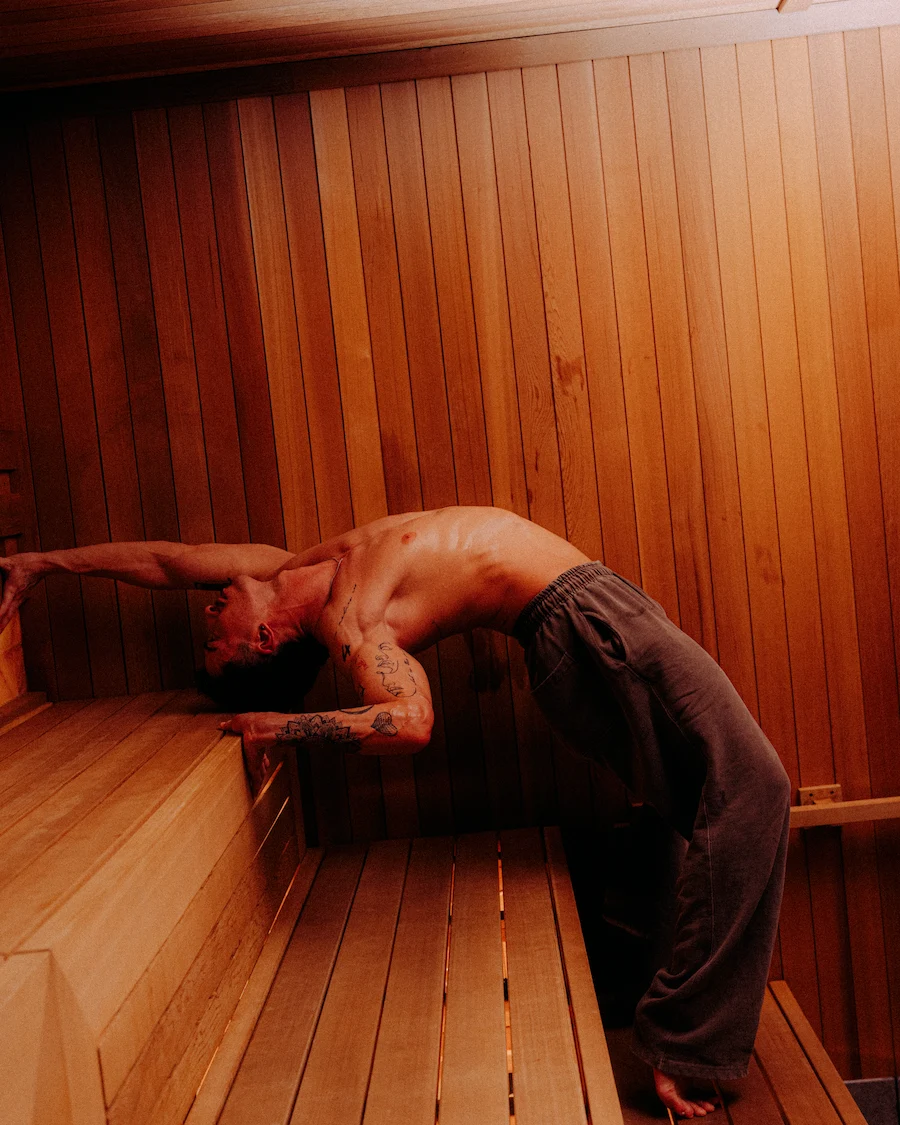
A Different Approach: Listening to Your Body in the Sauna
If you search for sauna advice online, you will find protocols everywhere. Stay in for this many minutes. Go this many times per week. Track your sessions. Optimize your recovery window.
We think there is a better way.
Why Protocols Can Become Another Source of Stress
There is nothing wrong with the research that produces these numbers. Studies need controlled variables and measurable outcomes. That is how science works, and we are grateful for what it reveals.
But personal practice is not a clinical trial. When you bring the mindset of optimization into the sauna, something subtle happens. You start watching the clock instead of feeling the heat. You worry about whether you are "doing it right" instead of being present. The practice becomes another thing on your to-do list rather than a space to exhale.
These practices do not need to become another thing you are "doing right" or tracking in an app.
What Sensation-Based Practice Looks Like
Here is what we suggest instead:
Instead of "stay in for 15-20 minutes": Stay until the heat feels like it has moved through you. Step out when your body signals readiness, not when a timer dictates.
Instead of "use the sauna 3-4 times per week": Return when you feel drawn to. Some weeks that might be daily. Some weeks it might not be at all.
Instead of "cold plunge for 2-3 minutes": Enter the cold. Breathe. Exit when your body tells you it is time.
Instead of "track your progress": Notice how you feel. Not in a spreadsheet. In your shoulders. In the depth of your breath. In the quality of your sleep.
The research gives us reasons to be in the sauna. It helps us understand the mechanisms. That is valuable. But the practice itself is yours to navigate.
There is no perfect duration. Your body will tell you when it is time. This is not about optimization. It is about presence.
After a decade of guiding people through heat and cold, I have seen that the ones who transform are not the ones who follow the strictest protocols. They are the ones who learn to pay attention.
If you are new to mindfulness practices, our guide to meditation for beginners explores how to build this kind of inner listening.
The Forgotten Dimension: Community, Ritual, and Rest
Most conversations about sauna and stress focus entirely on individual biology. Cortisol levels. Endorphin counts. Brain wave frequencies. These matter.
But some of the most powerful stress relief comes from something the research measures less easily: being in a room with other people, without your phone, without a clock, without anywhere else to be.
Heat as Ritual, Not Routine
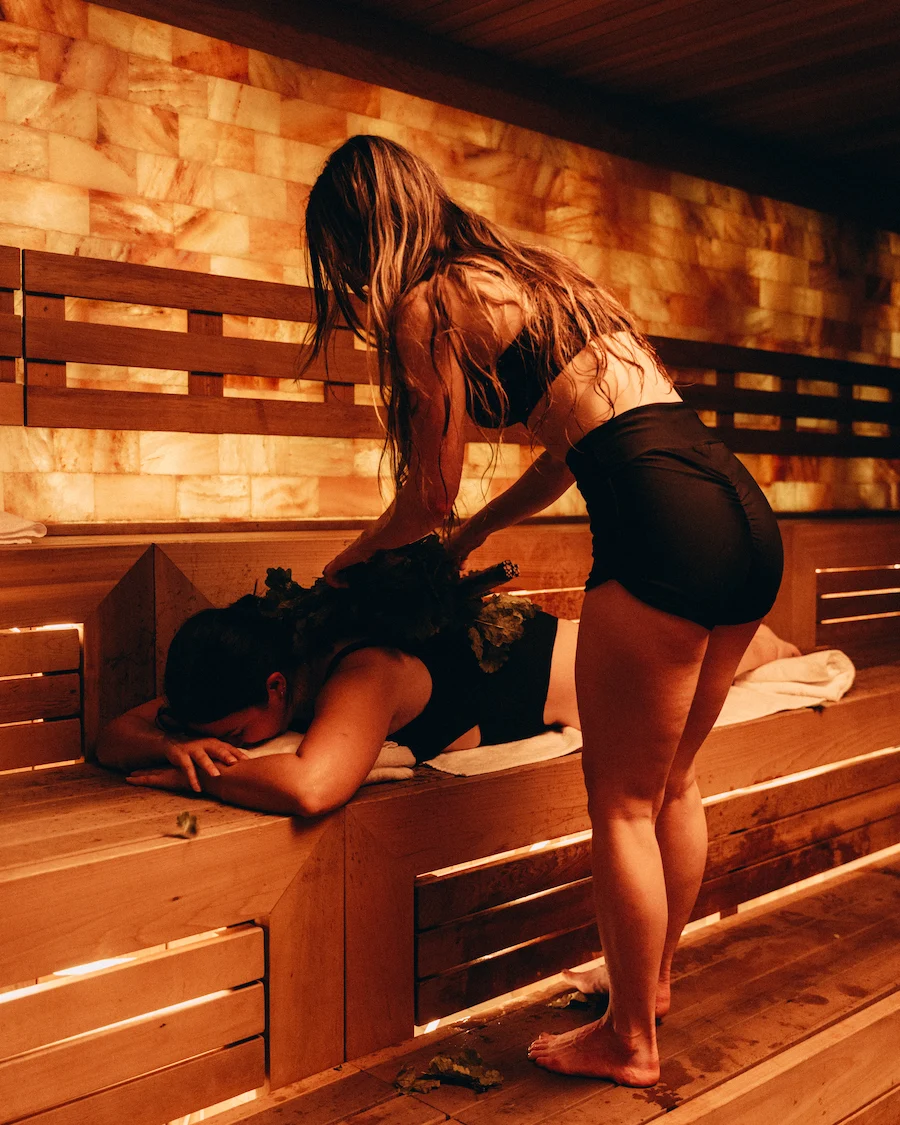
Sauna culture did not begin as a health intervention. In Russia, the banya was a gathering place for community, cleansing, and conversation. In Germany, the Aufguss ceremony transformed the sauna into a multi-sensory ritual of heat, aroma, and guided towel movements. Across many Indigenous cultures, heated spaces held spiritual and communal significance.
These traditions understood something that modern research is only beginning to quantify. The power of heat is not purely physical. The container matters. Darkness, music, guided breath, communal presence: these elements amplify the body's ability to release.
At AetherHaus, we bring these traditions into a modern Vancouver setting. Our sound journeys, yin yoga sessions, and Aufguss rituals are designed not as performances but as invitations to be present with yourself and the people around you.
The Phone-Free, Clock-Free Environment
When phones and clocks are removed, something in the nervous system relaxes. There is no notification to check. No meeting to count down to. No algorithm competing for your attention.
This is not a rule for the sake of rules. It is a design choice rooted in how stress actually works. Your nervous system cannot fully rest while remaining on alert for digital input. Removing that stimulus is itself a form of intervention.
Social connection in a low-stimulation environment is also a form of nervous system regulation. Co-regulation (the process of our nervous systems calming in the presence of calm others) is well documented in attachment research. A quiet room. Warm light. Soft conversation or comfortable silence. These are not luxuries. They are conditions for genuine rest.
Our sauna does not care how many followers you have. She wants us to connect, not compare.
Key Takeaways
Sauna bathing reduces cortisol, releases beta-endorphins, and activates the parasympathetic nervous system, all of which directly counter the body's stress response (SAGE Journals, 2021; Cleveland Clinic, 2024)
A single session of whole-body hyperthermia reduced depression scores for up to six weeks in a randomized clinical trial, suggesting heat has powerful mood-regulating effects (JAMA Psychiatry, 2016)
Alternating sauna, cold water, and rest produces measurable brain changes associated with deep relaxation and improved mental efficiency, a state Japanese researchers call "totonou" (PMC, 2023)
The most meaningful stress relief comes not from optimizing your sauna protocol but from learning to listen to your body and being fully present in the experience
Ritual, community, and the absence of digital distraction amplify the physiological effects of heat in ways that individual practice alone cannot replicate
Frequently Asked Questions
Does sauna actually reduce cortisol?
Yes. Research shows that sauna bathing, especially when combined with cold water immersion, can significantly reduce serum cortisol levels (SAGE Journals, 2021). Regular sauna users tend to show more consistent cortisol reductions than those who are new to the practice (Frontiers in Public Health, 2024).
How long should you sit in a sauna for stress relief?
Research protocols vary. The most important guide is your own body. Stay until the heat has done its work and step out when you feel ready. Your nervous system knows more about what it needs than any timer.
Can sauna help with anxiety and depression?
Emerging research is promising. A randomized, double-blind study published in JAMA Psychiatry found significant antidepressant effects from a single session of whole-body hyperthermia (JAMA Psychiatry, 2016). Medical providers at the Cleveland Clinic have also noted improvements in anxiety and burnout among sauna users (Cleveland Clinic, 2024). Sauna is best understood as a complement to professional care, not a replacement.
Is sauna or cold plunge better for stress relief?
Research suggests the combination is more powerful than either alone. Brain imaging research shows distinct neurological shifts from alternating hot, cold, and rest cycles, including increased theta and alpha brain waves associated with deep relaxation (PMC, 2023). Learn more about how these practices work together in our guide to contrast therapy.
Is infrared sauna better than traditional sauna for stress?
Both types produce stress-relieving effects through heat exposure. The largest body of long-term research comes from traditional Finnish sauna, including a 20-year cohort study involving over 2,300 men (JAMA Internal Medicine, 2015). What matters most is finding an approach that feels right for your body.
Can sauna replace therapy or medication for stress?
No. Sauna is a complementary practice that supports nervous system regulation. Anyone experiencing clinical anxiety, depression, or other mental health conditions should work with a qualified healthcare provider. Heat practice works best as one part of a broader approach to caring for yourself.
What should I expect during my first sauna session?
Warmth, sweating, and a gradual sense of relaxation. No experience is required, and there is no "right" way to do it. If you would like a fuller picture, our guide on what to expect at your first session walks you through the experience.
If you are curious about what sauna and cold plunge might feel like without the pressure of a protocol, AetherHaus is a space to begin. No timers. No performance metrics. Just heat, cold, rest, and real human presence.
Sauna bathing helps relieve stress through measurable biological pathways. Heat exposure lowers cortisol, triggers the release of beta-endorphins, activates the parasympathetic nervous system, and improves sleep quality. Research published in journals including JAMA Psychiatry, Mayo Clinic Proceedings, and Frontiers in Public Health supports these findings.
The science is clear. But after a decade of guiding people through heat and cold practice, I have learned that the deepest stress relief does not come from following a protocol. It comes from learning to listen.
My name is Dave, and I am the Program Director at AetherHaus in Vancouver. When I was 15, I was diagnosed with ankylosing spondylitis, the same autoimmune condition that fused my father's spine into a permanent hunchback position. I spent the next 15 years navigating chronic pain, never knowing if tomorrow would be a day I could walk. Heat and cold practice gave me my life back. Not because I followed the perfect protocol. Because I learned to feel what my body needed.
Here is what the research shows about sauna and cold plunge for stress. And here is why we think the most important thing you can do in the sauna is put the timer away.
How Sauna Bathing Helps Your Body Release Stress
Stress is not just a feeling. It is a physiological state your body gets locked into. Your heart rate stays elevated. Your muscles stay tight. Your hormones stay primed for a threat that may have passed hours ago.
Sauna bathing interrupts that cycle through three primary pathways.
Cortisol and the Stress Hormone Response
Cortisol is your body's primary stress hormone. In short bursts, it is useful. It sharpens your focus and mobilizes energy. But when cortisol stays elevated for days, weeks, or months, it erodes sleep, digestion, immune function, and emotional resilience.
Research shows that sauna bathing, particularly when combined with cold water immersion, can significantly reduce cortisol levels. A study of 30 healthy men found that serum cortisol decreased significantly during a sauna session with cold water immersion between rounds (SAGE Journals, 2021). The higher a person's baseline cortisol was, the greater the reduction.
A separate review in Frontiers in Public Health confirmed that in regular sauna users, the relaxing effects of sauna therapy combined with cold water immersion typically lead to a decrease in serum cortisol levels (Frontiers in Public Health, 2024).
There is an important nuance here. These studies measured cortisol at specific intervals under controlled conditions. Your body does not operate on a lab schedule. The reduction happens as part of a broader physiological shift, not because you stayed in for a precise number of minutes.
Endorphins and the Body's Natural Calm
Beta-endorphins are neuropeptides your body produces in response to stress and pain. They bind to the same receptors as morphine, creating a sense of calm, reduced pain perception, and elevated mood.
Sauna exposure triggers a substantial release of these compounds. According to the North American Sauna Society, endorphin levels during sauna bathing can reach approximately three times their normal level, comparable to the release during a moderate-intensity run (North American Sauna Society, 2015). A study published in Stress Medicine confirmed that sauna-induced hyperthermia increased plasma beta-endorphin and ACTH levels, while cold exposure alone did not produce the same hormonal response (Wiley Online Library, 1992).
This is part of why so many people describe a "natural high" after sauna. It is not imagined. It is chemistry.
I have watched hundreds of guests walk out of the sauna with a softness in their face that was not there when they arrived. That shift is not performance. It is your body doing what it was designed to do when you give it the right conditions.
Parasympathetic Activation: Shifting Out of Fight-or-Flight
Your autonomic nervous system has two modes. The sympathetic branch is your accelerator: heart rate up, muscles tense, pupils dilated. The parasympathetic branch is your brake: heart rate down, digestion restored, breathing deepened.
Chronic stress keeps the accelerator pressed. Sauna bathing helps your body find the brake.
Emerging research suggests that sauna use may help activate the parasympathetic nervous system, the part of your body responsible for rest and relaxation (LifeStance Health, 2026). This activation slows heart rate, lowers blood pressure, and promotes a sense of calm that supports emotional regulation.
This is also why we remove phones and clocks from our space at AetherHaus. The nervous system cannot fully shift into rest mode while scanning for notifications. When the external noise disappears, the body has permission to soften. You can experience this for yourself when you book a session.
Sauna, Anxiety, and Depression: What the Research Shows
The connection between heat and mood is ancient. Cultures around the world have used heated spaces for emotional and spiritual restoration for centuries. Banya traditions in Russia. Aufguss ceremonies in Germany. Sweat lodges across Indigenous nations. Modern research is now confirming what tradition already understood.
The Whole-Body Hyperthermia Study
One of the most compelling pieces of evidence comes from a landmark study published in JAMA Psychiatry.
Researchers at the University of Wisconsin-Madison conducted a randomized, double-blind trial with participants diagnosed with major depressive disorder. A single session of whole-body hyperthermia (raising core body temperature to the equivalent of a mild fever) produced significant reductions in depression scores compared to a sham treatment. The antidepressant effect persisted for up to six weeks after that single session (JAMA Psychiatry, 2016).
One session. Not a 12-week programme. Not a daily protocol. One experience of deep, intentional heat was enough to shift something meaningful.
Subsequent research has explored why this happens. A 2023 study published in Translational Psychiatry found that the antidepressant effect was associated with activation of anti-inflammatory signaling pathways, suggesting that heat may help the body resolve the chronic, low-grade inflammation that often accompanies depression (Nature, 2023).
Sleep, Mood, and the Ripple Effect
Stress, sleep, and mood do not exist in isolation. They feed each other.
Sauna bathing has been shown to improve sleep quality through body temperature regulation. When your core temperature rises during a sauna session and then drops afterward, it signals your body to produce melatonin and enter deeper stages of sleep. A medical provider at the Cleveland Clinic confirmed that sauna use shows improvement in anxiety and helps mitigate stress, depression, and burnout (Cleveland Clinic, 2024).
Better sleep improves mood regulation. Improved mood reduces the physiological stress response. Reduced stress improves sleep. The cycle works in your favour instead of against you.
When I was on immunosuppressants, I was exhausted constantly. My energy levels were unpredictable. A consistent heat and cold practice stabilized not just my pain but my mood, my sleep, and my overall capacity for life. I share this not as a prescription but as an honest account of what happened when I committed to showing up for myself through this practice.
If you are interested in how breath supports this process, our guide to healing meditation explores the contemplative side of heat practice.
Why Contrast Therapy Deepens the Stress Response
Sauna alone is powerful. But when you pair it with cold exposure and rest, something shifts at a deeper level. This is the foundation of contrast therapy, and it is central to what we offer at AetherHaus.
What Happens in the Brain During Hot-Cold-Rest Cycles
Researchers in Japan recently studied what happens in the brain during alternating cycles of sauna, cold water immersion, and rest. The study, published in PLOS ONE, measured EEG brain activity and found significant increases in theta and alpha brain waves during and after the sauna phase compared to before (PMC, 2023).
Theta and alpha waves are associated with deep relaxation, meditative states, and creative insight. The researchers also found that the brain entered what they described as a more efficient state, with improved pre-attentional auditory processing and decreased need for attention-related brain activity.
In Japanese sauna culture, this state is called totonou, which roughly translates to being "prepared" or "arranged." It is the experience of the body and mind being automatically conditioned through the cycle of heat, cold, and rest. It typically occurs during the rest phase after at least three rounds.
This is not mysticism. It is measurable neural activity. And it aligns precisely with what sauna cultures around the world have practised for generations: heat, cold, rest, repeat.
Cold Exposure and the Nervous System Reset
Cold water immersion following sauna amplifies the parasympathetic response. The brief sympathetic activation from cold (the sharp intake of breath, the spike in alertness) is followed by a powerful rebound into calm when you move to rest.
My journey with cold exposure began out of desperation. In my mid-20s, the pain from ankylosing spondylitis was unbearable. I found the Wim Hof Method, flew to Spain for an expedition, and came home to Vancouver where I emptied my freezer and bought 50 ice trays. I started doing ice baths every second day because it took two days for the ice to freeze.
What they taught us at the Wim Hof camp was that it was not about time. It was about sensation and feeling. With an autoimmune condition, you have to be mindful of where your nervous system is each day. Some days I might be in for 30 seconds. Other days, several minutes. It was a process of learning what my body needed in the moment, not sticking to a prescriptive number.
After eight months, my pain was decreasing. My energy was increasing. My nervous system felt like it was starting to reset in a way I had never experienced. Eventually, I was able to get off my medication, snowboard again, climb mountains again, and experience the world without physical limitation.
I share this not because my experience is universal. It is deeply personal. But I have since guided hundreds of people through their own cold plunge journeys, and the ones who find the most benefit are consistently the ones who learn to listen rather than count.
If you are curious about how breath supports the cold experience, our guide to breathwork techniques for cold plunge is a good place to start.
A Different Approach: Listening to Your Body in the Sauna
If you search for sauna advice online, you will find protocols everywhere. Stay in for this many minutes. Go this many times per week. Track your sessions. Optimize your recovery window.
We think there is a better way.
Why Protocols Can Become Another Source of Stress
There is nothing wrong with the research that produces these numbers. Studies need controlled variables and measurable outcomes. That is how science works, and we are grateful for what it reveals.
But personal practice is not a clinical trial. When you bring the mindset of optimization into the sauna, something subtle happens. You start watching the clock instead of feeling the heat. You worry about whether you are "doing it right" instead of being present. The practice becomes another thing on your to-do list rather than a space to exhale.
These practices do not need to become another thing you are "doing right" or tracking in an app.
What Sensation-Based Practice Looks Like
Here is what we suggest instead:
Instead of "stay in for 15-20 minutes": Stay until the heat feels like it has moved through you. Step out when your body signals readiness, not when a timer dictates.
Instead of "use the sauna 3-4 times per week": Return when you feel drawn to. Some weeks that might be daily. Some weeks it might not be at all.
Instead of "cold plunge for 2-3 minutes": Enter the cold. Breathe. Exit when your body tells you it is time.
Instead of "track your progress": Notice how you feel. Not in a spreadsheet. In your shoulders. In the depth of your breath. In the quality of your sleep.
The research gives us reasons to be in the sauna. It helps us understand the mechanisms. That is valuable. But the practice itself is yours to navigate.
There is no perfect duration. Your body will tell you when it is time. This is not about optimization. It is about presence.
After a decade of guiding people through heat and cold, I have seen that the ones who transform are not the ones who follow the strictest protocols. They are the ones who learn to pay attention.
If you are new to mindfulness practices, our guide to meditation for beginners explores how to build this kind of inner listening.
The Forgotten Dimension: Community, Ritual, and Rest
Most conversations about sauna and stress focus entirely on individual biology. Cortisol levels. Endorphin counts. Brain wave frequencies. These matter.
But some of the most powerful stress relief comes from something the research measures less easily: being in a room with other people, without your phone, without a clock, without anywhere else to be.
Heat as Ritual, Not Routine
Sauna culture did not begin as a health intervention. In Russia, the banya was a gathering place for community, cleansing, and conversation. In Germany, the Aufguss ceremony transformed the sauna into a multi-sensory ritual of heat, aroma, and guided towel movements. Across many Indigenous cultures, heated spaces held spiritual and communal significance.
These traditions understood something that modern research is only beginning to quantify. The power of heat is not purely physical. The container matters. Darkness, music, guided breath, communal presence: these elements amplify the body's ability to release.
At AetherHaus, we bring these traditions into a modern Vancouver setting. Our sound journeys, yin yoga sessions, and Aufguss rituals are designed not as performances but as invitations to be present with yourself and the people around you.
The Phone-Free, Clock-Free Environment
When phones and clocks are removed, something in the nervous system relaxes. There is no notification to check. No meeting to count down to. No algorithm competing for your attention.
This is not a rule for the sake of rules. It is a design choice rooted in how stress actually works. Your nervous system cannot fully rest while remaining on alert for digital input. Removing that stimulus is itself a form of intervention.
Social connection in a low-stimulation environment is also a form of nervous system regulation. Co-regulation (the process of our nervous systems calming in the presence of calm others) is well documented in attachment research. A quiet room. Warm light. Soft conversation or comfortable silence. These are not luxuries. They are conditions for genuine rest.
Our sauna does not care how many followers you have. She wants us to connect, not compare.
Key Takeaways
Sauna bathing reduces cortisol, releases beta-endorphins, and activates the parasympathetic nervous system, all of which directly counter the body's stress response (SAGE Journals, 2021; Cleveland Clinic, 2024)
A single session of whole-body hyperthermia reduced depression scores for up to six weeks in a randomized clinical trial, suggesting heat has powerful mood-regulating effects (JAMA Psychiatry, 2016)
Alternating sauna, cold water, and rest produces measurable brain changes associated with deep relaxation and improved mental efficiency, a state Japanese researchers call "totonou" (PMC, 2023)
The most meaningful stress relief comes not from optimizing your sauna protocol but from learning to listen to your body and being fully present in the experience
Ritual, community, and the absence of digital distraction amplify the physiological effects of heat in ways that individual practice alone cannot replicate
Frequently Asked Questions
Does sauna actually reduce cortisol?
Yes. Research shows that sauna bathing, especially when combined with cold water immersion, can significantly reduce serum cortisol levels (SAGE Journals, 2021). Regular sauna users tend to show more consistent cortisol reductions than those who are new to the practice (Frontiers in Public Health, 2024).
How long should you sit in a sauna for stress relief?
Research protocols vary. The most important guide is your own body. Stay until the heat has done its work and step out when you feel ready. Your nervous system knows more about what it needs than any timer.
Can sauna help with anxiety and depression?
Emerging research is promising. A randomized, double-blind study published in JAMA Psychiatry found significant antidepressant effects from a single session of whole-body hyperthermia (JAMA Psychiatry, 2016). Medical providers at the Cleveland Clinic have also noted improvements in anxiety and burnout among sauna users (Cleveland Clinic, 2024). Sauna is best understood as a complement to professional care, not a replacement.
Is sauna or cold plunge better for stress relief?
Research suggests the combination is more powerful than either alone. Brain imaging research shows distinct neurological shifts from alternating hot, cold, and rest cycles, including increased theta and alpha brain waves associated with deep relaxation (PMC, 2023). Learn more about how these practices work together in our guide to contrast therapy.
Is infrared sauna better than traditional sauna for stress?
Both types produce stress-relieving effects through heat exposure. The largest body of long-term research comes from traditional Finnish sauna, including a 20-year cohort study involving over 2,300 men (JAMA Internal Medicine, 2015). What matters most is finding an approach that feels right for your body.
Can sauna replace therapy or medication for stress?
No. Sauna is a complementary practice that supports nervous system regulation. Anyone experiencing clinical anxiety, depression, or other mental health conditions should work with a qualified healthcare provider. Heat practice works best as one part of a broader approach to caring for yourself.
What should I expect during my first sauna session?
Warmth, sweating, and a gradual sense of relaxation. No experience is required, and there is no "right" way to do it. If you would like a fuller picture, our guide on what to expect at your first session walks you through the experience.
If you are curious about what sauna and cold plunge might feel like without the pressure of a protocol, AetherHaus is a space to begin. No timers. No performance metrics. Just heat, cold, rest, and real human presence.
our Blog
our Blog
More insights
More insights
Explore more reflections, guidance, and practical tools to support you.
Explore more reflections, guidance, and practical tools to support you.
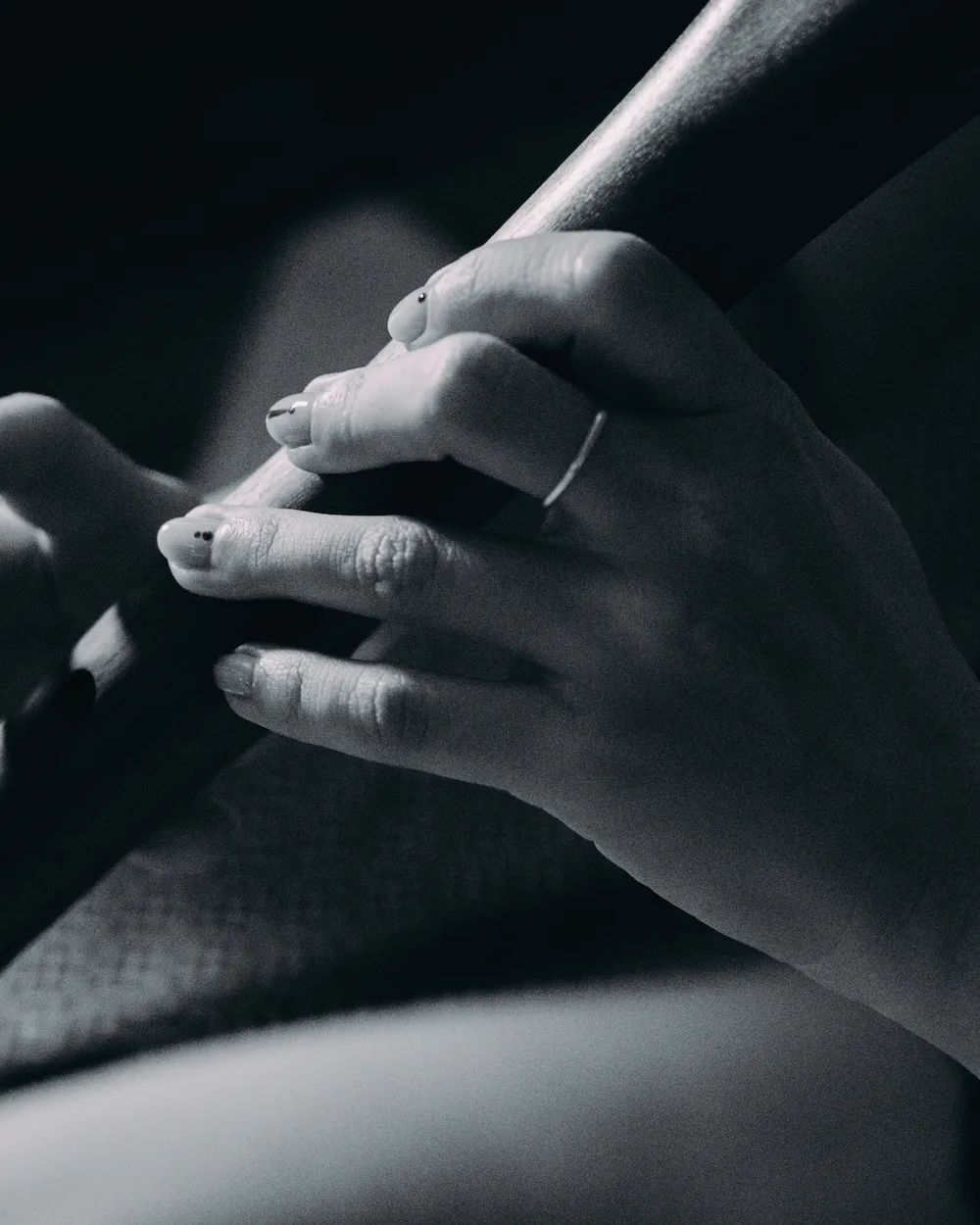
Sauna rituals are centuries-old cultural practices of cycling between heat, cold, and rest. Found across Finnish, Russian, German, Turkish, and Japanese traditions, they are rooted in community, presence, and physical restoration.

"What should I wear?" is one of the first questions people ask before stepping into a sauna for the first time. The answer is simpler than you might think.
"What should I wear?" is one of the first questions people ask before stepping into a sauna for the first time. The answer is simpler than you might think.
Your questions.
Answered.
Not sure what to expect? These answers might help you feel more confident as you begin.
Didn’t find your answer? Send us a message, we’ll respond with care and clarity.
What is a modern bathhouse?
A modern bathhouse keeps the architecture of the old idea, hot room, cold water, somewhere to rest, and lets the rhythm of the city around it shape the rest. Ours is built for Vancouver, on Davie Street, in the West End.
What is a modern bathhouse?
A modern bathhouse keeps the architecture of the old idea, hot room, cold water, somewhere to rest, and lets the rhythm of the city around it shape the rest. Ours is built for Vancouver, on Davie Street, in the West End.
Is the cold plunge at your bathhouse communal?
Is the cold plunge at your bathhouse communal?
Yes. Our cold pools are shared, with multiple temperature options so you can find one that meets you where you are. Communal plunging is part of what makes a bathhouse a bathhouse.
Is the bathhouse a welcoming space for the queer community?
Is the bathhouse a welcoming space for the queer community?
Yes. The West End is home to us and to our queer neighbours, and the bathhouse is built for everyone who walks in. We also host queer nights on a regular rotation, which you can find on the Classes calendar.
What's the etiquette inside the bathhouse?
What's the etiquette inside the bathhouse?
Phones stay in lockers. Voices stay low. Sit or lie on a towel inside the sauna, move at your own pace between rooms, and leave the space the way you'd want to find it. The room works because everyone in it is paying a little attention.
Do you offer Russian Banya at the bathhouse?
Do you offer Russian Banya at the bathhouse?
We run banya-inspired programming including venik work on select dates. The full ritual has its own page if you want to read about it before you book.
Do I need to book ahead, or can I walk in?
Do I need to book ahead, or can I walk in?
Walk-ins are welcome based on availability, but most guests book ahead through our app or website to lock in their preferred session time.
Your questions.
Answered.
Not sure what to expect? These answers might help you feel more confident as you begin.
What do I need to bring?
Please bring a bathing suit and a reusable water bottle. We provide two towels per guest, shower products, and secure lockers.
What do I need to bring?
Please bring a bathing suit and a reusable water bottle. We provide two towels per guest, shower products, and secure lockers.
Do I need a reservation?
Do I need a reservation?
Walk-ins are welcome, but we recommend booking through our app or website to check availability and join the waitlist.
Where can I park?
Where can I park?
Street parking is limited. We offer valet parking behind AetherHaus from 11:00–23:00. There is also some street parking available on Davie and nearby side streets.
What is Open Haus?
What is Open Haus?
Open Haus is a self-guided circuit through our saunas, plunge pools, and tea lounge. Our guides add essential oils to the stove throughout the day. The atmosphere shifts between silent, casual, and social, depending on the session.
What is your Haus Etiquette?
What is your Haus Etiquette?
Phones must be stored away. Please keep conversation soft, sit or lie on a towel, and move mindfully through the space. We ask that guests respect others’ experience and refrain from bringing outside food or drinks - complimentary tea is provided.
Can I visit if I am pregnant?
Can I visit if I am pregnant?
We advise against hot and cold therapy during pregnancy unless approved by your healthcare provider.
Didn’t find your answer? Send us a message, we’ll respond with care and clarity.
Your questions.
Answered.
Not sure what to expect? These answers might help you feel more confident as you begin.
Didn’t find your answer? Send us a message, we’ll respond with care and clarity.
What is a modern bathhouse?
A modern bathhouse keeps the architecture of the old idea, hot room, cold water, somewhere to rest, and lets the rhythm of the city around it shape the rest. Ours is built for Vancouver, on Davie Street, in the West End.
What is a modern bathhouse?
A modern bathhouse keeps the architecture of the old idea, hot room, cold water, somewhere to rest, and lets the rhythm of the city around it shape the rest. Ours is built for Vancouver, on Davie Street, in the West End.
Is the cold plunge at your bathhouse communal?
Is the cold plunge at your bathhouse communal?
Yes. Our cold pools are shared, with multiple temperature options so you can find one that meets you where you are. Communal plunging is part of what makes a bathhouse a bathhouse.
Is the bathhouse a welcoming space for the queer community?
Is the bathhouse a welcoming space for the queer community?
Yes. The West End is home to us and to our queer neighbours, and the bathhouse is built for everyone who walks in. We also host queer nights on a regular rotation, which you can find on the Classes calendar.
What's the etiquette inside the bathhouse?
What's the etiquette inside the bathhouse?
Phones stay in lockers. Voices stay low. Sit or lie on a towel inside the sauna, move at your own pace between rooms, and leave the space the way you'd want to find it. The room works because everyone in it is paying a little attention.
Do you offer Russian Banya at the bathhouse?
Do you offer Russian Banya at the bathhouse?
We run banya-inspired programming including venik work on select dates. The full ritual has its own page if you want to read about it before you book.
Do I need to book ahead, or can I walk in?
Do I need to book ahead, or can I walk in?
Walk-ins are welcome based on availability, but most guests book ahead through our app or website to lock in their preferred session time.