How Often Should You Use a Sauna? A Guide for Regular Practice
How Often Should You Use a Sauna? A Guide for Regular Practice
Most sauna frequency advice is written for people who own one. Here is what the research found, and how to build a practice you can hold for a year.
Most sauna frequency advice is written for people who own one. Here is what the research found, and how to build a practice you can hold for a year.
Published on:
Published on:
This is one of the first questions people ask once a sauna habit starts to form. Something about it is working, and they want to know how much is right.
The answer that circulates online arrives as a number with very little around it. The number is real and it comes from good research. The context it was measured in is worth knowing before you build a week around it.
What the Research Actually Found
The Finnish cohort
The study everyone cites followed 2,315 men in Eastern Finland for a median of 20.7 years. Men who bathed four to seven times weekly had a 63 percent lower risk of sudden cardiac death than men who went once a week (JAMA Internal Medicine, 2015).
That is a striking result, and it has shaped almost every frequency recommendation published since.
What the study does not tell you
The caveats rarely travel with the number, and they matter.
Every participant was a man between 42 and 60, from one region of Finland. No women were included. The study was observational, which means it found an association between frequent bathing and lower risk without establishing that one caused the other.
The group producing the headline figure was also small. Of 2,315 men, only 201 reported bathing four to seven times weekly.
None of this makes the finding useless. It makes it a starting point instead of a prescription, and it was measured on people for whom the sauna was a room in the house.
Why That Answer Does Not Fit a Visit
For someone with a sauna at home, a session costs electricity and twenty minutes. Going daily is a matter of walking downstairs.
A visit to a bathhouse has a different shape. There is a booking, a journey across the city, and a session that runs ninety minutes. There is a cost per visit, or a pass to think about.
Advice built for the first situation transfers badly to the second. Telling someone to bathe seven times a week stops being useful when each visit takes two hours of an evening and a place on the calendar.
The better question is simpler. What frequency can you hold for a year without it becoming a chore?
Finding a Rhythm You Can Hold
Consistency does more than intensity
The Finnish data is a frequency finding. Men who went often did better than men who went occasionally, tracked across two decades (JAMA Internal Medicine, 2015).
That points somewhere practical. One visit a week held for a year is worth more than five visits in a fortnight followed by two months away.
Most people arrive at a cadence without planning it. The visit stops being something scheduled and starts being the thing you do on a Tuesday.
Letting sensation set the pace
Dave Gu, Program Director at AetherHaus and a certified Wim Hof Method instructor, has described his own practice in these terms. Speaking about the early years of his cold exposure practice, he said: "Some days I might be in there for 30 seconds while other days I am in there for several minutes. And it was really about a process of learning what my body needed in the moment as opposed to always sticking to a prescriptive number."
The same thinking applies to how often you come. Some weeks ask for two visits. Some ask for none.
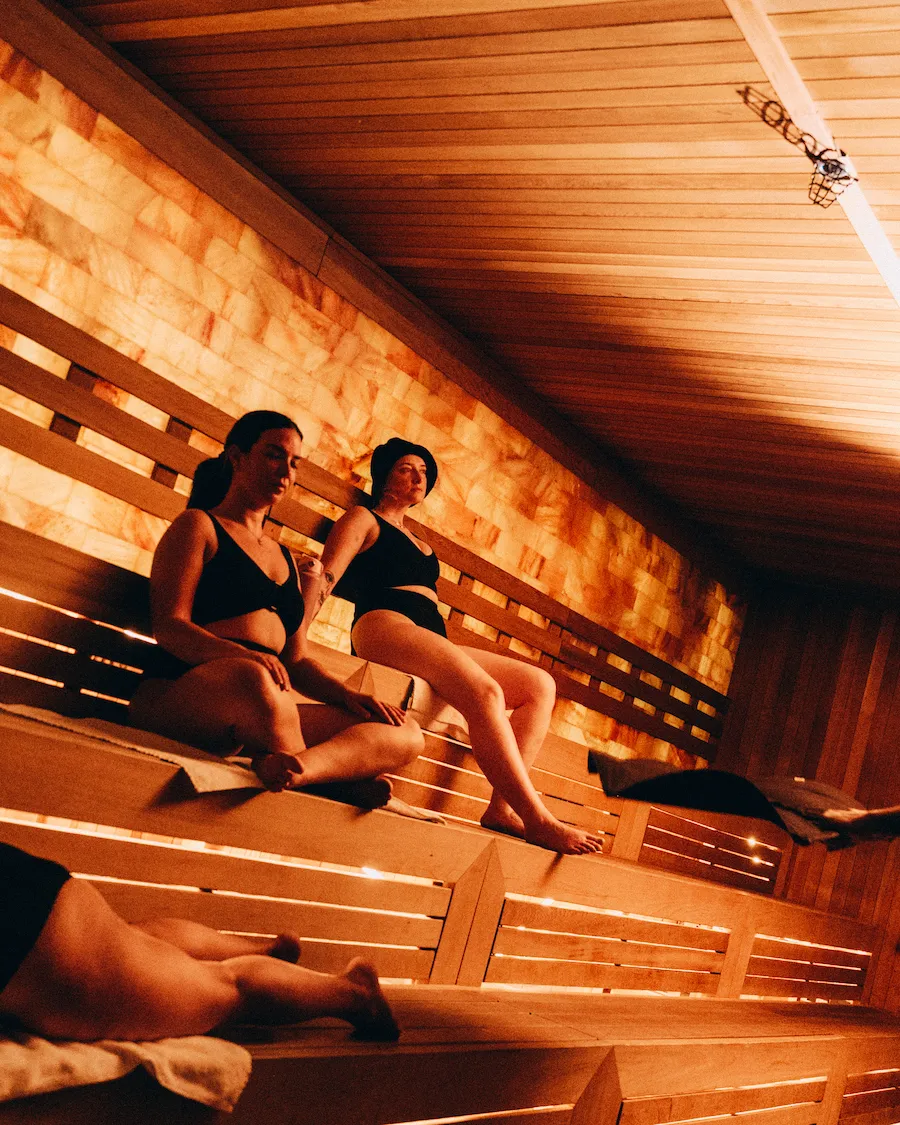
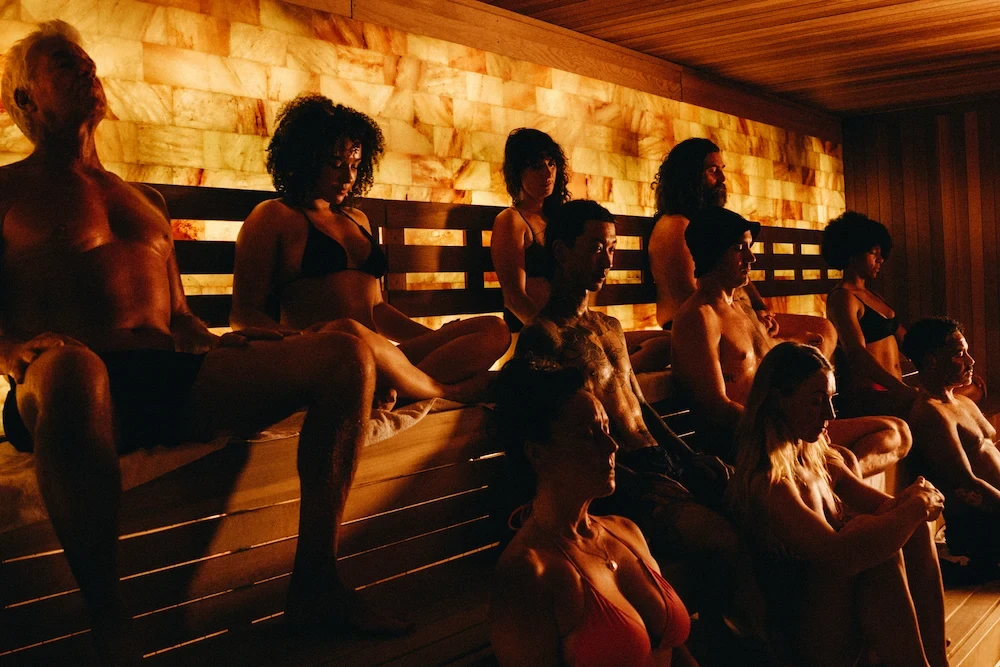
Our session formats are built around that variation, with silent, casual, and social settings depending on what the week has been like.

How Often for What You Are After
Most frequency advice gives one number. What you are coming for changes the answer.
For recovery after training
Two or three visits a week sits well alongside a training schedule, timed after sessions rather than before. Heat after effort is the traditional order and the one most people find useful. Our guide to sauna after training covers the timing in more detail.
For settling at the end of a day
Evening visits, once or twice a week, suit this best. Much of the value here is the ninety minutes away from a screen alongside the heat itself, and one evening a week is enough to notice.
For the cardiovascular findings
This is the one area where the research points toward higher frequency. The Finnish cohort found its strongest association at four to seven times weekly, though that group had saunas at home. Reaching that at a bathhouse means a membership and a real change to how your week runs.
For the social side
There is no research on this and none is needed. Some guests come because the room is full of people doing the same thing on a Saturday afternoon. Frequency here follows whatever rhythm the people you come with keep.
Starting Out and Building From There
The first month
Begin with one visit a week, and give it a month before deciding anything.
Build only when returning feels like something you want instead of something you have scheduled. That signal is more reliable than any number a study can give you.
There is no target to reach. One visit a week, held steadily, is a practice.
How long each session should be
Frequency and duration are separate questions with separate answers.
The same Finnish cohort found session length independently associated with risk. Men averaging more than 19 minutes per session were at lower risk than those averaging under 11 (JAMA Internal Medicine, 2015).
A ninety-minute bathhouse session is not ninety minutes of heat. It is several rounds of sauna, cold, and rest, arranged however suits you. Our guide to session length covers how to structure the time, and sauna temperature covers the heat itself.

Signs to Ease Off
Coming often is sustainable for most healthy adults. A few signals suggest slowing down.
Light-headedness that persists after you leave. Fatigue that does not clear with rest. Sleep that gets worse rather than better after evening sessions. Headaches, which usually point to hydration.
Any of these means fewer visits, shorter rounds, and more water. Sensible clothing and steady hydration remove most of the common problems before they start.
Who Should Come Less Often
Some people need medical guidance before setting any frequency at all.
Speak with a healthcare provider first if you have a cardiovascular condition, high or low blood pressure, or take medication affecting how your body handles heat. AetherHaus advises against hot and cold therapy during pregnancy unless a healthcare provider has approved it.
Beginners in any of these categories should treat the ranges in this article as background reading and take direction from their doctor.
Frequently Asked Questions
Is it safe to use a sauna every day?
For most healthy adults, daily heat bathing is well tolerated, and it is ordinary practice across Finland. Sessions of fifteen to twenty minutes with steady hydration are the general guidance. Anyone with a heart condition or taking blood pressure medication should speak with a healthcare provider first.
How often should a beginner go?
Once a week for the first month is a sensible start. Build from there if you find yourself wanting to return instead of scheduling it. There is no benefit to rushing the ramp, and a slower start tends to hold longer.
Does frequency differ for infrared saunas?
Infrared saunas run cooler, so the heat load per session is lower and sessions tend to run longer. Traditional saunas run considerably hotter with shorter rounds. The published cardiovascular research was conducted on traditional Finnish saunas.
How soon will I notice anything?
Most people notice the immediate effects on the first visit, particularly the settling afterwards and how they sleep that night. Findings on cardiovascular measures come from studies tracking people across years rather than weeks.
Is going once a week worth it?
Yes. The comparison group in the Finnish research bathed once weekly, and the benefits observed increased with frequency above that. One visit a week held for a year is a genuine practice with real value.
How long is a session at AetherHaus?
Sessions run ninety minutes. That covers several rounds through the Himalayan salt sauna, group cold pools, and the tea lounge, at whatever pace suits you. Booking options are on the pass page.
Key Takeaways
Research points to three to seven sessions weekly, measured on 2,315 middle-aged Finnish men who had saunas at home.
That study was observational, included no women, and only 201 participants sat in the frequent-bathing group.
Consistency across months matters more than frequency in any single week.
Starting with one visit a week and building when you want to return is the most durable approach.
Persistent light-headedness, fatigue that does not clear, or worsening sleep are signals to come less often.
This is one of the first questions people ask once a sauna habit starts to form. Something about it is working, and they want to know how much is right.
The answer that circulates online arrives as a number with very little around it. The number is real and it comes from good research. The context it was measured in is worth knowing before you build a week around it.
What the Research Actually Found
The Finnish cohort
The study everyone cites followed 2,315 men in Eastern Finland for a median of 20.7 years. Men who bathed four to seven times weekly had a 63 percent lower risk of sudden cardiac death than men who went once a week (JAMA Internal Medicine, 2015).
That is a striking result, and it has shaped almost every frequency recommendation published since.
What the study does not tell you
The caveats rarely travel with the number, and they matter.
Every participant was a man between 42 and 60, from one region of Finland. No women were included. The study was observational, which means it found an association between frequent bathing and lower risk without establishing that one caused the other.
The group producing the headline figure was also small. Of 2,315 men, only 201 reported bathing four to seven times weekly.
None of this makes the finding useless. It makes it a starting point instead of a prescription, and it was measured on people for whom the sauna was a room in the house.
Why That Answer Does Not Fit a Visit
For someone with a sauna at home, a session costs electricity and twenty minutes. Going daily is a matter of walking downstairs.
A visit to a bathhouse has a different shape. There is a booking, a journey across the city, and a session that runs ninety minutes. There is a cost per visit, or a pass to think about.
Advice built for the first situation transfers badly to the second. Telling someone to bathe seven times a week stops being useful when each visit takes two hours of an evening and a place on the calendar.
The better question is simpler. What frequency can you hold for a year without it becoming a chore?
Finding a Rhythm You Can Hold
Consistency does more than intensity
The Finnish data is a frequency finding. Men who went often did better than men who went occasionally, tracked across two decades (JAMA Internal Medicine, 2015).
That points somewhere practical. One visit a week held for a year is worth more than five visits in a fortnight followed by two months away.
Most people arrive at a cadence without planning it. The visit stops being something scheduled and starts being the thing you do on a Tuesday.
Letting sensation set the pace
Dave Gu, Program Director at AetherHaus and a certified Wim Hof Method instructor, has described his own practice in these terms. Speaking about the early years of his cold exposure practice, he said: "Some days I might be in there for 30 seconds while other days I am in there for several minutes. And it was really about a process of learning what my body needed in the moment as opposed to always sticking to a prescriptive number."
The same thinking applies to how often you come. Some weeks ask for two visits. Some ask for none.
Our session formats are built around that variation, with silent, casual, and social settings depending on what the week has been like.
How Often for What You Are After
Most frequency advice gives one number. What you are coming for changes the answer.
For recovery after training
Two or three visits a week sits well alongside a training schedule, timed after sessions rather than before. Heat after effort is the traditional order and the one most people find useful. Our guide to sauna after training covers the timing in more detail.
For settling at the end of a day
Evening visits, once or twice a week, suit this best. Much of the value here is the ninety minutes away from a screen alongside the heat itself, and one evening a week is enough to notice.
For the cardiovascular findings
This is the one area where the research points toward higher frequency. The Finnish cohort found its strongest association at four to seven times weekly, though that group had saunas at home. Reaching that at a bathhouse means a membership and a real change to how your week runs.
For the social side
There is no research on this and none is needed. Some guests come because the room is full of people doing the same thing on a Saturday afternoon. Frequency here follows whatever rhythm the people you come with keep.
Starting Out and Building From There
The first month
Begin with one visit a week, and give it a month before deciding anything.
Build only when returning feels like something you want instead of something you have scheduled. That signal is more reliable than any number a study can give you.
There is no target to reach. One visit a week, held steadily, is a practice.
How long each session should be
Frequency and duration are separate questions with separate answers.
The same Finnish cohort found session length independently associated with risk. Men averaging more than 19 minutes per session were at lower risk than those averaging under 11 (JAMA Internal Medicine, 2015).
A ninety-minute bathhouse session is not ninety minutes of heat. It is several rounds of sauna, cold, and rest, arranged however suits you. Our guide to session length covers how to structure the time, and sauna temperature covers the heat itself.
Signs to Ease Off
Coming often is sustainable for most healthy adults. A few signals suggest slowing down.
Light-headedness that persists after you leave. Fatigue that does not clear with rest. Sleep that gets worse rather than better after evening sessions. Headaches, which usually point to hydration.
Any of these means fewer visits, shorter rounds, and more water. Sensible clothing and steady hydration remove most of the common problems before they start.
Who Should Come Less Often
Some people need medical guidance before setting any frequency at all.
Speak with a healthcare provider first if you have a cardiovascular condition, high or low blood pressure, or take medication affecting how your body handles heat. AetherHaus advises against hot and cold therapy during pregnancy unless a healthcare provider has approved it.
Beginners in any of these categories should treat the ranges in this article as background reading and take direction from their doctor.
Frequently Asked Questions
Is it safe to use a sauna every day?
For most healthy adults, daily heat bathing is well tolerated, and it is ordinary practice across Finland. Sessions of fifteen to twenty minutes with steady hydration are the general guidance. Anyone with a heart condition or taking blood pressure medication should speak with a healthcare provider first.
How often should a beginner go?
Once a week for the first month is a sensible start. Build from there if you find yourself wanting to return instead of scheduling it. There is no benefit to rushing the ramp, and a slower start tends to hold longer.
Does frequency differ for infrared saunas?
Infrared saunas run cooler, so the heat load per session is lower and sessions tend to run longer. Traditional saunas run considerably hotter with shorter rounds. The published cardiovascular research was conducted on traditional Finnish saunas.
How soon will I notice anything?
Most people notice the immediate effects on the first visit, particularly the settling afterwards and how they sleep that night. Findings on cardiovascular measures come from studies tracking people across years rather than weeks.
Is going once a week worth it?
Yes. The comparison group in the Finnish research bathed once weekly, and the benefits observed increased with frequency above that. One visit a week held for a year is a genuine practice with real value.
How long is a session at AetherHaus?
Sessions run ninety minutes. That covers several rounds through the Himalayan salt sauna, group cold pools, and the tea lounge, at whatever pace suits you. Booking options are on the pass page.
Key Takeaways
Research points to three to seven sessions weekly, measured on 2,315 middle-aged Finnish men who had saunas at home.
That study was observational, included no women, and only 201 participants sat in the frequent-bathing group.
Consistency across months matters more than frequency in any single week.
Starting with one visit a week and building when you want to return is the most durable approach.
Persistent light-headedness, fatigue that does not clear, or worsening sleep are signals to come less often.
our Blog
our Blog
More insights
More insights
Explore more reflections, guidance, and practical tools to support you.
Explore more reflections, guidance, and practical tools to support you.
The mechanism is well understood. The direct evidence on saunas is thinner than the headlines suggest. Here is what the research shows, and how to time an evening session.

A bathhouse sells entry to shared rooms. A spa sells a booked treatment. Here is what separates them, and which one suits your next visit.
A bathhouse sells entry to shared rooms. A spa sells a booked treatment. Here is what separates them, and which one suits your next visit.
Your questions.
Answered.
Not sure what to expect? These answers might help you feel more confident as you begin.
Didn’t find your answer? Send us a message, we’ll respond with care and clarity.
What is a modern bathhouse?
A modern bathhouse keeps the architecture of the old idea, hot room, cold water, somewhere to rest, and lets the rhythm of the city around it shape the rest. Ours is built for Vancouver, on Davie Street, in the West End.
What is a modern bathhouse?
A modern bathhouse keeps the architecture of the old idea, hot room, cold water, somewhere to rest, and lets the rhythm of the city around it shape the rest. Ours is built for Vancouver, on Davie Street, in the West End.
Is the cold plunge at your bathhouse communal?
Is the cold plunge at your bathhouse communal?
Yes. Our cold pools are shared, with multiple temperature options so you can find one that meets you where you are. Communal plunging is part of what makes a bathhouse a bathhouse.
Is the bathhouse a welcoming space for the queer community?
Is the bathhouse a welcoming space for the queer community?
Yes. The West End is home to us and to our queer neighbours, and the bathhouse is built for everyone who walks in. We also host queer nights on a regular rotation, which you can find on the Classes calendar.
What's the etiquette inside the bathhouse?
What's the etiquette inside the bathhouse?
Phones stay in lockers. Voices stay low. Sit or lie on a towel inside the sauna, move at your own pace between rooms, and leave the space the way you'd want to find it. The room works because everyone in it is paying a little attention.
Do you offer Russian Banya at the bathhouse?
Do you offer Russian Banya at the bathhouse?
We run banya-inspired programming including venik work on select dates. The full ritual has its own page if you want to read about it before you book.
Do I need to book ahead, or can I walk in?
Do I need to book ahead, or can I walk in?
Walk-ins are welcome based on availability, but most guests book ahead through our app or website to lock in their preferred session time.
Your questions.
Answered.
Not sure what to expect? These answers might help you feel more confident as you begin.
What do I need to bring?
Please bring a bathing suit and a reusable water bottle. We provide two towels per guest, shower products, and secure lockers.
What do I need to bring?
Please bring a bathing suit and a reusable water bottle. We provide two towels per guest, shower products, and secure lockers.
Do I need a reservation?
Do I need a reservation?
Walk-ins are welcome, but we recommend booking through our app or website to check availability and join the waitlist.
Where can I park?
Where can I park?
Street parking is limited. We offer valet parking behind AetherHaus from 11:00–23:00. There is also some street parking available on Davie and nearby side streets.
What is Open Haus?
What is Open Haus?
Open Haus is a self-guided circuit through our saunas, plunge pools, and tea lounge. Our guides add essential oils to the stove throughout the day. The atmosphere shifts between silent, casual, and social, depending on the session.
What is your Haus Etiquette?
What is your Haus Etiquette?
Phones must be stored away. Please keep conversation soft, sit or lie on a towel, and move mindfully through the space. We ask that guests respect others’ experience and refrain from bringing outside food or drinks - complimentary tea is provided.
Can I visit if I am pregnant?
Can I visit if I am pregnant?
We advise against hot and cold therapy during pregnancy unless approved by your healthcare provider.
Didn’t find your answer? Send us a message, we’ll respond with care and clarity.
Your questions.
Answered.
Not sure what to expect? These answers might help you feel more confident as you begin.
Didn’t find your answer? Send us a message, we’ll respond with care and clarity.
What is a modern bathhouse?
A modern bathhouse keeps the architecture of the old idea, hot room, cold water, somewhere to rest, and lets the rhythm of the city around it shape the rest. Ours is built for Vancouver, on Davie Street, in the West End.
What is a modern bathhouse?
A modern bathhouse keeps the architecture of the old idea, hot room, cold water, somewhere to rest, and lets the rhythm of the city around it shape the rest. Ours is built for Vancouver, on Davie Street, in the West End.
Is the cold plunge at your bathhouse communal?
Is the cold plunge at your bathhouse communal?
Yes. Our cold pools are shared, with multiple temperature options so you can find one that meets you where you are. Communal plunging is part of what makes a bathhouse a bathhouse.
Is the bathhouse a welcoming space for the queer community?
Is the bathhouse a welcoming space for the queer community?
Yes. The West End is home to us and to our queer neighbours, and the bathhouse is built for everyone who walks in. We also host queer nights on a regular rotation, which you can find on the Classes calendar.
What's the etiquette inside the bathhouse?
What's the etiquette inside the bathhouse?
Phones stay in lockers. Voices stay low. Sit or lie on a towel inside the sauna, move at your own pace between rooms, and leave the space the way you'd want to find it. The room works because everyone in it is paying a little attention.
Do you offer Russian Banya at the bathhouse?
Do you offer Russian Banya at the bathhouse?
We run banya-inspired programming including venik work on select dates. The full ritual has its own page if you want to read about it before you book.
Do I need to book ahead, or can I walk in?
Do I need to book ahead, or can I walk in?
Walk-ins are welcome based on availability, but most guests book ahead through our app or website to lock in their preferred session time.