Russian Banya Culture and Its Influence on Modern Sauna Spaces: From Ancient Crossroads to Contemporary Fusion
Russian Banya Culture and Its Influence on Modern Sauna Spaces: From Ancient Crossroads to Contemporary Fusion
Before there was Russia, there was the banya. Before the Mongol invasion, before Moscow united the Russian lands, before the Soviet Union rose and fell; people gathered in steam to sweat together, to mark births and deaths, to negotiate power and find renewal.
Before there was Russia, there was the banya. Before the Mongol invasion, before Moscow united the Russian lands, before the Soviet Union rose and fell; people gathered in steam to sweat together, to mark births and deaths, to negotiate power and find renewal.
Published on:
Published on:
The communal steam bath has survived Mongols, Peter the Great, and Soviet communism and remains central and unifying national custom (Stanford CASBS / Ethan Pollock). Drawing on sources as diverse as ancient chronicles, government reports, medical books, and popular culture, historians show how banya has persisted, adapted, and flourished in everyday lives of Russians throughout wars, political ruptures, modernization, and urbanization (Ethan Pollock).
Today, banya influences modern sauna spaces from San Francisco to Vancouver, Berlin to London. But something changes when ritual crosses cultural borders. Some elements translate. Others require native context that cannot be packaged and exported.
At AetherHaus in Vancouver's West End, we honour Russian banya traditions alongside German aufguss and Nordic sauna practices. This fusion raises questions: What can be preserved? What gets lost in translation? When does adaptation become appropriation?
The answers lie in understanding where banya came from and how it evolved through centuries of political upheaval while maintaining its essential character.
The Cultural Crossroads: Why Banya Was Never Purely Russian
Ancient Origins (440 BCE - 12th Century)
The first known mention of Russian banyas appears in 440 BCE by Herodotus in his book "Histories"—he mentions group of people enjoying banya north of Black Sea, in what today would be modern-day Russia (Bathhouse, 2024).
But the practice described by Herodotus already carried influences from multiple cultures. Early banya was born in Kievan Rus' and mixed bathing traditions from Byzantium to south, Finns to north, Jews who lived among them and Khazar tribes to east (Wikipedia, 2025).
This cultural amalgamation matters. Banya was never purely Slavic invention. It emerged at intersection of trade routes, religious exchanges, and cultural cross-pollination.
Mention of banya appears in Radziwiłł Chronicle in story of Princess Olga's revenge for murder of her husband Prince Igor by Slavic tribe of Drevlians in 945 AD (Wikipedia, 2025). By the 12th century, banya was documented enough to feature in political narratives and revenge tales.
What This Means for Modern Adaptation
The cultural crossroads nature of banya's origin suggests something important: adaptation and fusion were built into the practice from the beginning.
When modern Western spaces combine Russian banya elements with Finnish sauna or German aufguss traditions, they are not corrupting pure lineage. They are continuing the tradition of cultural exchange that created banya in the first place.
The question becomes not whether fusion is appropriate, but how it happens; with cultural humility and historical awareness, or through appropriation that strips meaning while commodifying form.
Through Empire and Revolution: Banya as Political Constant
Peter the Great and Modernization That Preserved Tradition (1703)
Peter the Great drove Russia toward Westernization with often brutal determination. He forced nobles to shave their beards. He banned traditional clothing. He built St. Petersburg as window to Europe.
But Peter the Great enjoyed bathing, so his drive to modernize and westernize Russia never threatened indigenous culture of banya; when he founded St Petersburg in 1703, he authorized tax breaks to encourage construction of bath houses (Banya London, 2025).
Peter was allegedly asked about the importance of doctors for the military and is said to have answered, "Not for Russia. The banya alone is enough" (Banya London, 2025).
This was not a rejection of progress. This was recognition that some cultural practices carry health wisdom that Western medicine cannot replace.
Catherine the Great and Scientific Legitimization (1777-1779)
Catherine the Great built a stone banya on her estate at Tsarskoe Selo in 1779, and promoted the ancient Russian institution as vital to the health and power of her expanding empire (International Sauna Association).
Her reign marked a shift toward scientific documentation of what peasants already knew. Antonio Sanches, foreign doctor at Russian court during the reign of Catherine the Great, published study in 1777 explaining therapeutic and prophylactic advantages of regular bathing and called for state to administer and regulate industry in the interests of public health (Banya London, 2025).
Many doctors of the 18th century, including even one of Catherine the Great's medical advisors, believed that banyas could replace two-thirds of medical needs and were in many ways more beneficial than going to doctor (Bathhouse, 2024).
Between 1877-1911, over 30 medical treatises were published in Russia about medicinal effects of banya (Mr. Steam Blog).
The scientific attention did not medicalize banya into sterile procedure. The ritual remained communal, spiritual, deeply cultural. But Western validation helped ensure its survival through subsequent political upheavals.
Napoleon and Banya as Symbol of Russian Strength (1812)
When Napoleon invaded Russia in 1812, popular broadside showed him in parilka with three Russian soldiers "You were the one who entered the Russian banya," one soldier reminds Napoleon, stereotypical weedy foreigner (International Sauna Association).
The propaganda worked because it tapped into cultural truth: Russians understood heat tolerance as marker of strength, endurance, national character. The banya became symbol of what made Russians resilient against foreign invasion.
Grigory Rasputin, who became a spiritual intimate of tsar's family, took aristocratic women with him to banya to "remind them," in his peasant presence, "of their Russian bodies and souls" (International Sauna Association).
This gesture acknowledged banya as an equalizer. In steam, class distinctions dissolved. Everyone sweated. Everyone turned red. Everyone became simply the human body managing heat.
Soviet Transformation and Failure to Strip Ritual Meaning
Endorsing Banya as Hygienic Modernity
The Soviet Revolution might have eliminated banya as bourgeois indulgence or religious superstition. Instead, the state embraced it.
People demanded and needed to be able to wash and public banyas could cleanse society of capitalist pollutants that had accrued under tsarism; despite Soviet endorsement of banya as epitome of hygienic modernity, state failed to build enough and never succeeded in transforming bath house culture into something purely functionary (Banya London, 2025).
The Soviet attempt reveals something crucial about why ritual resists optimization. The state could frame banya as sanitation infrastructure. It could medicalize the practice. It could build facilities according to efficiency standards.
But it could not eliminate the cultural meanings people brought to steam. The conversations. The bonding. The sense that something beyond hygiene happened in heat.
Where Political Power Was Negotiated
Soviet Union could be said to have ended in banya—in August 1991 hardliners from Soviet elite gathered to sweat and discuss removal of Mikhail Gorbachev; two months later Yeltsin met with counterparts from Ukraine and Belorussia to agree decentralization of USSR; Yeltsin celebrated in banya (Banya London, 2025).
The location was not coincidental. Banya represented space outside normal power structures. Nakedness removed rank insignia. Heat made everyone vulnerable. Conversations in steam carried different weight than negotiations in government offices.
When the largest political entity in the world dissolved, the ritual that survived every previous upheaval witnessed its end and continuation.
Post-Soviet Resurgence and Modern Political Symbolism
Banya as Unifying Symbol of Russianness
The collapse of USSR brought privatization as well as resurgence of banya as a unifying and positive symbol of Russianness, here was something that predated the Soviet and tsarist period and which could be celebrated (Banya London, 2025).
In the chaos of the 1990s, as economic systems collapsed and national identity fragmented, banya offered continuity. It connected post-Soviet Russians to ancestors who sweated in the same way a thousand years earlier.
The practice required no ideology. It made no political demands. It simply was; ancient, Russian, enduring.
Putin's Patriotic Performance
Politicians used it to signal they remained close to fellow Russians, Putin uses his love of institution to signal his patriotism, health and wholesomeness; claims to have rescued treasured metal crucifix from ashes of country banya that burnt down in 1990s, perfect alloy of his love of country and church (Banya London, 2025).
Whether the crucifix story is true matters less than what it reveals: banya functions as a political symbol. The leader who loves banya demonstrates he has not abandoned traditional values for Western corruption.
This political deployment of banya raises questions for modern Western spaces. When we adopt the practice, do we also import its nationalist associations? Can ritual be separated from politics?
Cultural Significance: What Banya Meant Beyond Hygiene
The Sacred Transitions
In the past, banya was both a place for beginning and end of life, women would give birth in banyas, and mourners following death would gather at banya to ensure their loved ones were warm for afterlife (Bathhouse, 2024).
The building was often the cleanest structure on any farmstead. The heat created sterile environment. Steam assisted with difficult births. Cold water revived fading consciousness.
But the choice of banya for major life transitions carried meaning beyond practical hygiene. Russians understood that transformation; birth, death, marriage, spiritual renewal; required ritual space set apart from ordinary life.
The Language of Renewal
Phrase coined to describe banya's restorative properties is "pomylsya – budto zanovo rodilsya," which translates to "washed – born again" (Bathhouse, 2024).
The language reveals what banya offered: not mere cleaning of skin but fundamental reset. You entered as one version of yourself. You emerged renewed, reborn, carrying less weight from whatever preceded the steam.
This transformation required community witness. Since ancient times, banya has been considered an important bonding place in Russian culture; throughout Russian history, banya was used by all social classes within Russian society, including peasants and nobles; communal baths were very common in villages and towns (Wikipedia, 2025).
Migration to North America: What Travels and What Stays Behind
The Contemporary Global Spread
Story comes up to present, exploring continued importance of banyas in Russia and their newfound popularity in cities across globe (Ethan Pollock).
Major North American cities now host banya spaces: Archimedes in San Francisco, Russian & Turkish Baths in New York, various boutique facilities attempting to recreate the experience for Western audiences seeking alternatives to commercial spa culture.
Our guide comparing banya and sauna explores the technical differences. But the cultural translation involves more than temperature and humidity.
What Authentic Preservation Means
North American Sauna Society promotes "balance of cultural integrity and experiential excellence"—Sauna Ambassador Program honours Finnish, Russian, Estonian, Norwegian, Swedish, Latvian, Lithuanian traditions (NASS).
But NASS notes "strong and sometimes misleading marketing noise" in modern sauna spaces, with authentic understanding "still quite limited"—87% of respondents prefer traditional sauna, indicating desire for authenticity (NASS).
The tension is real. Modern Western spaces want to honour tradition while making it accessible to people who do not speak Russian, who feel uncomfortable with gender-segregated nudity, who lack cultural context for the rituals.
Some elements translate well: the three-room structure, the venik massage, the contrast between heat and cold, the communal atmosphere. These can be preserved with relative integrity.
Other elements require native context: the Russian language banter, the unspoken rules known to regular banya-goers, the cultural references embedded in the experience, the sense that you belong to lineage stretching back centuries.
AetherHaus: Fusion as Mindful Adaptation
What We Borrow from Russian Tradition
At AetherHaus, we honour several core banya elements. The communal spirit, our social open haus sessions create space for connection through shared heat. The contrast therapy cycling between extreme temperatures. The understanding that heat serves purposes beyond simple relaxation.
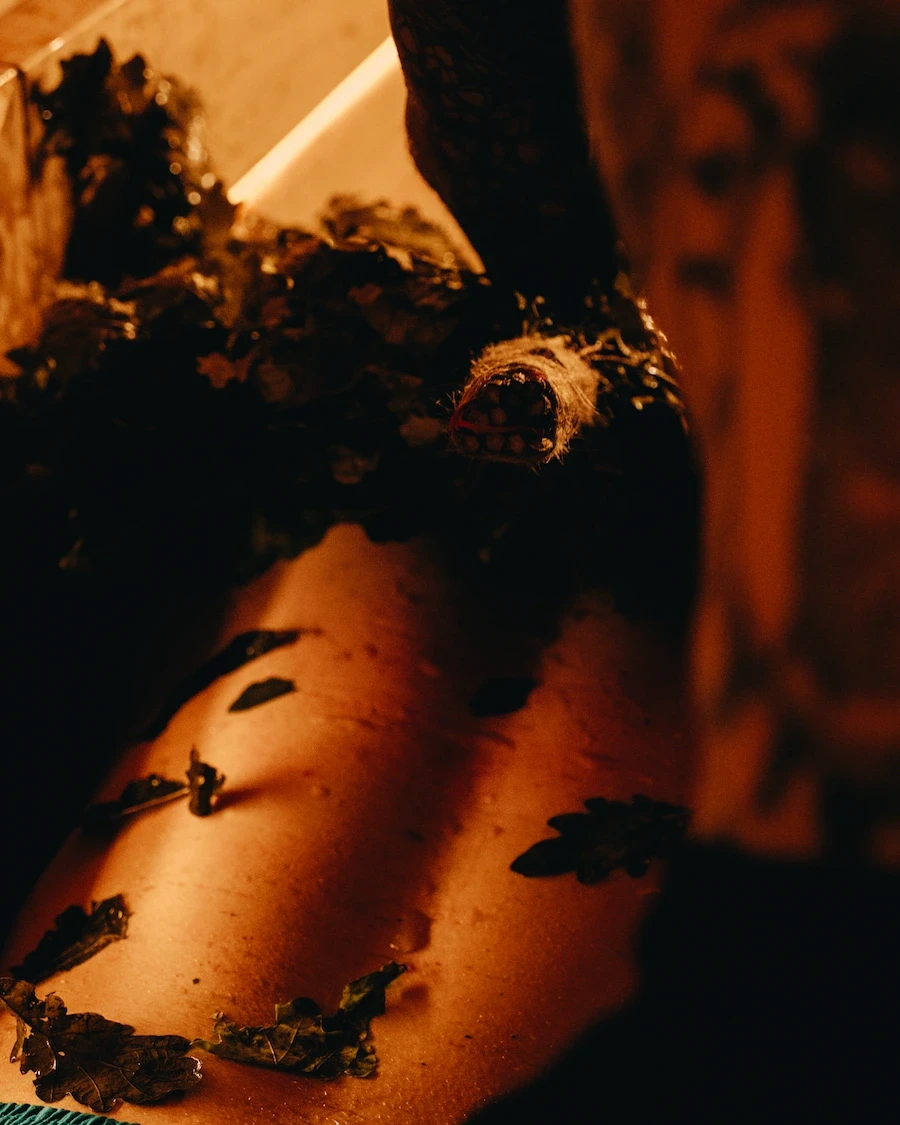
We recognize that venik traditions carry wisdom worth preserving. The birch branches are not decorative. They deliver anti-inflammatory compounds, stimulate circulation, create aromatic steam that affects nervous system directly.
We maintain the phone-free environment that Russian banyas naturally possessed before smartphones existed. Presence requires absence of digital distraction.
What We Cannot Take
But we cannot replicate certain elements without appropriation. We do not attempt Russian language immersion. We do not claim to recreate the specific cultural atmosphere of Moscow bathhouse frequented by regulars who share decades of history.
We adapted gender norms; our space is co-ed with swimsuits required, acknowledging North American comfort levels while sacrificing the gender-segregated nakedness that traditional banya considers essential.
We combine Russian banya elements with German aufguss theatricality and Nordic sauna contemplation. This fusion acknowledges that we operate at cultural intersection, not within a single tradition.
The question I return to after guiding people through contrast therapy: Are we honouring tradition or commercializing it? The answer depends on whether we maintain the core teaching; that heat reveals what thought obscures, that your body knows its limits better than any protocol, that transformation requires ritual space set apart from optimization culture.
When Ritual Becomes Transaction: What Gets Lost
The Optimization Problem
Modern Western approach to banya often strips ritual meaning while preserving technique. We measure temperature precisely. We prescribe duration. We track sessions. We optimize.
But optimization is antithetical to what made banya powerful for centuries. Russians never timed their steam. They stayed until they felt complete. They left when bodies signaled. They returned for another round when readiness emerged.
The Soviet state tried to systematize banya and failed. Modern commercial spaces make the same attempt with similar results. You can build the facility. You can recreate the temperature and humidity. You can import veniks.
But if you convert ritual into a timed session, if you reduce a thousand-year tradition to "heat therapy technique", you lose exactly what gave the practice its transformative power.
Preserving What Matters
The solution is not abandoning structure entirely. Some guidance helps beginners navigate unfamiliar territory. Our first-time banya guide offers practical preparation without prescribing how long anyone should stay.
The balance requires cultural humility: acknowledging what we take from Russian tradition, being honest about what we adapt, remaining aware that something ineffable resists translation.
Frequently Asked Questions
How did Russian banya culture originate?
Banya emerged at cultural crossroads in ancient Kievan Rus', mixing bathing traditions from Byzantium (south), Finnish practices (north), Jewish communities, and Khazar tribes (east). First documented mention appears in Herodotus 440 BCE. The practice predated Russian state formation and survived Mongol invasion, tsarist rule, Soviet communism, and post-Soviet transformation while maintaining essential character.
How did Russian political leaders use banya?
Peter the Great authorized tax breaks for bathhouse construction in 1703 and allegedly claimed "the banya alone is enough" instead of doctors for military health. Catherine the Great built stone banya at Tsarskoe Selo in 1779 and promoted it as vital to empire health. Soviet state endorsed it as hygienic modernity. USSR dissolution was negotiated in banya in 1991. Putin uses banya love to signal patriotism and connection to traditional Russian values.
What does "washed - born again" mean in banya culture?
Russian phrase "pomylsya – budto zanovo rodilsya" translates to "washed – born again," describing banya's restorative properties beyond simple hygiene. Phrase captures belief that banya offers fundamental reset; you emerge renewed, transformed, carrying less weight from whatever preceded the steam. This understanding positioned banya as sacred space for major life transitions including birth, death, weddings, and spiritual renewal.
How is modern North American banya different from traditional Russian practice?
Modern Western adaptations typically include co-ed spaces with swimsuits required (versus traditional gender-segregated nudity), electric heating (versus wood-fired). North American Sauna Society notes "strong and sometimes misleading marketing noise" with authentic understanding "still quite limited." Cultural elements requiring native context—Russian language, unspoken rules, lineage connection—resist translation while technical elements like three-room structure and venik massage transfer relatively intact.
Why did the Soviet state fail to transform banya into purely functional space?
Despite endorsing banya as epitome of hygienic modernity, the Soviet state never succeeded in transforming bath house culture into something purely functional. People maintained communal bonding, conversations, and a sense that something beyond hygiene occurred in heat. Ritual resisted systematization because cultural meanings persisted regardless of state framing. Political power was negotiated in banyas including USSR dissolution discussions in 1991.
Can modern fusion spaces honour tradition without appropriation?
Mindful fusion requires cultural humility; acknowledging what you borrow from tradition, being honest about adaptations, remaining aware that some elements resist translation. Elements that transfer well include three-room structure, venik massage, contrast therapy, communal atmosphere. Elements requiring native context include Russian language immersion, gender-segregated cultural norms, and lineage connection spanning centuries. Balance involves preserving core teaching (body wisdom over protocols, ritual over optimization) while adapting format for different cultural context.
What is the relationship between banya and Finnish sauna traditions?
Banya's origins included Finnish influences from northern neighbours; cultural crossroads nature meant Finnish practices mixed with Byzantium, Jewish, and Khazar bathing traditions from the beginning. Finnish saunas and Russian banya share ancient roots but evolved differently: Finnish emphasizes meditative silence and dry heat, Russian embraces communal conversation and wet steam. Modern spaces like AetherHaus combine both traditions alongside German aufguss, continuing the historical pattern of cultural exchange that created banya originally.
How does AetherHaus approach cultural adaptation?
AetherHaus combines Russian banya communal spirit, German aufguss theatrical elements, and Nordic sauna contemplation in a co-ed phone-free environment. We honour venik traditions, contrast therapy cycling, and understanding that heat serves purposes beyond relaxation. We adapted gender norms (swimsuits required) and avoid claiming to recreate the Moscow bathhouse atmosphere. Focus remains on core teaching: sensation-based practice over prescribed protocols, transformation through ritual rather than optimization through tracking.
Key Takeaways
Russian banya emerged at cultural crossroads mixing Byzantium, Finnish, Jewish, and Khazar bathing traditions, never purely Slavic but amalgamation from beginning (Wikipedia, 2025)
Banya survived Mongol invasion, Peter the Great's westernization, Soviet communism, and post-Soviet transformation while maintaining essential character as unifying Russian cultural practice (Ethan Pollock)
Political leaders from Peter the Great (1703 tax breaks) through Catherine the Great (1779 stone banya) to Putin (modern patriotic symbolism) used banya to signal national values and health priorities (Banya London, 2025)
Soviet state endorsed banya as hygienic modernity but failed to transform it into purely functional space, ritual meaning persisted despite systematization attempts (Banya London, 2025)
Modern North American spaces face authenticity tensions between cultural integrity and accessibility, 87% prefer traditional sauna while noting "misleading marketing noise" in commercial adaptations (NASS)
Experience mindful fusion of Russian Banya, German Aufguss, and Nordic sauna traditions. Book your session at AetherHaus in Vancouver's West End.
The communal steam bath has survived Mongols, Peter the Great, and Soviet communism and remains central and unifying national custom (Stanford CASBS / Ethan Pollock). Drawing on sources as diverse as ancient chronicles, government reports, medical books, and popular culture, historians show how banya has persisted, adapted, and flourished in everyday lives of Russians throughout wars, political ruptures, modernization, and urbanization (Ethan Pollock).
Today, banya influences modern sauna spaces from San Francisco to Vancouver, Berlin to London. But something changes when ritual crosses cultural borders. Some elements translate. Others require native context that cannot be packaged and exported.
At AetherHaus in Vancouver's West End, we honour Russian banya traditions alongside German aufguss and Nordic sauna practices. This fusion raises questions: What can be preserved? What gets lost in translation? When does adaptation become appropriation?
The answers lie in understanding where banya came from and how it evolved through centuries of political upheaval while maintaining its essential character.
The Cultural Crossroads: Why Banya Was Never Purely Russian
Ancient Origins (440 BCE - 12th Century)
The first known mention of Russian banyas appears in 440 BCE by Herodotus in his book "Histories"—he mentions group of people enjoying banya north of Black Sea, in what today would be modern-day Russia (Bathhouse, 2024).
But the practice described by Herodotus already carried influences from multiple cultures. Early banya was born in Kievan Rus' and mixed bathing traditions from Byzantium to south, Finns to north, Jews who lived among them and Khazar tribes to east (Wikipedia, 2025).
This cultural amalgamation matters. Banya was never purely Slavic invention. It emerged at intersection of trade routes, religious exchanges, and cultural cross-pollination.
Mention of banya appears in Radziwiłł Chronicle in story of Princess Olga's revenge for murder of her husband Prince Igor by Slavic tribe of Drevlians in 945 AD (Wikipedia, 2025). By the 12th century, banya was documented enough to feature in political narratives and revenge tales.
What This Means for Modern Adaptation
The cultural crossroads nature of banya's origin suggests something important: adaptation and fusion were built into the practice from the beginning.
When modern Western spaces combine Russian banya elements with Finnish sauna or German aufguss traditions, they are not corrupting pure lineage. They are continuing the tradition of cultural exchange that created banya in the first place.
The question becomes not whether fusion is appropriate, but how it happens; with cultural humility and historical awareness, or through appropriation that strips meaning while commodifying form.
Through Empire and Revolution: Banya as Political Constant
Peter the Great and Modernization That Preserved Tradition (1703)
Peter the Great drove Russia toward Westernization with often brutal determination. He forced nobles to shave their beards. He banned traditional clothing. He built St. Petersburg as window to Europe.
But Peter the Great enjoyed bathing, so his drive to modernize and westernize Russia never threatened indigenous culture of banya; when he founded St Petersburg in 1703, he authorized tax breaks to encourage construction of bath houses (Banya London, 2025).
Peter was allegedly asked about the importance of doctors for the military and is said to have answered, "Not for Russia. The banya alone is enough" (Banya London, 2025).
This was not a rejection of progress. This was recognition that some cultural practices carry health wisdom that Western medicine cannot replace.
Catherine the Great and Scientific Legitimization (1777-1779)
Catherine the Great built a stone banya on her estate at Tsarskoe Selo in 1779, and promoted the ancient Russian institution as vital to the health and power of her expanding empire (International Sauna Association).
Her reign marked a shift toward scientific documentation of what peasants already knew. Antonio Sanches, foreign doctor at Russian court during the reign of Catherine the Great, published study in 1777 explaining therapeutic and prophylactic advantages of regular bathing and called for state to administer and regulate industry in the interests of public health (Banya London, 2025).
Many doctors of the 18th century, including even one of Catherine the Great's medical advisors, believed that banyas could replace two-thirds of medical needs and were in many ways more beneficial than going to doctor (Bathhouse, 2024).
Between 1877-1911, over 30 medical treatises were published in Russia about medicinal effects of banya (Mr. Steam Blog).
The scientific attention did not medicalize banya into sterile procedure. The ritual remained communal, spiritual, deeply cultural. But Western validation helped ensure its survival through subsequent political upheavals.
Napoleon and Banya as Symbol of Russian Strength (1812)
When Napoleon invaded Russia in 1812, popular broadside showed him in parilka with three Russian soldiers "You were the one who entered the Russian banya," one soldier reminds Napoleon, stereotypical weedy foreigner (International Sauna Association).
The propaganda worked because it tapped into cultural truth: Russians understood heat tolerance as marker of strength, endurance, national character. The banya became symbol of what made Russians resilient against foreign invasion.
Grigory Rasputin, who became a spiritual intimate of tsar's family, took aristocratic women with him to banya to "remind them," in his peasant presence, "of their Russian bodies and souls" (International Sauna Association).
This gesture acknowledged banya as an equalizer. In steam, class distinctions dissolved. Everyone sweated. Everyone turned red. Everyone became simply the human body managing heat.
Soviet Transformation and Failure to Strip Ritual Meaning
Endorsing Banya as Hygienic Modernity
The Soviet Revolution might have eliminated banya as bourgeois indulgence or religious superstition. Instead, the state embraced it.
People demanded and needed to be able to wash and public banyas could cleanse society of capitalist pollutants that had accrued under tsarism; despite Soviet endorsement of banya as epitome of hygienic modernity, state failed to build enough and never succeeded in transforming bath house culture into something purely functionary (Banya London, 2025).
The Soviet attempt reveals something crucial about why ritual resists optimization. The state could frame banya as sanitation infrastructure. It could medicalize the practice. It could build facilities according to efficiency standards.
But it could not eliminate the cultural meanings people brought to steam. The conversations. The bonding. The sense that something beyond hygiene happened in heat.
Where Political Power Was Negotiated
Soviet Union could be said to have ended in banya—in August 1991 hardliners from Soviet elite gathered to sweat and discuss removal of Mikhail Gorbachev; two months later Yeltsin met with counterparts from Ukraine and Belorussia to agree decentralization of USSR; Yeltsin celebrated in banya (Banya London, 2025).
The location was not coincidental. Banya represented space outside normal power structures. Nakedness removed rank insignia. Heat made everyone vulnerable. Conversations in steam carried different weight than negotiations in government offices.
When the largest political entity in the world dissolved, the ritual that survived every previous upheaval witnessed its end and continuation.
Post-Soviet Resurgence and Modern Political Symbolism
Banya as Unifying Symbol of Russianness
The collapse of USSR brought privatization as well as resurgence of banya as a unifying and positive symbol of Russianness, here was something that predated the Soviet and tsarist period and which could be celebrated (Banya London, 2025).
In the chaos of the 1990s, as economic systems collapsed and national identity fragmented, banya offered continuity. It connected post-Soviet Russians to ancestors who sweated in the same way a thousand years earlier.
The practice required no ideology. It made no political demands. It simply was; ancient, Russian, enduring.
Putin's Patriotic Performance
Politicians used it to signal they remained close to fellow Russians, Putin uses his love of institution to signal his patriotism, health and wholesomeness; claims to have rescued treasured metal crucifix from ashes of country banya that burnt down in 1990s, perfect alloy of his love of country and church (Banya London, 2025).
Whether the crucifix story is true matters less than what it reveals: banya functions as a political symbol. The leader who loves banya demonstrates he has not abandoned traditional values for Western corruption.
This political deployment of banya raises questions for modern Western spaces. When we adopt the practice, do we also import its nationalist associations? Can ritual be separated from politics?
Cultural Significance: What Banya Meant Beyond Hygiene
The Sacred Transitions
In the past, banya was both a place for beginning and end of life, women would give birth in banyas, and mourners following death would gather at banya to ensure their loved ones were warm for afterlife (Bathhouse, 2024).
The building was often the cleanest structure on any farmstead. The heat created sterile environment. Steam assisted with difficult births. Cold water revived fading consciousness.
But the choice of banya for major life transitions carried meaning beyond practical hygiene. Russians understood that transformation; birth, death, marriage, spiritual renewal; required ritual space set apart from ordinary life.
The Language of Renewal
Phrase coined to describe banya's restorative properties is "pomylsya – budto zanovo rodilsya," which translates to "washed – born again" (Bathhouse, 2024).
The language reveals what banya offered: not mere cleaning of skin but fundamental reset. You entered as one version of yourself. You emerged renewed, reborn, carrying less weight from whatever preceded the steam.
This transformation required community witness. Since ancient times, banya has been considered an important bonding place in Russian culture; throughout Russian history, banya was used by all social classes within Russian society, including peasants and nobles; communal baths were very common in villages and towns (Wikipedia, 2025).
Migration to North America: What Travels and What Stays Behind
The Contemporary Global Spread
Story comes up to present, exploring continued importance of banyas in Russia and their newfound popularity in cities across globe (Ethan Pollock).
Major North American cities now host banya spaces: Archimedes in San Francisco, Russian & Turkish Baths in New York, various boutique facilities attempting to recreate the experience for Western audiences seeking alternatives to commercial spa culture.
Our guide comparing banya and sauna explores the technical differences. But the cultural translation involves more than temperature and humidity.
What Authentic Preservation Means
North American Sauna Society promotes "balance of cultural integrity and experiential excellence"—Sauna Ambassador Program honours Finnish, Russian, Estonian, Norwegian, Swedish, Latvian, Lithuanian traditions (NASS).
But NASS notes "strong and sometimes misleading marketing noise" in modern sauna spaces, with authentic understanding "still quite limited"—87% of respondents prefer traditional sauna, indicating desire for authenticity (NASS).
The tension is real. Modern Western spaces want to honour tradition while making it accessible to people who do not speak Russian, who feel uncomfortable with gender-segregated nudity, who lack cultural context for the rituals.
Some elements translate well: the three-room structure, the venik massage, the contrast between heat and cold, the communal atmosphere. These can be preserved with relative integrity.
Other elements require native context: the Russian language banter, the unspoken rules known to regular banya-goers, the cultural references embedded in the experience, the sense that you belong to lineage stretching back centuries.
AetherHaus: Fusion as Mindful Adaptation
What We Borrow from Russian Tradition
At AetherHaus, we honour several core banya elements. The communal spirit, our social open haus sessions create space for connection through shared heat. The contrast therapy cycling between extreme temperatures. The understanding that heat serves purposes beyond simple relaxation.
We recognize that venik traditions carry wisdom worth preserving. The birch branches are not decorative. They deliver anti-inflammatory compounds, stimulate circulation, create aromatic steam that affects nervous system directly.
We maintain the phone-free environment that Russian banyas naturally possessed before smartphones existed. Presence requires absence of digital distraction.
What We Cannot Take
But we cannot replicate certain elements without appropriation. We do not attempt Russian language immersion. We do not claim to recreate the specific cultural atmosphere of Moscow bathhouse frequented by regulars who share decades of history.
We adapted gender norms; our space is co-ed with swimsuits required, acknowledging North American comfort levels while sacrificing the gender-segregated nakedness that traditional banya considers essential.
We combine Russian banya elements with German aufguss theatricality and Nordic sauna contemplation. This fusion acknowledges that we operate at cultural intersection, not within a single tradition.
The question I return to after guiding people through contrast therapy: Are we honouring tradition or commercializing it? The answer depends on whether we maintain the core teaching; that heat reveals what thought obscures, that your body knows its limits better than any protocol, that transformation requires ritual space set apart from optimization culture.
When Ritual Becomes Transaction: What Gets Lost
The Optimization Problem
Modern Western approach to banya often strips ritual meaning while preserving technique. We measure temperature precisely. We prescribe duration. We track sessions. We optimize.
But optimization is antithetical to what made banya powerful for centuries. Russians never timed their steam. They stayed until they felt complete. They left when bodies signaled. They returned for another round when readiness emerged.
The Soviet state tried to systematize banya and failed. Modern commercial spaces make the same attempt with similar results. You can build the facility. You can recreate the temperature and humidity. You can import veniks.
But if you convert ritual into a timed session, if you reduce a thousand-year tradition to "heat therapy technique", you lose exactly what gave the practice its transformative power.
Preserving What Matters
The solution is not abandoning structure entirely. Some guidance helps beginners navigate unfamiliar territory. Our first-time banya guide offers practical preparation without prescribing how long anyone should stay.
The balance requires cultural humility: acknowledging what we take from Russian tradition, being honest about what we adapt, remaining aware that something ineffable resists translation.
Frequently Asked Questions
How did Russian banya culture originate?
Banya emerged at cultural crossroads in ancient Kievan Rus', mixing bathing traditions from Byzantium (south), Finnish practices (north), Jewish communities, and Khazar tribes (east). First documented mention appears in Herodotus 440 BCE. The practice predated Russian state formation and survived Mongol invasion, tsarist rule, Soviet communism, and post-Soviet transformation while maintaining essential character.
How did Russian political leaders use banya?
Peter the Great authorized tax breaks for bathhouse construction in 1703 and allegedly claimed "the banya alone is enough" instead of doctors for military health. Catherine the Great built stone banya at Tsarskoe Selo in 1779 and promoted it as vital to empire health. Soviet state endorsed it as hygienic modernity. USSR dissolution was negotiated in banya in 1991. Putin uses banya love to signal patriotism and connection to traditional Russian values.
What does "washed - born again" mean in banya culture?
Russian phrase "pomylsya – budto zanovo rodilsya" translates to "washed – born again," describing banya's restorative properties beyond simple hygiene. Phrase captures belief that banya offers fundamental reset; you emerge renewed, transformed, carrying less weight from whatever preceded the steam. This understanding positioned banya as sacred space for major life transitions including birth, death, weddings, and spiritual renewal.
How is modern North American banya different from traditional Russian practice?
Modern Western adaptations typically include co-ed spaces with swimsuits required (versus traditional gender-segregated nudity), electric heating (versus wood-fired). North American Sauna Society notes "strong and sometimes misleading marketing noise" with authentic understanding "still quite limited." Cultural elements requiring native context—Russian language, unspoken rules, lineage connection—resist translation while technical elements like three-room structure and venik massage transfer relatively intact.
Why did the Soviet state fail to transform banya into purely functional space?
Despite endorsing banya as epitome of hygienic modernity, the Soviet state never succeeded in transforming bath house culture into something purely functional. People maintained communal bonding, conversations, and a sense that something beyond hygiene occurred in heat. Ritual resisted systematization because cultural meanings persisted regardless of state framing. Political power was negotiated in banyas including USSR dissolution discussions in 1991.
Can modern fusion spaces honour tradition without appropriation?
Mindful fusion requires cultural humility; acknowledging what you borrow from tradition, being honest about adaptations, remaining aware that some elements resist translation. Elements that transfer well include three-room structure, venik massage, contrast therapy, communal atmosphere. Elements requiring native context include Russian language immersion, gender-segregated cultural norms, and lineage connection spanning centuries. Balance involves preserving core teaching (body wisdom over protocols, ritual over optimization) while adapting format for different cultural context.
What is the relationship between banya and Finnish sauna traditions?
Banya's origins included Finnish influences from northern neighbours; cultural crossroads nature meant Finnish practices mixed with Byzantium, Jewish, and Khazar bathing traditions from the beginning. Finnish saunas and Russian banya share ancient roots but evolved differently: Finnish emphasizes meditative silence and dry heat, Russian embraces communal conversation and wet steam. Modern spaces like AetherHaus combine both traditions alongside German aufguss, continuing the historical pattern of cultural exchange that created banya originally.
How does AetherHaus approach cultural adaptation?
AetherHaus combines Russian banya communal spirit, German aufguss theatrical elements, and Nordic sauna contemplation in a co-ed phone-free environment. We honour venik traditions, contrast therapy cycling, and understanding that heat serves purposes beyond relaxation. We adapted gender norms (swimsuits required) and avoid claiming to recreate the Moscow bathhouse atmosphere. Focus remains on core teaching: sensation-based practice over prescribed protocols, transformation through ritual rather than optimization through tracking.
Key Takeaways
Russian banya emerged at cultural crossroads mixing Byzantium, Finnish, Jewish, and Khazar bathing traditions, never purely Slavic but amalgamation from beginning (Wikipedia, 2025)
Banya survived Mongol invasion, Peter the Great's westernization, Soviet communism, and post-Soviet transformation while maintaining essential character as unifying Russian cultural practice (Ethan Pollock)
Political leaders from Peter the Great (1703 tax breaks) through Catherine the Great (1779 stone banya) to Putin (modern patriotic symbolism) used banya to signal national values and health priorities (Banya London, 2025)
Soviet state endorsed banya as hygienic modernity but failed to transform it into purely functional space, ritual meaning persisted despite systematization attempts (Banya London, 2025)
Modern North American spaces face authenticity tensions between cultural integrity and accessibility, 87% prefer traditional sauna while noting "misleading marketing noise" in commercial adaptations (NASS)
Experience mindful fusion of Russian Banya, German Aufguss, and Nordic sauna traditions. Book your session at AetherHaus in Vancouver's West End.
our Blog
our Blog
More insights
More insights
Explore more reflections, guidance, and practical tools to support you.
Explore more reflections, guidance, and practical tools to support you.
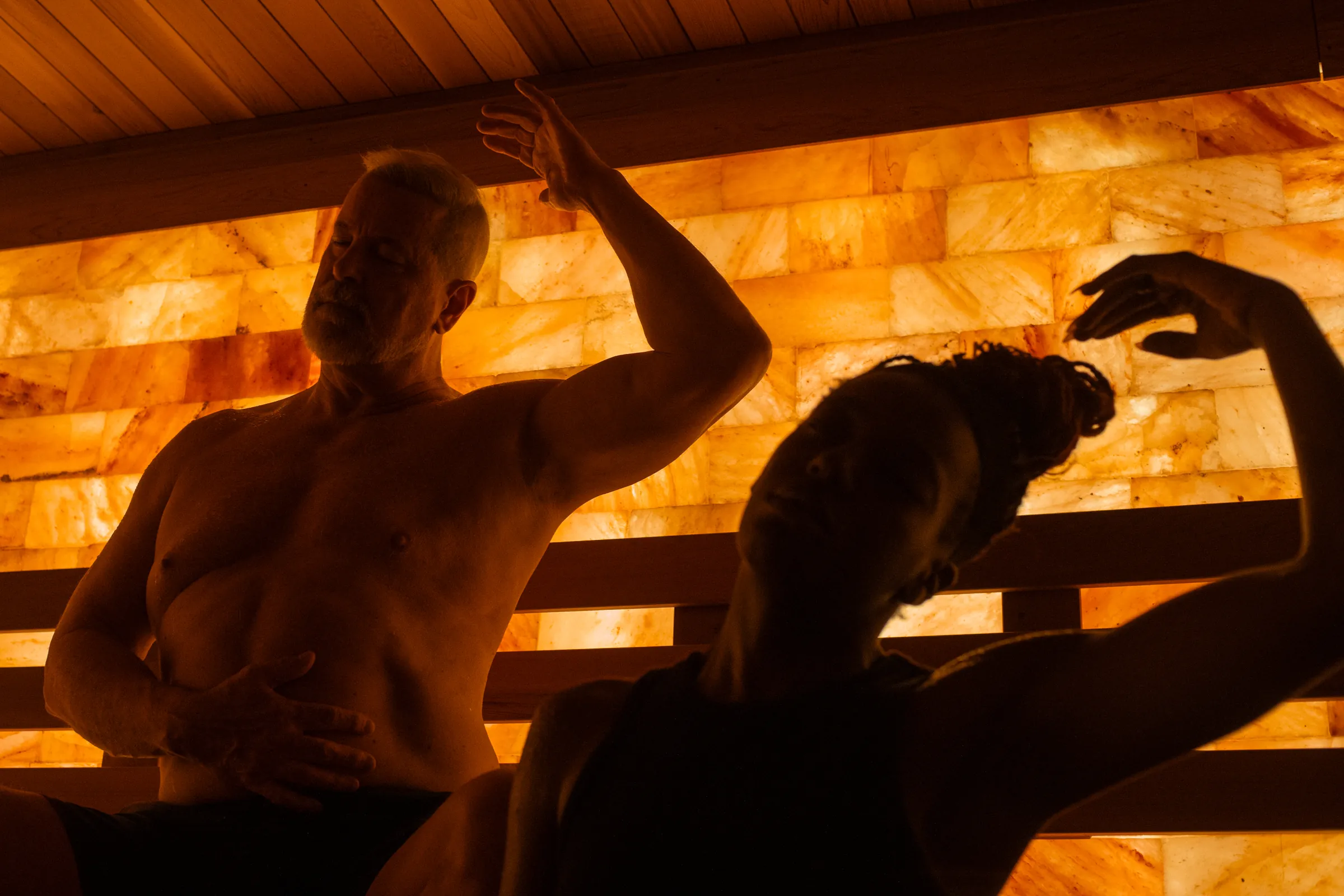
Aufguss looks deceptively simple; water, hot stones, towel movements, music. But between appearance and reality sits weeks of training in anatomy, thermal dynamics, essential oil chemistry, crowd management, and embodied skill that cannot be compressed into a short video. This practice resists shortcuts. Some knowledge lives in the body, not in algorithms.
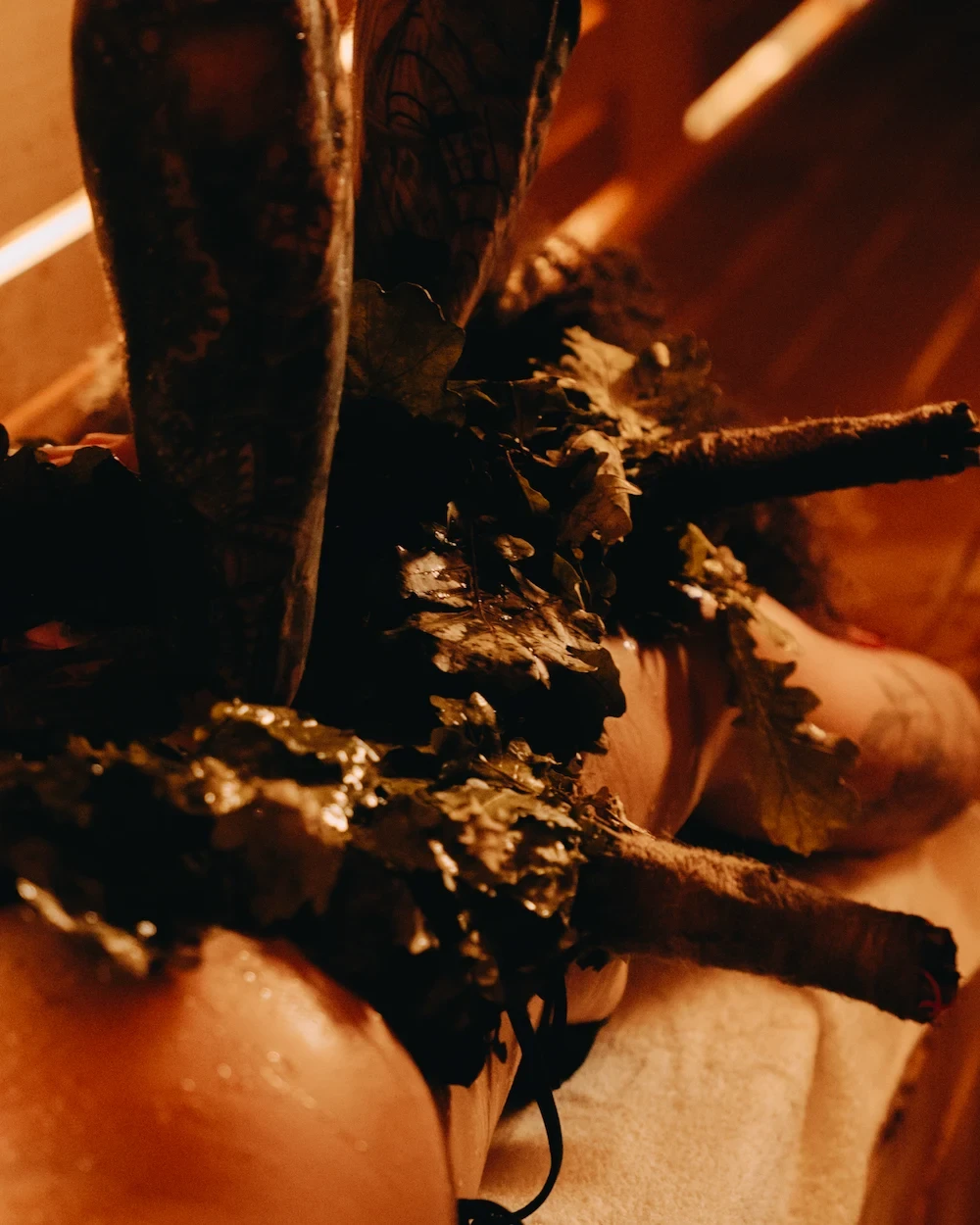
You are about to enter someone else's ritual. A thousand-year-old tradition where the rules are unspoken, the heat is extreme, and you have no idea whether that person approaching with birch branches intends comfort or assault.
You are about to enter someone else's ritual. A thousand-year-old tradition where the rules are unspoken, the heat is extreme, and you have no idea whether that person approaching with birch branches intends comfort or assault.
Your questions.
Answered.
Not sure what to expect? These answers might help you feel more confident as you begin.
Didn’t find your answer? Send us a message, we’ll respond with care and clarity.
What is a modern bathhouse?
A modern bathhouse keeps the architecture of the old idea, hot room, cold water, somewhere to rest, and lets the rhythm of the city around it shape the rest. Ours is built for Vancouver, on Davie Street, in the West End.
What is a modern bathhouse?
A modern bathhouse keeps the architecture of the old idea, hot room, cold water, somewhere to rest, and lets the rhythm of the city around it shape the rest. Ours is built for Vancouver, on Davie Street, in the West End.
Is the cold plunge at your bathhouse communal?
Is the cold plunge at your bathhouse communal?
Yes. Our cold pools are shared, with multiple temperature options so you can find one that meets you where you are. Communal plunging is part of what makes a bathhouse a bathhouse.
Is the bathhouse a welcoming space for the queer community?
Is the bathhouse a welcoming space for the queer community?
Yes. The West End is home to us and to our queer neighbours, and the bathhouse is built for everyone who walks in. We also host queer nights on a regular rotation, which you can find on the Classes calendar.
What's the etiquette inside the bathhouse?
What's the etiquette inside the bathhouse?
Phones stay in lockers. Voices stay low. Sit or lie on a towel inside the sauna, move at your own pace between rooms, and leave the space the way you'd want to find it. The room works because everyone in it is paying a little attention.
Do you offer Russian Banya at the bathhouse?
Do you offer Russian Banya at the bathhouse?
We run banya-inspired programming including venik work on select dates. The full ritual has its own page if you want to read about it before you book.
Do I need to book ahead, or can I walk in?
Do I need to book ahead, or can I walk in?
Walk-ins are welcome based on availability, but most guests book ahead through our app or website to lock in their preferred session time.
Your questions.
Answered.
Not sure what to expect? These answers might help you feel more confident as you begin.
What do I need to bring?
Please bring a bathing suit and a reusable water bottle. We provide two towels per guest, shower products, and secure lockers.
What do I need to bring?
Please bring a bathing suit and a reusable water bottle. We provide two towels per guest, shower products, and secure lockers.
Do I need a reservation?
Do I need a reservation?
Walk-ins are welcome, but we recommend booking through our app or website to check availability and join the waitlist.
Where can I park?
Where can I park?
Street parking is limited. We offer valet parking behind AetherHaus from 11:00–23:00. There is also some street parking available on Davie and nearby side streets.
What is Open Haus?
What is Open Haus?
Open Haus is a self-guided circuit through our saunas, plunge pools, and tea lounge. Our guides add essential oils to the stove throughout the day. The atmosphere shifts between silent, casual, and social, depending on the session.
What is your Haus Etiquette?
What is your Haus Etiquette?
Phones must be stored away. Please keep conversation soft, sit or lie on a towel, and move mindfully through the space. We ask that guests respect others’ experience and refrain from bringing outside food or drinks - complimentary tea is provided.
Can I visit if I am pregnant?
Can I visit if I am pregnant?
We advise against hot and cold therapy during pregnancy unless approved by your healthcare provider.
Didn’t find your answer? Send us a message, we’ll respond with care and clarity.
Your questions.
Answered.
Not sure what to expect? These answers might help you feel more confident as you begin.
Didn’t find your answer? Send us a message, we’ll respond with care and clarity.
What is a modern bathhouse?
A modern bathhouse keeps the architecture of the old idea, hot room, cold water, somewhere to rest, and lets the rhythm of the city around it shape the rest. Ours is built for Vancouver, on Davie Street, in the West End.
What is a modern bathhouse?
A modern bathhouse keeps the architecture of the old idea, hot room, cold water, somewhere to rest, and lets the rhythm of the city around it shape the rest. Ours is built for Vancouver, on Davie Street, in the West End.
Is the cold plunge at your bathhouse communal?
Is the cold plunge at your bathhouse communal?
Yes. Our cold pools are shared, with multiple temperature options so you can find one that meets you where you are. Communal plunging is part of what makes a bathhouse a bathhouse.
Is the bathhouse a welcoming space for the queer community?
Is the bathhouse a welcoming space for the queer community?
Yes. The West End is home to us and to our queer neighbours, and the bathhouse is built for everyone who walks in. We also host queer nights on a regular rotation, which you can find on the Classes calendar.
What's the etiquette inside the bathhouse?
What's the etiquette inside the bathhouse?
Phones stay in lockers. Voices stay low. Sit or lie on a towel inside the sauna, move at your own pace between rooms, and leave the space the way you'd want to find it. The room works because everyone in it is paying a little attention.
Do you offer Russian Banya at the bathhouse?
Do you offer Russian Banya at the bathhouse?
We run banya-inspired programming including venik work on select dates. The full ritual has its own page if you want to read about it before you book.
Do I need to book ahead, or can I walk in?
Do I need to book ahead, or can I walk in?
Walk-ins are welcome based on availability, but most guests book ahead through our app or website to lock in their preferred session time.