The Art of the Aufgussmeister: Why Choreographed Heat Cannot Be Replicated at Home
The Art of the Aufgussmeister: Why Choreographed Heat Cannot Be Replicated at Home
Aufguss looks deceptively simple; water, hot stones, towel movements, music. But between appearance and reality sits weeks of training in anatomy, thermal dynamics, essential oil chemistry, crowd management, and embodied skill that cannot be compressed into a short video. This practice resists shortcuts. Some knowledge lives in the body, not in algorithms.
Aufguss looks deceptively simple; water, hot stones, towel movements, music. But between appearance and reality sits weeks of training in anatomy, thermal dynamics, essential oil chemistry, crowd management, and embodied skill that cannot be compressed into a short video. This practice resists shortcuts. Some knowledge lives in the body, not in algorithms.
Published on:
Published on:
You watched a tutorial. You bought a towel and essential oils. You think you can perform Aufguss in your home sauna.
You cannot.
When I found the Wim Hof Method years ago, I could have watched YouTube videos and bought ice trays. Instead, I flew to Spain for proper training. That decision changed my relationship to the practice. The difference between watching someone explain cold exposure and learning under supervision revealed how much embodied guidance matters when working with extreme environments.
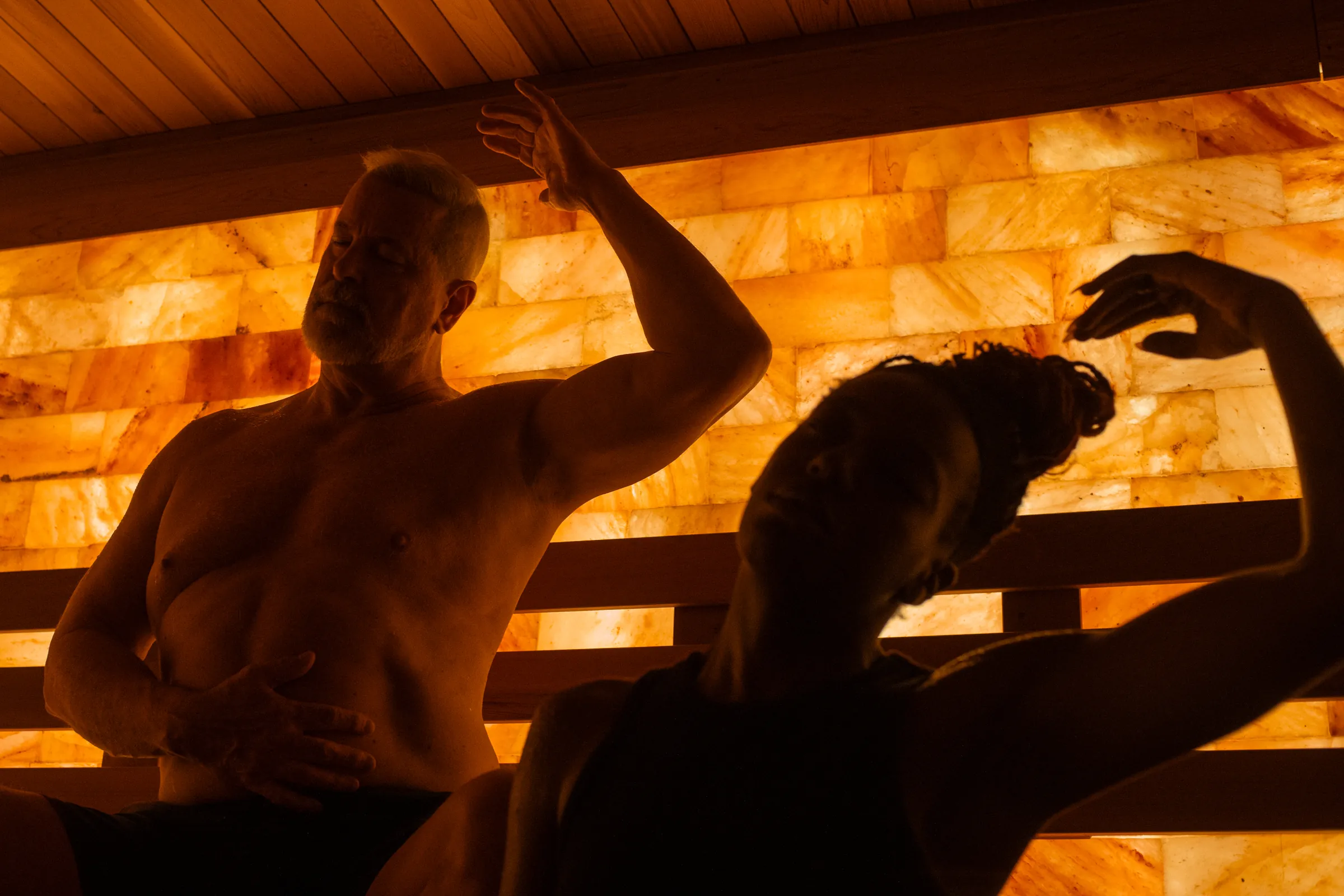
The same principle applies to Aufguss ritual. What you see: the elegant towel movements, the perfectly timed heat waves, the aromatic steam- is the visible surface of invisible expertise.
What Professional Aufgussmeister Training Actually Entails
The gap between YouTube tutorial and professional preparation is substantial. Let me show you what actual certification requires.
The German Sauna-Bund Certification
In Germany, where Aufguss originated as formalized practice, the Sauna-Bund offers the baseline professional certification. Training is intensive and immersive, requiring full commitment to classroom instruction and practical application (World of Sauna, 2021). Students must also complete first aid certification.
The cost is approximately €2,100, covering overnight stays, commute, and materials (World of Sauna, 2021). This is not a casual workshop. This is serious professional education.
The curriculum includes:
Human anatomy and physiology: How heat affects cardiovascular and respiratory systems
Essential oil chemistry: Which compounds vaporize at high heat, which irritate airways
Music management: Rhythm, tempo, and silence as tools for guiding attention and sensory experience
First aid protocols: Recognizing heat exhaustion, responding to allergic reactions
Customer service ethics: The power dynamic of controlling heat for vulnerable people
Scrub and treatment techniques: Skin care integration within heat exposure
Event organization: Managing group dynamics, timing rotations, creating flow
Here is what surprised me most. Heike Schneider, a practicing Saunameister interviewed for (World of Sauna, 2021), said the training felt "too short." Even after completing comprehensive certification, she wanted more knowledge about human anatomy and health effects. When practitioners who complete certification say they need more education, that tells you how deep this craft actually goes.
Some North American venues take training even further. When Nordik Spa-Nature decided to bring authentic Aufguss to Canada, they sent artisans to Germany for extended professional Sauna-Meister training (Thermëa, 2024). Nordik is now a proud member of the German association Sauna-Bund, which has regulated and supervised Aufguss rituals for its members across generations.
The Italian AISA Mentorship Model
Classroom education is only the beginning. The Italian Aufguss training association AISA requires something YouTube cannot provide: human supervision.
After completing theoretical training, aspiring Aufgussmeisters must perform extensive supervised Aufguss sessions before certification (Aufguss.it). Then comes a practical examination where experienced practitioners evaluate your technique under real conditions.
AISA's training curriculum reveals the specialization required. Different instructors bring expertise from different fields:
Cosmetology and yoga: For understanding skin response and body positioning
Philosophy and communication: For the ethics and verbal/non-verbal dynamics
Nursing: For medical aspects, heart and blood circulation, emergency response
Performance art: For advanced towel movements and show techniques
Why does mentorship matter? Because some knowledge cannot be transmitted through screens. You learn to read humidity changes by feeling them on your own skin while someone with many years of experience tells you what you are missing. You learn proper towel technique by having your shoulder position corrected in real time, preventing the rotator cuff injury that develops after months of improper movement.
This is embodied learning. Your nervous system adapts. Your muscles remember. Your attention sharpens through repetition under watchful eyes.
The First American Sauna Master (2024)
In 2024, Nate Daubert became the first American to earn full Sauna Master certification from the Deutsche Sauna Akademie in Germany (Humanitix, 2024). Before pursuing certification, he spent extensive time researching bathhouses. He visited over 60 saunas across Europe, North America, and South America.
Sustained field research before formal training. That is how rare proper knowledge is, and how committed serious practitioners become.
The training Daubert now offers includes a comprehensive 500-page textbook with over 200 scientific charts and diagrams (Humanitix, 2024). The curriculum covers physics of air movement, olfactory scent design, towel technique fundamentals, and optimizing daily Aufguss schedules for employee safety. This is not entertainment. This is applied thermal science.
The emergence of American training programs reveals how vast the knowledge gap remains in North America's growing sauna culture. As demand increases, the pressure grows to take shortcuts. But thermal physics and essential oil chemistry do not compress well.
The Knowledge YouTube Cannot Teach
Let me break down specific domains where video tutorials fail completely.
Thermal Dynamics and Physiological Response Management
When water hits 160°C stones, something counterintuitive happens. The temperature technically drops slightly, but it feels much hotter (HomeInDepth, 2025). Why? Steam carries heat more intensely than dry air. Understanding this distinction changes how you pour, where you direct heat, and when you create respite.
Professional Aufgussmeisters learn to manipulate thermal cycles. The heat wave you feel washing over you during ritual is not random. It is choreographed based on:
Where people are sitting (lower benches experience less intensity)
Which guests show signs of thermal stress
The desired emotional arc of the session
Recognizing signs of distress requires training. Subtle changes in breathing, posture, and responsiveness signal when heat must be adjusted or release offered. These signals happen fast in 140-160°F environments. You need to catch them before someone passes out.
The integration with cold plunge timing also matters. Rapid temperature contrast creates intense sensory shifts, followed by deep states of rest during recovery (Thermëa, 2024). Managing this full cycle means understanding nervous system states, not just pouring water.
There is no formula for perfect heat distribution. Your body learns to read the room; humidity levels, guest positioning, duration of heat exposure. This develops through practice and presence. I learned this through cold exposure. What they taught us at the Wim Hof camp was that it was not about time. It was about sensation and feeling. The body tells you what algorithms cannot.
Essential Oil Chemistry and Safety Protocols
Here is where YouTube tutorials become dangerous.
Never apply undiluted essential oils to hot sauna stones. This creates fire hazards, harmful burning, and unpleasant odours that damage equipment (Kemitron, 2024). Yet comment sections overflow with people suggesting exactly this. One person recommended pouring peppermint oil straight onto 160°C stones. This is how fires start.
Proper dilution is 3 to 5 drops of essential oil per liter of water (Kemitron, 2024). That ratio matters. Too much overwhelms airways. Too little provides no therapeutic benefit.
Professional Aufgussmeisters use alcohol-based fragrance solutions rather than water emulsions. Why? Alcohol-based solutions evaporate without leaving residue on stones or clogging pipes (Kemitron, 2024). Emulsions contain high concentrations of emulsifiers that damage equipment over time, create greasy buildup, and reduce fragrance quality.
Understanding smoke points of different oils prevents dangerous situations. Not all essential oils tolerate high heat equally. Some break down into irritating compounds. Some catch fire. Training teaches you which oils work at which temperatures, and how to recognize when heat has degraded an oil's chemistry.
Recognizing allergic reactions in group settings requires knowledge YouTube cannot provide. Respiratory distress from high-menthol oils looks different from heat exhaustion. Skin reactions from certain compounds need immediate response. These scenarios happen in real time, with real people, in enclosed spaces reaching 160°F.
The safety protocols at professional Aufguss sessions exist because trained practitioners know what can go wrong.
Crowd Management and Non-Verbal Communication
Managing 40 to 90 guests with different heat tolerances simultaneously is an art form competitors completely miss (Thermëa, 2024).
AISA training specifically includes "Communication theory applied to the role of the Aufgussmeister" (Aufguss.it). This is not abstract philosophy. This is a practical skill for reading room energy while maintaining ritual integrity.
You must know:
When to intensify heat and when to give respite
How to check on someone without disrupting group flow
Which guests are heat-adapted regulars and which are first-timers
How to make exits safe and shame-free
When silence shifts from peaceful to tense
Most Aufguss happens without talking. Music plays or silence holds. Your communication is non-verbal; towel movements, positioning, eye contact, gesture. Learning this language takes presence with groups, not screen time.
The ethics run deeper than technique. You control heat intensity for vulnerable people. That power dynamic requires humility, attentiveness, and respect for body autonomy. Some guests need to leave. Your job is to make that easy, not shameful.
I learned this through my own practice with cold exposure. Through sustained practice, I developed the capacity to read my body's needs in the moment rather than following prescriptive numbers. The Aufgussmeister must read multiple bodies simultaneously with that same attentiveness. You cannot learn this from a screen. You develop it through presence; sitting with discomfort, noticing micro-expressions, feeling when silence shifts.

The Physical Craft: Why Your Shoulders Will Remember Before Your Mind Does
What guests rarely see is the athletic demand of this practice.
Towel Technique and Injury Prevention
Professional Aufgussmeisters move energetically in 140 to 160°F heat (Spa Executive, 2023). That combination, intense movement plus thermal stress, creates injury risk without proper technique.
Towel weight matters more than amateurs realize. The Aufguss Roots Magic Towel 2.0 weighs only 550 grams specifically because "correct execution of the waving techniques in combination with a light sauna waving towel is essential and can prevent incorrect physical strain" (Aufguss Roots). This is engineering for injury prevention.
Proper body mechanics mean using core rotation, not shoulder strength, to generate heat waves. Amateur practitioners tend to lift and wave from the shoulder joint. After months of repetitive overhead motion in heat, rotator cuff injuries develop. Lower back strain follows. The body breaks down under improper patterns.
Training teaches:
Warming up before rituals despite already being in heat
Core engagement during towel movements
Recovery protocols between sessions
When to stop before injury compounds
The physical demands explain the sustainability limits.
Sustainable Practice vs Performance Burnout
Professional Aufgussmeisters maintain careful limits on ritual performance, with substantial rest periods between sessions (Spa Executive, 2023). This is not luxury. This is a physiological necessity.
A practitioner interviewed for (Spa Executive, 2023) compared it to massage therapy: "The first massage uses more energy, focus, attention. More throughout the day, less intensity is able to give." The same applies to Aufguss. Each ritual drains physical reserves and emotional presence.
Rest periods allow:
Muscle recovery: Thermoregulation, hydration, tissue repair
Mental reset: Presence and attentiveness require emotional reserves
Quality maintenance: Rushed practitioners lose the subtlety that makes ritual transformative
Sigrid van Rijswijk, a professional Aufguss performer who now runs a training company in Europe, brings theatre background to injury prevention teaching (HomeInDepth, 2025). She specializes in "proper technique, posture, and injury prevention for sustainable performances."
Commercial pressure treats Aufguss like assembly line production. More rituals per session means more revenue. But the body and presence required for authentic ritual cannot be optimized for profit margins. This is where training protects practitioners from exploitation. You learn sustainable pacing, not just performance skill.
If you need recovery between intense experiences, imagine the person creating those experiences for you.
Professional Standards vs Commercialization
The quality gap between properly trained practitioners and quickly-trained "pourers" affects everyone.
The Difference Training Makes
A quote from industry professionals captures this perfectly: "Many saunas have water pourers. But only a few are masters of their craft" (Aufguss Roots). Another source notes that "quickly trained pourers lack necessary expertise to offer multi-sensory experience prioritizing wellbeing and health."
What shortcuts miss:
Safety protocols for vulnerable populations
Pregnancy, cardiovascular conditions, medications that affect thermoregulation, trained practitioners recognize contraindications. Untrained staff pour water without understanding risk.
Equipment damage from improper technique
Stone cracking from thermal shock when water pours incorrectly. Pipe clogging from emulsified oils. Equipment designed for decades of use fails within years from amateur handling.
Guest experience degradation
Heat distribution becomes uneven. Scents overwhelm or disappoint. The rhythm feels off. Guests cannot articulate why the experience feels hollow, but their nervous systems register the difference between authentic ritual and theatrical performance.
Professional competitions exist because this is formalized discipline. The Aufguss World Championships and regional qualifiers like the Italian Championships evaluate practitioners on specific criteria: professionalism, heat distribution, fragrances, waving techniques, emotions, and theme coherence (Spa Executive, 2023). Peer evaluation maintains standards that market forces alone will not enforce.
The Sauna-Bund has overseen quality for 900 members for over 50 years (Thermëa, 2024). That organizational oversight creates accountability. Random staff trained in a weekend workshop answer to no professional body.
Why YouTube Tutorials Create Dangerous Amateurs
Let me be direct about what brief online tutorials skip:
Essential oil fire hazards
Comment sections recommend undiluted application. This causes fires, equipment damage, and guest injuries. No video adequately communicates the physics of flash points and vaporization.
Guest medical contraindications
Which medications make heat dangerous? When does cardiovascular strain become emergency? How do you recognize the difference between discomfort and distress? Tutorials do not cover this because liability prevents frank discussion.
Proper ventilation requirements
Home saunas designed for personal use lack air exchange systems commercial facilities require. Group Aufguss produces carbon dioxide buildup that proper ventilation addresses. DIY practitioners rarely understand this engineering.
Emergency response protocols
Heat exhaustion, allergic reactions, panic attacks in enclosed spaces- these happen. Training includes first aid certification and crisis management. YouTube offers entertainment, not emergency preparation.
Liability and insurance considerations
Performing Aufguss for others creates legal responsibility. Professional practitioners carry liability insurance. Home enthusiasts do not realize they assume risk for guests' wellbeing.
The gap between performing for the camera and reading live rooms cannot be overstated. The camera does not sweat. It does not show signs of thermal stress. It does not need you to adjust heat distribution mid-ritual because someone in the back row is struggling.
Optimization culture suggests everything can be hacked, shortened, made efficient. But some practices require apprenticeship, embodied learning, time spent making mistakes under supervision. The shortcut is the thing destroying the practice.
The Role of Mentorship: What Can Only Be Learned in Presence
Digital learning has limits. Let me explain why apprenticeship remains essential.
The Apprenticeship Model
AISA requires extensive mentored sessions before certification (Aufguss.it). Each session exposes you to different scenarios:
First-time guests who need gentle introduction
Heat-adapted regulars who want intensity
Mixed groups with conflicting preferences
Equipment variations across different facilities
Seasonal changes in humidity and guest thermoregulation
Unexpected situations requiring real-time adjustment
Feedback loops during mentorship provide immediate correction. Your mentor watches your towel technique and adjusts your shoulder position before strain becomes injury. They note when you miss a guest's distress signal. They explain why that particular essential oil combination produced headaches instead of relaxation.
The progression follows natural development:
Observer: You watch, take notes, ask questions
Assistant: You prepare materials, manage timing, support lead practitioner
Supervised performer: You lead ritual with mentor present for intervention
Independent practitioner: You perform solo after demonstrating consistent competence
Mistakes under supervision create learning without harm. You pour water too fast, creating a harsh heat spike; your mentor intervenes, brings temperature down, explains the physics you just violated. That mistake imprints deeper than any tutorial explanation.
When Nordik Spa-Nature's artisans traveled to Germany for professional Sauna-Meister training, they were not just learning technique (Thermëa, 2024). They were receiving cultural transmission. The unspoken protocols, regional variations, and ethical considerations that cannot be written in manuals.
This mirrors my experience with the Wim Hof Method. What they taught us was that it was not about time. It was about sensation and feeling. I learned what my body needed through consistent practice. You cannot extract that wisdom from a video. Your nervous system must adapt through lived experience.
Aufgussmeister training operates on the same principle. You learn to read subtle cues- shifts in room energy, early signs of thermal distress, when silence needs breaking- through sustained practice, not content consumption.
Different Styles Require Different Training
Not all Aufguss follows the same pattern. Professional training distinguishes between styles, each requiring different skill emphasis.
Classic/Traditional Aufguss
Focus on thermal precision, guest comfort, and subtle heat distribution. Towel movements stay relatively simple. The emphasis is therapeutic, not theatrical. Training teaches restraint, timing, and reading physiological response.
Show/Freestyle Aufguss
Complex choreography, dramatic towel techniques, entertainment value. This style is "increasingly requested and becoming more popular in programs of many renowned centres" but is "not particularly appreciated by purists" (Aufguss.it). Training for show style requires performance art background, crowd energy management, and physical conditioning for sustained theatrical movement.
Meditative Aufguss
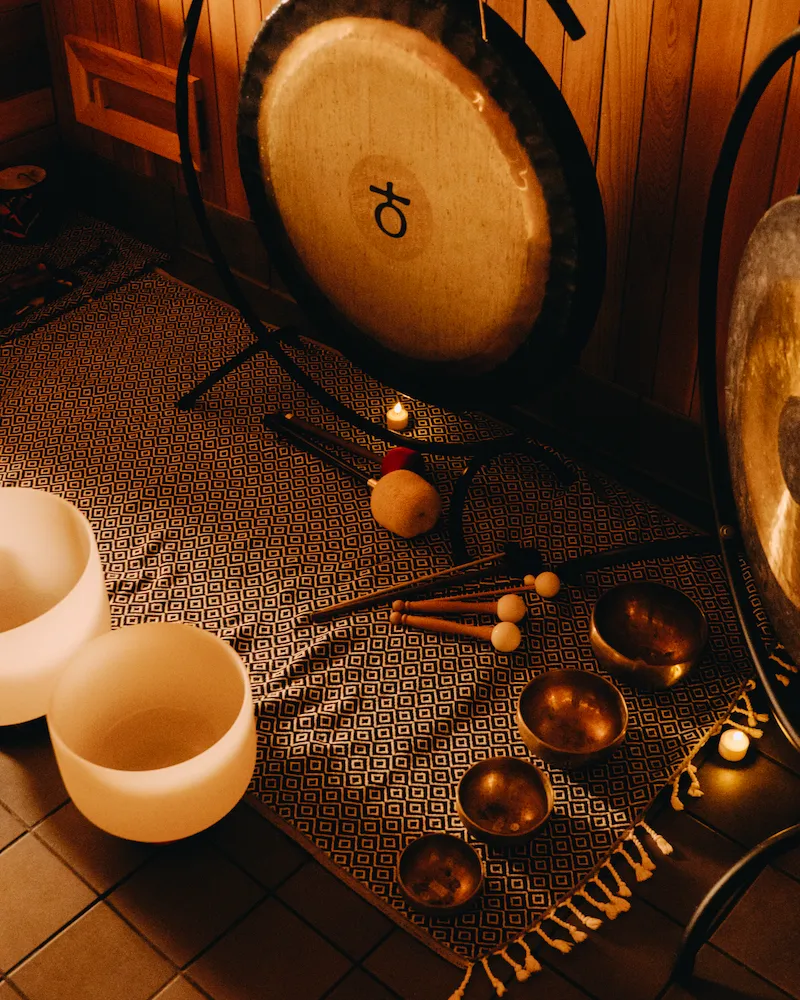
Minimal towel movement and contemplative music or silence (Aufguss.it). Some incorporate shamanic elements, Tibetan bells, drums. Training emphasizes sustained presence, breath awareness, and comfort with extended silence. This style draws from meditation practice traditions as much as sauna culture.
World Championships evaluate practitioners across multiple criteria: professionalism, heat distribution, fragrances, waving techniques, emotions, and theme coherence (Spa Executive, 2023). You cannot master all styles without specialized instruction in each.
Training pathways determine style mastery. A practitioner trained only in classic technique will struggle with show choreography. Someone who learns freestyle first may lack the subtlety traditional practice requires. Comprehensive training covers multiple approaches, but depth in any single style requires focused apprenticeship.
At AetherHaus: How Vancouver Experiences Professional Aufguss
We do not perform Aufguss. We facilitate ritual. The difference is in the training, the presence, and the understanding that this practice cannot be rushed or reduced to entertainment.
AetherHaus commitment to trained facilitators, not "water pourers", shapes every aspect of the experience. Our team includes a Certified Wim Hof Instructor, Sound Healer, Somatic Coach, and movement specialists. Each brings complementary expertise that enriches the Aufguss ritual beyond what single-discipline training provides.
How training shows:
Safety protocols
We recognize contraindications. We create exit pathways that feel natural, not shameful. Our first aid certification is current, not expired.
Heat distribution precision
Thermal dynamics training means we read humidity changes and adjust in real time. Heat waves reach every corner evenly. Lower benches receive gentler exposure while upper levels experience full intensity.
Guest attentiveness
Non-verbal communication training allows us to check on you without interrupting the ritual flow. We notice distress signals before they become emergencies.
Our integration of European traditions, German Aufguss, Russian Banya with a West Coast approach reflects years of study, not cultural appropriation. We travelled to source traditions. We trained under masters. We brought knowledge home with respect for its origins.
Why we ban phones and clocks: This practice cannot be tracked, optimized, or turned into metrics. Your body tells you when it is time to exit the heat, when to plunge into the cold, when to rest. These practices do not need to become another thing you are doing right or measuring in an app.
Our 4.9 out of 5 rating reflects quality that training produces (Business Overview). Guests sense the difference between amateur enthusiasm and professional competence. The nervous system registers authentic presence.
When you book an Aufguss session at AetherHaus, you experience the result of extensive training, mentorship, and dedicated practice. The ritual looks effortless. That effortlessness requires mastery.

Frequently Asked Questions
How long does it take to train as an Aufgussmeister?
European certification requires intensive classroom training plus extensive mentored sessions performing under supervision (World of Sauna, 2021; Aufguss.it). The Italian AISA model requires practical examination after the mentorship period. North American training programs are emerging but vary in depth and comprehensiveness (Humanitix, 2024).
True mastery requires sustained practice. Training provides foundation. Experience builds skill. There is no shortcut to the body wisdom that develops through repetition under watchful eyes.
Can I perform Aufguss in my home sauna?
You can pour water with diluted essential oils over your home sauna stones for personal use. However, professional Aufguss involves thermal management, crowd safety protocols, and essential oil knowledge that require training.
For personal practice, prioritize safety:
Always dilute oils (3 to 5 drops per liter of water)
Never pour undiluted oils on hot stones
Ensure proper ventilation
Stay within your heat tolerance
Exit when your body signals readiness, not when a timer dictates
Professional practice on others requires proper training and insurance. The liability for managing other people's thermal exposure is significant.
What essential oils are safe for sauna use?
Eucalyptus, lavender, peppermint, pine, and citrus oils are commonly used when properly diluted; 3 to 5 drops per liter of water or alcohol-based solution (Kemitron, 2024). Never apply undiluted oils to hot stones. This creates fire hazards.
Alcohol-based fragrance solutions are preferred over water emulsions. They distribute evenly without leaving equipment-damaging residue (Kemitron, 2024). High-menthol oils like peppermint should be used sparingly. They can irritate airways at high concentrations.
Quality matters. Use 100% natural essential oils from reputable sources. Synthetic fragrances behave unpredictably at high heat.
Is Aufguss safe for everyone?
Aufguss intensifies heat through increased humidity, making it more physiologically demanding than dry sauna. People with cardiovascular conditions, pregnancy, certain medications, or heat sensitivity should consult healthcare providers before participating.
Professional Aufgussmeisters learn to recognize distress signals and create exit pathways. Lower sauna benches offer less intense heat. You can always leave when needed. Proper hydration before and after is essential.
Trained facilitators at venues like AetherHaus understand contraindications and adjust ritual intensity based on group composition. This is why training matters.
How much does Aufgussmeister training cost?
German Sauna-Bund certification costs approximately €2,100, including overnight stays and materials for intensive professional training (World of Sauna, 2021). North American workshops range from $275 for introductory programs to $1,500 or more for comprehensive certification (Ritual Nordic Spa, 2025). Italian AISA programs vary.
Costs include curriculum materials, practice time, mentorship, and certification examination. Investment reflects specialized knowledge spanning thermal physics, essential oil chemistry, crowd management, and emergency protocols. This is not a casual hobby course. This is professional certification.
What is the difference between Aufguss and regular sauna?
A regular sauna involves sitting in dry or moderately humid heat. Aufguss is a structured ritual where trained practitioners pour water with essential oils onto hot stones while using towel movements to distribute aromatic steam.
This intensifies heat perception, creates rhythmic waves of temperature, and transforms passive sitting into guided experience. Professional Aufguss includes music selection, timing precision, heat variation choreography, and attention to group dynamics; elements absent in self-directed sauna use.
The ritual creates nervous system regulation through controlled thermal stress. It is theatre, therapy, and thermal science combined.
Do I need insurance to perform Aufguss professionally?
Yes. Professional Aufguss involves managing heat stress for multiple guests simultaneously. This carries liability for heat-related incidents, allergic reactions to essential oils, or slips and falls in wet environments.
Most commercial venues require practitioners to carry professional liability insurance. Training programs typically address insurance requirements and scope of practice. Home or personal practice is different from offering services to others.
The legal distinction matters. Once you perform Aufguss for compensation or in commercial setting, you assume responsibility for guest wellbeing. Proper training and insurance protect both you and your guests.
Conclusion
Some practices resist optimization. Aufguss is one of them.
The YouTube tutorial promises shortcuts. The training organizations offer apprenticeship. The difference is not just time or money. The difference is recognition that certain knowledge lives in the body, not the algorithm.
You can watch endless videos of towel technique. You will not learn how humidity feels on your own skin while you hold heat responsibility for forty strangers. You will not learn which guest needs respite by reading facial expressions through a screen.
This is not gatekeeping. This is acknowledgment that some crafts require presence, mistakes made under supervision, seasons spent learning what cannot be compressed.
When I was desperate for relief from autoimmune pain, I could have watched videos and filled my freezer with ice trays. Instead, I flew to Spain for Wim Hof training. That decision taught me the difference between information and transformation. The cold exposure practice that changed my life required embodied learning, not content consumption.
The Aufgussmeister does not optimize heat. They read it, shape it, offer it with attention that training and dedication make possible. They know when to intensify and when to give respite. They recognize the fine line between therapeutic stress and harm.
Not everything that matters can be made faster. Some rituals demand we slow down and learn properly.
When you experience professional Aufguss at AetherHaus, you feel the difference training makes. The heat waves reach you with precision. The essential oils open your airways without overwhelming. The rhythm feels right in your nervous system. Your body recognizes authentic presence.
That recognition is what training, mentorship, and sustained practice create. It cannot be downloaded. It can only be embodied.
If you want to learn more about the practices that support nervous system regulation and authentic presence, explore our approach to contrast therapy. The principles are the same. The commitment to proper training, to honouring tradition, to resisting shortcuts that undermine genuine practice.
Your body knows the difference between entertainment and ritual. Trust that knowing.
Key Takeaways
Professional Aufgussmeister training requires intensive education plus extensive mentored sessions, covering thermal physics, essential oil chemistry, crowd management, and emergency protocols (World of Sauna, 2021; Aufguss.it)
Essential oils must never be applied undiluted to hot stones- proper dilution is 3 to 5 drops per liter, using alcohol-based solutions to prevent fire hazards and equipment damage (Kemitron, 2024)
Physical demands require proper technique to prevent injury: working in 140 to 160°F heat while moving energetically, with careful limits on ritual frequency and substantial rest periods between sessions (Spa Executive, 2023)
"Many saunas have water pourers. But only a few are masters of their craft" the gap between quickly-trained staff and properly certified practitioners affects safety, guest experience, and ritual integrity (Aufguss Roots)
You watched a tutorial. You bought a towel and essential oils. You think you can perform Aufguss in your home sauna.
You cannot.
When I found the Wim Hof Method years ago, I could have watched YouTube videos and bought ice trays. Instead, I flew to Spain for proper training. That decision changed my relationship to the practice. The difference between watching someone explain cold exposure and learning under supervision revealed how much embodied guidance matters when working with extreme environments.
The same principle applies to Aufguss ritual. What you see: the elegant towel movements, the perfectly timed heat waves, the aromatic steam- is the visible surface of invisible expertise.
What Professional Aufgussmeister Training Actually Entails
The gap between YouTube tutorial and professional preparation is substantial. Let me show you what actual certification requires.
The German Sauna-Bund Certification
In Germany, where Aufguss originated as formalized practice, the Sauna-Bund offers the baseline professional certification. Training is intensive and immersive, requiring full commitment to classroom instruction and practical application (World of Sauna, 2021). Students must also complete first aid certification.
The cost is approximately €2,100, covering overnight stays, commute, and materials (World of Sauna, 2021). This is not a casual workshop. This is serious professional education.
The curriculum includes:
Human anatomy and physiology: How heat affects cardiovascular and respiratory systems
Essential oil chemistry: Which compounds vaporize at high heat, which irritate airways
Music management: Rhythm, tempo, and silence as tools for guiding attention and sensory experience
First aid protocols: Recognizing heat exhaustion, responding to allergic reactions
Customer service ethics: The power dynamic of controlling heat for vulnerable people
Scrub and treatment techniques: Skin care integration within heat exposure
Event organization: Managing group dynamics, timing rotations, creating flow
Here is what surprised me most. Heike Schneider, a practicing Saunameister interviewed for (World of Sauna, 2021), said the training felt "too short." Even after completing comprehensive certification, she wanted more knowledge about human anatomy and health effects. When practitioners who complete certification say they need more education, that tells you how deep this craft actually goes.
Some North American venues take training even further. When Nordik Spa-Nature decided to bring authentic Aufguss to Canada, they sent artisans to Germany for extended professional Sauna-Meister training (Thermëa, 2024). Nordik is now a proud member of the German association Sauna-Bund, which has regulated and supervised Aufguss rituals for its members across generations.
The Italian AISA Mentorship Model
Classroom education is only the beginning. The Italian Aufguss training association AISA requires something YouTube cannot provide: human supervision.
After completing theoretical training, aspiring Aufgussmeisters must perform extensive supervised Aufguss sessions before certification (Aufguss.it). Then comes a practical examination where experienced practitioners evaluate your technique under real conditions.
AISA's training curriculum reveals the specialization required. Different instructors bring expertise from different fields:
Cosmetology and yoga: For understanding skin response and body positioning
Philosophy and communication: For the ethics and verbal/non-verbal dynamics
Nursing: For medical aspects, heart and blood circulation, emergency response
Performance art: For advanced towel movements and show techniques
Why does mentorship matter? Because some knowledge cannot be transmitted through screens. You learn to read humidity changes by feeling them on your own skin while someone with many years of experience tells you what you are missing. You learn proper towel technique by having your shoulder position corrected in real time, preventing the rotator cuff injury that develops after months of improper movement.
This is embodied learning. Your nervous system adapts. Your muscles remember. Your attention sharpens through repetition under watchful eyes.
The First American Sauna Master (2024)
In 2024, Nate Daubert became the first American to earn full Sauna Master certification from the Deutsche Sauna Akademie in Germany (Humanitix, 2024). Before pursuing certification, he spent extensive time researching bathhouses. He visited over 60 saunas across Europe, North America, and South America.
Sustained field research before formal training. That is how rare proper knowledge is, and how committed serious practitioners become.
The training Daubert now offers includes a comprehensive 500-page textbook with over 200 scientific charts and diagrams (Humanitix, 2024). The curriculum covers physics of air movement, olfactory scent design, towel technique fundamentals, and optimizing daily Aufguss schedules for employee safety. This is not entertainment. This is applied thermal science.
The emergence of American training programs reveals how vast the knowledge gap remains in North America's growing sauna culture. As demand increases, the pressure grows to take shortcuts. But thermal physics and essential oil chemistry do not compress well.
The Knowledge YouTube Cannot Teach
Let me break down specific domains where video tutorials fail completely.
Thermal Dynamics and Physiological Response Management
When water hits 160°C stones, something counterintuitive happens. The temperature technically drops slightly, but it feels much hotter (HomeInDepth, 2025). Why? Steam carries heat more intensely than dry air. Understanding this distinction changes how you pour, where you direct heat, and when you create respite.
Professional Aufgussmeisters learn to manipulate thermal cycles. The heat wave you feel washing over you during ritual is not random. It is choreographed based on:
Where people are sitting (lower benches experience less intensity)
Which guests show signs of thermal stress
The desired emotional arc of the session
Recognizing signs of distress requires training. Subtle changes in breathing, posture, and responsiveness signal when heat must be adjusted or release offered. These signals happen fast in 140-160°F environments. You need to catch them before someone passes out.
The integration with cold plunge timing also matters. Rapid temperature contrast creates intense sensory shifts, followed by deep states of rest during recovery (Thermëa, 2024). Managing this full cycle means understanding nervous system states, not just pouring water.
There is no formula for perfect heat distribution. Your body learns to read the room; humidity levels, guest positioning, duration of heat exposure. This develops through practice and presence. I learned this through cold exposure. What they taught us at the Wim Hof camp was that it was not about time. It was about sensation and feeling. The body tells you what algorithms cannot.
Essential Oil Chemistry and Safety Protocols
Here is where YouTube tutorials become dangerous.
Never apply undiluted essential oils to hot sauna stones. This creates fire hazards, harmful burning, and unpleasant odours that damage equipment (Kemitron, 2024). Yet comment sections overflow with people suggesting exactly this. One person recommended pouring peppermint oil straight onto 160°C stones. This is how fires start.
Proper dilution is 3 to 5 drops of essential oil per liter of water (Kemitron, 2024). That ratio matters. Too much overwhelms airways. Too little provides no therapeutic benefit.
Professional Aufgussmeisters use alcohol-based fragrance solutions rather than water emulsions. Why? Alcohol-based solutions evaporate without leaving residue on stones or clogging pipes (Kemitron, 2024). Emulsions contain high concentrations of emulsifiers that damage equipment over time, create greasy buildup, and reduce fragrance quality.
Understanding smoke points of different oils prevents dangerous situations. Not all essential oils tolerate high heat equally. Some break down into irritating compounds. Some catch fire. Training teaches you which oils work at which temperatures, and how to recognize when heat has degraded an oil's chemistry.
Recognizing allergic reactions in group settings requires knowledge YouTube cannot provide. Respiratory distress from high-menthol oils looks different from heat exhaustion. Skin reactions from certain compounds need immediate response. These scenarios happen in real time, with real people, in enclosed spaces reaching 160°F.
The safety protocols at professional Aufguss sessions exist because trained practitioners know what can go wrong.
Crowd Management and Non-Verbal Communication
Managing 40 to 90 guests with different heat tolerances simultaneously is an art form competitors completely miss (Thermëa, 2024).
AISA training specifically includes "Communication theory applied to the role of the Aufgussmeister" (Aufguss.it). This is not abstract philosophy. This is a practical skill for reading room energy while maintaining ritual integrity.
You must know:
When to intensify heat and when to give respite
How to check on someone without disrupting group flow
Which guests are heat-adapted regulars and which are first-timers
How to make exits safe and shame-free
When silence shifts from peaceful to tense
Most Aufguss happens without talking. Music plays or silence holds. Your communication is non-verbal; towel movements, positioning, eye contact, gesture. Learning this language takes presence with groups, not screen time.
The ethics run deeper than technique. You control heat intensity for vulnerable people. That power dynamic requires humility, attentiveness, and respect for body autonomy. Some guests need to leave. Your job is to make that easy, not shameful.
I learned this through my own practice with cold exposure. Through sustained practice, I developed the capacity to read my body's needs in the moment rather than following prescriptive numbers. The Aufgussmeister must read multiple bodies simultaneously with that same attentiveness. You cannot learn this from a screen. You develop it through presence; sitting with discomfort, noticing micro-expressions, feeling when silence shifts.
The Physical Craft: Why Your Shoulders Will Remember Before Your Mind Does
What guests rarely see is the athletic demand of this practice.
Towel Technique and Injury Prevention
Professional Aufgussmeisters move energetically in 140 to 160°F heat (Spa Executive, 2023). That combination, intense movement plus thermal stress, creates injury risk without proper technique.
Towel weight matters more than amateurs realize. The Aufguss Roots Magic Towel 2.0 weighs only 550 grams specifically because "correct execution of the waving techniques in combination with a light sauna waving towel is essential and can prevent incorrect physical strain" (Aufguss Roots). This is engineering for injury prevention.
Proper body mechanics mean using core rotation, not shoulder strength, to generate heat waves. Amateur practitioners tend to lift and wave from the shoulder joint. After months of repetitive overhead motion in heat, rotator cuff injuries develop. Lower back strain follows. The body breaks down under improper patterns.
Training teaches:
Warming up before rituals despite already being in heat
Core engagement during towel movements
Recovery protocols between sessions
When to stop before injury compounds
The physical demands explain the sustainability limits.
Sustainable Practice vs Performance Burnout
Professional Aufgussmeisters maintain careful limits on ritual performance, with substantial rest periods between sessions (Spa Executive, 2023). This is not luxury. This is a physiological necessity.
A practitioner interviewed for (Spa Executive, 2023) compared it to massage therapy: "The first massage uses more energy, focus, attention. More throughout the day, less intensity is able to give." The same applies to Aufguss. Each ritual drains physical reserves and emotional presence.
Rest periods allow:
Muscle recovery: Thermoregulation, hydration, tissue repair
Mental reset: Presence and attentiveness require emotional reserves
Quality maintenance: Rushed practitioners lose the subtlety that makes ritual transformative
Sigrid van Rijswijk, a professional Aufguss performer who now runs a training company in Europe, brings theatre background to injury prevention teaching (HomeInDepth, 2025). She specializes in "proper technique, posture, and injury prevention for sustainable performances."
Commercial pressure treats Aufguss like assembly line production. More rituals per session means more revenue. But the body and presence required for authentic ritual cannot be optimized for profit margins. This is where training protects practitioners from exploitation. You learn sustainable pacing, not just performance skill.
If you need recovery between intense experiences, imagine the person creating those experiences for you.
Professional Standards vs Commercialization
The quality gap between properly trained practitioners and quickly-trained "pourers" affects everyone.
The Difference Training Makes
A quote from industry professionals captures this perfectly: "Many saunas have water pourers. But only a few are masters of their craft" (Aufguss Roots). Another source notes that "quickly trained pourers lack necessary expertise to offer multi-sensory experience prioritizing wellbeing and health."
What shortcuts miss:
Safety protocols for vulnerable populations
Pregnancy, cardiovascular conditions, medications that affect thermoregulation, trained practitioners recognize contraindications. Untrained staff pour water without understanding risk.
Equipment damage from improper technique
Stone cracking from thermal shock when water pours incorrectly. Pipe clogging from emulsified oils. Equipment designed for decades of use fails within years from amateur handling.
Guest experience degradation
Heat distribution becomes uneven. Scents overwhelm or disappoint. The rhythm feels off. Guests cannot articulate why the experience feels hollow, but their nervous systems register the difference between authentic ritual and theatrical performance.
Professional competitions exist because this is formalized discipline. The Aufguss World Championships and regional qualifiers like the Italian Championships evaluate practitioners on specific criteria: professionalism, heat distribution, fragrances, waving techniques, emotions, and theme coherence (Spa Executive, 2023). Peer evaluation maintains standards that market forces alone will not enforce.
The Sauna-Bund has overseen quality for 900 members for over 50 years (Thermëa, 2024). That organizational oversight creates accountability. Random staff trained in a weekend workshop answer to no professional body.
Why YouTube Tutorials Create Dangerous Amateurs
Let me be direct about what brief online tutorials skip:
Essential oil fire hazards
Comment sections recommend undiluted application. This causes fires, equipment damage, and guest injuries. No video adequately communicates the physics of flash points and vaporization.
Guest medical contraindications
Which medications make heat dangerous? When does cardiovascular strain become emergency? How do you recognize the difference between discomfort and distress? Tutorials do not cover this because liability prevents frank discussion.
Proper ventilation requirements
Home saunas designed for personal use lack air exchange systems commercial facilities require. Group Aufguss produces carbon dioxide buildup that proper ventilation addresses. DIY practitioners rarely understand this engineering.
Emergency response protocols
Heat exhaustion, allergic reactions, panic attacks in enclosed spaces- these happen. Training includes first aid certification and crisis management. YouTube offers entertainment, not emergency preparation.
Liability and insurance considerations
Performing Aufguss for others creates legal responsibility. Professional practitioners carry liability insurance. Home enthusiasts do not realize they assume risk for guests' wellbeing.
The gap between performing for the camera and reading live rooms cannot be overstated. The camera does not sweat. It does not show signs of thermal stress. It does not need you to adjust heat distribution mid-ritual because someone in the back row is struggling.
Optimization culture suggests everything can be hacked, shortened, made efficient. But some practices require apprenticeship, embodied learning, time spent making mistakes under supervision. The shortcut is the thing destroying the practice.
The Role of Mentorship: What Can Only Be Learned in Presence
Digital learning has limits. Let me explain why apprenticeship remains essential.
The Apprenticeship Model
AISA requires extensive mentored sessions before certification (Aufguss.it). Each session exposes you to different scenarios:
First-time guests who need gentle introduction
Heat-adapted regulars who want intensity
Mixed groups with conflicting preferences
Equipment variations across different facilities
Seasonal changes in humidity and guest thermoregulation
Unexpected situations requiring real-time adjustment
Feedback loops during mentorship provide immediate correction. Your mentor watches your towel technique and adjusts your shoulder position before strain becomes injury. They note when you miss a guest's distress signal. They explain why that particular essential oil combination produced headaches instead of relaxation.
The progression follows natural development:
Observer: You watch, take notes, ask questions
Assistant: You prepare materials, manage timing, support lead practitioner
Supervised performer: You lead ritual with mentor present for intervention
Independent practitioner: You perform solo after demonstrating consistent competence
Mistakes under supervision create learning without harm. You pour water too fast, creating a harsh heat spike; your mentor intervenes, brings temperature down, explains the physics you just violated. That mistake imprints deeper than any tutorial explanation.
When Nordik Spa-Nature's artisans traveled to Germany for professional Sauna-Meister training, they were not just learning technique (Thermëa, 2024). They were receiving cultural transmission. The unspoken protocols, regional variations, and ethical considerations that cannot be written in manuals.
This mirrors my experience with the Wim Hof Method. What they taught us was that it was not about time. It was about sensation and feeling. I learned what my body needed through consistent practice. You cannot extract that wisdom from a video. Your nervous system must adapt through lived experience.
Aufgussmeister training operates on the same principle. You learn to read subtle cues- shifts in room energy, early signs of thermal distress, when silence needs breaking- through sustained practice, not content consumption.
Different Styles Require Different Training
Not all Aufguss follows the same pattern. Professional training distinguishes between styles, each requiring different skill emphasis.
Classic/Traditional Aufguss
Focus on thermal precision, guest comfort, and subtle heat distribution. Towel movements stay relatively simple. The emphasis is therapeutic, not theatrical. Training teaches restraint, timing, and reading physiological response.
Show/Freestyle Aufguss
Complex choreography, dramatic towel techniques, entertainment value. This style is "increasingly requested and becoming more popular in programs of many renowned centres" but is "not particularly appreciated by purists" (Aufguss.it). Training for show style requires performance art background, crowd energy management, and physical conditioning for sustained theatrical movement.
Meditative Aufguss
Minimal towel movement and contemplative music or silence (Aufguss.it). Some incorporate shamanic elements, Tibetan bells, drums. Training emphasizes sustained presence, breath awareness, and comfort with extended silence. This style draws from meditation practice traditions as much as sauna culture.
World Championships evaluate practitioners across multiple criteria: professionalism, heat distribution, fragrances, waving techniques, emotions, and theme coherence (Spa Executive, 2023). You cannot master all styles without specialized instruction in each.
Training pathways determine style mastery. A practitioner trained only in classic technique will struggle with show choreography. Someone who learns freestyle first may lack the subtlety traditional practice requires. Comprehensive training covers multiple approaches, but depth in any single style requires focused apprenticeship.
At AetherHaus: How Vancouver Experiences Professional Aufguss
We do not perform Aufguss. We facilitate ritual. The difference is in the training, the presence, and the understanding that this practice cannot be rushed or reduced to entertainment.
AetherHaus commitment to trained facilitators, not "water pourers", shapes every aspect of the experience. Our team includes a Certified Wim Hof Instructor, Sound Healer, Somatic Coach, and movement specialists. Each brings complementary expertise that enriches the Aufguss ritual beyond what single-discipline training provides.
How training shows:
Safety protocols
We recognize contraindications. We create exit pathways that feel natural, not shameful. Our first aid certification is current, not expired.
Heat distribution precision
Thermal dynamics training means we read humidity changes and adjust in real time. Heat waves reach every corner evenly. Lower benches receive gentler exposure while upper levels experience full intensity.
Guest attentiveness
Non-verbal communication training allows us to check on you without interrupting the ritual flow. We notice distress signals before they become emergencies.
Our integration of European traditions, German Aufguss, Russian Banya with a West Coast approach reflects years of study, not cultural appropriation. We travelled to source traditions. We trained under masters. We brought knowledge home with respect for its origins.
Why we ban phones and clocks: This practice cannot be tracked, optimized, or turned into metrics. Your body tells you when it is time to exit the heat, when to plunge into the cold, when to rest. These practices do not need to become another thing you are doing right or measuring in an app.
Our 4.9 out of 5 rating reflects quality that training produces (Business Overview). Guests sense the difference between amateur enthusiasm and professional competence. The nervous system registers authentic presence.
When you book an Aufguss session at AetherHaus, you experience the result of extensive training, mentorship, and dedicated practice. The ritual looks effortless. That effortlessness requires mastery.
Frequently Asked Questions
How long does it take to train as an Aufgussmeister?
European certification requires intensive classroom training plus extensive mentored sessions performing under supervision (World of Sauna, 2021; Aufguss.it). The Italian AISA model requires practical examination after the mentorship period. North American training programs are emerging but vary in depth and comprehensiveness (Humanitix, 2024).
True mastery requires sustained practice. Training provides foundation. Experience builds skill. There is no shortcut to the body wisdom that develops through repetition under watchful eyes.
Can I perform Aufguss in my home sauna?
You can pour water with diluted essential oils over your home sauna stones for personal use. However, professional Aufguss involves thermal management, crowd safety protocols, and essential oil knowledge that require training.
For personal practice, prioritize safety:
Always dilute oils (3 to 5 drops per liter of water)
Never pour undiluted oils on hot stones
Ensure proper ventilation
Stay within your heat tolerance
Exit when your body signals readiness, not when a timer dictates
Professional practice on others requires proper training and insurance. The liability for managing other people's thermal exposure is significant.
What essential oils are safe for sauna use?
Eucalyptus, lavender, peppermint, pine, and citrus oils are commonly used when properly diluted; 3 to 5 drops per liter of water or alcohol-based solution (Kemitron, 2024). Never apply undiluted oils to hot stones. This creates fire hazards.
Alcohol-based fragrance solutions are preferred over water emulsions. They distribute evenly without leaving equipment-damaging residue (Kemitron, 2024). High-menthol oils like peppermint should be used sparingly. They can irritate airways at high concentrations.
Quality matters. Use 100% natural essential oils from reputable sources. Synthetic fragrances behave unpredictably at high heat.
Is Aufguss safe for everyone?
Aufguss intensifies heat through increased humidity, making it more physiologically demanding than dry sauna. People with cardiovascular conditions, pregnancy, certain medications, or heat sensitivity should consult healthcare providers before participating.
Professional Aufgussmeisters learn to recognize distress signals and create exit pathways. Lower sauna benches offer less intense heat. You can always leave when needed. Proper hydration before and after is essential.
Trained facilitators at venues like AetherHaus understand contraindications and adjust ritual intensity based on group composition. This is why training matters.
How much does Aufgussmeister training cost?
German Sauna-Bund certification costs approximately €2,100, including overnight stays and materials for intensive professional training (World of Sauna, 2021). North American workshops range from $275 for introductory programs to $1,500 or more for comprehensive certification (Ritual Nordic Spa, 2025). Italian AISA programs vary.
Costs include curriculum materials, practice time, mentorship, and certification examination. Investment reflects specialized knowledge spanning thermal physics, essential oil chemistry, crowd management, and emergency protocols. This is not a casual hobby course. This is professional certification.
What is the difference between Aufguss and regular sauna?
A regular sauna involves sitting in dry or moderately humid heat. Aufguss is a structured ritual where trained practitioners pour water with essential oils onto hot stones while using towel movements to distribute aromatic steam.
This intensifies heat perception, creates rhythmic waves of temperature, and transforms passive sitting into guided experience. Professional Aufguss includes music selection, timing precision, heat variation choreography, and attention to group dynamics; elements absent in self-directed sauna use.
The ritual creates nervous system regulation through controlled thermal stress. It is theatre, therapy, and thermal science combined.
Do I need insurance to perform Aufguss professionally?
Yes. Professional Aufguss involves managing heat stress for multiple guests simultaneously. This carries liability for heat-related incidents, allergic reactions to essential oils, or slips and falls in wet environments.
Most commercial venues require practitioners to carry professional liability insurance. Training programs typically address insurance requirements and scope of practice. Home or personal practice is different from offering services to others.
The legal distinction matters. Once you perform Aufguss for compensation or in commercial setting, you assume responsibility for guest wellbeing. Proper training and insurance protect both you and your guests.
Conclusion
Some practices resist optimization. Aufguss is one of them.
The YouTube tutorial promises shortcuts. The training organizations offer apprenticeship. The difference is not just time or money. The difference is recognition that certain knowledge lives in the body, not the algorithm.
You can watch endless videos of towel technique. You will not learn how humidity feels on your own skin while you hold heat responsibility for forty strangers. You will not learn which guest needs respite by reading facial expressions through a screen.
This is not gatekeeping. This is acknowledgment that some crafts require presence, mistakes made under supervision, seasons spent learning what cannot be compressed.
When I was desperate for relief from autoimmune pain, I could have watched videos and filled my freezer with ice trays. Instead, I flew to Spain for Wim Hof training. That decision taught me the difference between information and transformation. The cold exposure practice that changed my life required embodied learning, not content consumption.
The Aufgussmeister does not optimize heat. They read it, shape it, offer it with attention that training and dedication make possible. They know when to intensify and when to give respite. They recognize the fine line between therapeutic stress and harm.
Not everything that matters can be made faster. Some rituals demand we slow down and learn properly.
When you experience professional Aufguss at AetherHaus, you feel the difference training makes. The heat waves reach you with precision. The essential oils open your airways without overwhelming. The rhythm feels right in your nervous system. Your body recognizes authentic presence.
That recognition is what training, mentorship, and sustained practice create. It cannot be downloaded. It can only be embodied.
If you want to learn more about the practices that support nervous system regulation and authentic presence, explore our approach to contrast therapy. The principles are the same. The commitment to proper training, to honouring tradition, to resisting shortcuts that undermine genuine practice.
Your body knows the difference between entertainment and ritual. Trust that knowing.
Key Takeaways
Professional Aufgussmeister training requires intensive education plus extensive mentored sessions, covering thermal physics, essential oil chemistry, crowd management, and emergency protocols (World of Sauna, 2021; Aufguss.it)
Essential oils must never be applied undiluted to hot stones- proper dilution is 3 to 5 drops per liter, using alcohol-based solutions to prevent fire hazards and equipment damage (Kemitron, 2024)
Physical demands require proper technique to prevent injury: working in 140 to 160°F heat while moving energetically, with careful limits on ritual frequency and substantial rest periods between sessions (Spa Executive, 2023)
"Many saunas have water pourers. But only a few are masters of their craft" the gap between quickly-trained staff and properly certified practitioners affects safety, guest experience, and ritual integrity (Aufguss Roots)
our Blog
our Blog
More insights
More insights
Explore more reflections, guidance, and practical tools to support you.
Explore more reflections, guidance, and practical tools to support you.
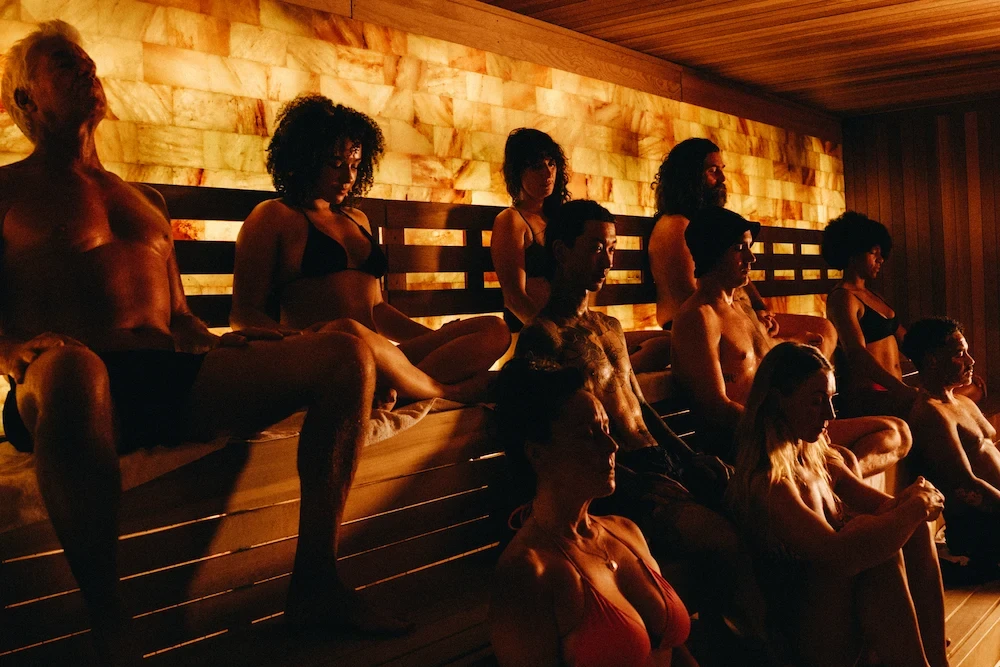
Both practices place a skilled attendant at the center. The Russian banshchik wields a venik, a bundle of birch or oak branches, to capture steam from the ceiling and direct it across your skin. The German Aufgussmeister uses a towel to create waves of infused heat that move through the room in choreographed patterns. Different tools, same fundamental art: shaping thermal intensity through human attention.
Before there was Russia, there was the banya. Before the Mongol invasion, before Moscow united the Russian lands, before the Soviet Union rose and fell; people gathered in steam to sweat together, to mark births and deaths, to negotiate power and find renewal.
Before there was Russia, there was the banya. Before the Mongol invasion, before Moscow united the Russian lands, before the Soviet Union rose and fell; people gathered in steam to sweat together, to mark births and deaths, to negotiate power and find renewal.
Your questions.
Answered.
Not sure what to expect? These answers might help you feel more confident as you begin.
Didn’t find your answer? Send us a message, we’ll respond with care and clarity.
What is a modern bathhouse?
A modern bathhouse keeps the architecture of the old idea, hot room, cold water, somewhere to rest, and lets the rhythm of the city around it shape the rest. Ours is built for Vancouver, on Davie Street, in the West End.
What is a modern bathhouse?
A modern bathhouse keeps the architecture of the old idea, hot room, cold water, somewhere to rest, and lets the rhythm of the city around it shape the rest. Ours is built for Vancouver, on Davie Street, in the West End.
Is the cold plunge at your bathhouse communal?
Is the cold plunge at your bathhouse communal?
Yes. Our cold pools are shared, with multiple temperature options so you can find one that meets you where you are. Communal plunging is part of what makes a bathhouse a bathhouse.
Is the bathhouse a welcoming space for the queer community?
Is the bathhouse a welcoming space for the queer community?
Yes. The West End is home to us and to our queer neighbours, and the bathhouse is built for everyone who walks in. We also host queer nights on a regular rotation, which you can find on the Classes calendar.
What's the etiquette inside the bathhouse?
What's the etiquette inside the bathhouse?
Phones stay in lockers. Voices stay low. Sit or lie on a towel inside the sauna, move at your own pace between rooms, and leave the space the way you'd want to find it. The room works because everyone in it is paying a little attention.
Do you offer Russian Banya at the bathhouse?
Do you offer Russian Banya at the bathhouse?
We run banya-inspired programming including venik work on select dates. The full ritual has its own page if you want to read about it before you book.
Do I need to book ahead, or can I walk in?
Do I need to book ahead, or can I walk in?
Walk-ins are welcome based on availability, but most guests book ahead through our app or website to lock in their preferred session time.
Your questions.
Answered.
Not sure what to expect? These answers might help you feel more confident as you begin.
What do I need to bring?
Please bring a bathing suit and a reusable water bottle. We provide two towels per guest, shower products, and secure lockers.
What do I need to bring?
Please bring a bathing suit and a reusable water bottle. We provide two towels per guest, shower products, and secure lockers.
Do I need a reservation?
Do I need a reservation?
Walk-ins are welcome, but we recommend booking through our app or website to check availability and join the waitlist.
Where can I park?
Where can I park?
Street parking is limited. We offer valet parking behind AetherHaus from 11:00–23:00. There is also some street parking available on Davie and nearby side streets.
What is Open Haus?
What is Open Haus?
Open Haus is a self-guided circuit through our saunas, plunge pools, and tea lounge. Our guides add essential oils to the stove throughout the day. The atmosphere shifts between silent, casual, and social, depending on the session.
What is your Haus Etiquette?
What is your Haus Etiquette?
Phones must be stored away. Please keep conversation soft, sit or lie on a towel, and move mindfully through the space. We ask that guests respect others’ experience and refrain from bringing outside food or drinks - complimentary tea is provided.
Can I visit if I am pregnant?
Can I visit if I am pregnant?
We advise against hot and cold therapy during pregnancy unless approved by your healthcare provider.
Didn’t find your answer? Send us a message, we’ll respond with care and clarity.
Your questions.
Answered.
Not sure what to expect? These answers might help you feel more confident as you begin.
Didn’t find your answer? Send us a message, we’ll respond with care and clarity.
What is a modern bathhouse?
A modern bathhouse keeps the architecture of the old idea, hot room, cold water, somewhere to rest, and lets the rhythm of the city around it shape the rest. Ours is built for Vancouver, on Davie Street, in the West End.
What is a modern bathhouse?
A modern bathhouse keeps the architecture of the old idea, hot room, cold water, somewhere to rest, and lets the rhythm of the city around it shape the rest. Ours is built for Vancouver, on Davie Street, in the West End.
Is the cold plunge at your bathhouse communal?
Is the cold plunge at your bathhouse communal?
Yes. Our cold pools are shared, with multiple temperature options so you can find one that meets you where you are. Communal plunging is part of what makes a bathhouse a bathhouse.
Is the bathhouse a welcoming space for the queer community?
Is the bathhouse a welcoming space for the queer community?
Yes. The West End is home to us and to our queer neighbours, and the bathhouse is built for everyone who walks in. We also host queer nights on a regular rotation, which you can find on the Classes calendar.
What's the etiquette inside the bathhouse?
What's the etiquette inside the bathhouse?
Phones stay in lockers. Voices stay low. Sit or lie on a towel inside the sauna, move at your own pace between rooms, and leave the space the way you'd want to find it. The room works because everyone in it is paying a little attention.
Do you offer Russian Banya at the bathhouse?
Do you offer Russian Banya at the bathhouse?
We run banya-inspired programming including venik work on select dates. The full ritual has its own page if you want to read about it before you book.
Do I need to book ahead, or can I walk in?
Do I need to book ahead, or can I walk in?
Walk-ins are welcome based on availability, but most guests book ahead through our app or website to lock in their preferred session time.