Infrared vs Traditional Sauna: How They Differ (And Which One Your Body Wants)
Infrared vs Traditional Sauna: How They Differ (And Which One Your Body Wants)
You have probably seen both by now. One is a wood-lined room with a stove and a bed of stones. The other is a glass cabin with panels that glow. They both make you hot and both make you sweat, but they get there in completely different ways. Most guides will tell you which one is better. The more honest answer is that it depends on what your body responds to and what you actually want from the practice.
You have probably seen both by now. One is a wood-lined room with a stove and a bed of stones. The other is a glass cabin with panels that glow. They both make you hot and both make you sweat, but they get there in completely different ways. Most guides will tell you which one is better. The more honest answer is that it depends on what your body responds to and what you actually want from the practice.
Published on:
Published on:
A traditional sauna heats the air with a stove and stones, usually 80 to 110°C (176 to 230°F). An infrared sauna skips the air and uses light to warm your body directly, at much lower temperatures, around 49 to 60°C (120 to 140°F). Both ease tension, lift your heart rate, and leave you looser than when you walked in. Choosing between them is less about which one is better and more about which one your body actually wants to come back to.
At AetherHaus, our practice is built around the traditional way. Our Himalayan salt sauna draws from the Finnish dry-heat lineage with German Aufguss layered on top, where steam comes from scented water on the stones. We did not arrive at that by chasing a trend. We arrived at it through the tradition.
These are practices, not products. The right one is the one you keep going back to.
Two Ways to Heat the Body
Before getting into which one suits you, it helps to know what each one actually is. They both get called saunas, but they come from different places and they do different things to your body.
What Defines a Traditional Sauna
A traditional sauna is a wood-lined room heated by a stove, usually topped with stones. Temperatures sit between 80 and 110°C (176 to 230°F), with low humidity, between 5 and 20 percent (Wikipedia, 2025). You ladle water onto the hot stones to release a burst of steam called löyly, which lifts the heat and humidity in waves.
Finnish sauna culture was added to the UNESCO Intangible Cultural Heritage list in December 2020. The practice has been part of daily life in Finland for more than two thousand years (Wikipedia, 2025).
What makes a traditional sauna a sauna is a living heat you can adjust. The room is not fixed. Every ladle of water changes it.
What Defines an Infrared Sauna
An infrared sauna does not really heat the room. Panels give off infrared light that passes through the cooler air and warms your skin and the tissue just beneath it directly, the way the sun warms your face on a cold day.
Because the heat lands on your body instead of the air, the room stays much cooler, usually 49 to 60°C (120 to 140°F). Many people find that easier to sit in, and easier to stay in longer (GoodRx, 2024). There are no stones and no löyly, so the experience is drier and more even, closer to targeted warmth than to an immersive room.
A Quick Comparison
Element | Traditional Sauna | Infrared Sauna |
|---|---|---|
Temperature | 80 to 110°C (176 to 230°F) | 49 to 60°C (120 to 140°F) |
How it heats | Warms the air, which warms you | Light warms your body directly |
Heat source | Stove with stones, wood-lined room | Infrared panels |
Steam | Yes, löyly from water on the stones | None |
Atmosphere | Hot, alive, adjustable in waves | Gentle, dry, even |
Cultural roots | Finnish, Baltic, Scandinavian, centuries deep | Modern, a few decades old |
Typical session | 10 to 20 minutes per round | 20 to 45 minutes |
Infrared vs Traditional Sauna: The Key Differences
The numbers explain the physics. They do not tell you what each one feels like, which is the part that actually decides where you want to spend your time.
How Each One Heats You
In a traditional sauna, the hot air meets your skin from every direction at once. You feel your skin first, then the heat settles deeper, and when you pour water on the stones a wave of steam rolls over the room and lifts everything in a second.
In an infrared sauna, the air stays mild while the light warms you from the surface inward. The heat is steadier and more contained. There are no waves, no steam, no sudden lift. It asks less of you, which is the point for a lot of people who reach for it.
What Each One Actually Feels Like
A traditional sauna feels like sitting close to a fire. The heat is dry and alive. There is weather in the room, and you can change it. Your breathing slows down on its own.
An infrared sauna feels like standing in warm sun with your eyes closed. Nothing rolls over you. The warmth just builds, slowly and evenly, and you can sit in it for a long time. It is calmer, and for some bodies that is exactly right.
What Tradition Tells Us
The cultures that built saunas were not running trials. They were paying attention. The traditional sauna has been refined by hand across centuries and whole regions, and it is still here. That kind of staying power is its own quiet form of evidence, the sort a new appliance has not had time to earn yet.

What the Research Supports
Here is where honesty matters, because the research is not evenly split. We will give you the studies, and then we will tell you how we read them.
The Long-Term Evidence Sits With Traditional Sauna
The most cited work comes from a 20-year study of more than 2,000 people in Finland. Those who used a traditional sauna four to seven times a week had a 63 percent lower risk of sudden cardiac death and a 50 percent lower risk of fatal cardiovascular disease, compared to once-a-week users (JAMA Internal Medicine, 2015). A 2018 follow-up found the effect held across men and women (BMC Medicine, 2018).
In the same population, four to seven sessions a week was linked to a 66 percent lower risk of dementia and a 65 percent lower risk of Alzheimer's, over the same 20-year follow-up (Age and Ageing, 2017).
Our view: these are observational findings, not proof that heat alone caused the outcome, and the people in them were living a whole Finnish life, not just sitting in a room. But every one of these studies was done on traditional dry saunas. The tradition we were built around happens to be the one with decades of evidence standing behind it. That is not why we chose it. It is a good sign that we did.
What We Know About Infrared So Far
Infrared saunas are newer, so the research is younger and thinner. Early studies suggest they can produce some of the same responses, and reviews point to possible support for heart function and comfort in people who find high heat hard to tolerate (GoodRx, 2024). The trials are smaller and shorter, and there is no 20-year mortality data the way there is for traditional sauna.
Our view: the promise is real, and we are not here to talk anyone out of a practice that helps them. Infrared is a genuinely good door in, especially if strong heat has kept you out of the room until now. We just would not pretend the evidence is settled when it is still early.
Which One Is Right for You?
There is no universal answer. There is your body, what you want from the practice, and what you have access to.
When a Traditional Sauna Probably Suits You Better
Try a traditional sauna if you want:
• Deep, living heat you can adjust with water on the stones
• The long-term research behind cardiovascular and cognitive health
• The Finnish, Baltic, and Scandinavian sauna lineage
• The swing from a hot room straight into a cold plunge for contrast therapy
• A shared, communal practice rather than a solo one
When an Infrared Sauna Probably Suits You Better
Try an infrared sauna if you want:
• A gentler heat that is easier to breathe and easier to stay in
• A calmer, more even warmth with no sudden steam
• A softer first step if high heat has felt like too much
• A quiet solo session at home
Tradition Beats Trend
The traditional sauna predates every modern conversation about heat. It carries UNESCO heritage status and two thousand years of daily use. It did not stick around because someone optimized it. It stuck around because something in the body responds to slow heat in the company of other people. Infrared is a clever piece of engineering. Tradition is a piece of culture.
Sensation Beats Protocol
There is no perfect temperature and no perfect minute count. Research points you in a direction. Your body fills in the rest. How long you stay and how often you go are best decided by paying attention, not by following a rule. A session you spend watching the clock is rarely a good one.
How AetherHaus Approaches This
AetherHaus is built around a Himalayan salt sauna and group cold pools, not an infrared cabin. That was a choice. Our sauna follows the Finnish dry-heat tradition with Aufguss layered on top, so steam comes through scented water on the stones rather than a panel of light. It breathes.
Phones away. Clocks out of sight. The whole point is to come back to your body, alongside other people doing the same. If you are new to heat and worried it will be too much, our guides keep the room workable, and you can always step out to the cold pools and the tea lounge between rounds.
Key Takeaways
• Traditional saunas heat the air with a stove and stones at 80 to 110°C. Infrared saunas warm your body directly with light at 49 to 60°C (Wikipedia, 2025; GoodRx, 2024)
• The strongest long-term evidence, including a 63 percent lower risk of sudden cardiac death, comes from traditional dry sauna populations (JAMA Internal Medicine, 2015)
• Infrared research is promising but early, with no equivalent long-term data yet
• Infrared is gentler and easier to tolerate, which makes it a good door in for people sensitive to high heat
• The right choice is sensation-based, not protocol-driven. Your body knows what it needs
Curious which one your body responds to? Book a session at AetherHaus and find out.
Frequently Asked Questions
Is an infrared or traditional sauna better?
Neither is universally better. Traditional saunas have far stronger long-term research behind them, especially for cardiovascular and cognitive health, observed over 20-year studies (JAMA Internal Medicine, 2015). Infrared saunas are gentler and easier to tolerate for people sensitive to high heat. The right choice depends on your body and what you want from the practice.
Does an infrared sauna have the same benefits as a traditional sauna?
Early research suggests infrared can produce some of the same responses, but the studies are smaller and shorter. The decades of long-term evidence, including lower cardiovascular and dementia risk, come specifically from traditional dry saunas. The honest version is that infrared is promising and traditional is proven.
Is an infrared sauna better for beginners?
It can be. Infrared runs at lower temperatures and is easier to breathe, so people who find high heat overwhelming often start there. That said, a well-run traditional sauna can be just as workable for a beginner, especially with a guide keeping the room comfortable and cold pools to step into between rounds.
Can you do contrast therapy with an infrared sauna?
You can pair any heat with a cold plunge, but the contrast is stronger when the heat is higher. A traditional sauna followed by a cold plunge creates a sharper swing between hot and cold, which is the heart of contrast therapy. Infrared works, it is just a gentler version of the same idea.
Which one makes you sweat more?
Most people sweat harder and faster in a traditional sauna because the air itself is hot. Infrared can still work up a real sweat, it just builds more slowly and at a lower room temperature. Sweat is water either way, so hydrate after both.
Are infrared saunas safe?
For most healthy adults, yes, when used in sensible sessions with hydration. Anyone with a cardiovascular condition, low blood pressure, or a pregnancy should talk to a healthcare provider before starting any heat practice, traditional or infrared.
Does AetherHaus have an infrared sauna?
No. AetherHaus is built around a traditional Himalayan salt sauna and group cold pools. Our Aufguss sessions add scented steam, rhythmic towel work, and music in the dark, all inside the traditional setting.
Step Into the Practice
Reading about heat is one thing. Feeling the difference in your own body is another.
At AetherHaus, heat is approached the way it has been for centuries. Slowly, without a stopwatch, in good company. Whether you are new to it or coming back to it, every session meets you where you are.
Book a session and see what your body responds to.
A traditional sauna heats the air with a stove and stones, usually 80 to 110°C (176 to 230°F). An infrared sauna skips the air and uses light to warm your body directly, at much lower temperatures, around 49 to 60°C (120 to 140°F). Both ease tension, lift your heart rate, and leave you looser than when you walked in. Choosing between them is less about which one is better and more about which one your body actually wants to come back to.
At AetherHaus, our practice is built around the traditional way. Our Himalayan salt sauna draws from the Finnish dry-heat lineage with German Aufguss layered on top, where steam comes from scented water on the stones. We did not arrive at that by chasing a trend. We arrived at it through the tradition.
These are practices, not products. The right one is the one you keep going back to.
Two Ways to Heat the Body
Before getting into which one suits you, it helps to know what each one actually is. They both get called saunas, but they come from different places and they do different things to your body.
What Defines a Traditional Sauna
A traditional sauna is a wood-lined room heated by a stove, usually topped with stones. Temperatures sit between 80 and 110°C (176 to 230°F), with low humidity, between 5 and 20 percent (Wikipedia, 2025). You ladle water onto the hot stones to release a burst of steam called löyly, which lifts the heat and humidity in waves.
Finnish sauna culture was added to the UNESCO Intangible Cultural Heritage list in December 2020. The practice has been part of daily life in Finland for more than two thousand years (Wikipedia, 2025).
What makes a traditional sauna a sauna is a living heat you can adjust. The room is not fixed. Every ladle of water changes it.
What Defines an Infrared Sauna
An infrared sauna does not really heat the room. Panels give off infrared light that passes through the cooler air and warms your skin and the tissue just beneath it directly, the way the sun warms your face on a cold day.
Because the heat lands on your body instead of the air, the room stays much cooler, usually 49 to 60°C (120 to 140°F). Many people find that easier to sit in, and easier to stay in longer (GoodRx, 2024). There are no stones and no löyly, so the experience is drier and more even, closer to targeted warmth than to an immersive room.
A Quick Comparison
Element | Traditional Sauna | Infrared Sauna |
|---|---|---|
Temperature | 80 to 110°C (176 to 230°F) | 49 to 60°C (120 to 140°F) |
How it heats | Warms the air, which warms you | Light warms your body directly |
Heat source | Stove with stones, wood-lined room | Infrared panels |
Steam | Yes, löyly from water on the stones | None |
Atmosphere | Hot, alive, adjustable in waves | Gentle, dry, even |
Cultural roots | Finnish, Baltic, Scandinavian, centuries deep | Modern, a few decades old |
Typical session | 10 to 20 minutes per round | 20 to 45 minutes |
Infrared vs Traditional Sauna: The Key Differences
The numbers explain the physics. They do not tell you what each one feels like, which is the part that actually decides where you want to spend your time.
How Each One Heats You
In a traditional sauna, the hot air meets your skin from every direction at once. You feel your skin first, then the heat settles deeper, and when you pour water on the stones a wave of steam rolls over the room and lifts everything in a second.
In an infrared sauna, the air stays mild while the light warms you from the surface inward. The heat is steadier and more contained. There are no waves, no steam, no sudden lift. It asks less of you, which is the point for a lot of people who reach for it.
What Each One Actually Feels Like
A traditional sauna feels like sitting close to a fire. The heat is dry and alive. There is weather in the room, and you can change it. Your breathing slows down on its own.
An infrared sauna feels like standing in warm sun with your eyes closed. Nothing rolls over you. The warmth just builds, slowly and evenly, and you can sit in it for a long time. It is calmer, and for some bodies that is exactly right.
What Tradition Tells Us
The cultures that built saunas were not running trials. They were paying attention. The traditional sauna has been refined by hand across centuries and whole regions, and it is still here. That kind of staying power is its own quiet form of evidence, the sort a new appliance has not had time to earn yet.
What the Research Supports
Here is where honesty matters, because the research is not evenly split. We will give you the studies, and then we will tell you how we read them.
The Long-Term Evidence Sits With Traditional Sauna
The most cited work comes from a 20-year study of more than 2,000 people in Finland. Those who used a traditional sauna four to seven times a week had a 63 percent lower risk of sudden cardiac death and a 50 percent lower risk of fatal cardiovascular disease, compared to once-a-week users (JAMA Internal Medicine, 2015). A 2018 follow-up found the effect held across men and women (BMC Medicine, 2018).
In the same population, four to seven sessions a week was linked to a 66 percent lower risk of dementia and a 65 percent lower risk of Alzheimer's, over the same 20-year follow-up (Age and Ageing, 2017).
Our view: these are observational findings, not proof that heat alone caused the outcome, and the people in them were living a whole Finnish life, not just sitting in a room. But every one of these studies was done on traditional dry saunas. The tradition we were built around happens to be the one with decades of evidence standing behind it. That is not why we chose it. It is a good sign that we did.
What We Know About Infrared So Far
Infrared saunas are newer, so the research is younger and thinner. Early studies suggest they can produce some of the same responses, and reviews point to possible support for heart function and comfort in people who find high heat hard to tolerate (GoodRx, 2024). The trials are smaller and shorter, and there is no 20-year mortality data the way there is for traditional sauna.
Our view: the promise is real, and we are not here to talk anyone out of a practice that helps them. Infrared is a genuinely good door in, especially if strong heat has kept you out of the room until now. We just would not pretend the evidence is settled when it is still early.
Which One Is Right for You?
There is no universal answer. There is your body, what you want from the practice, and what you have access to.
When a Traditional Sauna Probably Suits You Better
Try a traditional sauna if you want:
• Deep, living heat you can adjust with water on the stones
• The long-term research behind cardiovascular and cognitive health
• The Finnish, Baltic, and Scandinavian sauna lineage
• The swing from a hot room straight into a cold plunge for contrast therapy
• A shared, communal practice rather than a solo one
When an Infrared Sauna Probably Suits You Better
Try an infrared sauna if you want:
• A gentler heat that is easier to breathe and easier to stay in
• A calmer, more even warmth with no sudden steam
• A softer first step if high heat has felt like too much
• A quiet solo session at home
Tradition Beats Trend
The traditional sauna predates every modern conversation about heat. It carries UNESCO heritage status and two thousand years of daily use. It did not stick around because someone optimized it. It stuck around because something in the body responds to slow heat in the company of other people. Infrared is a clever piece of engineering. Tradition is a piece of culture.
Sensation Beats Protocol
There is no perfect temperature and no perfect minute count. Research points you in a direction. Your body fills in the rest. How long you stay and how often you go are best decided by paying attention, not by following a rule. A session you spend watching the clock is rarely a good one.
How AetherHaus Approaches This
AetherHaus is built around a Himalayan salt sauna and group cold pools, not an infrared cabin. That was a choice. Our sauna follows the Finnish dry-heat tradition with Aufguss layered on top, so steam comes through scented water on the stones rather than a panel of light. It breathes.
Phones away. Clocks out of sight. The whole point is to come back to your body, alongside other people doing the same. If you are new to heat and worried it will be too much, our guides keep the room workable, and you can always step out to the cold pools and the tea lounge between rounds.
Key Takeaways
• Traditional saunas heat the air with a stove and stones at 80 to 110°C. Infrared saunas warm your body directly with light at 49 to 60°C (Wikipedia, 2025; GoodRx, 2024)
• The strongest long-term evidence, including a 63 percent lower risk of sudden cardiac death, comes from traditional dry sauna populations (JAMA Internal Medicine, 2015)
• Infrared research is promising but early, with no equivalent long-term data yet
• Infrared is gentler and easier to tolerate, which makes it a good door in for people sensitive to high heat
• The right choice is sensation-based, not protocol-driven. Your body knows what it needs
Curious which one your body responds to? Book a session at AetherHaus and find out.
Frequently Asked Questions
Is an infrared or traditional sauna better?
Neither is universally better. Traditional saunas have far stronger long-term research behind them, especially for cardiovascular and cognitive health, observed over 20-year studies (JAMA Internal Medicine, 2015). Infrared saunas are gentler and easier to tolerate for people sensitive to high heat. The right choice depends on your body and what you want from the practice.
Does an infrared sauna have the same benefits as a traditional sauna?
Early research suggests infrared can produce some of the same responses, but the studies are smaller and shorter. The decades of long-term evidence, including lower cardiovascular and dementia risk, come specifically from traditional dry saunas. The honest version is that infrared is promising and traditional is proven.
Is an infrared sauna better for beginners?
It can be. Infrared runs at lower temperatures and is easier to breathe, so people who find high heat overwhelming often start there. That said, a well-run traditional sauna can be just as workable for a beginner, especially with a guide keeping the room comfortable and cold pools to step into between rounds.
Can you do contrast therapy with an infrared sauna?
You can pair any heat with a cold plunge, but the contrast is stronger when the heat is higher. A traditional sauna followed by a cold plunge creates a sharper swing between hot and cold, which is the heart of contrast therapy. Infrared works, it is just a gentler version of the same idea.
Which one makes you sweat more?
Most people sweat harder and faster in a traditional sauna because the air itself is hot. Infrared can still work up a real sweat, it just builds more slowly and at a lower room temperature. Sweat is water either way, so hydrate after both.
Are infrared saunas safe?
For most healthy adults, yes, when used in sensible sessions with hydration. Anyone with a cardiovascular condition, low blood pressure, or a pregnancy should talk to a healthcare provider before starting any heat practice, traditional or infrared.
Does AetherHaus have an infrared sauna?
No. AetherHaus is built around a traditional Himalayan salt sauna and group cold pools. Our Aufguss sessions add scented steam, rhythmic towel work, and music in the dark, all inside the traditional setting.
Step Into the Practice
Reading about heat is one thing. Feeling the difference in your own body is another.
At AetherHaus, heat is approached the way it has been for centuries. Slowly, without a stopwatch, in good company. Whether you are new to it or coming back to it, every session meets you where you are.
Book a session and see what your body responds to.
our Blog
our Blog
More insights
More insights
Explore more reflections, guidance, and practical tools to support you.
Explore more reflections, guidance, and practical tools to support you.

You have a hot sauna on one side and a cold pool on the other. The only real question most people have is which one to finish on. It sounds small, but the order changes what the practice does for you, and there is a reason nearly every heat tradition on earth settled on the same answer.
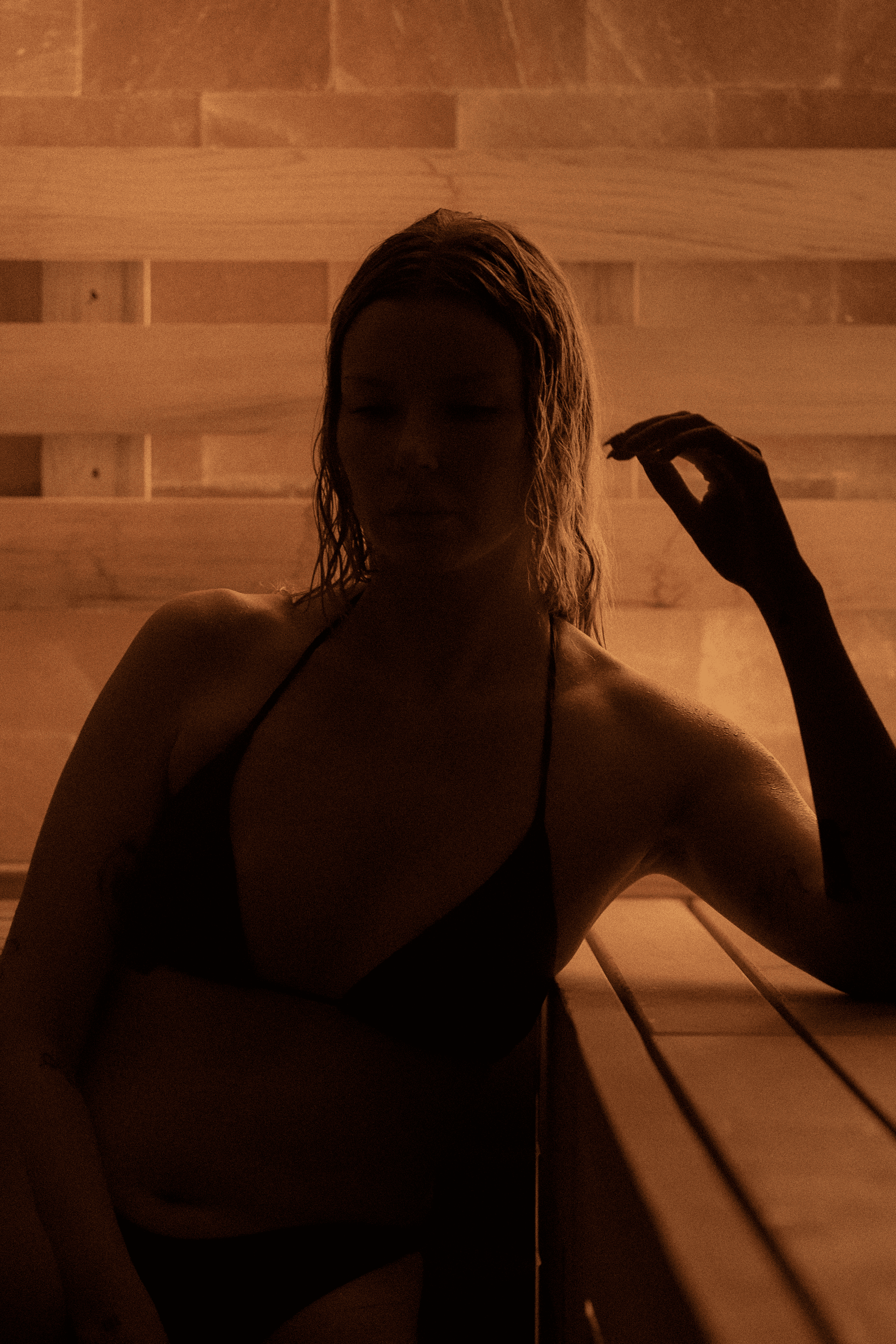
Most sauna sessions are full of small sounds. Quiet conversation, the hiss of water on stones, occasional laughter. A silent sauna strips that back. No talking. No phones. Just heat, breath, and whatever you brought in with you.
Most sauna sessions are full of small sounds. Quiet conversation, the hiss of water on stones, occasional laughter. A silent sauna strips that back. No talking. No phones. Just heat, breath, and whatever you brought in with you.
Your questions.
Answered.
Not sure what to expect? These answers might help you feel more confident as you begin.
Didn’t find your answer? Send us a message, we’ll respond with care and clarity.
What is a modern bathhouse?
A modern bathhouse keeps the architecture of the old idea, hot room, cold water, somewhere to rest, and lets the rhythm of the city around it shape the rest. Ours is built for Vancouver, on Davie Street, in the West End.
What is a modern bathhouse?
A modern bathhouse keeps the architecture of the old idea, hot room, cold water, somewhere to rest, and lets the rhythm of the city around it shape the rest. Ours is built for Vancouver, on Davie Street, in the West End.
Is the cold plunge at your bathhouse communal?
Is the cold plunge at your bathhouse communal?
Yes. Our cold pools are shared, with multiple temperature options so you can find one that meets you where you are. Communal plunging is part of what makes a bathhouse a bathhouse.
Is the bathhouse a welcoming space for the queer community?
Is the bathhouse a welcoming space for the queer community?
Yes. The West End is home to us and to our queer neighbours, and the bathhouse is built for everyone who walks in. We also host queer nights on a regular rotation, which you can find on the Classes calendar.
What's the etiquette inside the bathhouse?
What's the etiquette inside the bathhouse?
Phones stay in lockers. Voices stay low. Sit or lie on a towel inside the sauna, move at your own pace between rooms, and leave the space the way you'd want to find it. The room works because everyone in it is paying a little attention.
Do you offer Russian Banya at the bathhouse?
Do you offer Russian Banya at the bathhouse?
We run banya-inspired programming including venik work on select dates. The full ritual has its own page if you want to read about it before you book.
Do I need to book ahead, or can I walk in?
Do I need to book ahead, or can I walk in?
Walk-ins are welcome based on availability, but most guests book ahead through our app or website to lock in their preferred session time.
Your questions.
Answered.
Not sure what to expect? These answers might help you feel more confident as you begin.
What do I need to bring?
Please bring a bathing suit and a reusable water bottle. We provide two towels per guest, shower products, and secure lockers.
What do I need to bring?
Please bring a bathing suit and a reusable water bottle. We provide two towels per guest, shower products, and secure lockers.
Do I need a reservation?
Do I need a reservation?
Walk-ins are welcome, but we recommend booking through our app or website to check availability and join the waitlist.
Where can I park?
Where can I park?
Street parking is limited. We offer valet parking behind AetherHaus from 11:00–23:00. There is also some street parking available on Davie and nearby side streets.
What is Open Haus?
What is Open Haus?
Open Haus is a self-guided circuit through our saunas, plunge pools, and tea lounge. Our guides add essential oils to the stove throughout the day. The atmosphere shifts between silent, casual, and social, depending on the session.
What is your Haus Etiquette?
What is your Haus Etiquette?
Phones must be stored away. Please keep conversation soft, sit or lie on a towel, and move mindfully through the space. We ask that guests respect others’ experience and refrain from bringing outside food or drinks - complimentary tea is provided.
Can I visit if I am pregnant?
Can I visit if I am pregnant?
We advise against hot and cold therapy during pregnancy unless approved by your healthcare provider.
Didn’t find your answer? Send us a message, we’ll respond with care and clarity.
Your questions.
Answered.
Not sure what to expect? These answers might help you feel more confident as you begin.
Didn’t find your answer? Send us a message, we’ll respond with care and clarity.
What is a modern bathhouse?
A modern bathhouse keeps the architecture of the old idea, hot room, cold water, somewhere to rest, and lets the rhythm of the city around it shape the rest. Ours is built for Vancouver, on Davie Street, in the West End.
What is a modern bathhouse?
A modern bathhouse keeps the architecture of the old idea, hot room, cold water, somewhere to rest, and lets the rhythm of the city around it shape the rest. Ours is built for Vancouver, on Davie Street, in the West End.
Is the cold plunge at your bathhouse communal?
Is the cold plunge at your bathhouse communal?
Yes. Our cold pools are shared, with multiple temperature options so you can find one that meets you where you are. Communal plunging is part of what makes a bathhouse a bathhouse.
Is the bathhouse a welcoming space for the queer community?
Is the bathhouse a welcoming space for the queer community?
Yes. The West End is home to us and to our queer neighbours, and the bathhouse is built for everyone who walks in. We also host queer nights on a regular rotation, which you can find on the Classes calendar.
What's the etiquette inside the bathhouse?
What's the etiquette inside the bathhouse?
Phones stay in lockers. Voices stay low. Sit or lie on a towel inside the sauna, move at your own pace between rooms, and leave the space the way you'd want to find it. The room works because everyone in it is paying a little attention.
Do you offer Russian Banya at the bathhouse?
Do you offer Russian Banya at the bathhouse?
We run banya-inspired programming including venik work on select dates. The full ritual has its own page if you want to read about it before you book.
Do I need to book ahead, or can I walk in?
Do I need to book ahead, or can I walk in?
Walk-ins are welcome based on availability, but most guests book ahead through our app or website to lock in their preferred session time.