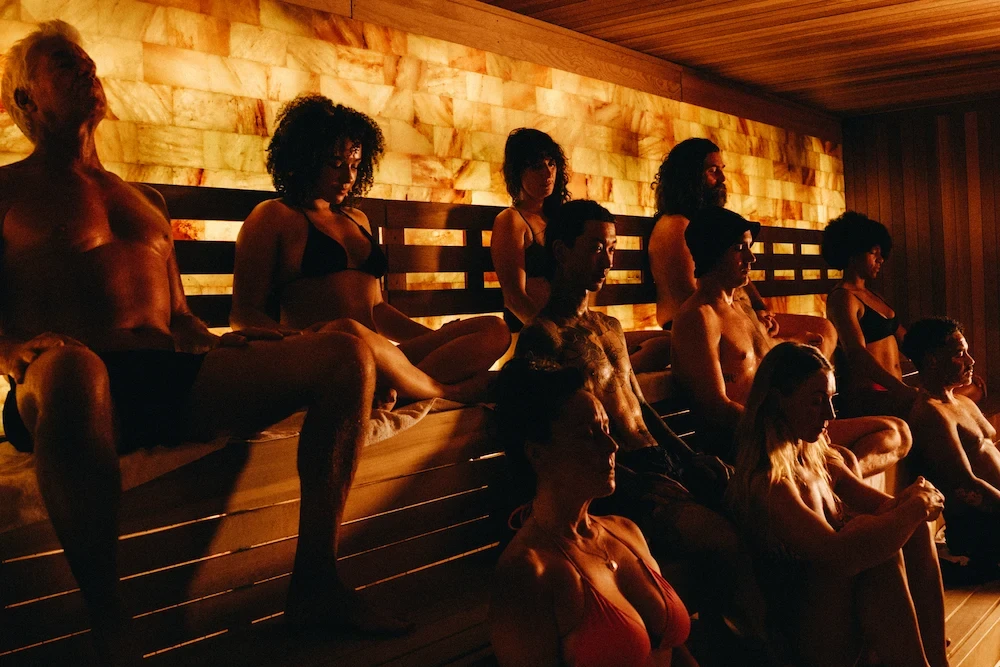
Banya vs Aufguss: How Russian Steam and German Ceremony Share Ancient Roots
Banya vs Aufguss: How Russian Steam and German Ceremony Share Ancient Roots
Both practices place a skilled attendant at the center. The Russian banshchik wields a venik, a bundle of birch or oak branches, to capture steam from the ceiling and direct it across your skin. The German Aufgussmeister uses a towel to create waves of infused heat that move through the room in choreographed patterns. Different tools, same fundamental art: shaping thermal intensity through human attention.
Both practices place a skilled attendant at the center. The Russian banshchik wields a venik, a bundle of birch or oak branches, to capture steam from the ceiling and direct it across your skin. The German Aufgussmeister uses a towel to create waves of infused heat that move through the room in choreographed patterns. Different tools, same fundamental art: shaping thermal intensity through human attention.
Published on:
Published on:
You do not have to choose between Russian banya and German aufguss. These traditions are not competitors. They are cousins, born from the same impulse: the human need to transform passive heat into guided ritual.
This is not about finding the superior method. The question is not which tradition does heat better. The question is which door you need today.
Neither practice needs to be optimized. Both invite you to listen.
What is Russian Banya?
The banya predates the Russian state itself. It emerged in Kievan Rus' as a cultural fusion, drawing on Byzantine public baths to the south, Finnish sweat traditions to the north, and bathing customs from Jewish and Khazar communities living among the early Slavs (Wikipedia, 2025). By the time Princess Olga's revenge story appeared in the Radziwiłł Chronicle in 945 AD, banyas were already established enough to feature in political intrigue (Wikipedia, 2025).
The tradition survived the Mongol invasion. It persisted through Peter the Great's campaign to westernize Russia. It endured Soviet communism's attempt to erase the tsarist past (Stanford CASBS, 2025). When so much changed, the banya remained.
Origins in Kievan Rus'
Historical documentation places banyas firmly in Russian culture by the 10th century. Some scholars suggest the practice extends much further back, possibly to groups described by Herodotus in 440 BCE bathing north of the Black Sea (Bathhouse, 2024). Whether this earlier reference describes true banya practice or something similar remains debatable.
What matters is continuity. For over one thousand years, Russians of every economic class have treated bathing as communal ritual integrating hygiene, health, social bonding, and something approaching spiritual renewal (Stanford CASBS, 2025).
The Banya Experience - Heat, Humidity, Ritual
Step into a traditional banya and the first thing you notice is moisture. The air wraps around you, thick and present. Temperature ranges from 70 to 90°C, moderate compared to Finnish sauna's punishing 100°C+ peaks (Galina's Banya, 2025). But humidity climbs to 40-70%, and that moisture completely changes how heat feels (Galina's Banya, 2025).
The sensation is softer than dry sauna but penetrates deeper. Your lungs fill with humid warmth. Sweat appears immediately but does not evaporate quickly; it sits on your skin, a wet sheen that makes you aware of every pore opening.
The banya oven creates this specific thermal environment. Unlike the open convective heater of a Finnish sauna, banya ovens are large enclosed structures that function more like steam generators (LocalMile, 2025). Heat and steam build inside the oven's mass, creating both radiant warmth from the large stone or tile surfaces and convective humidity from water meeting superheated rocks. This combination produces heat that stratifies, hottest near the ceiling and cooler at floor level, which skilled banshchik learn to manipulate (LocalMile, 2025).
Venik and Parenie - The Massage of Steam
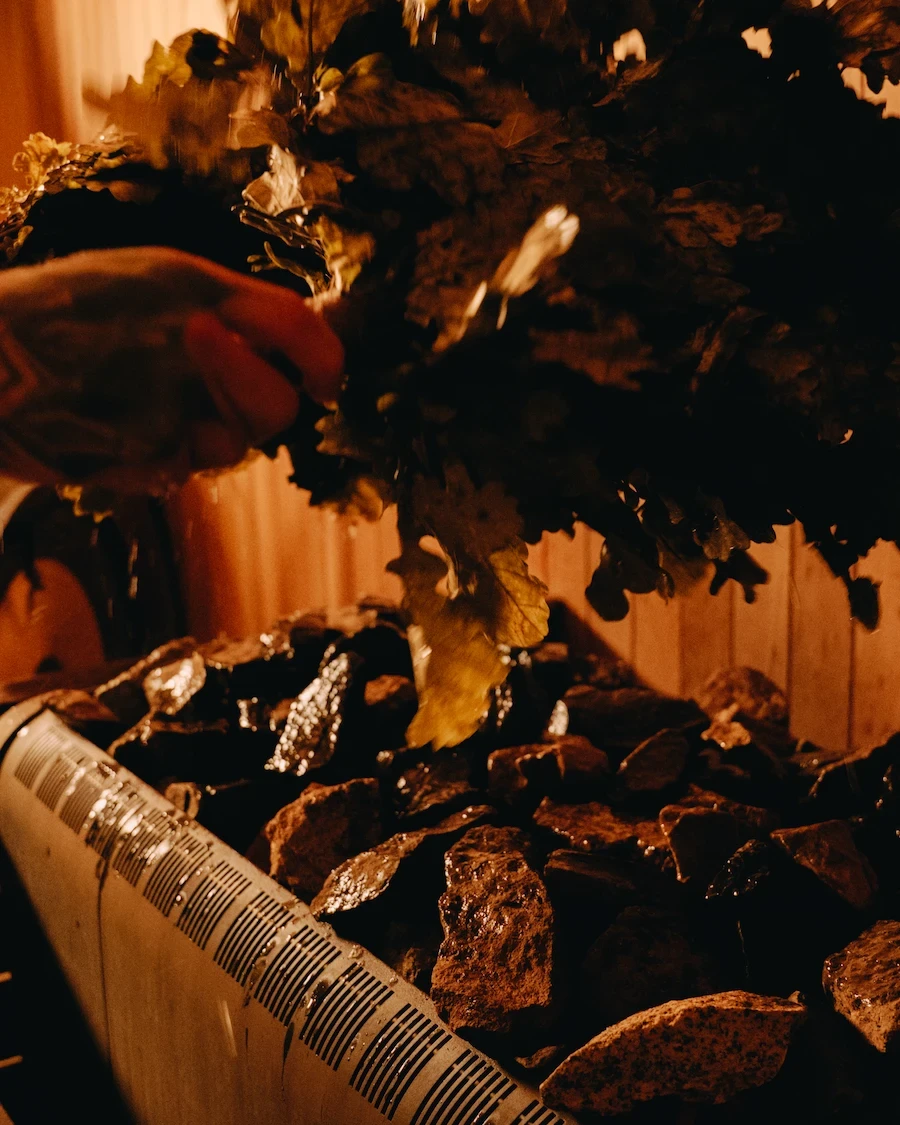
The venik distinguishes banya from every other heat tradition. A bundle of leafy branches; typically birch, oak, or eucalyptus; bound together and soaked until supple (Banya London, 2025). To outsiders, the practice looks bizarre. In the 12th century, observers described it as "lashing so violently they barely escape alive...a veritable torment" (Banya London, 2025).
Understanding requires experience. The venik does not beat. It massages through heat transfer and aromatic contact.
Parenie, the venik massage ritual, requires genuine skill. The banshchik must capture the hottest steam from near the ceiling and direct it downward onto your body using precise venik movements (Medium, 2025). The branches act as both fan and compress, wafting concentrated heat across your back, then pressing warm aromatic leaves against your skin. The rhythm alternates between gentle waving and firmer tapping, each movement calculated to increase circulation without causing discomfort (Banya London, 2025).
Different trees offer distinct therapeutic properties:
Birch: The classic Russian choice. High in essential oils, birch improves circulation and leaves skin feeling renewed. The scent is bright, almost sweet, immediately recognizable as forest.
Oak: Wider leaves move more air with each sweep. Oak contains water-soluble tannins that help stabilize blood pressure and calm the nervous system (Banya No.1, 2024). The aroma is deeper, earthier than birch.
Eucalyptus: Chosen for respiratory support. The volatile oils clear sinuses and carry antibacterial, antiviral, and anti-inflammatory properties (Banya No.1, 2024). The scent is sharp, medicinal, unmistakable.
The banshchik learns through apprenticeship which trees to use, how to read a client's heat tolerance, when to increase intensity and when to offer respite. This knowledge cannot be downloaded. Your nervous system adapts through consistent practice, learning to feel humidity characteristics and thermal stratification the way musicians learn to hear overtones.
Cultural Role - The Social Equalizer
Russian banya culture developed as explicitly communal practice. Conversation happens. Laughter echoes off wooden walls. Groups of friends visit together, and business deals get negotiated in the steam (AetherHaus, 2025). The atmosphere encourages openness because formalities dissolve when everyone sits naked in shared heat.
This is social democracy made literal. In the banya, your title and wealth mean nothing. You sweat the same as everyone else.
The tradition proved resilient precisely because it served this leveling function. Peter the Great encouraged banya construction in St. Petersburg with tax breaks, despite his broader campaign to modernize Russia along European lines (Banya London, 2025). When asked about the importance of doctors for the military, Peter allegedly responded: "Not for Russia. The banya alone is enough" (Banya London, 2025).
The Soviet era should have killed the banya. The Bolsheviks rejected tsarist culture systematically. But they recognized the banya's utility. Lenin's public health campaigns centered on banya access, declaring "either socialism will defeat the louse or the louse will defeat socialism" (Banya London, 2025). The state tried to reframe banyas as tools for cleansing "capitalist pollutants" from society; metaphorical cleansing to match the physical (Banya London, 2025).
The attempt at ideological capture failed. Despite Soviet endorsement, the state never built enough banyas to meet demand, and they never succeeded in transforming banya culture into purely functional hygiene (Banya London, 2025). People continued using banyas for connection, not just cleanliness.
After the USSR collapsed, banyas experienced resurgence as symbols of Russianness that predated both Soviet and tsarist periods (Banya London, 2025). The phrase "pomylsya – budto zanovo rodilsya" captures the experience: "washed – born again" (Bathhouse, 2024). Physical cleansing, yes. But also renewal of something harder to name.
Banya does not care about your productivity metrics. It cares that you are human, and humans need spaces where they can be vulnerable together.
What is Aufguss?
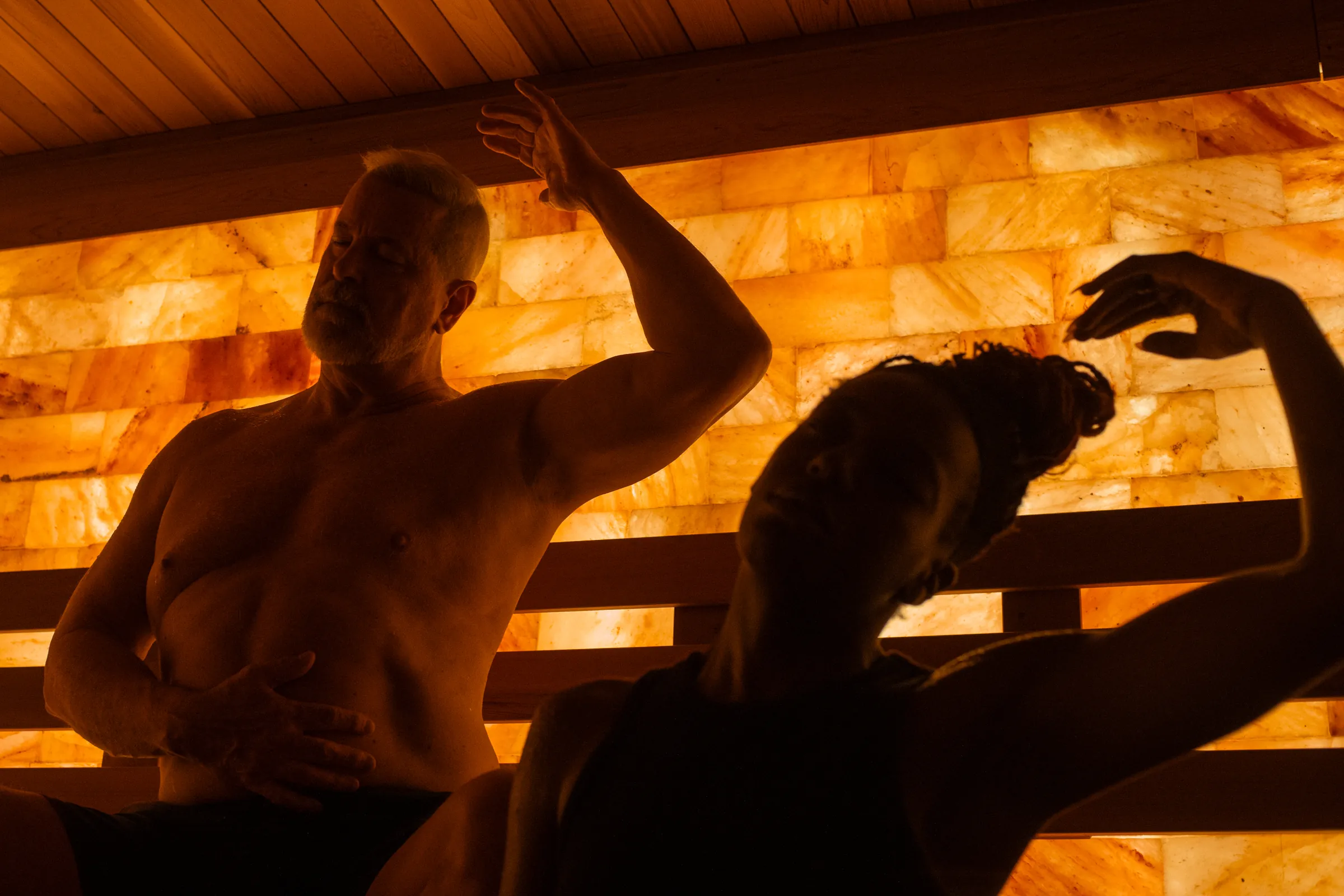
The word "aufguss" comes from German, meaning "infusion" (Kōena Spa, 2024). Water and essential oils pour onto hot sauna stones, releasing aromatic steam that a trained practitioner then circulates through the room using towel movements. The term suggests sophistication; carefully composed scents, deliberate ceremony, formalized technique.
Aufguss transforms the sauna from solitary endurance test into guided sensory journey. Where banya emphasizes participation and social flow, aufguss creates structured ritual with clear roles: the Aufgussmeister performs, guests receive.
Etymology and Evolution
Aufguss began pragmatically. After ventilating a sauna, opening doors and windows to bring in fresh air, the room cools. Someone realized that pouring water on stones and fanning the resulting steam could quickly reheat the space (InsideHook, 2023). Practical German engineering noticed an opportunity.
What started as functional necessity evolved into ceremonial art. Post-WWII Germany saw formalization of spa culture, and aufguss became professionalized. Training programs emerged. Competitions developed. Categories formed to distinguish styles and approaches.
The practice spread through Central Europe, particularly Austria and South Tyrol in northern Italy, where theatrical aufguss variations incorporating costumes and storytelling gained popularity around 2009 (LocalMile, 2025). Today, aufguss continues expanding globally, though it remains relatively new in North America (InsideHook, 2023).
The Aufguss Ceremony - Choreographed Heat
An Aufguss ritual follows structure. Guests gather in the sauna. The Aufgussmeister enters with prepared infusions, water mixed with specific essential oil combinations chosen for their aromatherapy properties or thematic coherence. The door closes. Silence settles.
Water hits the stones with a hiss. Steam explodes upward. The practitioner begins towel work; large sweeping movements that capture rising heat and direct it in waves across the seated audience. Each wave brings aromatic intensity and a surge of warmth that makes you acutely aware of your skin's boundaries.
The ceremony builds in intensity. Early waves feel pleasant, almost gentle. Middle waves challenge your heat tolerance. Final waves test your commitment to staying seated. Then release; the door opens, cool air rushes in, and you exit into profound relief.
Modern aufguss has evolved into four distinct categories (LocalMile, 2025):
Classical or Traditional: Focus remains purely on the sauna experience. Air movements mix infusions and reduce heat stratification. Minimal theatrics. The heat itself creates the ritual.
Modern: Adds curated music and more elaborate towel choreography. The practitioner's movements become more dance-like, though still serving the functional purpose of heat distribution.
Ritual or Zen: Incorporates meditation guidance, yoga breath work, or sound bathing. Takes guests on "an inward journey" where heat becomes a vehicle for contemplative practice (LocalMile, 2025).
Show or Theatrical: Full performance with costumes, narrative storytelling, and dramatic flair. Saunameisters might dress as characters, tell stories through movement, or create immersive themed experiences. This style originated in South Tyrol and spread rapidly through competition culture (LocalMile, 2025).
Cultural Character - Structured Ceremony
Aufguss creates different social dynamics than banya. Conversation stops when the ceremony begins. You sit. You receive. The Aufgussmeister guides, and your task is presence and breath management.
This is not social democracy. This is guided meditation through thermal intensity. The practitioner holds expertise. Guests trust that expertise and surrender to the structured experience.
Professional Aufgussmeister training involves formal certification through organizations like the German Sauna-Bund, covering essential oil chemistry, thermal dynamics, towel technique, and crowd management. The training formalizes knowledge that banshchik traditionally learn through apprenticeship. Different paths to similar skill; one emphasizing systematic education, the other emphasizing embodied transmission.
The guided structure suits modern urban life where time feels scarce and people seek clearly defined experiences. You book a session. You arrive. The ritual unfolds on schedule. You leave transformed but on time.
The Hidden Connection - Banshchik to Aufgussmeister
Most comparisons treat banya and aufguss as separate traditions. They miss the likely ancestry.
In Russian banyas, the banshchik (bath attendant) holds responsibility for making steam and moving air to create optimal conditions for everyone in the room (Medium, 2025). The skilled banshchik uses a venik to capture the hottest steam that collects near the ceiling, then directs it downward onto clients through precise movements. They prefer banya's high-humidity environment because the steam "sticks closer to the ceiling," giving them more control than drier sauna steam, they can heat the venik or use it to pull concentrated heat down briefly onto specific areas (Medium, 2025).
The functions parallel aufguss almost exactly. Both roles involve manipulating thermal environment through tools (venik or towel). Both require reading the room, adjusting intensity based on guest responses. Both transform passive heat exposure into active, guided ritual.
The connection seems clear enough that sauna experts have noted it explicitly: "It is likely that the idea for the aufguss masters popular in continental saunas came from the bath attendants in banyas" (LocalMile, 2025). The transmission probably happened through Central European spa culture's exposure to Slavic bathing traditions, with German formalization codifying what had been passed through apprenticeship.
We cannot know the exact historical path. What matters is recognizing these practices as branches of the same tree, humans learning from humans how to care for each other through heat.
The transmission was not about perfecting a protocol. It was about attention. The banshchik's attention to humidity and the client's heat tolerance. The Aufgussmeister's attention to essential oil composition and crowd energy. Both practices rest on the same foundation: presence applied to heat creates transformation.
Core Differences - Temperature, Humidity, Philosophy
Understanding technical differences helps you choose which experience suits your current state. But the numbers tell only part of the story.
The Physics of Heat
Banya operates at:
Temperature: 70-90°C (158-194°F)
Humidity: 40-70%
Heat type: Combination radiant and convective, stratified
Sensation: Softer, deeply penetrating, constant moisture
The high humidity prevents sweat from evaporating quickly. You feel wetness on your skin. Your lungs work harder to process the saturated air. The heat feels gentle but inescapable, it surrounds you completely (Galina's Banya, 2025).
Aufguss typically features:
Temperature: Often 80-100°C (176-212°F) in traditional German saunas
Humidity: Lower baseline, sharp increases with infusions
Heat type: Primarily convective, manipulated by towel work
Sensation: Intense waves, peaks and valleys, directed force
The lower baseline humidity allows your body to tolerate higher temperatures. When water hits the stones and the Aufgussmeister directs the resulting steam with towel waves, you feel heat as a moving force; it arrives, intensifies, then dissipates. The experience has more contrast, more defined edges (Galina's Banya, 2025).
Neither is objectively better. They create different nervous system responses. Banya's steady humid warmth can feel nurturing, enveloping. Aufguss's dynamic heat waves can feel invigorating, challenging. Some days your body wants the embrace. Other days it wants the intensity.
Your body will tell you which heat you need today. Some days, you want the embrace of humid warmth. Other days, you want the challenge of dry peaks. This is not a failure to commit to a protocol. This is listening.
Ritual Structure and Social Dynamics
Banya traditionally unfolds fluidly. You enter when ready. You exit when your body signals enough. Friends perform parenie on each other, taking turns with the venik. Conversation happens naturally. Multiple short sessions punctuate hours of socializing in the entrance room, drinking tea, resting (Banya No.1, 2024).
The experience emphasizes participation. You are not an audience. You are a participant in communal ritual.
Aufguss follows a defined structure. Sessions happen on schedule. Guests gather before the practitioner enters. The ceremony has a clear beginning and ending. You sit. You observe (though you are also deeply experiencing). Conversation pauses. The Aufgussmeister performs, and your role is to breathe, endure, integrate.
The experience emphasizes reception. You trust the guide's expertise and allow yourself to be led through choreographed intensity.
Both approaches offer value. Banya builds community through shared vulnerability and participatory care. Aufguss offers surrender to structured guidance and individual transformation within collective energy. Different paths, overlapping destinations.
These practices do not need to become another thing you are doing right. They are invitations to stop doing and start feeling.

Survival Stories - Political Upheaval and Cultural Preservation
How did these traditions endure through centuries of political and social change? The stories reveal something about human need for heat, connection, and ritual that transcends ideology.
Banya Through Russian History
Peter the Great should have killed the banya. His westernization campaign sought to modernize Russia along European lines, and European visitors regularly described Russian bathing customs as barbarous. Yet Peter encouraged banya construction, offering tax breaks and establishing a chancellery to manage public bathhouses (Banya London, 2025). The banya was too useful, too loved, too essential to Russian identity to abandon.
The Bolsheviks should have killed the banya. They disdained tsarist culture and worked systematically to eradicate its influence. Yet they embraced banyas as public health infrastructure during the post-revolutionary crisis. Lenin's famous declaration "Either socialism will defeat the louse or the louse will defeat socialism" made personal hygiene a state concern, and banyas became tools for cleansing not just bodies but society itself of "capitalist pollutants" (Banya London, 2025).
The metaphorical ambition reveals both the tradition's power and its resistance to complete ideological capture. People demanded access to banyas because they needed to bathe. But they also needed the social space, the ritual, the moment of equality in shared heat. Despite Soviet endorsement and metaphorical reframing, the state failed to build enough banyas and never transformed the culture into purely functional hygiene (Banya London, 2025).
After the USSR collapsed, banyas resurged as symbols of Russianness predating both Soviet and tsarist periods, something authentic that had survived multiple attempts at control (Banya London, 2025). Politicians used banya visits to signal connection to ordinary people. Yeltsin celebrated the USSR's dissolution in a banya. Putin references his love of the tradition to signal patriotism and wholesomeness.
The banya transcended every regime because it met needs deeper than any political program could address. Heat, water, community, renewal. Humans require these things regardless of who claims power.
Aufguss Formalization in Germany
Aufguss's story involves less political drama but reveals different cultural values. Post-WWII Germany rebuilt its spa culture with emphasis on professionalization and systematic organization. What had been informal folk practices became certified training programs, competition circuits, and categorized styles (LocalMile, 2025).
German culture's emphasis on precision and structure transformed bath attendant roles into the specialized profession of Aufgussmeister. This formalization allowed the practice to spread through Central Europe and eventually globally, as formal training created reproducible expertise.
The tradition continues expanding, particularly in North America where it remains relatively new despite growing interest (InsideHook, 2023). Venues like AetherHaus in Vancouver bring authenticated aufguss practice to the West Coast, honoring German training traditions while adapting to contemporary sauna culture.
Where Both Traditions Meet - Modern Fusion
You do not have to choose between banya and aufguss any more than you must choose between breathing in and breathing out. These are two expressions of the same human impulse; using heat to return to the body, to presence, to connection.
The Family of European Heat Traditions
The banya and aufguss belong to what we might call a family of European heat traditions (AetherHaus, 2025). They share common roots: the understanding that heat, water, steam, and cold create transformation. That humans need gathering spaces. That certain rituals persist because they meet needs that do not change despite surface cultural shifts.
Finnish sauna, Turkish hammam, Germanic therme traditions, Slavic banya culture, each regional variation reflects local climate, available materials, and cultural values. But all draw on the same fundamental knowledge that heat applied with attention heals body and spirit.
Modern spaces can honor multiple traditions without diluting either. The key is authentic practice rooted in understanding each tradition's specific wisdom rather than superficially borrowing aesthetic elements.
At AetherHaus - Honoring Both Lineages
AetherHaus explicitly draws on German Aufguss and Russian Banya rituals as part of its foundation. The Himalayan salt sauna provides a unique thermal environment where both approaches find expression.
Guided Aufguss sessions offer structured ceremonies with trained facilitators using towel technique to distribute essential oil infusions and create choreographed heat waves. The atmosphere emphasizes meditative focus, curated soundscapes, and individual journey within collective experience.
Open sessions allow a more fluid, banya-like experience where guests move between heat, contrast therapy with cold plunge, and rest according to their own rhythms. Conversation happens naturally. The experience unfolds organically rather than following prescribed structure.
No phones. No clocks. Sensation guides you, not metrics. This aligns with both traditions' deepest wisdom, your body knows what it needs better than any external measure.
The fusion approach recognizes that different days, different nervous system states, different intentions all call for different experiences. Some mornings you wake wanting guided intensity. Some evenings you need unstructured communal warmth. Recovery class offers one doorway. Silent open session offers another. Both honor historical roots while serving contemporary needs.
We do not optimize heat. We offer heat that invites you to feel. The practice chooses you as much as you choose it.
Which Should You Choose?
This is the wrong question. But since people ask it, let us reframe.
Questions to Ask Your Body (Not Your Mind)
Your mind wants protocols, comparisons, optimization strategies. Your body wants to know: will this feel right today?
Consider your current state:
Do you want to be guided through structured ceremony, or do you need space to wander intuitively? Is your nervous system seeking challenge and peaks, or does it need steady enveloping warmth? Do you want to receive care from a practitioner, or do you want to participate in mutual care with others? Does conversation sound appealing, or does silence feel necessary?
There is no wrong answer. Your needs change day to day, even session to session. You might start in one mode and realize mid-visit that your body wants something different. This is not failure to commit. This is listening.
Banya for one week. Aufguss another. Or experience elements of both in fusion spaces that honor multiple traditions. The heat knows what you need better than your calendar app.
For First-Timers
If you choose banya:
Expect a social, potentially loud, participatory environment. The moderate temperature (70-90°C) and high humidity (40-70%) create heat that feels gentle initially but penetrates deep (Galina's Banya, 2025). The sensation intensifies gradually rather than arriving in waves.
Venik experience may seem strange if you have never encountered it. Trust the tradition. What looks like aggressive beating is actually skilled massage using steam and aromatic plant oils. The branches do not hurt, they wake your skin up and increase circulation through alternating warmth and contact.
Visit with friends if possible, or be ready to make new ones. Banya culture encourages connection. Formality dissolves quickly in shared heat.
If you choose aufguss:
Expect guided ceremonies, curated atmosphere, and less ambient conversation. Silence or intentional soundscapes replace spontaneous chat. The heat arrives in waves as the Aufgussmeister works, you will feel distinct surges of intensity rather than constant moderate warmth.
Essential oil infusions may feel strong, especially eucalyptus or pine. Breathe slowly and steadily. If heat becomes too intense, you can leave anytime; there is no requirement to endure beyond your capacity. Many people choose lower benches where the temperature is more moderate.
This is individual experience within collective energy. You sit. You breathe. You allow the ritual to unfold. Your task is presence, not performance.
If you choose fusion space like AetherHaus:
Explore our experiences to understand what resonates. Guided sessions offer structure similar to aufguss. Open sessions provide banya-like flow. Recovery classes blend both approaches.
Start where curiosity leads you. Build from there based on what your body tells you. These practices reveal themselves through direct experience more than description.
These practices do not need to become another thing you are tracking or optimizing. They are invitations to stop producing and start feeling. The metrics do not matter. Your breath, your skin, your presence, these matter.
Frequently Asked Questions
What is the main difference between banya and aufguss?
Banya operates at moderate temperature (70-90°C) with high humidity (40-70%), creating steady, deeply penetrating warmth (Galina's Banya, 2025). Aufguss typically uses higher temperature with lower baseline humidity, delivering heat in directed waves through towel technique. Culturally, banya emphasizes participatory social experience while aufguss offers guided meditative ceremony with clear practitioner and guest roles.
Which is hotter, banya or aufguss?
Aufguss often reaches higher actual temperatures (80-100°C in traditional German saunas). However, banya can feel more intensely hot due to 40-70% humidity that prevents sweat evaporation and creates deeply penetrating moist heat (Galina's Banya, 2025). Perceived heat intensity differs from thermometer reading, humidity profoundly affects how temperature feels on your body.
What is venik in Russian banya?
Venik is a bundle of leafy branches; traditionally birch, oak, or eucalyptus; bound together and soaked to release oils and aromas (Banya London, 2025). Used in parenie massage ritual, the venik both directs hot steam onto the body and massages through rhythmic contact. Different tree species offer distinct therapeutic properties: birch for circulation, oak for calming effects, eucalyptus for respiratory support. Requires skill to use effectively.
Did aufguss originate from Russian banya?
The connection seems likely through bath attendant traditions. Russian banshchik and German Aufgussmeister perform parallel functions, manipulating thermal environment through tools (venik or towel) to create guided heat experiences (Medium, 2025; LocalMile, 2025). Sauna experts note "it is likely that the idea for aufguss masters popular in continental saunas came from bath attendants in banyas" (LocalMile, 2025). Exact historical transmission path remains unclear but functional similarities suggest shared ancestry.
Is Russian banya safe for beginners?
Yes, with normal heat precautions. Banya's moderate temperature (70-90°C) is gentler than Finnish sauna's 100°C+ peaks (Galina's Banya, 2025). High humidity requires gradual acclimation; start on lower benches, take breaks, hydrate consistently. Venik massage may appear intense but is not harmful when performed by a skilled practitioner. Anyone with cardiovascular conditions should consult a healthcare provider before any heat therapy, regardless of tradition.
Can you experience both banya and aufguss in one visit?
Some modern fusion spaces offer elements of both traditions authentically. AetherHaus in Vancouver explicitly blends German Aufguss and Russian Banya rituals, providing guided ceremonies similar to aufguss and open flow sessions with a banya-like social atmosphere. You can alternate between structured and fluid experiences based on what your nervous system needs at the moment.
Which is better for recovery after exercise?
Both support athletic recovery through different mechanisms. Banya's high humidity aids respiratory clearance and venik massage directly increases peripheral circulation (Banya London, 2025). Aufguss's heat waves create cardiovascular response and essential oil aromatherapy may support different recovery pathways. Choose based on what your nervous system needs post-workout, sometimes you want steady warmth, sometimes you want intense peaks. Neither is objectively superior.
Key Takeaways
Russian banya and German aufguss likely share ancestry through bath attendant traditions, with banshchik directing steam using venik paralleling Aufgussmeister towel techniques for manipulating thermal environment (LocalMile, 2025; Medium, 2025)
Banya operates at moderate temperature (70-90°C) with high humidity (40-70%), creating softer but deeply penetrating heat, while aufguss uses lower humidity allowing higher temperatures with heat delivered in practitioner-directed waves (Galina's Banya, 2025)
Banya survived Mongol invasion, Peter the Great's westernization, and Soviet communism as unifying cultural constant transcending political regimes, while aufguss formalized in post-WWII Germany and continues expanding globally including North America (Stanford CASBS, 2025; Banya London, 2025)
Neither tradition prescribes optimal duration or frequency; banya emphasizes communal participatory social experience, aufguss offers structured guided meditative ceremony, and modern fusion spaces like AetherHaus honor both lineages authentically (AetherHaus, 2025)
The Heat as Teacher
We began by challenging the "versus" framework. These traditions are not opponents. They are different dialects of the same language, the language of heat applied with human attention.
The banshchik learned to read humidity stratification through years of practice. The Aufgussmeister studying essential oil chemistry and towel dynamics. Both paths lead to the same destination: the ability to guide others through thermal transformation.
I have learned from both traditions that heat does not care about your metrics or your optimization protocols. Heat cares whether you are present. The temperature reading on the wall means less than the feeling in your chest when you inhale. The timer on your phone means less than the signal from your body saying "enough" or "more."
Russian banya teaches us that transformation happens through community. German aufguss teaches us that transformation happens through surrender to structured guidance. Both are true. Both are needed. Different days call for different doorways.
The invitation remains constant: book a session, step into the heat, and let your body remember what it knows.
The heat has been waiting for you for a very long time.
You do not have to choose between Russian banya and German aufguss. These traditions are not competitors. They are cousins, born from the same impulse: the human need to transform passive heat into guided ritual.
This is not about finding the superior method. The question is not which tradition does heat better. The question is which door you need today.
Neither practice needs to be optimized. Both invite you to listen.
What is Russian Banya?
The banya predates the Russian state itself. It emerged in Kievan Rus' as a cultural fusion, drawing on Byzantine public baths to the south, Finnish sweat traditions to the north, and bathing customs from Jewish and Khazar communities living among the early Slavs (Wikipedia, 2025). By the time Princess Olga's revenge story appeared in the Radziwiłł Chronicle in 945 AD, banyas were already established enough to feature in political intrigue (Wikipedia, 2025).
The tradition survived the Mongol invasion. It persisted through Peter the Great's campaign to westernize Russia. It endured Soviet communism's attempt to erase the tsarist past (Stanford CASBS, 2025). When so much changed, the banya remained.
Origins in Kievan Rus'
Historical documentation places banyas firmly in Russian culture by the 10th century. Some scholars suggest the practice extends much further back, possibly to groups described by Herodotus in 440 BCE bathing north of the Black Sea (Bathhouse, 2024). Whether this earlier reference describes true banya practice or something similar remains debatable.
What matters is continuity. For over one thousand years, Russians of every economic class have treated bathing as communal ritual integrating hygiene, health, social bonding, and something approaching spiritual renewal (Stanford CASBS, 2025).
The Banya Experience - Heat, Humidity, Ritual
Step into a traditional banya and the first thing you notice is moisture. The air wraps around you, thick and present. Temperature ranges from 70 to 90°C, moderate compared to Finnish sauna's punishing 100°C+ peaks (Galina's Banya, 2025). But humidity climbs to 40-70%, and that moisture completely changes how heat feels (Galina's Banya, 2025).
The sensation is softer than dry sauna but penetrates deeper. Your lungs fill with humid warmth. Sweat appears immediately but does not evaporate quickly; it sits on your skin, a wet sheen that makes you aware of every pore opening.
The banya oven creates this specific thermal environment. Unlike the open convective heater of a Finnish sauna, banya ovens are large enclosed structures that function more like steam generators (LocalMile, 2025). Heat and steam build inside the oven's mass, creating both radiant warmth from the large stone or tile surfaces and convective humidity from water meeting superheated rocks. This combination produces heat that stratifies, hottest near the ceiling and cooler at floor level, which skilled banshchik learn to manipulate (LocalMile, 2025).
Venik and Parenie - The Massage of Steam
The venik distinguishes banya from every other heat tradition. A bundle of leafy branches; typically birch, oak, or eucalyptus; bound together and soaked until supple (Banya London, 2025). To outsiders, the practice looks bizarre. In the 12th century, observers described it as "lashing so violently they barely escape alive...a veritable torment" (Banya London, 2025).
Understanding requires experience. The venik does not beat. It massages through heat transfer and aromatic contact.
Parenie, the venik massage ritual, requires genuine skill. The banshchik must capture the hottest steam from near the ceiling and direct it downward onto your body using precise venik movements (Medium, 2025). The branches act as both fan and compress, wafting concentrated heat across your back, then pressing warm aromatic leaves against your skin. The rhythm alternates between gentle waving and firmer tapping, each movement calculated to increase circulation without causing discomfort (Banya London, 2025).
Different trees offer distinct therapeutic properties:
Birch: The classic Russian choice. High in essential oils, birch improves circulation and leaves skin feeling renewed. The scent is bright, almost sweet, immediately recognizable as forest.
Oak: Wider leaves move more air with each sweep. Oak contains water-soluble tannins that help stabilize blood pressure and calm the nervous system (Banya No.1, 2024). The aroma is deeper, earthier than birch.
Eucalyptus: Chosen for respiratory support. The volatile oils clear sinuses and carry antibacterial, antiviral, and anti-inflammatory properties (Banya No.1, 2024). The scent is sharp, medicinal, unmistakable.
The banshchik learns through apprenticeship which trees to use, how to read a client's heat tolerance, when to increase intensity and when to offer respite. This knowledge cannot be downloaded. Your nervous system adapts through consistent practice, learning to feel humidity characteristics and thermal stratification the way musicians learn to hear overtones.
Cultural Role - The Social Equalizer
Russian banya culture developed as explicitly communal practice. Conversation happens. Laughter echoes off wooden walls. Groups of friends visit together, and business deals get negotiated in the steam (AetherHaus, 2025). The atmosphere encourages openness because formalities dissolve when everyone sits naked in shared heat.
This is social democracy made literal. In the banya, your title and wealth mean nothing. You sweat the same as everyone else.
The tradition proved resilient precisely because it served this leveling function. Peter the Great encouraged banya construction in St. Petersburg with tax breaks, despite his broader campaign to modernize Russia along European lines (Banya London, 2025). When asked about the importance of doctors for the military, Peter allegedly responded: "Not for Russia. The banya alone is enough" (Banya London, 2025).
The Soviet era should have killed the banya. The Bolsheviks rejected tsarist culture systematically. But they recognized the banya's utility. Lenin's public health campaigns centered on banya access, declaring "either socialism will defeat the louse or the louse will defeat socialism" (Banya London, 2025). The state tried to reframe banyas as tools for cleansing "capitalist pollutants" from society; metaphorical cleansing to match the physical (Banya London, 2025).
The attempt at ideological capture failed. Despite Soviet endorsement, the state never built enough banyas to meet demand, and they never succeeded in transforming banya culture into purely functional hygiene (Banya London, 2025). People continued using banyas for connection, not just cleanliness.
After the USSR collapsed, banyas experienced resurgence as symbols of Russianness that predated both Soviet and tsarist periods (Banya London, 2025). The phrase "pomylsya – budto zanovo rodilsya" captures the experience: "washed – born again" (Bathhouse, 2024). Physical cleansing, yes. But also renewal of something harder to name.
Banya does not care about your productivity metrics. It cares that you are human, and humans need spaces where they can be vulnerable together.
What is Aufguss?
The word "aufguss" comes from German, meaning "infusion" (Kōena Spa, 2024). Water and essential oils pour onto hot sauna stones, releasing aromatic steam that a trained practitioner then circulates through the room using towel movements. The term suggests sophistication; carefully composed scents, deliberate ceremony, formalized technique.
Aufguss transforms the sauna from solitary endurance test into guided sensory journey. Where banya emphasizes participation and social flow, aufguss creates structured ritual with clear roles: the Aufgussmeister performs, guests receive.
Etymology and Evolution
Aufguss began pragmatically. After ventilating a sauna, opening doors and windows to bring in fresh air, the room cools. Someone realized that pouring water on stones and fanning the resulting steam could quickly reheat the space (InsideHook, 2023). Practical German engineering noticed an opportunity.
What started as functional necessity evolved into ceremonial art. Post-WWII Germany saw formalization of spa culture, and aufguss became professionalized. Training programs emerged. Competitions developed. Categories formed to distinguish styles and approaches.
The practice spread through Central Europe, particularly Austria and South Tyrol in northern Italy, where theatrical aufguss variations incorporating costumes and storytelling gained popularity around 2009 (LocalMile, 2025). Today, aufguss continues expanding globally, though it remains relatively new in North America (InsideHook, 2023).
The Aufguss Ceremony - Choreographed Heat
An Aufguss ritual follows structure. Guests gather in the sauna. The Aufgussmeister enters with prepared infusions, water mixed with specific essential oil combinations chosen for their aromatherapy properties or thematic coherence. The door closes. Silence settles.
Water hits the stones with a hiss. Steam explodes upward. The practitioner begins towel work; large sweeping movements that capture rising heat and direct it in waves across the seated audience. Each wave brings aromatic intensity and a surge of warmth that makes you acutely aware of your skin's boundaries.
The ceremony builds in intensity. Early waves feel pleasant, almost gentle. Middle waves challenge your heat tolerance. Final waves test your commitment to staying seated. Then release; the door opens, cool air rushes in, and you exit into profound relief.
Modern aufguss has evolved into four distinct categories (LocalMile, 2025):
Classical or Traditional: Focus remains purely on the sauna experience. Air movements mix infusions and reduce heat stratification. Minimal theatrics. The heat itself creates the ritual.
Modern: Adds curated music and more elaborate towel choreography. The practitioner's movements become more dance-like, though still serving the functional purpose of heat distribution.
Ritual or Zen: Incorporates meditation guidance, yoga breath work, or sound bathing. Takes guests on "an inward journey" where heat becomes a vehicle for contemplative practice (LocalMile, 2025).
Show or Theatrical: Full performance with costumes, narrative storytelling, and dramatic flair. Saunameisters might dress as characters, tell stories through movement, or create immersive themed experiences. This style originated in South Tyrol and spread rapidly through competition culture (LocalMile, 2025).
Cultural Character - Structured Ceremony
Aufguss creates different social dynamics than banya. Conversation stops when the ceremony begins. You sit. You receive. The Aufgussmeister guides, and your task is presence and breath management.
This is not social democracy. This is guided meditation through thermal intensity. The practitioner holds expertise. Guests trust that expertise and surrender to the structured experience.
Professional Aufgussmeister training involves formal certification through organizations like the German Sauna-Bund, covering essential oil chemistry, thermal dynamics, towel technique, and crowd management. The training formalizes knowledge that banshchik traditionally learn through apprenticeship. Different paths to similar skill; one emphasizing systematic education, the other emphasizing embodied transmission.
The guided structure suits modern urban life where time feels scarce and people seek clearly defined experiences. You book a session. You arrive. The ritual unfolds on schedule. You leave transformed but on time.
The Hidden Connection - Banshchik to Aufgussmeister
Most comparisons treat banya and aufguss as separate traditions. They miss the likely ancestry.
In Russian banyas, the banshchik (bath attendant) holds responsibility for making steam and moving air to create optimal conditions for everyone in the room (Medium, 2025). The skilled banshchik uses a venik to capture the hottest steam that collects near the ceiling, then directs it downward onto clients through precise movements. They prefer banya's high-humidity environment because the steam "sticks closer to the ceiling," giving them more control than drier sauna steam, they can heat the venik or use it to pull concentrated heat down briefly onto specific areas (Medium, 2025).
The functions parallel aufguss almost exactly. Both roles involve manipulating thermal environment through tools (venik or towel). Both require reading the room, adjusting intensity based on guest responses. Both transform passive heat exposure into active, guided ritual.
The connection seems clear enough that sauna experts have noted it explicitly: "It is likely that the idea for the aufguss masters popular in continental saunas came from the bath attendants in banyas" (LocalMile, 2025). The transmission probably happened through Central European spa culture's exposure to Slavic bathing traditions, with German formalization codifying what had been passed through apprenticeship.
We cannot know the exact historical path. What matters is recognizing these practices as branches of the same tree, humans learning from humans how to care for each other through heat.
The transmission was not about perfecting a protocol. It was about attention. The banshchik's attention to humidity and the client's heat tolerance. The Aufgussmeister's attention to essential oil composition and crowd energy. Both practices rest on the same foundation: presence applied to heat creates transformation.
Core Differences - Temperature, Humidity, Philosophy
Understanding technical differences helps you choose which experience suits your current state. But the numbers tell only part of the story.
The Physics of Heat
Banya operates at:
Temperature: 70-90°C (158-194°F)
Humidity: 40-70%
Heat type: Combination radiant and convective, stratified
Sensation: Softer, deeply penetrating, constant moisture
The high humidity prevents sweat from evaporating quickly. You feel wetness on your skin. Your lungs work harder to process the saturated air. The heat feels gentle but inescapable, it surrounds you completely (Galina's Banya, 2025).
Aufguss typically features:
Temperature: Often 80-100°C (176-212°F) in traditional German saunas
Humidity: Lower baseline, sharp increases with infusions
Heat type: Primarily convective, manipulated by towel work
Sensation: Intense waves, peaks and valleys, directed force
The lower baseline humidity allows your body to tolerate higher temperatures. When water hits the stones and the Aufgussmeister directs the resulting steam with towel waves, you feel heat as a moving force; it arrives, intensifies, then dissipates. The experience has more contrast, more defined edges (Galina's Banya, 2025).
Neither is objectively better. They create different nervous system responses. Banya's steady humid warmth can feel nurturing, enveloping. Aufguss's dynamic heat waves can feel invigorating, challenging. Some days your body wants the embrace. Other days it wants the intensity.
Your body will tell you which heat you need today. Some days, you want the embrace of humid warmth. Other days, you want the challenge of dry peaks. This is not a failure to commit to a protocol. This is listening.
Ritual Structure and Social Dynamics
Banya traditionally unfolds fluidly. You enter when ready. You exit when your body signals enough. Friends perform parenie on each other, taking turns with the venik. Conversation happens naturally. Multiple short sessions punctuate hours of socializing in the entrance room, drinking tea, resting (Banya No.1, 2024).
The experience emphasizes participation. You are not an audience. You are a participant in communal ritual.
Aufguss follows a defined structure. Sessions happen on schedule. Guests gather before the practitioner enters. The ceremony has a clear beginning and ending. You sit. You observe (though you are also deeply experiencing). Conversation pauses. The Aufgussmeister performs, and your role is to breathe, endure, integrate.
The experience emphasizes reception. You trust the guide's expertise and allow yourself to be led through choreographed intensity.
Both approaches offer value. Banya builds community through shared vulnerability and participatory care. Aufguss offers surrender to structured guidance and individual transformation within collective energy. Different paths, overlapping destinations.
These practices do not need to become another thing you are doing right. They are invitations to stop doing and start feeling.
Survival Stories - Political Upheaval and Cultural Preservation
How did these traditions endure through centuries of political and social change? The stories reveal something about human need for heat, connection, and ritual that transcends ideology.
Banya Through Russian History
Peter the Great should have killed the banya. His westernization campaign sought to modernize Russia along European lines, and European visitors regularly described Russian bathing customs as barbarous. Yet Peter encouraged banya construction, offering tax breaks and establishing a chancellery to manage public bathhouses (Banya London, 2025). The banya was too useful, too loved, too essential to Russian identity to abandon.
The Bolsheviks should have killed the banya. They disdained tsarist culture and worked systematically to eradicate its influence. Yet they embraced banyas as public health infrastructure during the post-revolutionary crisis. Lenin's famous declaration "Either socialism will defeat the louse or the louse will defeat socialism" made personal hygiene a state concern, and banyas became tools for cleansing not just bodies but society itself of "capitalist pollutants" (Banya London, 2025).
The metaphorical ambition reveals both the tradition's power and its resistance to complete ideological capture. People demanded access to banyas because they needed to bathe. But they also needed the social space, the ritual, the moment of equality in shared heat. Despite Soviet endorsement and metaphorical reframing, the state failed to build enough banyas and never transformed the culture into purely functional hygiene (Banya London, 2025).
After the USSR collapsed, banyas resurged as symbols of Russianness predating both Soviet and tsarist periods, something authentic that had survived multiple attempts at control (Banya London, 2025). Politicians used banya visits to signal connection to ordinary people. Yeltsin celebrated the USSR's dissolution in a banya. Putin references his love of the tradition to signal patriotism and wholesomeness.
The banya transcended every regime because it met needs deeper than any political program could address. Heat, water, community, renewal. Humans require these things regardless of who claims power.
Aufguss Formalization in Germany
Aufguss's story involves less political drama but reveals different cultural values. Post-WWII Germany rebuilt its spa culture with emphasis on professionalization and systematic organization. What had been informal folk practices became certified training programs, competition circuits, and categorized styles (LocalMile, 2025).
German culture's emphasis on precision and structure transformed bath attendant roles into the specialized profession of Aufgussmeister. This formalization allowed the practice to spread through Central Europe and eventually globally, as formal training created reproducible expertise.
The tradition continues expanding, particularly in North America where it remains relatively new despite growing interest (InsideHook, 2023). Venues like AetherHaus in Vancouver bring authenticated aufguss practice to the West Coast, honoring German training traditions while adapting to contemporary sauna culture.
Where Both Traditions Meet - Modern Fusion
You do not have to choose between banya and aufguss any more than you must choose between breathing in and breathing out. These are two expressions of the same human impulse; using heat to return to the body, to presence, to connection.
The Family of European Heat Traditions
The banya and aufguss belong to what we might call a family of European heat traditions (AetherHaus, 2025). They share common roots: the understanding that heat, water, steam, and cold create transformation. That humans need gathering spaces. That certain rituals persist because they meet needs that do not change despite surface cultural shifts.
Finnish sauna, Turkish hammam, Germanic therme traditions, Slavic banya culture, each regional variation reflects local climate, available materials, and cultural values. But all draw on the same fundamental knowledge that heat applied with attention heals body and spirit.
Modern spaces can honor multiple traditions without diluting either. The key is authentic practice rooted in understanding each tradition's specific wisdom rather than superficially borrowing aesthetic elements.
At AetherHaus - Honoring Both Lineages
AetherHaus explicitly draws on German Aufguss and Russian Banya rituals as part of its foundation. The Himalayan salt sauna provides a unique thermal environment where both approaches find expression.
Guided Aufguss sessions offer structured ceremonies with trained facilitators using towel technique to distribute essential oil infusions and create choreographed heat waves. The atmosphere emphasizes meditative focus, curated soundscapes, and individual journey within collective experience.
Open sessions allow a more fluid, banya-like experience where guests move between heat, contrast therapy with cold plunge, and rest according to their own rhythms. Conversation happens naturally. The experience unfolds organically rather than following prescribed structure.
No phones. No clocks. Sensation guides you, not metrics. This aligns with both traditions' deepest wisdom, your body knows what it needs better than any external measure.
The fusion approach recognizes that different days, different nervous system states, different intentions all call for different experiences. Some mornings you wake wanting guided intensity. Some evenings you need unstructured communal warmth. Recovery class offers one doorway. Silent open session offers another. Both honor historical roots while serving contemporary needs.
We do not optimize heat. We offer heat that invites you to feel. The practice chooses you as much as you choose it.
Which Should You Choose?
This is the wrong question. But since people ask it, let us reframe.
Questions to Ask Your Body (Not Your Mind)
Your mind wants protocols, comparisons, optimization strategies. Your body wants to know: will this feel right today?
Consider your current state:
Do you want to be guided through structured ceremony, or do you need space to wander intuitively? Is your nervous system seeking challenge and peaks, or does it need steady enveloping warmth? Do you want to receive care from a practitioner, or do you want to participate in mutual care with others? Does conversation sound appealing, or does silence feel necessary?
There is no wrong answer. Your needs change day to day, even session to session. You might start in one mode and realize mid-visit that your body wants something different. This is not failure to commit. This is listening.
Banya for one week. Aufguss another. Or experience elements of both in fusion spaces that honor multiple traditions. The heat knows what you need better than your calendar app.
For First-Timers
If you choose banya:
Expect a social, potentially loud, participatory environment. The moderate temperature (70-90°C) and high humidity (40-70%) create heat that feels gentle initially but penetrates deep (Galina's Banya, 2025). The sensation intensifies gradually rather than arriving in waves.
Venik experience may seem strange if you have never encountered it. Trust the tradition. What looks like aggressive beating is actually skilled massage using steam and aromatic plant oils. The branches do not hurt, they wake your skin up and increase circulation through alternating warmth and contact.
Visit with friends if possible, or be ready to make new ones. Banya culture encourages connection. Formality dissolves quickly in shared heat.
If you choose aufguss:
Expect guided ceremonies, curated atmosphere, and less ambient conversation. Silence or intentional soundscapes replace spontaneous chat. The heat arrives in waves as the Aufgussmeister works, you will feel distinct surges of intensity rather than constant moderate warmth.
Essential oil infusions may feel strong, especially eucalyptus or pine. Breathe slowly and steadily. If heat becomes too intense, you can leave anytime; there is no requirement to endure beyond your capacity. Many people choose lower benches where the temperature is more moderate.
This is individual experience within collective energy. You sit. You breathe. You allow the ritual to unfold. Your task is presence, not performance.
If you choose fusion space like AetherHaus:
Explore our experiences to understand what resonates. Guided sessions offer structure similar to aufguss. Open sessions provide banya-like flow. Recovery classes blend both approaches.
Start where curiosity leads you. Build from there based on what your body tells you. These practices reveal themselves through direct experience more than description.
These practices do not need to become another thing you are tracking or optimizing. They are invitations to stop producing and start feeling. The metrics do not matter. Your breath, your skin, your presence, these matter.
Frequently Asked Questions
What is the main difference between banya and aufguss?
Banya operates at moderate temperature (70-90°C) with high humidity (40-70%), creating steady, deeply penetrating warmth (Galina's Banya, 2025). Aufguss typically uses higher temperature with lower baseline humidity, delivering heat in directed waves through towel technique. Culturally, banya emphasizes participatory social experience while aufguss offers guided meditative ceremony with clear practitioner and guest roles.
Which is hotter, banya or aufguss?
Aufguss often reaches higher actual temperatures (80-100°C in traditional German saunas). However, banya can feel more intensely hot due to 40-70% humidity that prevents sweat evaporation and creates deeply penetrating moist heat (Galina's Banya, 2025). Perceived heat intensity differs from thermometer reading, humidity profoundly affects how temperature feels on your body.
What is venik in Russian banya?
Venik is a bundle of leafy branches; traditionally birch, oak, or eucalyptus; bound together and soaked to release oils and aromas (Banya London, 2025). Used in parenie massage ritual, the venik both directs hot steam onto the body and massages through rhythmic contact. Different tree species offer distinct therapeutic properties: birch for circulation, oak for calming effects, eucalyptus for respiratory support. Requires skill to use effectively.
Did aufguss originate from Russian banya?
The connection seems likely through bath attendant traditions. Russian banshchik and German Aufgussmeister perform parallel functions, manipulating thermal environment through tools (venik or towel) to create guided heat experiences (Medium, 2025; LocalMile, 2025). Sauna experts note "it is likely that the idea for aufguss masters popular in continental saunas came from bath attendants in banyas" (LocalMile, 2025). Exact historical transmission path remains unclear but functional similarities suggest shared ancestry.
Is Russian banya safe for beginners?
Yes, with normal heat precautions. Banya's moderate temperature (70-90°C) is gentler than Finnish sauna's 100°C+ peaks (Galina's Banya, 2025). High humidity requires gradual acclimation; start on lower benches, take breaks, hydrate consistently. Venik massage may appear intense but is not harmful when performed by a skilled practitioner. Anyone with cardiovascular conditions should consult a healthcare provider before any heat therapy, regardless of tradition.
Can you experience both banya and aufguss in one visit?
Some modern fusion spaces offer elements of both traditions authentically. AetherHaus in Vancouver explicitly blends German Aufguss and Russian Banya rituals, providing guided ceremonies similar to aufguss and open flow sessions with a banya-like social atmosphere. You can alternate between structured and fluid experiences based on what your nervous system needs at the moment.
Which is better for recovery after exercise?
Both support athletic recovery through different mechanisms. Banya's high humidity aids respiratory clearance and venik massage directly increases peripheral circulation (Banya London, 2025). Aufguss's heat waves create cardiovascular response and essential oil aromatherapy may support different recovery pathways. Choose based on what your nervous system needs post-workout, sometimes you want steady warmth, sometimes you want intense peaks. Neither is objectively superior.
Key Takeaways
Russian banya and German aufguss likely share ancestry through bath attendant traditions, with banshchik directing steam using venik paralleling Aufgussmeister towel techniques for manipulating thermal environment (LocalMile, 2025; Medium, 2025)
Banya operates at moderate temperature (70-90°C) with high humidity (40-70%), creating softer but deeply penetrating heat, while aufguss uses lower humidity allowing higher temperatures with heat delivered in practitioner-directed waves (Galina's Banya, 2025)
Banya survived Mongol invasion, Peter the Great's westernization, and Soviet communism as unifying cultural constant transcending political regimes, while aufguss formalized in post-WWII Germany and continues expanding globally including North America (Stanford CASBS, 2025; Banya London, 2025)
Neither tradition prescribes optimal duration or frequency; banya emphasizes communal participatory social experience, aufguss offers structured guided meditative ceremony, and modern fusion spaces like AetherHaus honor both lineages authentically (AetherHaus, 2025)
The Heat as Teacher
We began by challenging the "versus" framework. These traditions are not opponents. They are different dialects of the same language, the language of heat applied with human attention.
The banshchik learned to read humidity stratification through years of practice. The Aufgussmeister studying essential oil chemistry and towel dynamics. Both paths lead to the same destination: the ability to guide others through thermal transformation.
I have learned from both traditions that heat does not care about your metrics or your optimization protocols. Heat cares whether you are present. The temperature reading on the wall means less than the feeling in your chest when you inhale. The timer on your phone means less than the signal from your body saying "enough" or "more."
Russian banya teaches us that transformation happens through community. German aufguss teaches us that transformation happens through surrender to structured guidance. Both are true. Both are needed. Different days call for different doorways.
The invitation remains constant: book a session, step into the heat, and let your body remember what it knows.
The heat has been waiting for you for a very long time.
our Blog
our Blog
More insights
More insights
Explore more reflections, guidance, and practical tools to support you.
Explore more reflections, guidance, and practical tools to support you.
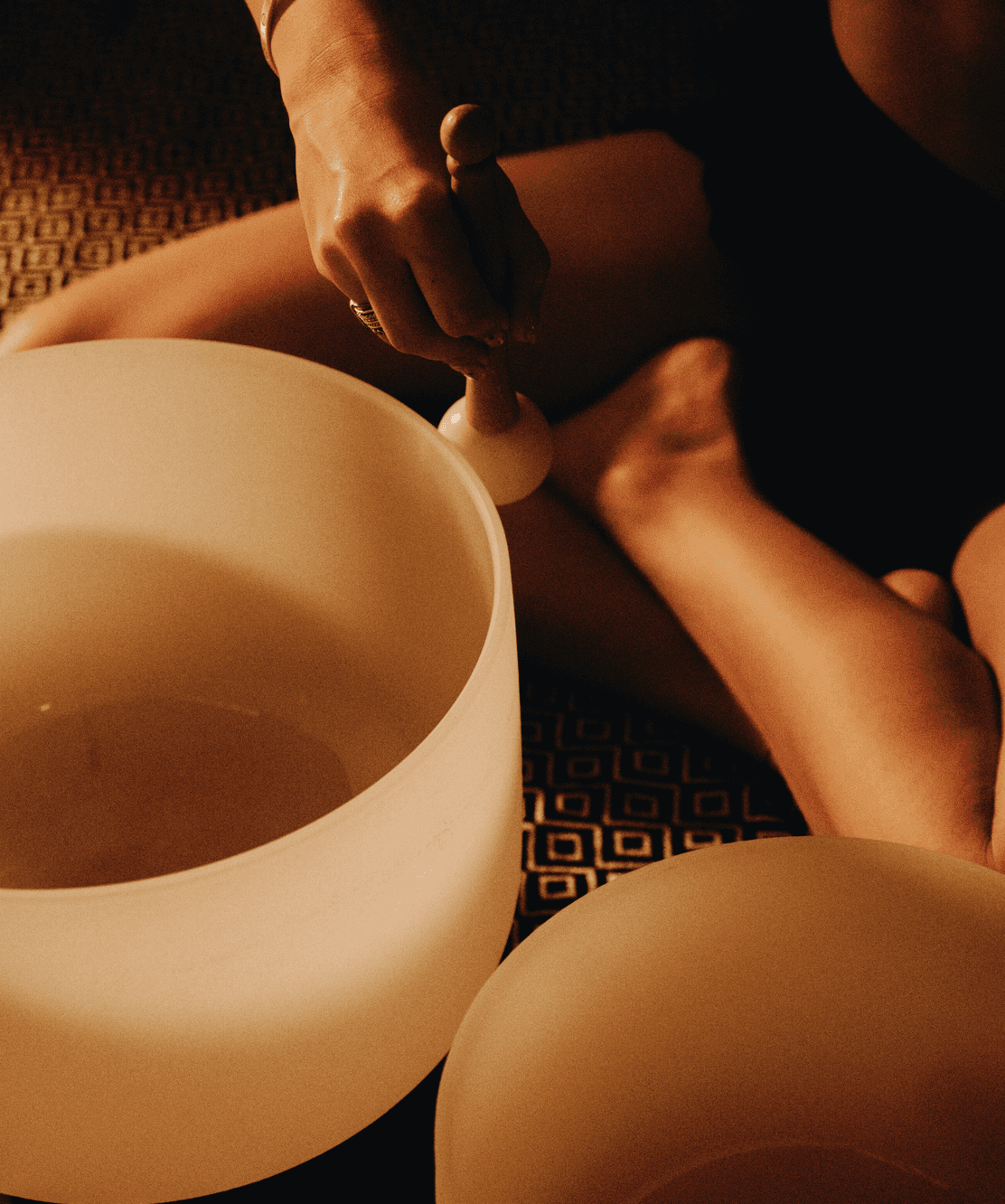
Imagine lying in gentle warmth, eyes closed, as waves of resonant sound wash through you. Gongs shimmer. Crystal bowls sing. Time dissolves. Is this a sound bath, or something more?
Aufguss looks deceptively simple; water, hot stones, towel movements, music. But between appearance and reality sits weeks of training in anatomy, thermal dynamics, essential oil chemistry, crowd management, and embodied skill that cannot be compressed into a short video. This practice resists shortcuts. Some knowledge lives in the body, not in algorithms.
Aufguss looks deceptively simple; water, hot stones, towel movements, music. But between appearance and reality sits weeks of training in anatomy, thermal dynamics, essential oil chemistry, crowd management, and embodied skill that cannot be compressed into a short video. This practice resists shortcuts. Some knowledge lives in the body, not in algorithms.
Your questions.
Answered.
Not sure what to expect? These answers might help you feel more confident as you begin.
Didn’t find your answer? Send us a message, we’ll respond with care and clarity.
What is a modern bathhouse?
A modern bathhouse keeps the architecture of the old idea, hot room, cold water, somewhere to rest, and lets the rhythm of the city around it shape the rest. Ours is built for Vancouver, on Davie Street, in the West End.
What is a modern bathhouse?
A modern bathhouse keeps the architecture of the old idea, hot room, cold water, somewhere to rest, and lets the rhythm of the city around it shape the rest. Ours is built for Vancouver, on Davie Street, in the West End.
Is the cold plunge at your bathhouse communal?
Is the cold plunge at your bathhouse communal?
Yes. Our cold pools are shared, with multiple temperature options so you can find one that meets you where you are. Communal plunging is part of what makes a bathhouse a bathhouse.
Is the bathhouse a welcoming space for the queer community?
Is the bathhouse a welcoming space for the queer community?
Yes. The West End is home to us and to our queer neighbours, and the bathhouse is built for everyone who walks in. We also host queer nights on a regular rotation, which you can find on the Classes calendar.
What's the etiquette inside the bathhouse?
What's the etiquette inside the bathhouse?
Phones stay in lockers. Voices stay low. Sit or lie on a towel inside the sauna, move at your own pace between rooms, and leave the space the way you'd want to find it. The room works because everyone in it is paying a little attention.
Do you offer Russian Banya at the bathhouse?
Do you offer Russian Banya at the bathhouse?
We run banya-inspired programming including venik work on select dates. The full ritual has its own page if you want to read about it before you book.
Do I need to book ahead, or can I walk in?
Do I need to book ahead, or can I walk in?
Walk-ins are welcome based on availability, but most guests book ahead through our app or website to lock in their preferred session time.
Your questions.
Answered.
Not sure what to expect? These answers might help you feel more confident as you begin.
What do I need to bring?
Please bring a bathing suit and a reusable water bottle. We provide two towels per guest, shower products, and secure lockers.
What do I need to bring?
Please bring a bathing suit and a reusable water bottle. We provide two towels per guest, shower products, and secure lockers.
Do I need a reservation?
Do I need a reservation?
Walk-ins are welcome, but we recommend booking through our app or website to check availability and join the waitlist.
Where can I park?
Where can I park?
Street parking is limited. We offer valet parking behind AetherHaus from 11:00–23:00. There is also some street parking available on Davie and nearby side streets.
What is Open Haus?
What is Open Haus?
Open Haus is a self-guided circuit through our saunas, plunge pools, and tea lounge. Our guides add essential oils to the stove throughout the day. The atmosphere shifts between silent, casual, and social, depending on the session.
What is your Haus Etiquette?
What is your Haus Etiquette?
Phones must be stored away. Please keep conversation soft, sit or lie on a towel, and move mindfully through the space. We ask that guests respect others’ experience and refrain from bringing outside food or drinks - complimentary tea is provided.
Can I visit if I am pregnant?
Can I visit if I am pregnant?
We advise against hot and cold therapy during pregnancy unless approved by your healthcare provider.
Didn’t find your answer? Send us a message, we’ll respond with care and clarity.
Your questions.
Answered.
Not sure what to expect? These answers might help you feel more confident as you begin.
Didn’t find your answer? Send us a message, we’ll respond with care and clarity.
What is a modern bathhouse?
A modern bathhouse keeps the architecture of the old idea, hot room, cold water, somewhere to rest, and lets the rhythm of the city around it shape the rest. Ours is built for Vancouver, on Davie Street, in the West End.
What is a modern bathhouse?
A modern bathhouse keeps the architecture of the old idea, hot room, cold water, somewhere to rest, and lets the rhythm of the city around it shape the rest. Ours is built for Vancouver, on Davie Street, in the West End.
Is the cold plunge at your bathhouse communal?
Is the cold plunge at your bathhouse communal?
Yes. Our cold pools are shared, with multiple temperature options so you can find one that meets you where you are. Communal plunging is part of what makes a bathhouse a bathhouse.
Is the bathhouse a welcoming space for the queer community?
Is the bathhouse a welcoming space for the queer community?
Yes. The West End is home to us and to our queer neighbours, and the bathhouse is built for everyone who walks in. We also host queer nights on a regular rotation, which you can find on the Classes calendar.
What's the etiquette inside the bathhouse?
What's the etiquette inside the bathhouse?
Phones stay in lockers. Voices stay low. Sit or lie on a towel inside the sauna, move at your own pace between rooms, and leave the space the way you'd want to find it. The room works because everyone in it is paying a little attention.
Do you offer Russian Banya at the bathhouse?
Do you offer Russian Banya at the bathhouse?
We run banya-inspired programming including venik work on select dates. The full ritual has its own page if you want to read about it before you book.
Do I need to book ahead, or can I walk in?
Do I need to book ahead, or can I walk in?
Walk-ins are welcome based on availability, but most guests book ahead through our app or website to lock in their preferred session time.