What Is a Sound Journey? Vancouver's Guide to Transformative Sound Healing
What Is a Sound Journey? Vancouver's Guide to Transformative Sound Healing
Imagine lying in gentle warmth, eyes closed, as waves of resonant sound wash through you. Gongs shimmer. Crystal bowls sing. Time dissolves. Is this a sound bath, or something more?
Imagine lying in gentle warmth, eyes closed, as waves of resonant sound wash through you. Gongs shimmer. Crystal bowls sing. Time dissolves. Is this a sound bath, or something more?
Published on:
Published on:
A sound journey is an immersive sonic experience where live instruments create evolving soundscapes designed to guide listeners into altered states of awareness. Unlike passive sound baths focused purely on relaxation, sound journeys invite active internal exploration. You are not simply bathing in sound. You are travelling through it.
This guide explores what sound journeys are, how they differ from sound baths, what happens during a session, and what research suggests about their effects on the nervous system. This is not about optimizing another aspect of your life. It is about stepping out of optimization entirely, if only for an hour.
What Is a Sound Journey?
A sound journey uses the vibrations of acoustic instruments to create an internal experience of movement and transformation. Practitioners play gongs, singing bowls, chimes, and other resonant instruments in ways that shift and evolve over time, creating a sonic landscape you travel through rather than simply receive.
The term "journey" is intentional. Where a sound bath washes over you like warm water, a sound journey takes you somewhere. Participants often describe experiencing colours, memories, insights, or a profound sense of spaciousness. Some find resolution to questions they had been carrying. Others simply arrive at stillness.
The Difference Between Hearing and Listening
Sound journeys require something subtle but essential: intentional listening. This is not the background hearing of everyday life, where sounds compete for attention. It is focused, receptive awareness directed toward the unfolding soundscape.
This distinction matters. Research on meditation shows that the quality of attention shapes the depth of experience. In a sound journey, your attention becomes the vehicle. The instruments provide the landscape. Together, they create the conditions for something to shift.
Origins of the Sound Journey
Sound has been used for healing and altered states across cultures for millennia. Tibetan singing bowls emerged from Himalayan traditions. Gongs originated in Asia around 3500 BCE. Aboriginal Australians have played the didgeridoo for over 40,000 years. Shamanic drumming traditions span continents.
Modern sound journeys weave these ancient instruments into contemporary practice. They emerged alongside the growth of yoga and meditation in the West, evolving from the savasana (rest) portion of yoga classes into standalone experiences.
At AetherHaus, sound journeys connect to European sauna heritage. The warmth of the Himalayan salt sauna opens the body, making it more receptive to vibration. This combination of heat and sound draws from traditions where gathering around fire and sound was simply how people came together.
Sound Journey vs Sound Bath: Understanding the Difference
These terms are often used interchangeably, but they describe different experiences. Understanding the distinction helps you choose what resonates with your needs.
Sound Bath: Bathing in Vibration
A sound bath is a passive, restorative experience. You lie down, close your eyes, and let sound waves wash over you. The goal is deep relaxation and nervous system regulation. Think of it as a sonic massage.
Sound baths typically use sustained, harmonious tones that create a sense of floating or being held. The practitioner focuses on creating a consistent, soothing soundscape. Your job is simply to receive.
Sound Journey: Travelling Through Sound
A sound journey asks something more of you. While your body remains still, your attention moves. The soundscape evolves through phases, sometimes building intensity, sometimes dropping into profound silence. There may be moments of dissonance alongside harmony.
The practitioner guides you through a sonic arc with intention. You might experience the sound as taking you somewhere, revealing something, or shifting energy that had been stuck. The goal is not just relaxation but transformation.
How They Compare
Aspect | Sound Bath | Sound Journey |
|---|---|---|
Participation | Passive receiving | Active listening |
Primary Goal | Deep relaxation | Transformation and insight |
Soundscape | Consistent, soothing | Evolving, dynamic |
Experience | Washing over you | Moving through you |
After Effect | Relaxed, calm | Shifted, clarified |
Neither is "better." A sound bath might be exactly what you need after an exhausting week. A sound journey might call to you when something feels stuck or when you are seeking clarity. The right choice depends on what you need in the moment, not on which promises more benefits.
For those seeking pure restoration, the Recovery session at AetherHaus offers a gentler approach. For deeper exploration, the Sound Journey invites you further in.
What Happens During a Sound Journey?
Every sound journey is unique. The instruments, the practitioner, the group energy, and your own inner landscape all shape what unfolds. Still, most journeys follow a recognizable arc.
Before the Journey Begins
You arrive and settle into the space. At AetherHaus, this means entering a phone-free, clock-free environment. There is no timer ticking. No notifications pulling at your attention. Just warmth, dim light, and the quiet anticipation of what is to come.
You might lie on a mat with blankets and cushions, or find a supported position that allows complete comfort. Some practitioners invite you to set an intention. Others simply let you arrive as you are. There is no preparation required. You are already ready.
The Unfolding Soundscape
The journey begins, often softly. A single bowl might ring, its tone spreading through the room. Gradually, more instruments enter. Gongs build and recede. Crystal bowls layer overtones that seem to hang in the air. Chimes scatter like light on water.
The practitioner reads the room, the energy, the moment. Some passages build intensity. Others drop into complete silence, which can feel as powerful as the loudest gong. The journey moves through phases, but there is no fixed protocol. Each session unfolds according to what is needed.
This is not about following a prescription. The length of each phase responds to sensation, not to a timer. When the journey feels complete, it ends. This might be shorter or longer than expected.
Common Experiences
People report a wide range of experiences during sound journeys. All are normal. All are welcome.
Physical sensations often include warmth spreading through the body, tingling in the hands or feet, a sense of heaviness or floating, and deep muscular release.
Visual experiences might arise even with eyes closed: colours, geometric patterns, landscapes, or memories surfacing like dreams.
Emotional responses range from profound peace to unexpected tears. Some people process grief or release anxiety they did not know they were holding.
Mental shifts often include quieting of the inner monologue, sudden clarity about a question, or a spacious sense of simply being present.
There is no correct experience. Whatever arises is simply what is present for you in that moment. The sound creates conditions; your system responds in its own way.
What Does the Research Say?
Sound healing research is still emerging, but several studies suggest meaningful effects on mood, stress, and nervous system regulation. The science offers validation without prescription.
Effects on Mood and Tension
The most frequently cited study comes from researchers at the University of California, San Diego. Dr. Tamara Goldsby and colleagues studied 62 participants before and after a singing bowl meditation that included gongs, crystal bowls, and other instruments.
The results were significant. Participants reported substantially less tension, anger, fatigue, and depressed mood after the session compared to before. Feelings of spiritual well-being increased across all participants. Notably, those who were new to sound meditation experienced even greater reductions in tension than experienced practitioners (Journal of Evidence-Based Integrative Medicine, 2016).
This suggests you do not need years of practice to benefit. Simply showing up and listening may be enough.
Nervous System Regulation
Sound healing appears to shift the nervous system from sympathetic (fight-or-flight) activation toward parasympathetic (rest-and-digest) states. This is the relaxation response: lowered heart rate, reduced blood pressure, decreased cortisol.
A 2015 study of 129 participants in Slovenia found that gong bath experiences produced lasting inner peace, improved physical and mental well-being, and what participants described as "healing" effects (Bratina & Pesek, 2016).
Small studies have also shown improvements in heart rate variability (HRV), a marker of how well the body recovers from stress. Higher HRV is associated with greater resilience and better emotional regulation.
Brainwave States
Sound healing may help shift brainwave activity toward states associated with deep relaxation and meditation. Research on brainwave entrainment suggests that rhythmic sounds can influence neural oscillations, potentially guiding the brain from active beta states into slower alpha and theta patterns (Neuroscience and Biobehavioral Reviews).
Theta waves (4-8 Hz) are particularly associated with deep meditation, creativity, and the threshold between waking and sleep. Experienced meditators typically spend years developing the ability to access these states. Sound journeys may offer a more accessible pathway.
What Science Cannot Measure
Research validates that something happens. It measures mood shifts, physiological changes, brainwave patterns. But the inner experience of a sound journey, the sense of travelling somewhere, the sudden clarity, the feeling of coming home to yourself, these resist quantification.
This is not a limitation. It is simply a recognition that some things matter beyond what can be measured. Research points toward the territory. Experience reveals it.
Your journey does not need to match a study to be real. The research offers encouragement, not requirements.
Instruments of the Sound Journey
The instruments used in sound journeys create a palette of frequencies, tones, and textures. Each contributes something distinct to the sonic landscape.
Gongs
Gongs produce some of the most complex and encompassing sounds in the practitioner's toolkit. When struck or rubbed, a gong releases cascading waves of overtones that seem to fill every corner of the room and every cell of the body.
The sound is often described as cosmic or oceanic. Gongs can build to intense crescendos or hover at the edge of audibility. They have been used ceremonially across Asian cultures for thousands of years.
Crystal Singing Bowls
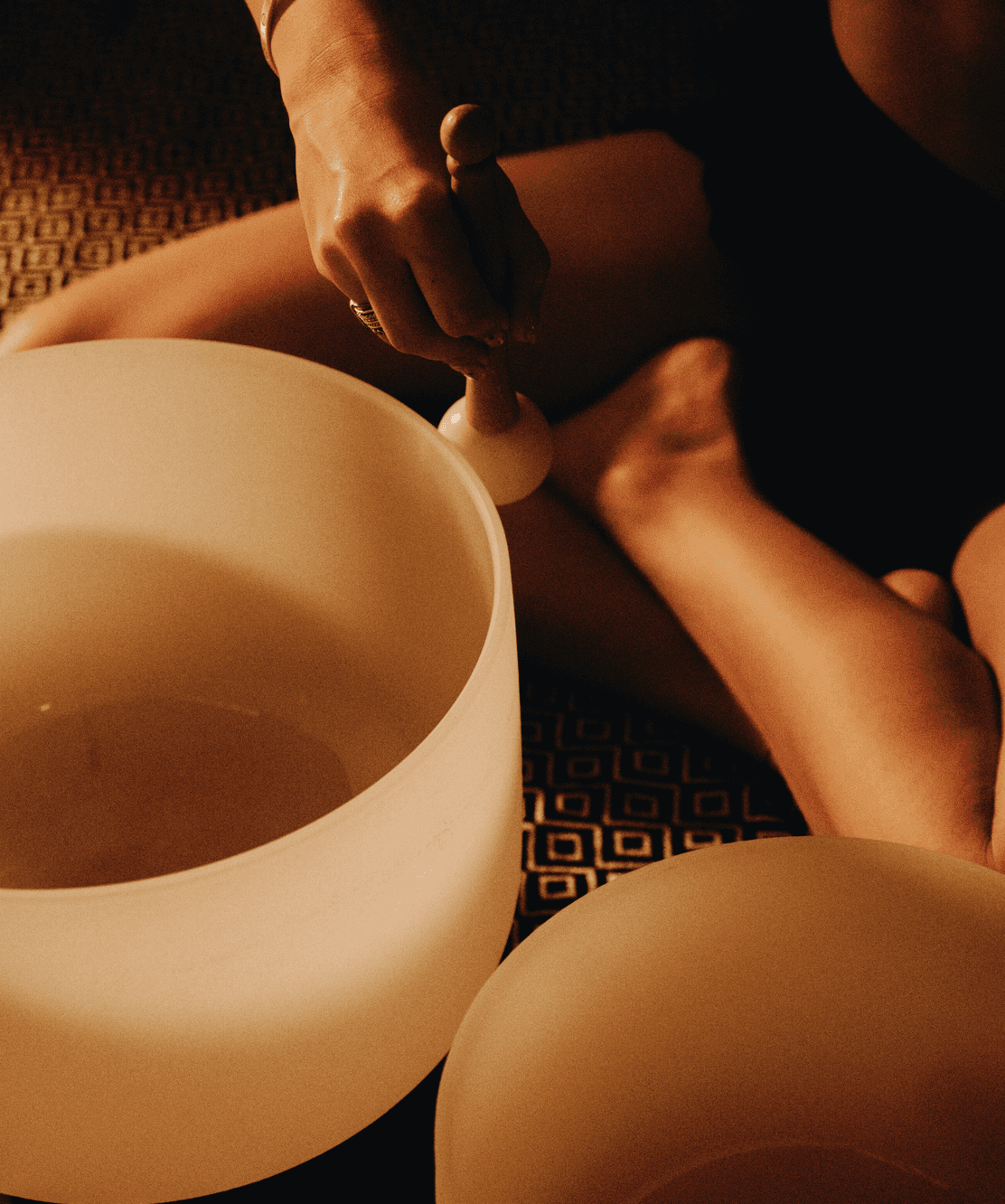
Made from pure quartz crystal, these bowls produce clear, sustained tones that seem to hang in the air. Each bowl is tuned to a specific note, and the sound has an ethereal, penetrating quality.
Crystal bowls are a relatively modern innovation, developed in the 1980s. Their pure tones contrast with the complex harmonics of metal instruments, offering clarity amid the layers of sound.
Tibetan (Himalayan) Singing Bowls
Traditional metal bowls, often made from bronze alloys, produce warm, grounding tones with rich overtones. When a mallet circles the rim, the bowl "sings" with sustained resonance.
These bowls emerged from Himalayan traditions and have been used for meditation and ceremony for centuries. Their sound feels ancient and earthy compared to the crystalline quality of quartz bowls.
Supporting Instruments
Many practitioners incorporate additional instruments: chimes that scatter high frequencies like light, rain sticks that mimic falling water, drums that ground and pulse, bells that mark transitions.
The human voice also serves as an instrument. Toning, chanting, or simple breath sounds add an organic, intimate quality to the soundscape.
Silence, too, is an instrument. The pause between sounds can be as powerful as the sounds themselves. In the quiet, the body integrates what it has received.
At AetherHaus Aufguss ceremonies, sound and heat combine in a different way. The rhythmic towel movements of Aufguss create their own kind of sonic and sensory journey, rooted in German sauna tradition.
Sound Journeys at AetherHaus Vancouver
AetherHaus offers something rare: the integration of sound healing with traditional heat therapy. This combination creates conditions for deeper receptivity than either practice alone.
Sound Meets Heat
The Himalayan salt sauna warms the body before the journey begins. Heat opens muscles, relaxes the nervous system, and creates a sense of softness and receptivity. When the sound begins, it meets a body already prepared to receive.
This approach echoes ancient practices where fire, heat, and sound came together in ceremony. The warmth is not incidental. It is part of the journey.
The AetherHaus Approach
Sound journeys at AetherHaus happen in a phone-free, clock-free sanctuary. There is no timer counting down. No external world demanding attention. Just the space between the sounds and whatever arises within it.
The approach draws from European sauna heritage, where gathering in warmth was never about metrics or optimization. It was about community, presence, and the simple act of being together in a nurturing space.
This is hospitality, not transaction. You are welcomed as a guest, not processed as a customer.
Complementary Practices
Sound journeys pair naturally with other offerings at AetherHaus. Yin yoga cultivates the same quality of receptive stillness. Contrast therapy works with the nervous system in complementary ways. The Release session offers another pathway into letting go.
Each practice supports the others. Together, they create a coherent approach to nervous system care, one that does not ask you to track progress or optimize outcomes.
Preparing for Your First Sound Journey
If you are new to sound journeys, you might wonder what to bring, what to wear, or how to prepare. The honest answer is: very little.
What to Bring
Comfortable clothing you can relax in completely. Layers are helpful, as body temperature can shift during deep relaxation. Everything else, including mats, blankets, and cushions, is typically provided.
An open mind helps, but even that is not required. Skeptics often have profound experiences. Your beliefs about sound healing do not determine what your nervous system will do.
What to Expect
You will lie down in a comfortable position, likely on your back. The room will be dim. The practitioner will begin playing instruments, and your job is simply to listen and receive.
You might fall asleep. That is fine. You might stay vividly awake. Also fine. You might cry, laugh, see colours, or simply feel peaceful. All of it is welcome.
There is no wrong way to experience a sound journey. Whatever happens is what was meant to happen.
After the Journey
When the sound fades and the journey ends, there is often a period of integration. You might lie still for several minutes before moving. This is not wasted time. The body is processing.
Drink water when you are ready. Move slowly. Allow the effects to settle before rushing back into the world. Some people feel energized; others feel deeply relaxed. Both responses are normal.
For a gentler introduction to the AetherHaus space, consider starting with Casual Open Haus, where you can explore sauna and cold plunge at your own pace before committing to a guided session.
Frequently Asked Questions
Is a sound journey the same as a sound bath?
Not quite. A sound bath focuses on passive relaxation, bathing you in soothing sounds. A sound journey invites active internal exploration through an evolving soundscape. Both use similar instruments, but the intention and experience differ.
Do I need meditation experience for a sound journey?
No. Sound journeys are accessible to complete beginners. Unlike traditional meditation, which requires developing concentration skills over time, sound healing simply asks you to lie down and listen. Your nervous system does the rest.
How long does a sound journey last?
Sessions typically range from 45 minutes to 90 minutes, though the experience of time often shifts during a journey. Many participants report being surprised by how much time has passed. At AetherHaus, sessions are guided by the practitioner's sense of what the group needs rather than by a rigid schedule.
Can sound journeys help with anxiety?
Research suggests sound healing may reduce tension and anxiety. The 2016 UCSD study found significant decreases in negative mood states after a single session. However, sound journeys are a complement to, not a replacement for, professional mental health care when needed.
What should I wear to a sound journey?
Comfortable, loose clothing that allows you to fully relax. Avoid anything restrictive. Layers are helpful since body temperature can fluctuate during deep relaxation.
Are sound journeys safe during pregnancy?
Most practitioners recommend consulting with your healthcare provider before attending. The vibrations from some instruments, particularly gongs, can be quite powerful. If you are pregnant, let the practitioner know so they can adjust their approach or advise accordingly.
Key Takeaways
Sound journeys offer something increasingly rare: an invitation to stop doing and simply be present with what arises. Here is what to remember:
Sound journeys are active experiences, not passive relaxation. They invite internal exploration through intentional listening.
Research supports real effects on mood, tension, and nervous system regulation. A single session can produce significant shifts.
No experience or preparation is required. First-time participants often report the most profound responses.
The experience is yours. There is no wrong way to journey. Whatever arises is simply what is present.
This is not another thing to optimize. It is an invitation to step outside optimization entirely. To lie down, listen, and let the sound take you where it will.
Your journey begins when you decide you are ready.
Experience a Sound Journey at AetherHaus →
A sound journey is an immersive sonic experience where live instruments create evolving soundscapes designed to guide listeners into altered states of awareness. Unlike passive sound baths focused purely on relaxation, sound journeys invite active internal exploration. You are not simply bathing in sound. You are travelling through it.
This guide explores what sound journeys are, how they differ from sound baths, what happens during a session, and what research suggests about their effects on the nervous system. This is not about optimizing another aspect of your life. It is about stepping out of optimization entirely, if only for an hour.
What Is a Sound Journey?
A sound journey uses the vibrations of acoustic instruments to create an internal experience of movement and transformation. Practitioners play gongs, singing bowls, chimes, and other resonant instruments in ways that shift and evolve over time, creating a sonic landscape you travel through rather than simply receive.
The term "journey" is intentional. Where a sound bath washes over you like warm water, a sound journey takes you somewhere. Participants often describe experiencing colours, memories, insights, or a profound sense of spaciousness. Some find resolution to questions they had been carrying. Others simply arrive at stillness.
The Difference Between Hearing and Listening
Sound journeys require something subtle but essential: intentional listening. This is not the background hearing of everyday life, where sounds compete for attention. It is focused, receptive awareness directed toward the unfolding soundscape.
This distinction matters. Research on meditation shows that the quality of attention shapes the depth of experience. In a sound journey, your attention becomes the vehicle. The instruments provide the landscape. Together, they create the conditions for something to shift.
Origins of the Sound Journey
Sound has been used for healing and altered states across cultures for millennia. Tibetan singing bowls emerged from Himalayan traditions. Gongs originated in Asia around 3500 BCE. Aboriginal Australians have played the didgeridoo for over 40,000 years. Shamanic drumming traditions span continents.
Modern sound journeys weave these ancient instruments into contemporary practice. They emerged alongside the growth of yoga and meditation in the West, evolving from the savasana (rest) portion of yoga classes into standalone experiences.
At AetherHaus, sound journeys connect to European sauna heritage. The warmth of the Himalayan salt sauna opens the body, making it more receptive to vibration. This combination of heat and sound draws from traditions where gathering around fire and sound was simply how people came together.
Sound Journey vs Sound Bath: Understanding the Difference
These terms are often used interchangeably, but they describe different experiences. Understanding the distinction helps you choose what resonates with your needs.
Sound Bath: Bathing in Vibration
A sound bath is a passive, restorative experience. You lie down, close your eyes, and let sound waves wash over you. The goal is deep relaxation and nervous system regulation. Think of it as a sonic massage.
Sound baths typically use sustained, harmonious tones that create a sense of floating or being held. The practitioner focuses on creating a consistent, soothing soundscape. Your job is simply to receive.
Sound Journey: Travelling Through Sound
A sound journey asks something more of you. While your body remains still, your attention moves. The soundscape evolves through phases, sometimes building intensity, sometimes dropping into profound silence. There may be moments of dissonance alongside harmony.
The practitioner guides you through a sonic arc with intention. You might experience the sound as taking you somewhere, revealing something, or shifting energy that had been stuck. The goal is not just relaxation but transformation.
How They Compare
Aspect | Sound Bath | Sound Journey |
|---|---|---|
Participation | Passive receiving | Active listening |
Primary Goal | Deep relaxation | Transformation and insight |
Soundscape | Consistent, soothing | Evolving, dynamic |
Experience | Washing over you | Moving through you |
After Effect | Relaxed, calm | Shifted, clarified |
Neither is "better." A sound bath might be exactly what you need after an exhausting week. A sound journey might call to you when something feels stuck or when you are seeking clarity. The right choice depends on what you need in the moment, not on which promises more benefits.
For those seeking pure restoration, the Recovery session at AetherHaus offers a gentler approach. For deeper exploration, the Sound Journey invites you further in.
What Happens During a Sound Journey?
Every sound journey is unique. The instruments, the practitioner, the group energy, and your own inner landscape all shape what unfolds. Still, most journeys follow a recognizable arc.
Before the Journey Begins
You arrive and settle into the space. At AetherHaus, this means entering a phone-free, clock-free environment. There is no timer ticking. No notifications pulling at your attention. Just warmth, dim light, and the quiet anticipation of what is to come.
You might lie on a mat with blankets and cushions, or find a supported position that allows complete comfort. Some practitioners invite you to set an intention. Others simply let you arrive as you are. There is no preparation required. You are already ready.
The Unfolding Soundscape
The journey begins, often softly. A single bowl might ring, its tone spreading through the room. Gradually, more instruments enter. Gongs build and recede. Crystal bowls layer overtones that seem to hang in the air. Chimes scatter like light on water.
The practitioner reads the room, the energy, the moment. Some passages build intensity. Others drop into complete silence, which can feel as powerful as the loudest gong. The journey moves through phases, but there is no fixed protocol. Each session unfolds according to what is needed.
This is not about following a prescription. The length of each phase responds to sensation, not to a timer. When the journey feels complete, it ends. This might be shorter or longer than expected.
Common Experiences
People report a wide range of experiences during sound journeys. All are normal. All are welcome.
Physical sensations often include warmth spreading through the body, tingling in the hands or feet, a sense of heaviness or floating, and deep muscular release.
Visual experiences might arise even with eyes closed: colours, geometric patterns, landscapes, or memories surfacing like dreams.
Emotional responses range from profound peace to unexpected tears. Some people process grief or release anxiety they did not know they were holding.
Mental shifts often include quieting of the inner monologue, sudden clarity about a question, or a spacious sense of simply being present.
There is no correct experience. Whatever arises is simply what is present for you in that moment. The sound creates conditions; your system responds in its own way.
What Does the Research Say?
Sound healing research is still emerging, but several studies suggest meaningful effects on mood, stress, and nervous system regulation. The science offers validation without prescription.
Effects on Mood and Tension
The most frequently cited study comes from researchers at the University of California, San Diego. Dr. Tamara Goldsby and colleagues studied 62 participants before and after a singing bowl meditation that included gongs, crystal bowls, and other instruments.
The results were significant. Participants reported substantially less tension, anger, fatigue, and depressed mood after the session compared to before. Feelings of spiritual well-being increased across all participants. Notably, those who were new to sound meditation experienced even greater reductions in tension than experienced practitioners (Journal of Evidence-Based Integrative Medicine, 2016).
This suggests you do not need years of practice to benefit. Simply showing up and listening may be enough.
Nervous System Regulation
Sound healing appears to shift the nervous system from sympathetic (fight-or-flight) activation toward parasympathetic (rest-and-digest) states. This is the relaxation response: lowered heart rate, reduced blood pressure, decreased cortisol.
A 2015 study of 129 participants in Slovenia found that gong bath experiences produced lasting inner peace, improved physical and mental well-being, and what participants described as "healing" effects (Bratina & Pesek, 2016).
Small studies have also shown improvements in heart rate variability (HRV), a marker of how well the body recovers from stress. Higher HRV is associated with greater resilience and better emotional regulation.
Brainwave States
Sound healing may help shift brainwave activity toward states associated with deep relaxation and meditation. Research on brainwave entrainment suggests that rhythmic sounds can influence neural oscillations, potentially guiding the brain from active beta states into slower alpha and theta patterns (Neuroscience and Biobehavioral Reviews).
Theta waves (4-8 Hz) are particularly associated with deep meditation, creativity, and the threshold between waking and sleep. Experienced meditators typically spend years developing the ability to access these states. Sound journeys may offer a more accessible pathway.
What Science Cannot Measure
Research validates that something happens. It measures mood shifts, physiological changes, brainwave patterns. But the inner experience of a sound journey, the sense of travelling somewhere, the sudden clarity, the feeling of coming home to yourself, these resist quantification.
This is not a limitation. It is simply a recognition that some things matter beyond what can be measured. Research points toward the territory. Experience reveals it.
Your journey does not need to match a study to be real. The research offers encouragement, not requirements.
Instruments of the Sound Journey
The instruments used in sound journeys create a palette of frequencies, tones, and textures. Each contributes something distinct to the sonic landscape.
Gongs
Gongs produce some of the most complex and encompassing sounds in the practitioner's toolkit. When struck or rubbed, a gong releases cascading waves of overtones that seem to fill every corner of the room and every cell of the body.
The sound is often described as cosmic or oceanic. Gongs can build to intense crescendos or hover at the edge of audibility. They have been used ceremonially across Asian cultures for thousands of years.
Crystal Singing Bowls
Made from pure quartz crystal, these bowls produce clear, sustained tones that seem to hang in the air. Each bowl is tuned to a specific note, and the sound has an ethereal, penetrating quality.
Crystal bowls are a relatively modern innovation, developed in the 1980s. Their pure tones contrast with the complex harmonics of metal instruments, offering clarity amid the layers of sound.
Tibetan (Himalayan) Singing Bowls
Traditional metal bowls, often made from bronze alloys, produce warm, grounding tones with rich overtones. When a mallet circles the rim, the bowl "sings" with sustained resonance.
These bowls emerged from Himalayan traditions and have been used for meditation and ceremony for centuries. Their sound feels ancient and earthy compared to the crystalline quality of quartz bowls.
Supporting Instruments
Many practitioners incorporate additional instruments: chimes that scatter high frequencies like light, rain sticks that mimic falling water, drums that ground and pulse, bells that mark transitions.
The human voice also serves as an instrument. Toning, chanting, or simple breath sounds add an organic, intimate quality to the soundscape.
Silence, too, is an instrument. The pause between sounds can be as powerful as the sounds themselves. In the quiet, the body integrates what it has received.
At AetherHaus Aufguss ceremonies, sound and heat combine in a different way. The rhythmic towel movements of Aufguss create their own kind of sonic and sensory journey, rooted in German sauna tradition.
Sound Journeys at AetherHaus Vancouver
AetherHaus offers something rare: the integration of sound healing with traditional heat therapy. This combination creates conditions for deeper receptivity than either practice alone.
Sound Meets Heat
The Himalayan salt sauna warms the body before the journey begins. Heat opens muscles, relaxes the nervous system, and creates a sense of softness and receptivity. When the sound begins, it meets a body already prepared to receive.
This approach echoes ancient practices where fire, heat, and sound came together in ceremony. The warmth is not incidental. It is part of the journey.
The AetherHaus Approach
Sound journeys at AetherHaus happen in a phone-free, clock-free sanctuary. There is no timer counting down. No external world demanding attention. Just the space between the sounds and whatever arises within it.
The approach draws from European sauna heritage, where gathering in warmth was never about metrics or optimization. It was about community, presence, and the simple act of being together in a nurturing space.
This is hospitality, not transaction. You are welcomed as a guest, not processed as a customer.
Complementary Practices
Sound journeys pair naturally with other offerings at AetherHaus. Yin yoga cultivates the same quality of receptive stillness. Contrast therapy works with the nervous system in complementary ways. The Release session offers another pathway into letting go.
Each practice supports the others. Together, they create a coherent approach to nervous system care, one that does not ask you to track progress or optimize outcomes.
Preparing for Your First Sound Journey
If you are new to sound journeys, you might wonder what to bring, what to wear, or how to prepare. The honest answer is: very little.
What to Bring
Comfortable clothing you can relax in completely. Layers are helpful, as body temperature can shift during deep relaxation. Everything else, including mats, blankets, and cushions, is typically provided.
An open mind helps, but even that is not required. Skeptics often have profound experiences. Your beliefs about sound healing do not determine what your nervous system will do.
What to Expect
You will lie down in a comfortable position, likely on your back. The room will be dim. The practitioner will begin playing instruments, and your job is simply to listen and receive.
You might fall asleep. That is fine. You might stay vividly awake. Also fine. You might cry, laugh, see colours, or simply feel peaceful. All of it is welcome.
There is no wrong way to experience a sound journey. Whatever happens is what was meant to happen.
After the Journey
When the sound fades and the journey ends, there is often a period of integration. You might lie still for several minutes before moving. This is not wasted time. The body is processing.
Drink water when you are ready. Move slowly. Allow the effects to settle before rushing back into the world. Some people feel energized; others feel deeply relaxed. Both responses are normal.
For a gentler introduction to the AetherHaus space, consider starting with Casual Open Haus, where you can explore sauna and cold plunge at your own pace before committing to a guided session.
Frequently Asked Questions
Is a sound journey the same as a sound bath?
Not quite. A sound bath focuses on passive relaxation, bathing you in soothing sounds. A sound journey invites active internal exploration through an evolving soundscape. Both use similar instruments, but the intention and experience differ.
Do I need meditation experience for a sound journey?
No. Sound journeys are accessible to complete beginners. Unlike traditional meditation, which requires developing concentration skills over time, sound healing simply asks you to lie down and listen. Your nervous system does the rest.
How long does a sound journey last?
Sessions typically range from 45 minutes to 90 minutes, though the experience of time often shifts during a journey. Many participants report being surprised by how much time has passed. At AetherHaus, sessions are guided by the practitioner's sense of what the group needs rather than by a rigid schedule.
Can sound journeys help with anxiety?
Research suggests sound healing may reduce tension and anxiety. The 2016 UCSD study found significant decreases in negative mood states after a single session. However, sound journeys are a complement to, not a replacement for, professional mental health care when needed.
What should I wear to a sound journey?
Comfortable, loose clothing that allows you to fully relax. Avoid anything restrictive. Layers are helpful since body temperature can fluctuate during deep relaxation.
Are sound journeys safe during pregnancy?
Most practitioners recommend consulting with your healthcare provider before attending. The vibrations from some instruments, particularly gongs, can be quite powerful. If you are pregnant, let the practitioner know so they can adjust their approach or advise accordingly.
Key Takeaways
Sound journeys offer something increasingly rare: an invitation to stop doing and simply be present with what arises. Here is what to remember:
Sound journeys are active experiences, not passive relaxation. They invite internal exploration through intentional listening.
Research supports real effects on mood, tension, and nervous system regulation. A single session can produce significant shifts.
No experience or preparation is required. First-time participants often report the most profound responses.
The experience is yours. There is no wrong way to journey. Whatever arises is simply what is present.
This is not another thing to optimize. It is an invitation to step outside optimization entirely. To lie down, listen, and let the sound take you where it will.
Your journey begins when you decide you are ready.
Experience a Sound Journey at AetherHaus →
our Blog
our Blog
More insights
More insights
Explore more reflections, guidance, and practical tools to support you.
Explore more reflections, guidance, and practical tools to support you.
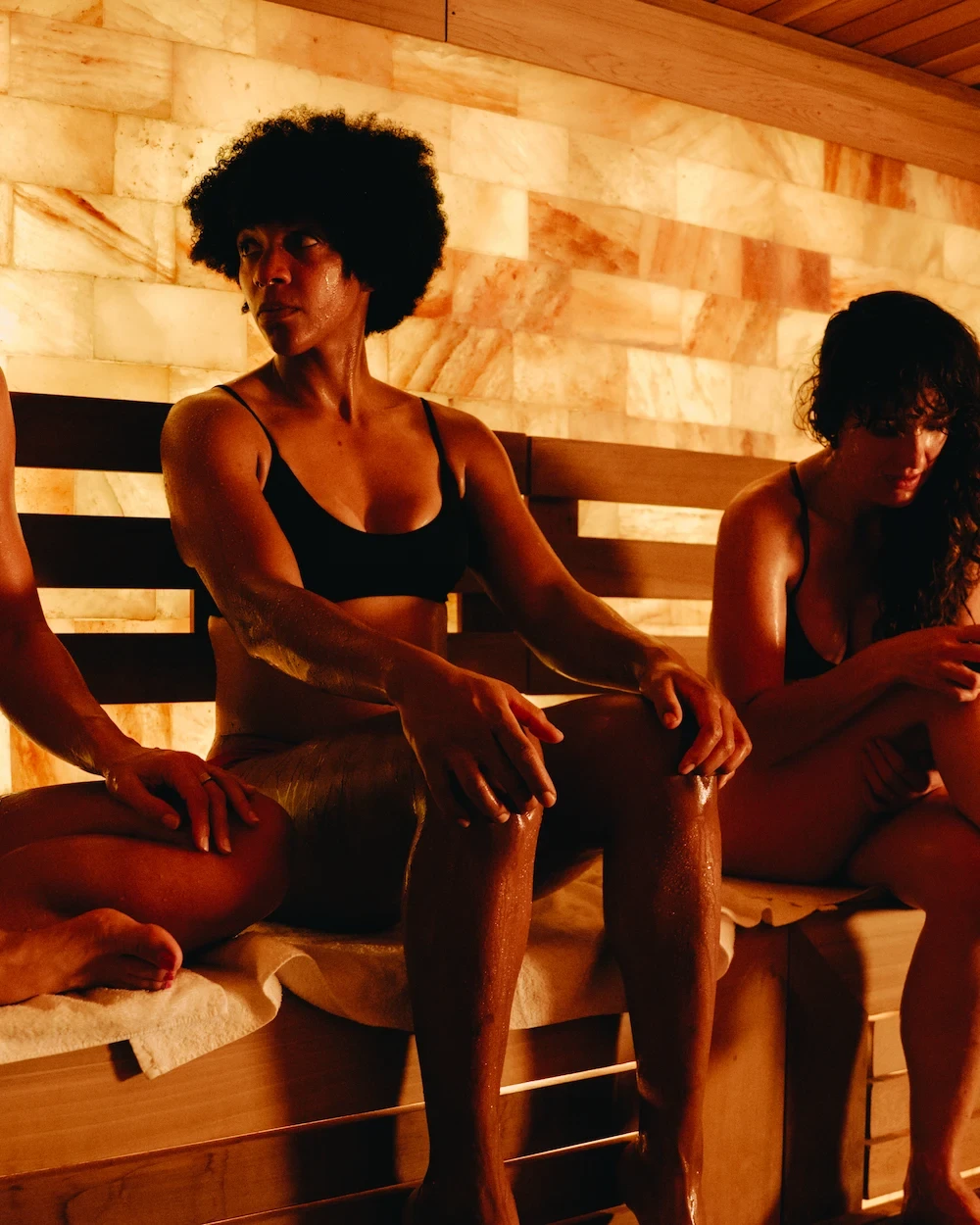
Learn the essential sauna etiquette rules for any setting. Covers hygiene, dress codes, löyly customs, cold plunge protocol, and cultural traditions from Finland, Germany, and Russia.
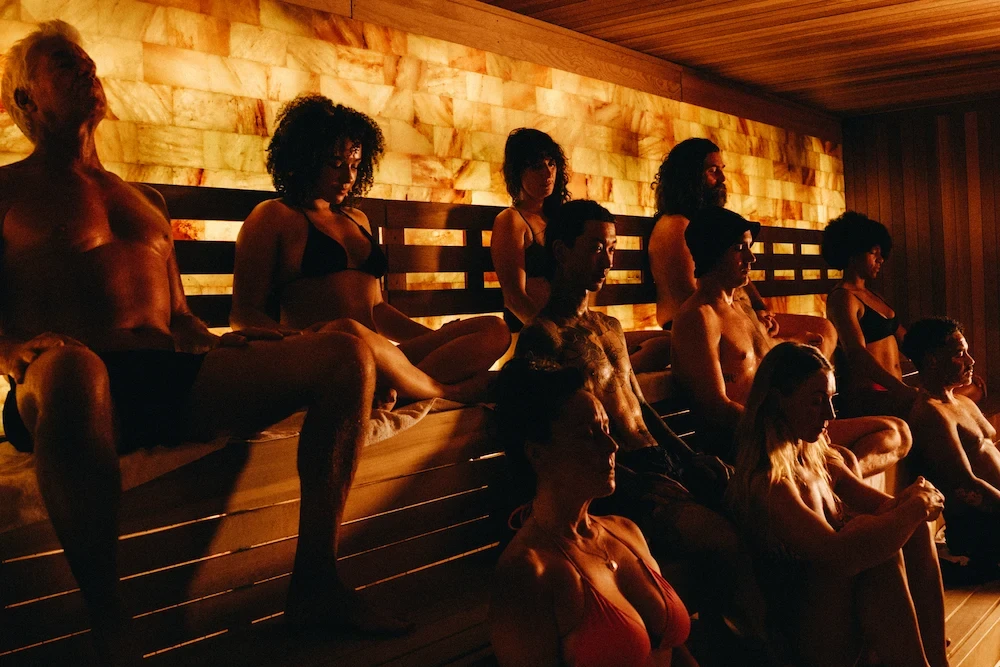
Both practices place a skilled attendant at the center. The Russian banshchik wields a venik, a bundle of birch or oak branches, to capture steam from the ceiling and direct it across your skin. The German Aufgussmeister uses a towel to create waves of infused heat that move through the room in choreographed patterns. Different tools, same fundamental art: shaping thermal intensity through human attention.
Both practices place a skilled attendant at the center. The Russian banshchik wields a venik, a bundle of birch or oak branches, to capture steam from the ceiling and direct it across your skin. The German Aufgussmeister uses a towel to create waves of infused heat that move through the room in choreographed patterns. Different tools, same fundamental art: shaping thermal intensity through human attention.
Your questions.
Answered.
Not sure what to expect? These answers might help you feel more confident as you begin.
Didn’t find your answer? Send us a message, we’ll respond with care and clarity.
What is a modern bathhouse?
A modern bathhouse keeps the architecture of the old idea, hot room, cold water, somewhere to rest, and lets the rhythm of the city around it shape the rest. Ours is built for Vancouver, on Davie Street, in the West End.
What is a modern bathhouse?
A modern bathhouse keeps the architecture of the old idea, hot room, cold water, somewhere to rest, and lets the rhythm of the city around it shape the rest. Ours is built for Vancouver, on Davie Street, in the West End.
Is the cold plunge at your bathhouse communal?
Is the cold plunge at your bathhouse communal?
Yes. Our cold pools are shared, with multiple temperature options so you can find one that meets you where you are. Communal plunging is part of what makes a bathhouse a bathhouse.
Is the bathhouse a welcoming space for the queer community?
Is the bathhouse a welcoming space for the queer community?
Yes. The West End is home to us and to our queer neighbours, and the bathhouse is built for everyone who walks in. We also host queer nights on a regular rotation, which you can find on the Classes calendar.
What's the etiquette inside the bathhouse?
What's the etiquette inside the bathhouse?
Phones stay in lockers. Voices stay low. Sit or lie on a towel inside the sauna, move at your own pace between rooms, and leave the space the way you'd want to find it. The room works because everyone in it is paying a little attention.
Do you offer Russian Banya at the bathhouse?
Do you offer Russian Banya at the bathhouse?
We run banya-inspired programming including venik work on select dates. The full ritual has its own page if you want to read about it before you book.
Do I need to book ahead, or can I walk in?
Do I need to book ahead, or can I walk in?
Walk-ins are welcome based on availability, but most guests book ahead through our app or website to lock in their preferred session time.
Your questions.
Answered.
Not sure what to expect? These answers might help you feel more confident as you begin.
What do I need to bring?
Please bring a bathing suit and a reusable water bottle. We provide two towels per guest, shower products, and secure lockers.
What do I need to bring?
Please bring a bathing suit and a reusable water bottle. We provide two towels per guest, shower products, and secure lockers.
Do I need a reservation?
Do I need a reservation?
Walk-ins are welcome, but we recommend booking through our app or website to check availability and join the waitlist.
Where can I park?
Where can I park?
Street parking is limited. We offer valet parking behind AetherHaus from 11:00–23:00. There is also some street parking available on Davie and nearby side streets.
What is Open Haus?
What is Open Haus?
Open Haus is a self-guided circuit through our saunas, plunge pools, and tea lounge. Our guides add essential oils to the stove throughout the day. The atmosphere shifts between silent, casual, and social, depending on the session.
What is your Haus Etiquette?
What is your Haus Etiquette?
Phones must be stored away. Please keep conversation soft, sit or lie on a towel, and move mindfully through the space. We ask that guests respect others’ experience and refrain from bringing outside food or drinks - complimentary tea is provided.
Can I visit if I am pregnant?
Can I visit if I am pregnant?
We advise against hot and cold therapy during pregnancy unless approved by your healthcare provider.
Didn’t find your answer? Send us a message, we’ll respond with care and clarity.
Your questions.
Answered.
Not sure what to expect? These answers might help you feel more confident as you begin.
Didn’t find your answer? Send us a message, we’ll respond with care and clarity.
What is a modern bathhouse?
A modern bathhouse keeps the architecture of the old idea, hot room, cold water, somewhere to rest, and lets the rhythm of the city around it shape the rest. Ours is built for Vancouver, on Davie Street, in the West End.
What is a modern bathhouse?
A modern bathhouse keeps the architecture of the old idea, hot room, cold water, somewhere to rest, and lets the rhythm of the city around it shape the rest. Ours is built for Vancouver, on Davie Street, in the West End.
Is the cold plunge at your bathhouse communal?
Is the cold plunge at your bathhouse communal?
Yes. Our cold pools are shared, with multiple temperature options so you can find one that meets you where you are. Communal plunging is part of what makes a bathhouse a bathhouse.
Is the bathhouse a welcoming space for the queer community?
Is the bathhouse a welcoming space for the queer community?
Yes. The West End is home to us and to our queer neighbours, and the bathhouse is built for everyone who walks in. We also host queer nights on a regular rotation, which you can find on the Classes calendar.
What's the etiquette inside the bathhouse?
What's the etiquette inside the bathhouse?
Phones stay in lockers. Voices stay low. Sit or lie on a towel inside the sauna, move at your own pace between rooms, and leave the space the way you'd want to find it. The room works because everyone in it is paying a little attention.
Do you offer Russian Banya at the bathhouse?
Do you offer Russian Banya at the bathhouse?
We run banya-inspired programming including venik work on select dates. The full ritual has its own page if you want to read about it before you book.
Do I need to book ahead, or can I walk in?
Do I need to book ahead, or can I walk in?
Walk-ins are welcome based on availability, but most guests book ahead through our app or website to lock in their preferred session time.