
What to Wear in a Sauna: A Practical Guide for Every Setting
What to Wear in a Sauna: A Practical Guide for Every Setting
"What should I wear?" is one of the first questions people ask before stepping into a sauna for the first time. The answer is simpler than you might think.
"What should I wear?" is one of the first questions people ask before stepping into a sauna for the first time. The answer is simpler than you might think.
Published on:
Published on:
In most public and studio saunas, a swimsuit is the standard. Choose something made from natural fibers like cotton or linen, avoid anything with metal hardware, and leave the gym clothes in your locker. Beyond that, the specifics depend on your setting, whether you are visiting a gym, a dedicated sauna studio, or practising at home.
This guide covers what to wear in a sauna across every setting, which fabrics work and which to avoid, what to bring along, and what to wear for guided sauna rituals and contrast therapy sessions.
Why What You Wear in a Sauna Matters
Sauna attire is not about fashion. It is about letting your body do what it needs to do in the heat.
Your Body Needs to Breathe
Saunas create intense heat. Your body responds by sweating, which is its natural cooling system. When sweat evaporates from your skin, it draws heat away and helps regulate your internal temperature.
Restrictive or heavy clothing interferes with this process. The Cleveland Clinic identifies loose-fitting, breathable clothing as a key factor in preventing heat-related illness (Cleveland Clinic, 2025). The Mayo Clinic's first-aid guidelines for heat exhaustion specifically advise removing tight or heavy clothing as an immediate step (Mayo Clinic, 2024).
In a sauna, the same principle applies. Your clothing should support your body's ability to cool itself, not work against it.
The Problem with Synthetic Fabrics
Not all fabrics belong in a sauna. Synthetic materials like polyester, nylon, and PVC trap heat and moisture against the skin. They cling when wet, restrict airflow, and can become genuinely uncomfortable in high temperatures.
There is also a growing conversation about what happens when plastics meet heat. In heated environments, synthetic fibers can shed microplastic particles that become airborne or settle on the skin (SaunaTimes, 2025). Research published in the Journal of Environmental and Public Health found that plastic-related chemicals like BPA and phthalates were more easily excreted through sweat than through urine or blood (Journal of Environmental and Public Health, 2015).
Natural fibers avoid these concerns entirely. They breathe, absorb moisture, and let your skin do its job.
Your clothing is not a performance variable. It is simply about feeling at ease so you can be present in the heat.
What to Wear in a Sauna (By Setting)
The right sauna attire depends on where you are. Here is a practical breakdown by setting.
Public and Studio Saunas
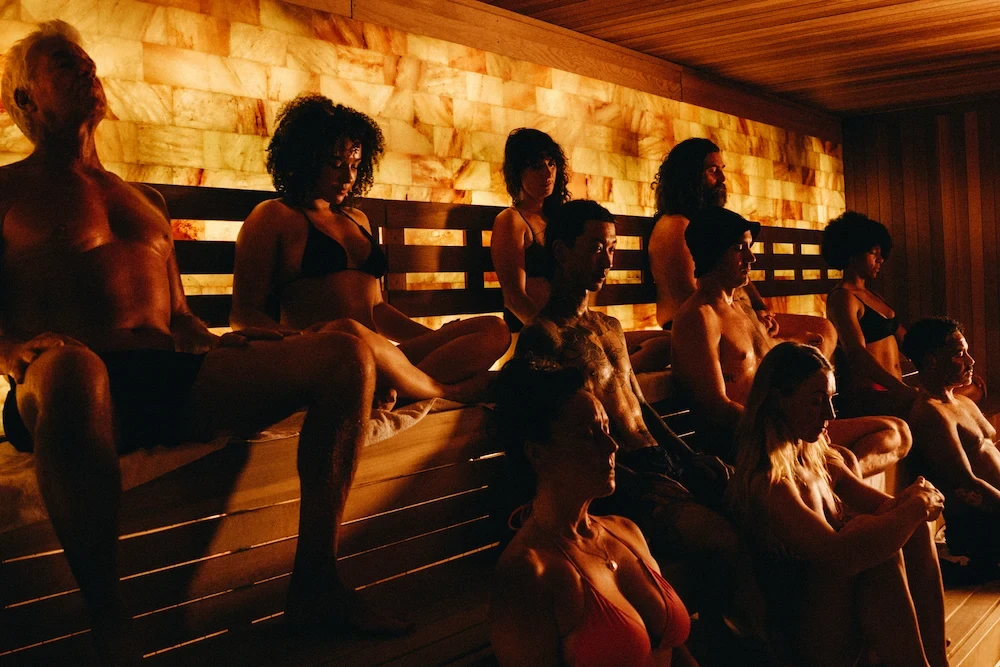
A swimsuit is the standard in most North American public and studio saunas. It provides coverage, maintains hygiene, and keeps shared spaces comfortable for everyone.
When choosing a swimsuit for the sauna:
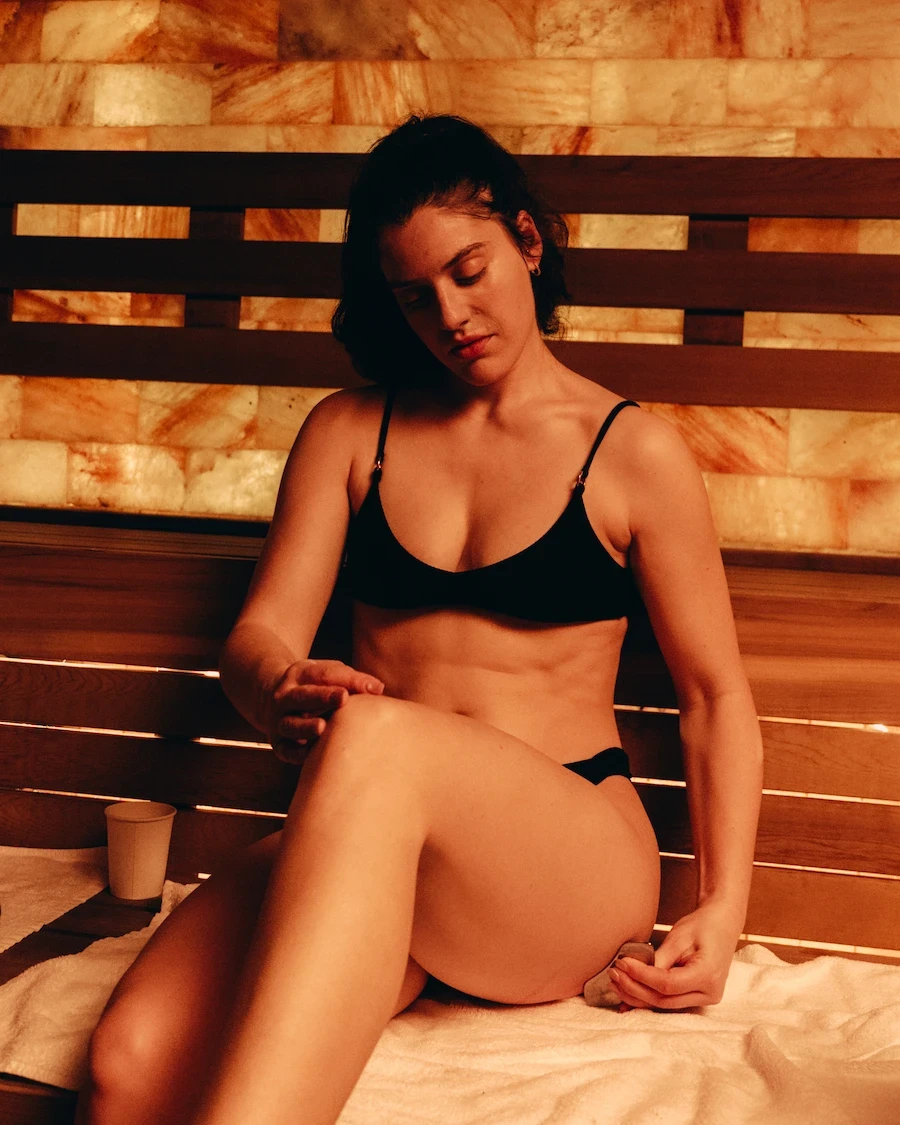
Opt for simple, minimal styles without heavy padding or lining
Avoid metal clasps, zippers, or underwire, which conduct heat and can burn
Bring or use a towel to sit on for hygiene on shared benches
If you visit regularly, consider having a dedicated swimsuit for sauna use. Repeated heat exposure can break down elastic and synthetic fibers over time, causing fading and stretching.
Gym Saunas
Gym saunas often have their own specific rules. Check with your facility before your first visit.
The general guidelines are the same. A clean swimsuit or cotton shorts with a loose top works well. The key distinction: do not wear the clothes you just exercised in. Sweaty workout gear harbours bacteria and synthetic materials trap heat against your skin.
Shower before entering the sauna. This is both a hygiene practice and a courtesy to others sharing the space.
Private or Home Saunas
In your own space, the rules are yours. Many people prefer a towel, loose cotton clothing, or nothing at all.
In Finnish and Scandinavian tradition, nudity is considered the natural way to experience a sauna, especially in private or same-gender settings. If that feels right to you, it is entirely appropriate in your own home.
Coed and Mixed Settings
When sharing a sauna with people of different genders, a swimsuit is the respectful and practical default. Choose something that provides comfortable coverage and lets you relax without self-consciousness.
Every facility has its own dress code. When in doubt, ask before your visit.
Fabrics That Work (and Those That Do Not)
The material your clothing is made from can make a real difference in how the heat feels on your body. A review in Sports Medicine confirmed that clothing fit and air permeability significantly affect thermoregulation and comfort during heat exposure (PMC, 2022).
Fabrics That Work
Cotton: The most common and accessible choice. Breathable, absorbent, and soft against the skin. A cotton towel wrap or loose cotton shorts are reliable options.
Linen: Lightweight and quick-drying with excellent airflow. Ideal for sauna environments where moisture is constant.
Bamboo: Naturally antibacterial, soft, and effective at managing moisture. A great option for those with sensitive skin.
Merino wool: Perhaps surprising, but merino wool is naturally thermoregulating. It can absorb up to 30% of its weight in moisture while remaining dry to the touch (SaunaTimes, 2025). It is a traditional sauna fabric in many European cultures.
Fabrics to Avoid
Polyester and nylon: Trap heat and moisture, cling to sweaty skin, and do not allow adequate airflow
PVC and plastic-based materials: Can off-gas in high temperatures and completely block the skin from breathing
Spandex and elastane: Restrictive, heat-trapping, and degrades with repeated high-temperature exposure
Heavy fabrics like denim, fleece, or layered clothing have no place in a sauna
Even if your regular swimsuit is made from a synthetic blend, it will work for occasional visits. The concern is more relevant for frequent sauna-goers who may want to invest in a natural-fibre alternative.
What Not to Wear in a Sauna
Knowing what to leave behind is just as important as knowing what to put on. Clinical guidelines are clear that tight or heavy clothing should be removed in heat-stress situations (Mayo Clinic, 2024). The National Library of Medicine identifies tight-fitting clothing as a specific concern in heat-related skin conditions (StatPearls, 2023).
Here is what to leave in your locker:
Metal jewellery and piercings. Metal conducts heat quickly and can cause burns or discomfort. Remove rings, necklaces, earrings, and watches before entering.
Tight workout gear. Compression shorts, leggings, and sports bras restrict airflow and trap heat against the body.
Shoes, flip-flops, or socks. Go barefoot inside the sauna. Footwear traps heat, introduces outside bacteria, and is not permitted in most facilities.
Heavy or layered clothing. Anything that prevents your skin from breathing will make the experience uncomfortable and potentially unsafe.
Makeup, lotions, and perfumes. Heat opens pores and intensifies absorption. Enter the sauna with clean, bare skin.
Electronics and wearables. Smartwatches, earbuds, and phones are damaged by heat and moisture. Leave them behind.
What to Wear for Guided Sauna Rituals
If you are attending a guided sauna experience, such as an Aufguss ceremony or a banya-inspired session, your clothing choices become even simpler. The less you have to think about what you are wearing, the more you can be in the experience.
Aufguss Ceremonies
An Aufguss is a guided sauna ritual rooted in German tradition. A trained guide moves heated air through the room using rhythmic towel movements, essential oils, and music, creating waves of intense, shifting heat.
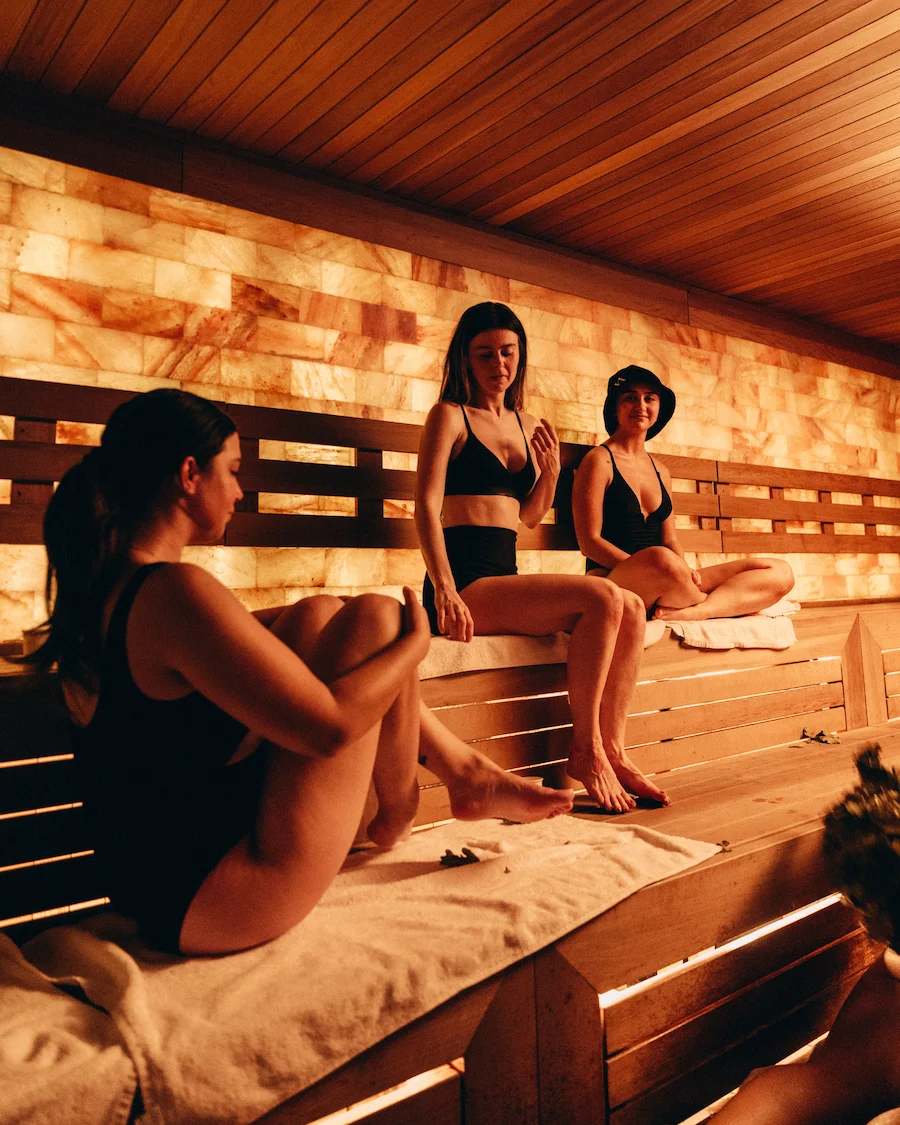
At AetherHaus, swimsuits are required for all guided sessions. Choose something simple and secure that will stay in place without adjustment. A basic one-piece or swim trunks without loose ties or metal hardware is ideal.
In my experience guiding people through their first Aufguss, the guests who settle in most easily are the ones who chose something they could forget about. A basic swimsuit. Nothing to fuss with. When you are not thinking about what you are wearing, you can actually feel the heat, the steam, and the shift in the room.
Banya Traditions
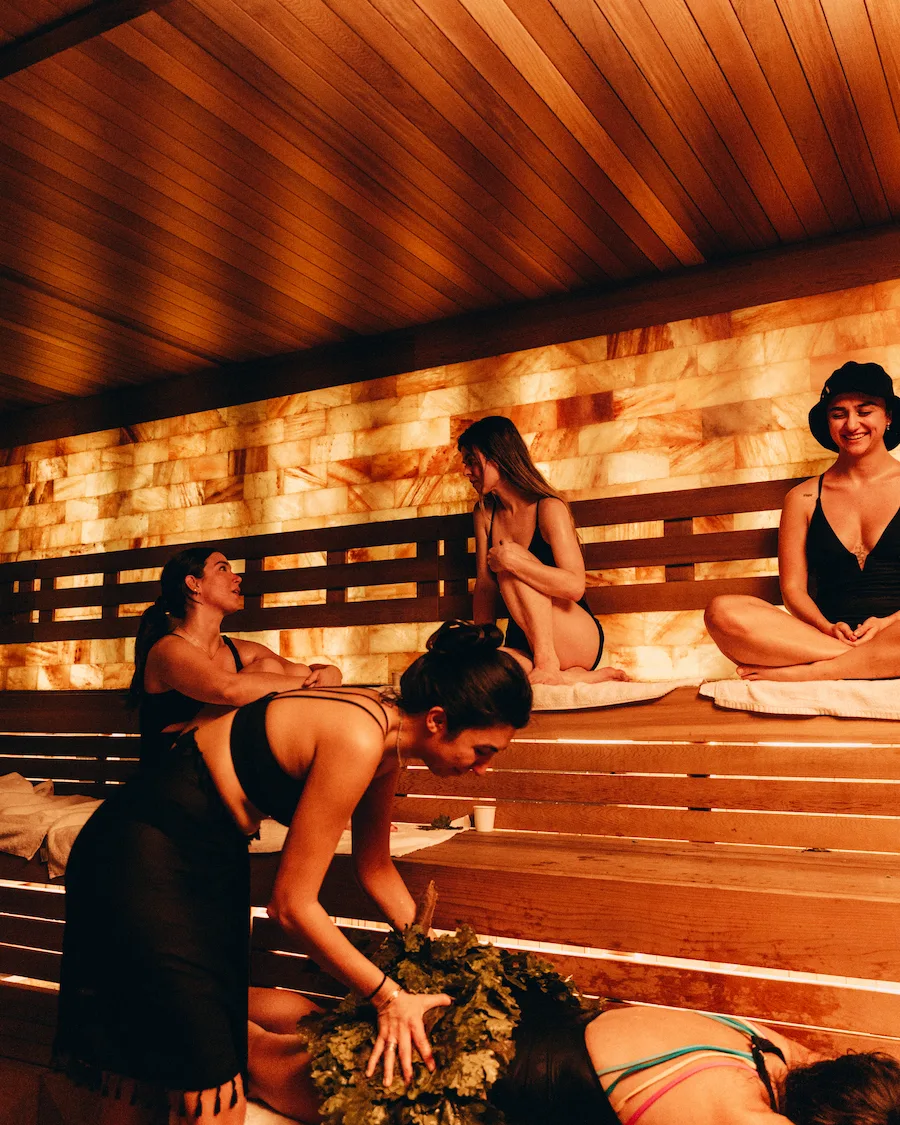
Traditional Russian banya culture often involves minimal clothing, felt hats (called shapka), and birch branch (venik) rituals. The felt hat is not a fashion statement. It protects the top of the head from the most intense heat near the ceiling.
In a modern studio setting, swimsuits remain the standard. But if you ever see someone wearing a tall felt hat in a sauna, now you know why.
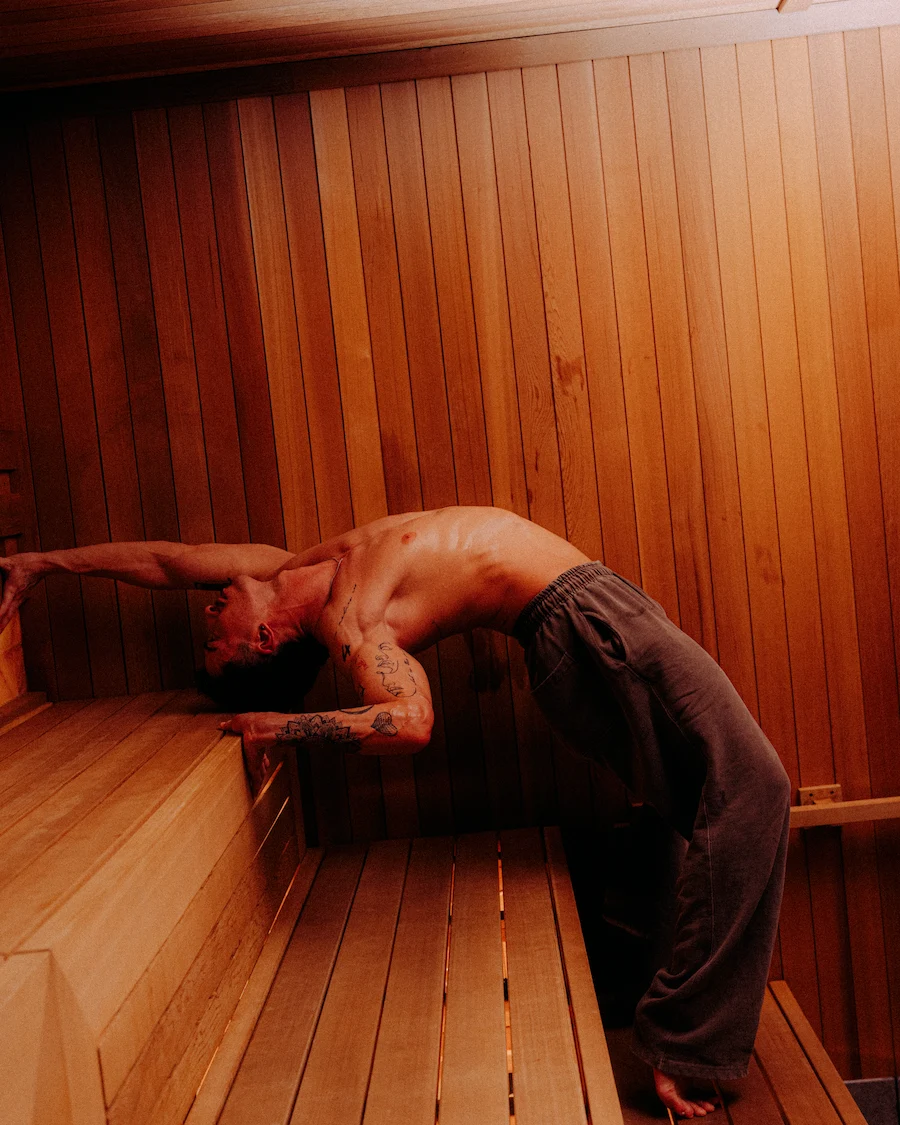
Movement-Based Sessions
Sessions like yin yoga or Pilates and Plunge involve physical movement in a heated space. Your clothing needs to stay secure through postures and transitions.
A fitted swimsuit or a snug athletic top with shorts works well. Choose natural fibres when possible, but prioritize something that will not shift or ride up during movement. The goal is to move freely without distraction.
There is no "optimal" sauna outfit. There is only what lets you stop thinking about clothing and start paying attention to how the heat feels on your skin.
What to Wear for Contrast Therapy
If your sauna session includes a cold plunge, the good news is that the same swimsuit works for both. There is no need to change between heat and cold.
Choose something that stays secure when wet and during movement between stations. Avoid anything with excessive ties, straps, or loose elements that could become uncomfortable when transitioning quickly.
At AetherHaus, towels and robes are provided for the spaces between sauna and plunge. A robe or towel draped over your shoulders can ease the transition, especially during your first few visits.
The cold does not care what brand your swimsuit is. It only asks that you show up.
What to Bring to Your Sauna Visit
Knowing what to bring can be just as helpful as knowing what to wear. Here is a simple checklist.
Essentials:
Reusable water bottle. Hydration before, during, and after your session is essential. Your body loses significant fluid through sweating.
Swimsuit. Your main attire for any public or studio sauna.
Hair tie or headband. Keeps hair off your neck and face in the heat.
Provided at AetherHaus:
Towels and robes. No need to bring your own. Check with your specific facility, as policies vary elsewhere.
Optional:
Sauna hat. A felt or wool hat protects the top of your head from the most intense heat. Common in German and Russian sauna traditions, and increasingly popular in North America.
Change of clothes for after. Loose, breathable clothing for the transition back to daily life. Let your body cool gradually rather than pulling on tight jeans immediately.
Bag for wet items. A simple waterproof bag keeps your wet swimsuit from soaking everything else in your bag.

Sauna Attire Across Cultures
Sauna traditions span centuries and continents. What people wear, or do not wear, varies widely depending on where you are in the world.
Finland and Scandinavia treat sauna as an essential part of daily life. Nudity is the norm in private and same-gender settings. In public or mixed saunas, towels and swimsuits are common. The emphasis is on simplicity and being at ease.
Germany has a deeply rooted Aufguss culture. Many public saunas require nudity, and towels are used for sitting on rather than covering up. Aufguss ceremonies are theatrical and communal, with strict etiquette around hygiene and respect.
Russia centres its bathing culture around the banya. Felt hats protect the head, and the venik (birch branch) ritual is done with minimal clothing. Same-gender sessions are traditional.
Japan practises communal bathing in onsen with complete nudity and rigorous pre-bathing cleansing. Facilities are gender-separated.
North America generally prioritizes modesty. Swimsuits are the default in studios, spas, and gyms. Towels are used for sitting and additional coverage.
Across every sauna culture, the underlying principle is the same. Wear less. Feel more. Let your skin do what it was designed to do.
Frequently Asked Questions
Can you wear a swimsuit in a sauna?
Yes. In most North American studios and gyms, a swimsuit is required. Choose one without metal hardware and made from breathable materials when possible. It is the simplest and most widely accepted option.
Do you have to be naked in a sauna?
It depends on the setting. In Finnish and German traditions, nudity is customary. In North American studios and gyms, swimsuits or towels are the standard. Wear whatever allows you to relax and be present.
What is the best fabric for a sauna?
Natural fibres like cotton, linen, bamboo, and merino wool are ideal. They breathe, absorb moisture, and support your body's natural temperature regulation. Avoid synthetic materials like polyester, nylon, and PVC.
Can you wear gym clothes in a sauna?
It is best to avoid it. Sweaty workout gear harbours bacteria, and synthetic fabrics trap heat and moisture against the skin. Change into a clean swimsuit or cotton clothing before entering.
Should you remove jewellery before a sauna?
Yes. Metal conducts heat rapidly and can cause burns or leave marks on the skin. Remove all rings, necklaces, earrings, and watches before your session.
What should you wear after a sauna?
Loose, breathable clothing in natural fibres. This allows your body to cool down gradually. Avoid pulling on tight or heavy clothing immediately after.
Do you need to bring a towel to a sauna?
Many studios, including AetherHaus in Vancouver, provide towels and robes for their guests. For gym saunas, bring your own clean towel to sit on for hygiene.
Key Takeaways
A swimsuit made from natural fibres is the safest, most versatile choice for any public or studio sauna
Avoid synthetic fabrics, metal jewellery, tight clothing, and electronics in the heat
Loose-fitting, breathable clothing supports your body's natural thermoregulation (Cleveland Clinic, 2025)
For guided rituals and contrast therapy, choose something simple and secure that lets you be fully present
Bring a reusable water bottle and wear loose clothing after your session for a smooth cool-down
Ready to Step Into the Heat?
Now that you know what to wear, the only thing left is to show up. AetherHaus is a sauna and cold plunge studio in Vancouver's West End, rooted in European sauna traditions and built for real human connection. Towels and robes are provided. Just bring your swimsuit, a reusable water bottle, and a willingness to be present.
In most public and studio saunas, a swimsuit is the standard. Choose something made from natural fibers like cotton or linen, avoid anything with metal hardware, and leave the gym clothes in your locker. Beyond that, the specifics depend on your setting, whether you are visiting a gym, a dedicated sauna studio, or practising at home.
This guide covers what to wear in a sauna across every setting, which fabrics work and which to avoid, what to bring along, and what to wear for guided sauna rituals and contrast therapy sessions.
Why What You Wear in a Sauna Matters
Sauna attire is not about fashion. It is about letting your body do what it needs to do in the heat.
Your Body Needs to Breathe
Saunas create intense heat. Your body responds by sweating, which is its natural cooling system. When sweat evaporates from your skin, it draws heat away and helps regulate your internal temperature.
Restrictive or heavy clothing interferes with this process. The Cleveland Clinic identifies loose-fitting, breathable clothing as a key factor in preventing heat-related illness (Cleveland Clinic, 2025). The Mayo Clinic's first-aid guidelines for heat exhaustion specifically advise removing tight or heavy clothing as an immediate step (Mayo Clinic, 2024).
In a sauna, the same principle applies. Your clothing should support your body's ability to cool itself, not work against it.
The Problem with Synthetic Fabrics
Not all fabrics belong in a sauna. Synthetic materials like polyester, nylon, and PVC trap heat and moisture against the skin. They cling when wet, restrict airflow, and can become genuinely uncomfortable in high temperatures.
There is also a growing conversation about what happens when plastics meet heat. In heated environments, synthetic fibers can shed microplastic particles that become airborne or settle on the skin (SaunaTimes, 2025). Research published in the Journal of Environmental and Public Health found that plastic-related chemicals like BPA and phthalates were more easily excreted through sweat than through urine or blood (Journal of Environmental and Public Health, 2015).
Natural fibers avoid these concerns entirely. They breathe, absorb moisture, and let your skin do its job.
Your clothing is not a performance variable. It is simply about feeling at ease so you can be present in the heat.
What to Wear in a Sauna (By Setting)
The right sauna attire depends on where you are. Here is a practical breakdown by setting.
Public and Studio Saunas
A swimsuit is the standard in most North American public and studio saunas. It provides coverage, maintains hygiene, and keeps shared spaces comfortable for everyone.
When choosing a swimsuit for the sauna:
Opt for simple, minimal styles without heavy padding or lining
Avoid metal clasps, zippers, or underwire, which conduct heat and can burn
Bring or use a towel to sit on for hygiene on shared benches
If you visit regularly, consider having a dedicated swimsuit for sauna use. Repeated heat exposure can break down elastic and synthetic fibers over time, causing fading and stretching.
Gym Saunas
Gym saunas often have their own specific rules. Check with your facility before your first visit.
The general guidelines are the same. A clean swimsuit or cotton shorts with a loose top works well. The key distinction: do not wear the clothes you just exercised in. Sweaty workout gear harbours bacteria and synthetic materials trap heat against your skin.
Shower before entering the sauna. This is both a hygiene practice and a courtesy to others sharing the space.
Private or Home Saunas
In your own space, the rules are yours. Many people prefer a towel, loose cotton clothing, or nothing at all.
In Finnish and Scandinavian tradition, nudity is considered the natural way to experience a sauna, especially in private or same-gender settings. If that feels right to you, it is entirely appropriate in your own home.
Coed and Mixed Settings
When sharing a sauna with people of different genders, a swimsuit is the respectful and practical default. Choose something that provides comfortable coverage and lets you relax without self-consciousness.
Every facility has its own dress code. When in doubt, ask before your visit.
Fabrics That Work (and Those That Do Not)
The material your clothing is made from can make a real difference in how the heat feels on your body. A review in Sports Medicine confirmed that clothing fit and air permeability significantly affect thermoregulation and comfort during heat exposure (PMC, 2022).
Fabrics That Work
Cotton: The most common and accessible choice. Breathable, absorbent, and soft against the skin. A cotton towel wrap or loose cotton shorts are reliable options.
Linen: Lightweight and quick-drying with excellent airflow. Ideal for sauna environments where moisture is constant.
Bamboo: Naturally antibacterial, soft, and effective at managing moisture. A great option for those with sensitive skin.
Merino wool: Perhaps surprising, but merino wool is naturally thermoregulating. It can absorb up to 30% of its weight in moisture while remaining dry to the touch (SaunaTimes, 2025). It is a traditional sauna fabric in many European cultures.
Fabrics to Avoid
Polyester and nylon: Trap heat and moisture, cling to sweaty skin, and do not allow adequate airflow
PVC and plastic-based materials: Can off-gas in high temperatures and completely block the skin from breathing
Spandex and elastane: Restrictive, heat-trapping, and degrades with repeated high-temperature exposure
Heavy fabrics like denim, fleece, or layered clothing have no place in a sauna
Even if your regular swimsuit is made from a synthetic blend, it will work for occasional visits. The concern is more relevant for frequent sauna-goers who may want to invest in a natural-fibre alternative.
What Not to Wear in a Sauna
Knowing what to leave behind is just as important as knowing what to put on. Clinical guidelines are clear that tight or heavy clothing should be removed in heat-stress situations (Mayo Clinic, 2024). The National Library of Medicine identifies tight-fitting clothing as a specific concern in heat-related skin conditions (StatPearls, 2023).
Here is what to leave in your locker:
Metal jewellery and piercings. Metal conducts heat quickly and can cause burns or discomfort. Remove rings, necklaces, earrings, and watches before entering.
Tight workout gear. Compression shorts, leggings, and sports bras restrict airflow and trap heat against the body.
Shoes, flip-flops, or socks. Go barefoot inside the sauna. Footwear traps heat, introduces outside bacteria, and is not permitted in most facilities.
Heavy or layered clothing. Anything that prevents your skin from breathing will make the experience uncomfortable and potentially unsafe.
Makeup, lotions, and perfumes. Heat opens pores and intensifies absorption. Enter the sauna with clean, bare skin.
Electronics and wearables. Smartwatches, earbuds, and phones are damaged by heat and moisture. Leave them behind.
What to Wear for Guided Sauna Rituals
If you are attending a guided sauna experience, such as an Aufguss ceremony or a banya-inspired session, your clothing choices become even simpler. The less you have to think about what you are wearing, the more you can be in the experience.
Aufguss Ceremonies
An Aufguss is a guided sauna ritual rooted in German tradition. A trained guide moves heated air through the room using rhythmic towel movements, essential oils, and music, creating waves of intense, shifting heat.
At AetherHaus, swimsuits are required for all guided sessions. Choose something simple and secure that will stay in place without adjustment. A basic one-piece or swim trunks without loose ties or metal hardware is ideal.
In my experience guiding people through their first Aufguss, the guests who settle in most easily are the ones who chose something they could forget about. A basic swimsuit. Nothing to fuss with. When you are not thinking about what you are wearing, you can actually feel the heat, the steam, and the shift in the room.
Banya Traditions
Traditional Russian banya culture often involves minimal clothing, felt hats (called shapka), and birch branch (venik) rituals. The felt hat is not a fashion statement. It protects the top of the head from the most intense heat near the ceiling.
In a modern studio setting, swimsuits remain the standard. But if you ever see someone wearing a tall felt hat in a sauna, now you know why.
Movement-Based Sessions
Sessions like yin yoga or Pilates and Plunge involve physical movement in a heated space. Your clothing needs to stay secure through postures and transitions.
A fitted swimsuit or a snug athletic top with shorts works well. Choose natural fibres when possible, but prioritize something that will not shift or ride up during movement. The goal is to move freely without distraction.
There is no "optimal" sauna outfit. There is only what lets you stop thinking about clothing and start paying attention to how the heat feels on your skin.
What to Wear for Contrast Therapy
If your sauna session includes a cold plunge, the good news is that the same swimsuit works for both. There is no need to change between heat and cold.
Choose something that stays secure when wet and during movement between stations. Avoid anything with excessive ties, straps, or loose elements that could become uncomfortable when transitioning quickly.
At AetherHaus, towels and robes are provided for the spaces between sauna and plunge. A robe or towel draped over your shoulders can ease the transition, especially during your first few visits.
The cold does not care what brand your swimsuit is. It only asks that you show up.
What to Bring to Your Sauna Visit
Knowing what to bring can be just as helpful as knowing what to wear. Here is a simple checklist.
Essentials:
Reusable water bottle. Hydration before, during, and after your session is essential. Your body loses significant fluid through sweating.
Swimsuit. Your main attire for any public or studio sauna.
Hair tie or headband. Keeps hair off your neck and face in the heat.
Provided at AetherHaus:
Towels and robes. No need to bring your own. Check with your specific facility, as policies vary elsewhere.
Optional:
Sauna hat. A felt or wool hat protects the top of your head from the most intense heat. Common in German and Russian sauna traditions, and increasingly popular in North America.
Change of clothes for after. Loose, breathable clothing for the transition back to daily life. Let your body cool gradually rather than pulling on tight jeans immediately.
Bag for wet items. A simple waterproof bag keeps your wet swimsuit from soaking everything else in your bag.
Sauna Attire Across Cultures
Sauna traditions span centuries and continents. What people wear, or do not wear, varies widely depending on where you are in the world.
Finland and Scandinavia treat sauna as an essential part of daily life. Nudity is the norm in private and same-gender settings. In public or mixed saunas, towels and swimsuits are common. The emphasis is on simplicity and being at ease.
Germany has a deeply rooted Aufguss culture. Many public saunas require nudity, and towels are used for sitting on rather than covering up. Aufguss ceremonies are theatrical and communal, with strict etiquette around hygiene and respect.
Russia centres its bathing culture around the banya. Felt hats protect the head, and the venik (birch branch) ritual is done with minimal clothing. Same-gender sessions are traditional.
Japan practises communal bathing in onsen with complete nudity and rigorous pre-bathing cleansing. Facilities are gender-separated.
North America generally prioritizes modesty. Swimsuits are the default in studios, spas, and gyms. Towels are used for sitting and additional coverage.
Across every sauna culture, the underlying principle is the same. Wear less. Feel more. Let your skin do what it was designed to do.
Frequently Asked Questions
Can you wear a swimsuit in a sauna?
Yes. In most North American studios and gyms, a swimsuit is required. Choose one without metal hardware and made from breathable materials when possible. It is the simplest and most widely accepted option.
Do you have to be naked in a sauna?
It depends on the setting. In Finnish and German traditions, nudity is customary. In North American studios and gyms, swimsuits or towels are the standard. Wear whatever allows you to relax and be present.
What is the best fabric for a sauna?
Natural fibres like cotton, linen, bamboo, and merino wool are ideal. They breathe, absorb moisture, and support your body's natural temperature regulation. Avoid synthetic materials like polyester, nylon, and PVC.
Can you wear gym clothes in a sauna?
It is best to avoid it. Sweaty workout gear harbours bacteria, and synthetic fabrics trap heat and moisture against the skin. Change into a clean swimsuit or cotton clothing before entering.
Should you remove jewellery before a sauna?
Yes. Metal conducts heat rapidly and can cause burns or leave marks on the skin. Remove all rings, necklaces, earrings, and watches before your session.
What should you wear after a sauna?
Loose, breathable clothing in natural fibres. This allows your body to cool down gradually. Avoid pulling on tight or heavy clothing immediately after.
Do you need to bring a towel to a sauna?
Many studios, including AetherHaus in Vancouver, provide towels and robes for their guests. For gym saunas, bring your own clean towel to sit on for hygiene.
Key Takeaways
A swimsuit made from natural fibres is the safest, most versatile choice for any public or studio sauna
Avoid synthetic fabrics, metal jewellery, tight clothing, and electronics in the heat
Loose-fitting, breathable clothing supports your body's natural thermoregulation (Cleveland Clinic, 2025)
For guided rituals and contrast therapy, choose something simple and secure that lets you be fully present
Bring a reusable water bottle and wear loose clothing after your session for a smooth cool-down
Ready to Step Into the Heat?
Now that you know what to wear, the only thing left is to show up. AetherHaus is a sauna and cold plunge studio in Vancouver's West End, rooted in European sauna traditions and built for real human connection. Towels and robes are provided. Just bring your swimsuit, a reusable water bottle, and a willingness to be present.
our Blog
our Blog
More insights
More insights
Explore more reflections, guidance, and practical tools to support you.
Explore more reflections, guidance, and practical tools to support you.
Stress does not just live in your thoughts. It settles into your shoulders, your jaw, the shallow rhythm of your breathing. It rewires your nervous system so that rest feels foreign and alertness becomes your default.

Leafy branches. Rising steam. A rhythm older than memory. Venik massage is the heart of the Russian banya, a practice where wood, fire, and water meet on the surface of the skin. It is not something to be explained so much as felt.
Leafy branches. Rising steam. A rhythm older than memory. Venik massage is the heart of the Russian banya, a practice where wood, fire, and water meet on the surface of the skin. It is not something to be explained so much as felt.
Your questions.
Answered.
Not sure what to expect? These answers might help you feel more confident as you begin.
Didn’t find your answer? Send us a message, we’ll respond with care and clarity.
What is a modern bathhouse?
A modern bathhouse keeps the architecture of the old idea, hot room, cold water, somewhere to rest, and lets the rhythm of the city around it shape the rest. Ours is built for Vancouver, on Davie Street, in the West End.
What is a modern bathhouse?
A modern bathhouse keeps the architecture of the old idea, hot room, cold water, somewhere to rest, and lets the rhythm of the city around it shape the rest. Ours is built for Vancouver, on Davie Street, in the West End.
Is the cold plunge at your bathhouse communal?
Is the cold plunge at your bathhouse communal?
Yes. Our cold pools are shared, with multiple temperature options so you can find one that meets you where you are. Communal plunging is part of what makes a bathhouse a bathhouse.
Is the bathhouse a welcoming space for the queer community?
Is the bathhouse a welcoming space for the queer community?
Yes. The West End is home to us and to our queer neighbours, and the bathhouse is built for everyone who walks in. We also host queer nights on a regular rotation, which you can find on the Classes calendar.
What's the etiquette inside the bathhouse?
What's the etiquette inside the bathhouse?
Phones stay in lockers. Voices stay low. Sit or lie on a towel inside the sauna, move at your own pace between rooms, and leave the space the way you'd want to find it. The room works because everyone in it is paying a little attention.
Do you offer Russian Banya at the bathhouse?
Do you offer Russian Banya at the bathhouse?
We run banya-inspired programming including venik work on select dates. The full ritual has its own page if you want to read about it before you book.
Do I need to book ahead, or can I walk in?
Do I need to book ahead, or can I walk in?
Walk-ins are welcome based on availability, but most guests book ahead through our app or website to lock in their preferred session time.
Your questions.
Answered.
Not sure what to expect? These answers might help you feel more confident as you begin.
What do I need to bring?
Please bring a bathing suit and a reusable water bottle. We provide two towels per guest, shower products, and secure lockers.
What do I need to bring?
Please bring a bathing suit and a reusable water bottle. We provide two towels per guest, shower products, and secure lockers.
Do I need a reservation?
Do I need a reservation?
Walk-ins are welcome, but we recommend booking through our app or website to check availability and join the waitlist.
Where can I park?
Where can I park?
Street parking is limited. We offer valet parking behind AetherHaus from 11:00–23:00. There is also some street parking available on Davie and nearby side streets.
What is Open Haus?
What is Open Haus?
Open Haus is a self-guided circuit through our saunas, plunge pools, and tea lounge. Our guides add essential oils to the stove throughout the day. The atmosphere shifts between silent, casual, and social, depending on the session.
What is your Haus Etiquette?
What is your Haus Etiquette?
Phones must be stored away. Please keep conversation soft, sit or lie on a towel, and move mindfully through the space. We ask that guests respect others’ experience and refrain from bringing outside food or drinks - complimentary tea is provided.
Can I visit if I am pregnant?
Can I visit if I am pregnant?
We advise against hot and cold therapy during pregnancy unless approved by your healthcare provider.
Didn’t find your answer? Send us a message, we’ll respond with care and clarity.
Your questions.
Answered.
Not sure what to expect? These answers might help you feel more confident as you begin.
Didn’t find your answer? Send us a message, we’ll respond with care and clarity.
What is a modern bathhouse?
A modern bathhouse keeps the architecture of the old idea, hot room, cold water, somewhere to rest, and lets the rhythm of the city around it shape the rest. Ours is built for Vancouver, on Davie Street, in the West End.
What is a modern bathhouse?
A modern bathhouse keeps the architecture of the old idea, hot room, cold water, somewhere to rest, and lets the rhythm of the city around it shape the rest. Ours is built for Vancouver, on Davie Street, in the West End.
Is the cold plunge at your bathhouse communal?
Is the cold plunge at your bathhouse communal?
Yes. Our cold pools are shared, with multiple temperature options so you can find one that meets you where you are. Communal plunging is part of what makes a bathhouse a bathhouse.
Is the bathhouse a welcoming space for the queer community?
Is the bathhouse a welcoming space for the queer community?
Yes. The West End is home to us and to our queer neighbours, and the bathhouse is built for everyone who walks in. We also host queer nights on a regular rotation, which you can find on the Classes calendar.
What's the etiquette inside the bathhouse?
What's the etiquette inside the bathhouse?
Phones stay in lockers. Voices stay low. Sit or lie on a towel inside the sauna, move at your own pace between rooms, and leave the space the way you'd want to find it. The room works because everyone in it is paying a little attention.
Do you offer Russian Banya at the bathhouse?
Do you offer Russian Banya at the bathhouse?
We run banya-inspired programming including venik work on select dates. The full ritual has its own page if you want to read about it before you book.
Do I need to book ahead, or can I walk in?
Do I need to book ahead, or can I walk in?
Walk-ins are welcome based on availability, but most guests book ahead through our app or website to lock in their preferred session time.