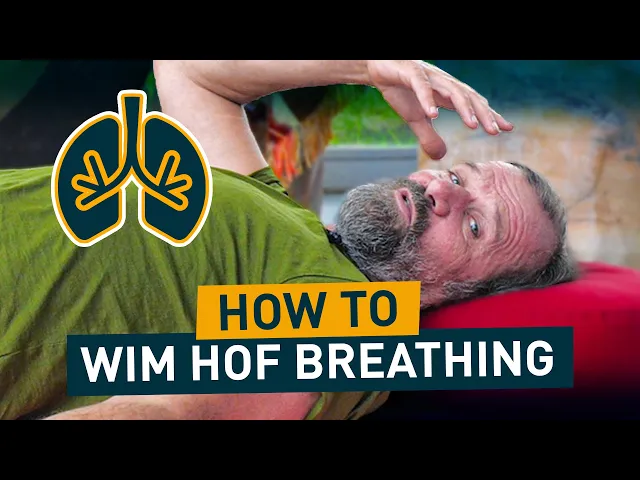
Breathwork for Cold Plunge: Beyond Wim Hof to Ancient Traditions
Breathwork for Cold Plunge: Beyond Wim Hof to Ancient Traditions
The cold does not care about your protocol. It asks only that you show up.
The cold does not care about your protocol. It asks only that you show up.
Published on:
Published on:
Medical Disclaimer: The information in this article is for educational purposes only and is not intended as medical advice. Cold exposure and breathwork practices carry inherent risks. Consult with a qualified healthcare provider before beginning any cold exposure or breathwork practice, especially if you have cardiovascular conditions, respiratory issues, pregnancy, or other health concerns. Listen to your body and exit immediately if you experience dizziness, numbness, or discomfort.
While Wim Hof Method popularized breathwork for cold exposure in the West, centuries-old practices from Tibetan mountains to Russian banyas reveal something deeper. Breath is not a performance metric to optimize. It is a dialogue with sensation.
"What they taught us at the Wim Hof camp was that it was not about time," says Dave Gu, Program Director at AetherHaus and certified Wim Hof Method instructor with over a decade of personal practice. "It was about sensation and feeling."
This distinction matters. When you pair breath with cold water, you are not executing a protocol. You are entering a conversation between your nervous system and the elements—one that has been happening in sauna houses and mountain streams for thousands of years before anyone thought to track it in an app.
Why Breathwork Transforms Cold Exposure
Your body knows how to respond to cold. The question is whether you can stay present enough to listen.
Breathwork does not make the cold easier. It makes your relationship with the cold clearer. When breath meets frigid water, something ancient activates: pathways that predate modern science but are now being validated by it.
The physiological cascade is remarkable. Controlled breathing before and during cold exposure influences your autonomic nervous system, the part of you that operates below conscious thought (PNAS, 2014). This is not metaphor. This is measurable biology.

The Vagus Nerve Connection
Cold water touches your face and something immediate happens. Your heart rate slows. Your breathing deepens. This is the diving response, an evolutionary reflex that activates the vagus nerve through what researchers call the trigeminal-vagal reflex arc (JMIR, 2019).
The vagus nerve is the wandering nerve, the longest cranial nerve in your body. It connects your brainstem to your heart, lungs, and digestive system. When cold water stimulates specific nerve pathways in your face and neck, it activates parasympathetic responses that reduce your body's natural stress reaction (Cedars-Sinai, 2024).
Breath amplifies this effect. When you slow your exhale before entering cold water, you shift your autonomic balance toward parasympathetic activity, the rest-and-digest state that allows you to stay present rather than panic (Frontiers in Human Neuroscience, 2018).
Cold facial stimulus alone can trigger this diving response and reduce acute psychosocial stress (Scientific Reports, 2022). Add intentional breathing, and you are not just tolerating cold. You are rewriting your nervous system's relationship with challenge.
The Synergy Effect
Here is what matters: breathwork and cold exposure work better together than either does alone.
A 2022 study examined combined breathing practices with cold water immersion and found medium to large positive effects on perceived stress reduction (PeerJ, 2022). Neither breathwork alone nor cold exposure alone produced substantial effects in isolation. The power lives in the combination.
This is not surprising if you have ever stood at the edge of contrast therapy between heat and cold. The breath becomes the bridge. The inhale carries you into the cold. The exhale allows you to stay.
What Happens in Your Body
When trained participants combined specific breathing techniques with cold exposure in controlled conditions, they could voluntarily activate their sympathetic nervous system (the fight-or-flight response) and produce increased epinephrine while simultaneously reducing inflammatory markers (PNAS, 2014).
This landmark research challenged the assumption that the autonomic nervous system operates completely outside conscious control. Through breath, you can influence systems previously thought automatic.
The cascade includes:
Increased oxygenation as breathing patterns shift blood pH and oxygen delivery
Sympathetic activation preparing your body for the cold stimulus
Parasympathetic rebound as you settle into the cold and your exhale lengthens
Reduced inflammatory response as your immune system recalibrates
Enhanced resilience as your nervous system learns new patterns of response
Your body knows the rhythm. The breath simply helps you listen.
These techniques do not need to become another thing you are "doing right" or tracking in an app. They are invitations to presence, not performance metrics.
The Wim Hof Method: Gateway, Not Gospel
Wim Hof brought breathwork and cold exposure out of ashrams and into athletic centres. For many, including Dave, the method became a doorway into practices that have existed far longer than their modern packaging.
"In my mid-20s, the pain was pretty unbearable while I was in school, and I got really desperate and found the Wim Hof Method on YouTube," Dave recalls. He was navigating ankylosing spondylitis, the same autoimmune condition that left his father's spine fully fused. "Something about it really called to me, and I ended up flying to Spain to attend one of Wim Hof's summer expeditions."
What Dave experienced there was not just technique. It was the first time he had felt hope that his condition's trajectory could shift.
What Makes Wim Hof Effective
The Wim Hof Method combines cyclic hyperventilation (deep, rhythmic breathing) with breath retention, often paired with cold exposure (Medical News Today, 2024). The technique creates specific physiological states: alkalization of the blood during the breathing phase, followed by controlled hypoxia during the hold.
Research shows the method can enhance anti-inflammatory chemicals in the body, though it does not appear to improve athletic performance in the short term (Medical News Today, 2024). The benefits seem to live elsewhere—in nervous system regulation, stress resilience, and the psychological shift that comes from deliberately choosing discomfort.
The basic structure involves:
Cyclic breathing—deep inhales and passive exhales in succession
Breath retention after the final exhale, holding as long as comfortable
A recovery breath with another hold after the inhale
Repetition based on what your body signals, not a prescribed count
The method offers an accessible entry point. It is structured enough to feel safe, simple enough to remember when you are standing at the edge of cold water wondering if you can actually do this.
If you are new to cold immersion, learning how to approach your first cold plunge safely matters as much as the breathing technique itself.
Beyond the Protocol
Dave's personal practice evolved beyond prescribed methods. "When I got back home to Vancouver, I emptied my freezer and bought 50 ice trays and started doing ice baths," he shares. "Some days I might be in there for 30 seconds while other days I am in there for several minutes. And it was really about a process of learning what my body needed in the moment as opposed to always sticking to a prescriptive number."
This is the crucial shift. The technique gives you structure. Sensation gives you wisdom.
"I never measured it," Dave says of the water temperature. "I just used 50 ice trays and the goal was just to get it cold enough that it felt a little bit of stress on the system to allow for thermal regulation to happen."
Let sensation guide you, not the clock. The cold will teach you when to breathe deeper and when to soften. When your body is ready to exit and when you can stay another moment. No timer can tell you this.
After consistent practice, Dave noticed his pain decreasing while his energy levels increased. His nervous system felt like it was resetting in a way he had never experienced. Eventually, he was able to get off his immunosuppressant medication, return to snowboarding, and reclaim the physical freedom he thought he had lost.
"For the first eight months, it was the immediate and the temporary relief that the cold plunge offered to my joints that really hooked me in," he explains. "It often felt like there was this inner forest fire of inflammation that was being extinguished from the cold exposure."
The Wim Hof Method opened the door. But the practice that sustained him was learning to listen rather than perform.
Tummo: The Original Inner Fire
Long before cold exposure became a biohacking trend, Tibetan Buddhist monks were sitting in snow-covered mountains practicing g-tummo—the meditation of inner fire.
Tummo translates to "inner fire" in Tibetan. It is one of the Six Dharmas of Naropa, a collection of advanced meditation practices passed down through Tibetan Buddhism (Medical News Today, 2022). Where modern methods often emphasize hyperventilation and sympathetic activation, Tummo weaves breath with visualization and subtle muscle contractions to generate internal heat.
This is not metaphor. The heat is real.
Ancient Roots, Modern Science
In 1982, Harvard researcher Herbert Benson traveled to the Himalayas to study monks practicing g-tummo. What he documented challenged Western assumptions about the limits of human physiology. Monks could raise the temperature in their fingers and toes by up to 8.3 degrees Celsius while sitting in frigid conditions (Nature, 1982). They could dry wet sheets wrapped around their bodies through body heat alone.
Later research from Harvard showed these practitioners could lower their metabolism by 64 percent during advanced meditation and raise peripheral body temperature by up to 17 degrees Fahrenheit (Harvard Gazette, 2002).
A 2013 study in PLOS One identified two distinct components of g-tummo practice: Forceful Breath and Gentle Breath, each producing different temperature patterns in the body (PLOS One, 2013). During practice, core body temperature can increase to fever range (up to 38.3 degrees Celsius) through breath and visualization alone.
Technique | Primary Mechanism | Temperature Effect | Tradition |
|---|---|---|---|
Tummo | Forceful + Gentle Breath, visualization | Raises peripheral temp up to 8.3°C | Tibetan Buddhist |
Wim Hof Method | Cyclic hyperventilation, retention | Sympathetic activation, improved cold tolerance | Modern Dutch |
Cyclic Sighing | Double inhale, extended exhale | Parasympathetic activation, mood regulation | Stanford research |
Box Breathing | Equal count inhale-hold-exhale-hold | Autonomic nervous system balance | Navy SEAL adaptation |
How Tummo Works with Cold
While Wim Hof Method prepares you to withstand cold, Tummo teaches you to generate heat from within. This distinction matters when you are cycling between extreme temperatures, as in traditional European sauna practice.
At AetherHaus, the Aufguss ritual draws from German sauna tradition, where heat is layered through rhythmic towel movements and essential oil infusions. The breath becomes the rhythm that allows you to stay present as temperatures rise and fall. Tummo's focus on internal heat generation aligns with this understanding—heat and cold are not opposites to battle but complementary states to inhabit.
The practice also connects to the broader tradition of contrast therapy found in Russian Banya culture and Nordic sauna rituals. When you move from the intense heat of a Himalayan salt sauna into cold plunge pools, breath becomes the anchor that allows your nervous system to integrate these extremes rather than just survive them.
Sensation-Based Practice
Tummo is traditionally taught through direct transmission from teacher to student, not through written protocol. The breath patterns adapt to the practitioner's state, the environment, the intention of the practice.
There is no perfect duration. Your body will tell you when it is time.
Sensation cues to notice during practice:
Warmth building in the lower abdomen or along the spine
Tingling or vibration in the hands and feet as circulation shifts
Mental clarity as the mind settles into focus
Respiratory ease as the breath finds its natural rhythm
Emotional release as stored tension surfaces and moves through
This is not about optimization. This is about presence. The cold does not care about your protocol. It asks only that you show up with awareness and respect for what your body knows.
Cyclic Sighing: The Exhale-Focused Approach
While ancient traditions offer time-tested wisdom, contemporary research continues to reveal new insights into how breath shapes our nervous system response.
In 2023, Stanford University researchers published findings that challenged assumptions about which breathing techniques most effectively regulate mood and reduce physiological stress. The answer surprised even the research team.
Stanford's Discovery
The study compared four interventions: cyclic sighing, box breathing, cyclic hyperventilation with retention (similar to Wim Hof Method), and mindfulness meditation. Participants practiced their assigned technique daily and tracked mood, anxiety, respiratory rate, and heart rate variability (Cell Reports Medicine, 2023).
Cyclic sighing (characterized by a double inhale followed by an extended exhale) produced the greatest improvements in mood and the most significant reduction in respiratory rate compared to all other techniques tested (Stanford Medicine, 2023).
The physiological sigh is something your body already does naturally when you have been holding tension. You have felt this: the spontaneous double inhale followed by a long exhale that seems to reset something deep in your nervous system. Stanford's research validated what traditional practitioners have long understood—the exhale is where regulation lives.
Why Extended Exhale Matters Before Cold
Slow breathing shifts autonomic balance toward parasympathetic activity, the state that allows you to rest, digest, and remain present rather than reactive (Frontiers in Human Neuroscience, 2018). When your exhale extends beyond your inhale, you signal safety to your nervous system.
This matters immensely when you are about to enter cold water.
The sympathetic response—fight, flight, freeze—wants to activate the moment cold touches your skin. An extended exhale tells a different story. It says: we are safe. We can stay.
Cyclic sighing is particularly effective before cold immersion because it emphasizes the exhale without the intense sympathetic activation of hyperventilation techniques. You are not ramping up to battle the cold. You are settling down to meet it.
If you have explored different breathing approaches, you might find parallels with box breathing and 4-7-8 technique, both of which also emphasize exhale length for calming effects.
Applying Cyclic Sighing
The technique itself is elegantly simple. A full inhale through the nose. A second, smaller inhale to completely fill the lungs. Then a long, slow exhale through the mouth.
The rhythm matters more than the count. Your inhales fill you completely. Your exhale empties you slowly. The pause between rounds happens naturally—there is no need to force it.
When to explore cyclic sighing:
Before entering cold water, to shift into parasympathetic tone
During the initial shock of cold, to anchor your nervous system
After exiting, to integrate the experience and allow heart rate to settle
Anytime you notice shallow chest breathing and want to return to depth
Your breath knows how to regulate. The technique simply reminds you to listen.
Box Breathing and 4-7-8: When Regulation Comes First
Not every moment calls for heat generation or extended exhales. Sometimes, your nervous system needs the steady rhythm of equal measure.
Box breathing and 4-7-8 breathing both emphasize regulated patterns that bring the autonomic nervous system into balance (University of Arizona, 2024). They do not push you toward activation or deep relaxation. They meet you where you are and offer stability.
The Regulating Rhythm
Box breathing follows equal counts: inhale, hold, exhale, hold. The pattern creates a container, a predictable rhythm that your nervous system can anchor to when everything else feels chaotic.
The 4-7-8 technique, developed by Dr. Andrew Weil, extends the exhale slightly beyond the inhale (inhale, hold, longer exhale), creating gentle parasympathetic activation (Medical News Today, 2025). While clinical research remains limited, anecdotal evidence for sleep improvement and anxiety reduction is substantial.
Both techniques share a common principle: when you consciously regulate your breath, you influence systems that usually run below awareness.
Cold Plunge Application
Dave's approach to daily practice illustrates the wisdom of matching breath to state rather than following rigid prescription. "With an autoimmune condition, you have to be very mindful of where your nervous system is at each day," he explains.
Some mornings, his body needed the steadying influence of measured breathing. Other mornings, he could move directly into cold with minimal preparation. The practice was learning to read the signals.
Consider regulated breathing patterns when:
Your nervous system feels scattered or overwhelmed
You are new to cold exposure and need an anchor point
The water feels particularly challenging that day
You notice shallow, rapid breathing and want to reset
You are integrating cold with movement practices like yin yoga
The box does not imprison you. It gives you four walls to lean against when the cold feels vast.
Building Your Personal Practice
There is no formula that accounts for the temperature of the water, the temperature of your nervous system, what happened before you arrived, what you carry in your body from years of living.
This is why sensation-based practice matters more than protocol.
Starting Point: Presence Over Performance
Dave's journey from desperate graduate student to pain-free practitioner did not follow a linear path. "There was never any sort of major setback," he reflects. "It was more so the consistent minor setbacks that would happen. I feel like as I was doing better with pain and then maybe I would bump into a little flare-up, it was in those moments that I had to have faith and hope in what I was doing and to keep going."
The practice taught patience, surrender, gratitude, and kindness: to himself and to others. Growth is never fully linear, he learned. The journey through chronic pain became a life teaching.
"For the first eight months, it was the immediate and the temporary relief that the cold plunge offered to my joints that really hooked me in," Dave shares. Relief would last anywhere from less than an hour to longer periods as his practice deepened. "It often felt like there was this inner forest fire of inflammation that was being extinguished from the cold exposure."
What kept him returning was not the metrics. It was the sensation of possibility.
Early practice cues to notice:
Temperature perception: How cold feels cold enough to engage your system without overwhelming it
Breath rhythm shifts: When your breathing naturally wants to quicken or slow
Emotional responses: What feelings surface when you face the edge of the cold
Energy afterwards: Not just immediately, but hours later as your nervous system integrates
Sleep quality: How your body recovers and what your rest reveals about your practice
The goal is not to build tolerance faster. The goal is to build relationship with sensation.
Many find that working with experienced facilitators accelerates this learning. Guided experiences like breathwork sessions at AetherHaus provide structured support as you develop your personal practice, offering both technique and the permission to move at your body's pace.
Reading Your Body's Signals
Your body communicates constantly if you slow down enough to listen. The challenge is distinguishing between productive discomfort and signals to exit.
Sensation states and breath approaches:
What You Notice | What It Might Mean | Breath Approach to Explore |
|---|---|---|
Scattered thoughts, rapid heartbeat | Sympathetic activation | Extended exhale (cyclic sighing, 4-7-8) |
Feeling sluggish, low energy | Need for activation | Wim Hof style breathing before entering |
Anxiety about entering | Nervous system anticipating threat | Box breathing for regulation |
Already calm and present | Ready state | Minimal preparation, enter mindfully |
Shaky breathing, struggle to inhale | Exit signal | Leave the cold immediately |
This is not about optimization. This is about presence.
Dave never measured water temperature in his home practice. He never set timers. "The goal was just to get it cold enough that it felt a little bit of stress on the system to allow for thermal regulation to happen and to allow for a stress response to happen."
Your body will tell you when the stress is productive and when it has become too much. The sensation of your fingers growing numb is different from the sensation of your breathing settling into rhythm. These distinctions matter.
Integration with Heat
European sauna culture has understood for centuries what modern research is now validating: the power lives not in heat alone or cold alone, but in the movement between them.
When you cycle through sauna and cold plunge, breath becomes the bridge that allows your cardiovascular system and nervous system to adapt rather than just react. The inhale carries you into heat. The exhale allows you to stay. The breath between helps you transition.
At AetherHaus, this understanding shapes how we approach contrast therapy. The German Aufguss tradition, the Russian Banya practice, the Finnish sauna ritual—all emphasize breath as the thread connecting heat and cold, exertion and rest, intensity and integration.
Athletes often discover that breathwork transforms their relationship with temperature extremes, enhancing recovery and performance through improved nervous system regulation rather than just grit.
The practice is not about enduring more. It is about feeling more clearly what your body needs.
Safety and Contraindications
Breathwork and cold exposure are powerful tools precisely because they influence fundamental physiological systems. This power requires respect.
Certain conditions and circumstances make these practices inadvisable or require medical supervision.
When to Avoid Breath Manipulation with Cold
Do not practice cold exposure with breathwork if you have:
Cardiovascular disease, heart conditions, or uncontrolled high blood pressure
Respiratory conditions like asthma, COPD, or active respiratory infection
Pregnancy (consult your healthcare provider)
Epilepsy or seizure disorders
History of fainting or syncope
Raynaud's disease or severe cold sensitivity
Recent surgery or open wounds
Active psychosis or certain psychiatric conditions
Breath retention techniques, in particular, can cause temporary oxygen deprivation and changes in blood pH. These effects are generally safe for healthy individuals but can be dangerous if you have underlying conditions.
If you are taking medication for any condition, speak with your doctor before beginning any breathwork or cold exposure practice. Some medications affect your body's ability to regulate temperature or respond to breathing pattern changes.
Signs to Exit the Cold Immediately
Your body speaks clearly when something is wrong. The challenge is staying aware enough to hear it.
Exit the cold water immediately if you experience:
Difficulty catching your breath or inability to control breathing
Numbness or loss of sensation in extremities
Dizziness, disorientation, or confusion
Chest pain or irregular heartbeat
Severe shivering that does not subside
Bluish colour in lips, fingers, or toes (cyanosis)
Feeling faint or losing coordination
These are not signs to push through. They are your body telling you the conversation with cold has moved beyond productive stress into actual danger.
Dave emphasizes this distinction in his teaching: "It was all about being persistent and trusting the process and never succumbing to the setbacks, because I think growth is never fully linear." Growth requires showing up consistently. It does not require ignoring warning signals.
If you are learning to navigate cold exposure, working with experienced guides helps you distinguish between the discomfort of adaptation and the danger of going too far. This is one reason facilities like AetherHaus offer both guided sessions and self-directed experiences—you learn the signals in supported environments before practicing alone.
The AetherHaus Approach
European sauna tradition has never separated breath from heat, cold from ritual, technique from community. These practices evolved over centuries not as biohacks but as cultural ceremonies: ways of gathering, cleansing, resetting together.
This is what we carry forward at AetherHaus.
European Tradition Meets West Coast Sanctuary
Dave Gu brings more than a decade of personal practice and professional facilitation to his role as Program Director. As a certified Wim Hof Method instructor, he has taught countless workshops and retreats, guiding individuals through their first cold exposures and their hundredth.
But the deeper expertise comes from years of learning what techniques cannot teach: how to read the subtle signals of a nervous system under stress, how to hold space for someone discovering they are stronger than they believed, how to know when to push and when to soften.
"I've been teaching at studios, leading workshops, leading retreats, and teaching people how to utilize cold exposure and breathwork to help with their personal goals," Dave shares. "Whatever people were seeking for why they were coming to these workshops—it gave me a lot of opportunities to meet a lot of interesting people along the way and to witness just how effective cold exposure and breathwork were at helping people in their own personal journeys."
The German Aufguss ritual at AetherHaus illustrates this approach. Performed in darkness, the experience shifts from performance to introspection. Psychedelic-inspired music, rhythmic towel movements, breathwork, and aroma diffusion create waves of heat that cycle through stillness, challenge, release, and emotion.
This is breath as ceremony, not protocol.
Guided vs Self-Directed Practice
There is value in both facilitated experiences and solitary practice. Each serves different aspects of learning.
Guided sessions provide structure when you are building foundations. An experienced facilitator can help you understand the difference between productive discomfort and danger signals, can mirror what regulated breathing looks like when your own breath feels chaotic, can hold space when strong emotions surface during practice.
Self-directed practice develops your internal authority. You learn to trust your own signals, to adjust in real time, to take full responsibility for your choices in the cold.
At AetherHaus, Open Haus sessions allow you to move intuitively between Himalayan salt sauna, cold plunge pools, and tea lounge. Some days are silent, inviting deep introspection. Other times, the space holds gentle conversation and community. The breath moves with you, adapting to what each moment requires.
For those integrating breath with movement, yin yoga sessions in the sauna combine supported postures with heat exposure, creating space for both muscular release and nervous system recalibration.
The practice is discovering what your body needs, when community serves you and when solitude does, when to follow guidance and when to trust your own knowing.
Summary: Key Takeaways
Combined breathwork and cold exposure show synergistic stress reduction effects that neither achieves alone, with medium to large positive impacts on perceived stress (PeerJ, 2022)
Ancient Tummo practice enabled Tibetan monks to raise peripheral body temperature by up to 8.3 degrees Celsius through breath and visualization alone, challenging Western assumptions about physiological limits (Nature, 1982)
Cyclic sighing—characterized by double inhale and extended exhale—outperformed box breathing, cyclic hyperventilation, and mindfulness meditation for mood improvement in Stanford research (Cell Reports Medicine, 2023)
Cold water stimulation activates the vagus nerve through the trigeminal-vagal reflex arc, triggering parasympathetic responses that reduce the body's stress reaction (JMIR, 2019)
Sensation-based practice acknowledges daily nervous system variation rather than prescribed protocols, honouring the body's wisdom over arbitrary metrics
The cold does not need you to optimize it. It asks only that you meet it with presence, breath, and respect for what your body already knows.
Frequently Asked Questions
What is the best breathing technique for cold plunge?
The most effective breathing technique depends on your current nervous system state and experience level. Cyclic sighing with extended exhales works well for calming before entry. Wim Hof style breathing can prepare you for the initial shock. Box breathing offers steady regulation when you feel scattered. The best approach is the one that helps you stay present rather than reactive.
Should I breathe during or before cold plunge?
Both matter, but they serve different purposes. Breathing before cold plunge helps prepare your nervous system for the temperature change. Breathing during cold plunge keeps you anchored to the present moment rather than fighting the sensation. Focus on lengthening your exhales during the experience to activate parasympathetic responses.
How does Wim Hof breathing work with cold exposure?
Wim Hof Method combines cyclic hyperventilation with breath retention to influence the autonomic nervous system. Research shows trained participants can voluntarily activate sympathetic responses and increase epinephrine levels while reducing inflammatory markers (PNAS, 2014). The technique does not eliminate cold shock but changes your relationship with discomfort.
What is Tummo breathing?
Tummo, or "inner fire" meditation, is an ancient Tibetan Buddhist practice combining breath, visualization, and subtle muscle contractions to generate internal heat (Medical News Today, 2022). Monks practicing g-tummo have demonstrated the ability to raise peripheral body temperature by up to 8.3 degrees Celsius and dry wet sheets in frigid conditions (Nature, 1982).
Can breathwork help with cold water shock?
Yes. Controlled breathing activates the vagus nerve and shifts autonomic balance toward parasympathetic activity, reducing the severity of cold water shock response (Frontiers in Human Neuroscience, 2018). Extended exhales before and during cold exposure signal safety to your nervous system, allowing you to stay present rather than panic.
Is box breathing good for cold plunge?
Box breathing provides steady regulation when your nervous system feels scattered or overwhelmed. The equal count pattern—inhale, hold, exhale, hold—creates a reliable rhythm to anchor to during cold exposure (University of Arizona, 2024). It works particularly well for beginners who need structure before entering cold water.
How do I know which breathing technique to use?
Listen to your current state. If you feel anxious or scattered, try extended exhales or box breathing for regulation. If you need activation before entering, Wim Hof style breathing may serve you. If you are already calm, minimal breathing preparation might be enough. Your body signals what it needs if you slow down enough to notice.
What are the dangers of breathwork with cold exposure?
Breath retention and hyperventilation can cause temporary oxygen changes and altered blood pH. Combined with cold exposure, these practices can be dangerous if you have cardiovascular disease, respiratory conditions, epilepsy, or are pregnant. Never practice breath retention while in water. Exit immediately if you experience dizziness, numbness, chest pain, or difficulty controlling your breathing. Consult a healthcare provider before beginning any cold exposure or breathwork practice.
Final Note: These practices are not about optimizing another aspect of your life. They are invitations to presence—to feeling what you feel, breathing what you breathe, allowing the cold to teach you what no protocol can.
Medical Disclaimer: The information in this article is for educational purposes only and is not intended as medical advice. Cold exposure and breathwork practices carry inherent risks. Consult with a qualified healthcare provider before beginning any cold exposure or breathwork practice, especially if you have cardiovascular conditions, respiratory issues, pregnancy, or other health concerns. Listen to your body and exit immediately if you experience dizziness, numbness, or discomfort.
While Wim Hof Method popularized breathwork for cold exposure in the West, centuries-old practices from Tibetan mountains to Russian banyas reveal something deeper. Breath is not a performance metric to optimize. It is a dialogue with sensation.
"What they taught us at the Wim Hof camp was that it was not about time," says Dave Gu, Program Director at AetherHaus and certified Wim Hof Method instructor with over a decade of personal practice. "It was about sensation and feeling."
This distinction matters. When you pair breath with cold water, you are not executing a protocol. You are entering a conversation between your nervous system and the elements—one that has been happening in sauna houses and mountain streams for thousands of years before anyone thought to track it in an app.
Why Breathwork Transforms Cold Exposure
Your body knows how to respond to cold. The question is whether you can stay present enough to listen.
Breathwork does not make the cold easier. It makes your relationship with the cold clearer. When breath meets frigid water, something ancient activates: pathways that predate modern science but are now being validated by it.
The physiological cascade is remarkable. Controlled breathing before and during cold exposure influences your autonomic nervous system, the part of you that operates below conscious thought (PNAS, 2014). This is not metaphor. This is measurable biology.
The Vagus Nerve Connection
Cold water touches your face and something immediate happens. Your heart rate slows. Your breathing deepens. This is the diving response, an evolutionary reflex that activates the vagus nerve through what researchers call the trigeminal-vagal reflex arc (JMIR, 2019).
The vagus nerve is the wandering nerve, the longest cranial nerve in your body. It connects your brainstem to your heart, lungs, and digestive system. When cold water stimulates specific nerve pathways in your face and neck, it activates parasympathetic responses that reduce your body's natural stress reaction (Cedars-Sinai, 2024).
Breath amplifies this effect. When you slow your exhale before entering cold water, you shift your autonomic balance toward parasympathetic activity, the rest-and-digest state that allows you to stay present rather than panic (Frontiers in Human Neuroscience, 2018).
Cold facial stimulus alone can trigger this diving response and reduce acute psychosocial stress (Scientific Reports, 2022). Add intentional breathing, and you are not just tolerating cold. You are rewriting your nervous system's relationship with challenge.
The Synergy Effect
Here is what matters: breathwork and cold exposure work better together than either does alone.
A 2022 study examined combined breathing practices with cold water immersion and found medium to large positive effects on perceived stress reduction (PeerJ, 2022). Neither breathwork alone nor cold exposure alone produced substantial effects in isolation. The power lives in the combination.
This is not surprising if you have ever stood at the edge of contrast therapy between heat and cold. The breath becomes the bridge. The inhale carries you into the cold. The exhale allows you to stay.
What Happens in Your Body
When trained participants combined specific breathing techniques with cold exposure in controlled conditions, they could voluntarily activate their sympathetic nervous system (the fight-or-flight response) and produce increased epinephrine while simultaneously reducing inflammatory markers (PNAS, 2014).
This landmark research challenged the assumption that the autonomic nervous system operates completely outside conscious control. Through breath, you can influence systems previously thought automatic.
The cascade includes:
Increased oxygenation as breathing patterns shift blood pH and oxygen delivery
Sympathetic activation preparing your body for the cold stimulus
Parasympathetic rebound as you settle into the cold and your exhale lengthens
Reduced inflammatory response as your immune system recalibrates
Enhanced resilience as your nervous system learns new patterns of response
Your body knows the rhythm. The breath simply helps you listen.
These techniques do not need to become another thing you are "doing right" or tracking in an app. They are invitations to presence, not performance metrics.
The Wim Hof Method: Gateway, Not Gospel
Wim Hof brought breathwork and cold exposure out of ashrams and into athletic centres. For many, including Dave, the method became a doorway into practices that have existed far longer than their modern packaging.
"In my mid-20s, the pain was pretty unbearable while I was in school, and I got really desperate and found the Wim Hof Method on YouTube," Dave recalls. He was navigating ankylosing spondylitis, the same autoimmune condition that left his father's spine fully fused. "Something about it really called to me, and I ended up flying to Spain to attend one of Wim Hof's summer expeditions."
What Dave experienced there was not just technique. It was the first time he had felt hope that his condition's trajectory could shift.
What Makes Wim Hof Effective
The Wim Hof Method combines cyclic hyperventilation (deep, rhythmic breathing) with breath retention, often paired with cold exposure (Medical News Today, 2024). The technique creates specific physiological states: alkalization of the blood during the breathing phase, followed by controlled hypoxia during the hold.
Research shows the method can enhance anti-inflammatory chemicals in the body, though it does not appear to improve athletic performance in the short term (Medical News Today, 2024). The benefits seem to live elsewhere—in nervous system regulation, stress resilience, and the psychological shift that comes from deliberately choosing discomfort.
The basic structure involves:
Cyclic breathing—deep inhales and passive exhales in succession
Breath retention after the final exhale, holding as long as comfortable
A recovery breath with another hold after the inhale
Repetition based on what your body signals, not a prescribed count
The method offers an accessible entry point. It is structured enough to feel safe, simple enough to remember when you are standing at the edge of cold water wondering if you can actually do this.
If you are new to cold immersion, learning how to approach your first cold plunge safely matters as much as the breathing technique itself.
Beyond the Protocol
Dave's personal practice evolved beyond prescribed methods. "When I got back home to Vancouver, I emptied my freezer and bought 50 ice trays and started doing ice baths," he shares. "Some days I might be in there for 30 seconds while other days I am in there for several minutes. And it was really about a process of learning what my body needed in the moment as opposed to always sticking to a prescriptive number."
This is the crucial shift. The technique gives you structure. Sensation gives you wisdom.
"I never measured it," Dave says of the water temperature. "I just used 50 ice trays and the goal was just to get it cold enough that it felt a little bit of stress on the system to allow for thermal regulation to happen."
Let sensation guide you, not the clock. The cold will teach you when to breathe deeper and when to soften. When your body is ready to exit and when you can stay another moment. No timer can tell you this.
After consistent practice, Dave noticed his pain decreasing while his energy levels increased. His nervous system felt like it was resetting in a way he had never experienced. Eventually, he was able to get off his immunosuppressant medication, return to snowboarding, and reclaim the physical freedom he thought he had lost.
"For the first eight months, it was the immediate and the temporary relief that the cold plunge offered to my joints that really hooked me in," he explains. "It often felt like there was this inner forest fire of inflammation that was being extinguished from the cold exposure."
The Wim Hof Method opened the door. But the practice that sustained him was learning to listen rather than perform.
Tummo: The Original Inner Fire
Long before cold exposure became a biohacking trend, Tibetan Buddhist monks were sitting in snow-covered mountains practicing g-tummo—the meditation of inner fire.
Tummo translates to "inner fire" in Tibetan. It is one of the Six Dharmas of Naropa, a collection of advanced meditation practices passed down through Tibetan Buddhism (Medical News Today, 2022). Where modern methods often emphasize hyperventilation and sympathetic activation, Tummo weaves breath with visualization and subtle muscle contractions to generate internal heat.
This is not metaphor. The heat is real.
Ancient Roots, Modern Science
In 1982, Harvard researcher Herbert Benson traveled to the Himalayas to study monks practicing g-tummo. What he documented challenged Western assumptions about the limits of human physiology. Monks could raise the temperature in their fingers and toes by up to 8.3 degrees Celsius while sitting in frigid conditions (Nature, 1982). They could dry wet sheets wrapped around their bodies through body heat alone.
Later research from Harvard showed these practitioners could lower their metabolism by 64 percent during advanced meditation and raise peripheral body temperature by up to 17 degrees Fahrenheit (Harvard Gazette, 2002).
A 2013 study in PLOS One identified two distinct components of g-tummo practice: Forceful Breath and Gentle Breath, each producing different temperature patterns in the body (PLOS One, 2013). During practice, core body temperature can increase to fever range (up to 38.3 degrees Celsius) through breath and visualization alone.
Technique | Primary Mechanism | Temperature Effect | Tradition |
|---|---|---|---|
Tummo | Forceful + Gentle Breath, visualization | Raises peripheral temp up to 8.3°C | Tibetan Buddhist |
Wim Hof Method | Cyclic hyperventilation, retention | Sympathetic activation, improved cold tolerance | Modern Dutch |
Cyclic Sighing | Double inhale, extended exhale | Parasympathetic activation, mood regulation | Stanford research |
Box Breathing | Equal count inhale-hold-exhale-hold | Autonomic nervous system balance | Navy SEAL adaptation |
How Tummo Works with Cold
While Wim Hof Method prepares you to withstand cold, Tummo teaches you to generate heat from within. This distinction matters when you are cycling between extreme temperatures, as in traditional European sauna practice.
At AetherHaus, the Aufguss ritual draws from German sauna tradition, where heat is layered through rhythmic towel movements and essential oil infusions. The breath becomes the rhythm that allows you to stay present as temperatures rise and fall. Tummo's focus on internal heat generation aligns with this understanding—heat and cold are not opposites to battle but complementary states to inhabit.
The practice also connects to the broader tradition of contrast therapy found in Russian Banya culture and Nordic sauna rituals. When you move from the intense heat of a Himalayan salt sauna into cold plunge pools, breath becomes the anchor that allows your nervous system to integrate these extremes rather than just survive them.
Sensation-Based Practice
Tummo is traditionally taught through direct transmission from teacher to student, not through written protocol. The breath patterns adapt to the practitioner's state, the environment, the intention of the practice.
There is no perfect duration. Your body will tell you when it is time.
Sensation cues to notice during practice:
Warmth building in the lower abdomen or along the spine
Tingling or vibration in the hands and feet as circulation shifts
Mental clarity as the mind settles into focus
Respiratory ease as the breath finds its natural rhythm
Emotional release as stored tension surfaces and moves through
This is not about optimization. This is about presence. The cold does not care about your protocol. It asks only that you show up with awareness and respect for what your body knows.
Cyclic Sighing: The Exhale-Focused Approach
While ancient traditions offer time-tested wisdom, contemporary research continues to reveal new insights into how breath shapes our nervous system response.
In 2023, Stanford University researchers published findings that challenged assumptions about which breathing techniques most effectively regulate mood and reduce physiological stress. The answer surprised even the research team.
Stanford's Discovery
The study compared four interventions: cyclic sighing, box breathing, cyclic hyperventilation with retention (similar to Wim Hof Method), and mindfulness meditation. Participants practiced their assigned technique daily and tracked mood, anxiety, respiratory rate, and heart rate variability (Cell Reports Medicine, 2023).
Cyclic sighing (characterized by a double inhale followed by an extended exhale) produced the greatest improvements in mood and the most significant reduction in respiratory rate compared to all other techniques tested (Stanford Medicine, 2023).
The physiological sigh is something your body already does naturally when you have been holding tension. You have felt this: the spontaneous double inhale followed by a long exhale that seems to reset something deep in your nervous system. Stanford's research validated what traditional practitioners have long understood—the exhale is where regulation lives.
Why Extended Exhale Matters Before Cold
Slow breathing shifts autonomic balance toward parasympathetic activity, the state that allows you to rest, digest, and remain present rather than reactive (Frontiers in Human Neuroscience, 2018). When your exhale extends beyond your inhale, you signal safety to your nervous system.
This matters immensely when you are about to enter cold water.
The sympathetic response—fight, flight, freeze—wants to activate the moment cold touches your skin. An extended exhale tells a different story. It says: we are safe. We can stay.
Cyclic sighing is particularly effective before cold immersion because it emphasizes the exhale without the intense sympathetic activation of hyperventilation techniques. You are not ramping up to battle the cold. You are settling down to meet it.
If you have explored different breathing approaches, you might find parallels with box breathing and 4-7-8 technique, both of which also emphasize exhale length for calming effects.
Applying Cyclic Sighing
The technique itself is elegantly simple. A full inhale through the nose. A second, smaller inhale to completely fill the lungs. Then a long, slow exhale through the mouth.
The rhythm matters more than the count. Your inhales fill you completely. Your exhale empties you slowly. The pause between rounds happens naturally—there is no need to force it.
When to explore cyclic sighing:
Before entering cold water, to shift into parasympathetic tone
During the initial shock of cold, to anchor your nervous system
After exiting, to integrate the experience and allow heart rate to settle
Anytime you notice shallow chest breathing and want to return to depth
Your breath knows how to regulate. The technique simply reminds you to listen.
Box Breathing and 4-7-8: When Regulation Comes First
Not every moment calls for heat generation or extended exhales. Sometimes, your nervous system needs the steady rhythm of equal measure.
Box breathing and 4-7-8 breathing both emphasize regulated patterns that bring the autonomic nervous system into balance (University of Arizona, 2024). They do not push you toward activation or deep relaxation. They meet you where you are and offer stability.
The Regulating Rhythm
Box breathing follows equal counts: inhale, hold, exhale, hold. The pattern creates a container, a predictable rhythm that your nervous system can anchor to when everything else feels chaotic.
The 4-7-8 technique, developed by Dr. Andrew Weil, extends the exhale slightly beyond the inhale (inhale, hold, longer exhale), creating gentle parasympathetic activation (Medical News Today, 2025). While clinical research remains limited, anecdotal evidence for sleep improvement and anxiety reduction is substantial.
Both techniques share a common principle: when you consciously regulate your breath, you influence systems that usually run below awareness.
Cold Plunge Application
Dave's approach to daily practice illustrates the wisdom of matching breath to state rather than following rigid prescription. "With an autoimmune condition, you have to be very mindful of where your nervous system is at each day," he explains.
Some mornings, his body needed the steadying influence of measured breathing. Other mornings, he could move directly into cold with minimal preparation. The practice was learning to read the signals.
Consider regulated breathing patterns when:
Your nervous system feels scattered or overwhelmed
You are new to cold exposure and need an anchor point
The water feels particularly challenging that day
You notice shallow, rapid breathing and want to reset
You are integrating cold with movement practices like yin yoga
The box does not imprison you. It gives you four walls to lean against when the cold feels vast.
Building Your Personal Practice
There is no formula that accounts for the temperature of the water, the temperature of your nervous system, what happened before you arrived, what you carry in your body from years of living.
This is why sensation-based practice matters more than protocol.
Starting Point: Presence Over Performance
Dave's journey from desperate graduate student to pain-free practitioner did not follow a linear path. "There was never any sort of major setback," he reflects. "It was more so the consistent minor setbacks that would happen. I feel like as I was doing better with pain and then maybe I would bump into a little flare-up, it was in those moments that I had to have faith and hope in what I was doing and to keep going."
The practice taught patience, surrender, gratitude, and kindness: to himself and to others. Growth is never fully linear, he learned. The journey through chronic pain became a life teaching.
"For the first eight months, it was the immediate and the temporary relief that the cold plunge offered to my joints that really hooked me in," Dave shares. Relief would last anywhere from less than an hour to longer periods as his practice deepened. "It often felt like there was this inner forest fire of inflammation that was being extinguished from the cold exposure."
What kept him returning was not the metrics. It was the sensation of possibility.
Early practice cues to notice:
Temperature perception: How cold feels cold enough to engage your system without overwhelming it
Breath rhythm shifts: When your breathing naturally wants to quicken or slow
Emotional responses: What feelings surface when you face the edge of the cold
Energy afterwards: Not just immediately, but hours later as your nervous system integrates
Sleep quality: How your body recovers and what your rest reveals about your practice
The goal is not to build tolerance faster. The goal is to build relationship with sensation.
Many find that working with experienced facilitators accelerates this learning. Guided experiences like breathwork sessions at AetherHaus provide structured support as you develop your personal practice, offering both technique and the permission to move at your body's pace.
Reading Your Body's Signals
Your body communicates constantly if you slow down enough to listen. The challenge is distinguishing between productive discomfort and signals to exit.
Sensation states and breath approaches:
What You Notice | What It Might Mean | Breath Approach to Explore |
|---|---|---|
Scattered thoughts, rapid heartbeat | Sympathetic activation | Extended exhale (cyclic sighing, 4-7-8) |
Feeling sluggish, low energy | Need for activation | Wim Hof style breathing before entering |
Anxiety about entering | Nervous system anticipating threat | Box breathing for regulation |
Already calm and present | Ready state | Minimal preparation, enter mindfully |
Shaky breathing, struggle to inhale | Exit signal | Leave the cold immediately |
This is not about optimization. This is about presence.
Dave never measured water temperature in his home practice. He never set timers. "The goal was just to get it cold enough that it felt a little bit of stress on the system to allow for thermal regulation to happen and to allow for a stress response to happen."
Your body will tell you when the stress is productive and when it has become too much. The sensation of your fingers growing numb is different from the sensation of your breathing settling into rhythm. These distinctions matter.
Integration with Heat
European sauna culture has understood for centuries what modern research is now validating: the power lives not in heat alone or cold alone, but in the movement between them.
When you cycle through sauna and cold plunge, breath becomes the bridge that allows your cardiovascular system and nervous system to adapt rather than just react. The inhale carries you into heat. The exhale allows you to stay. The breath between helps you transition.
At AetherHaus, this understanding shapes how we approach contrast therapy. The German Aufguss tradition, the Russian Banya practice, the Finnish sauna ritual—all emphasize breath as the thread connecting heat and cold, exertion and rest, intensity and integration.
Athletes often discover that breathwork transforms their relationship with temperature extremes, enhancing recovery and performance through improved nervous system regulation rather than just grit.
The practice is not about enduring more. It is about feeling more clearly what your body needs.
Safety and Contraindications
Breathwork and cold exposure are powerful tools precisely because they influence fundamental physiological systems. This power requires respect.
Certain conditions and circumstances make these practices inadvisable or require medical supervision.
When to Avoid Breath Manipulation with Cold
Do not practice cold exposure with breathwork if you have:
Cardiovascular disease, heart conditions, or uncontrolled high blood pressure
Respiratory conditions like asthma, COPD, or active respiratory infection
Pregnancy (consult your healthcare provider)
Epilepsy or seizure disorders
History of fainting or syncope
Raynaud's disease or severe cold sensitivity
Recent surgery or open wounds
Active psychosis or certain psychiatric conditions
Breath retention techniques, in particular, can cause temporary oxygen deprivation and changes in blood pH. These effects are generally safe for healthy individuals but can be dangerous if you have underlying conditions.
If you are taking medication for any condition, speak with your doctor before beginning any breathwork or cold exposure practice. Some medications affect your body's ability to regulate temperature or respond to breathing pattern changes.
Signs to Exit the Cold Immediately
Your body speaks clearly when something is wrong. The challenge is staying aware enough to hear it.
Exit the cold water immediately if you experience:
Difficulty catching your breath or inability to control breathing
Numbness or loss of sensation in extremities
Dizziness, disorientation, or confusion
Chest pain or irregular heartbeat
Severe shivering that does not subside
Bluish colour in lips, fingers, or toes (cyanosis)
Feeling faint or losing coordination
These are not signs to push through. They are your body telling you the conversation with cold has moved beyond productive stress into actual danger.
Dave emphasizes this distinction in his teaching: "It was all about being persistent and trusting the process and never succumbing to the setbacks, because I think growth is never fully linear." Growth requires showing up consistently. It does not require ignoring warning signals.
If you are learning to navigate cold exposure, working with experienced guides helps you distinguish between the discomfort of adaptation and the danger of going too far. This is one reason facilities like AetherHaus offer both guided sessions and self-directed experiences—you learn the signals in supported environments before practicing alone.
The AetherHaus Approach
European sauna tradition has never separated breath from heat, cold from ritual, technique from community. These practices evolved over centuries not as biohacks but as cultural ceremonies: ways of gathering, cleansing, resetting together.
This is what we carry forward at AetherHaus.
European Tradition Meets West Coast Sanctuary
Dave Gu brings more than a decade of personal practice and professional facilitation to his role as Program Director. As a certified Wim Hof Method instructor, he has taught countless workshops and retreats, guiding individuals through their first cold exposures and their hundredth.
But the deeper expertise comes from years of learning what techniques cannot teach: how to read the subtle signals of a nervous system under stress, how to hold space for someone discovering they are stronger than they believed, how to know when to push and when to soften.
"I've been teaching at studios, leading workshops, leading retreats, and teaching people how to utilize cold exposure and breathwork to help with their personal goals," Dave shares. "Whatever people were seeking for why they were coming to these workshops—it gave me a lot of opportunities to meet a lot of interesting people along the way and to witness just how effective cold exposure and breathwork were at helping people in their own personal journeys."
The German Aufguss ritual at AetherHaus illustrates this approach. Performed in darkness, the experience shifts from performance to introspection. Psychedelic-inspired music, rhythmic towel movements, breathwork, and aroma diffusion create waves of heat that cycle through stillness, challenge, release, and emotion.
This is breath as ceremony, not protocol.
Guided vs Self-Directed Practice
There is value in both facilitated experiences and solitary practice. Each serves different aspects of learning.
Guided sessions provide structure when you are building foundations. An experienced facilitator can help you understand the difference between productive discomfort and danger signals, can mirror what regulated breathing looks like when your own breath feels chaotic, can hold space when strong emotions surface during practice.
Self-directed practice develops your internal authority. You learn to trust your own signals, to adjust in real time, to take full responsibility for your choices in the cold.
At AetherHaus, Open Haus sessions allow you to move intuitively between Himalayan salt sauna, cold plunge pools, and tea lounge. Some days are silent, inviting deep introspection. Other times, the space holds gentle conversation and community. The breath moves with you, adapting to what each moment requires.
For those integrating breath with movement, yin yoga sessions in the sauna combine supported postures with heat exposure, creating space for both muscular release and nervous system recalibration.
The practice is discovering what your body needs, when community serves you and when solitude does, when to follow guidance and when to trust your own knowing.
Summary: Key Takeaways
Combined breathwork and cold exposure show synergistic stress reduction effects that neither achieves alone, with medium to large positive impacts on perceived stress (PeerJ, 2022)
Ancient Tummo practice enabled Tibetan monks to raise peripheral body temperature by up to 8.3 degrees Celsius through breath and visualization alone, challenging Western assumptions about physiological limits (Nature, 1982)
Cyclic sighing—characterized by double inhale and extended exhale—outperformed box breathing, cyclic hyperventilation, and mindfulness meditation for mood improvement in Stanford research (Cell Reports Medicine, 2023)
Cold water stimulation activates the vagus nerve through the trigeminal-vagal reflex arc, triggering parasympathetic responses that reduce the body's stress reaction (JMIR, 2019)
Sensation-based practice acknowledges daily nervous system variation rather than prescribed protocols, honouring the body's wisdom over arbitrary metrics
The cold does not need you to optimize it. It asks only that you meet it with presence, breath, and respect for what your body already knows.
Frequently Asked Questions
What is the best breathing technique for cold plunge?
The most effective breathing technique depends on your current nervous system state and experience level. Cyclic sighing with extended exhales works well for calming before entry. Wim Hof style breathing can prepare you for the initial shock. Box breathing offers steady regulation when you feel scattered. The best approach is the one that helps you stay present rather than reactive.
Should I breathe during or before cold plunge?
Both matter, but they serve different purposes. Breathing before cold plunge helps prepare your nervous system for the temperature change. Breathing during cold plunge keeps you anchored to the present moment rather than fighting the sensation. Focus on lengthening your exhales during the experience to activate parasympathetic responses.
How does Wim Hof breathing work with cold exposure?
Wim Hof Method combines cyclic hyperventilation with breath retention to influence the autonomic nervous system. Research shows trained participants can voluntarily activate sympathetic responses and increase epinephrine levels while reducing inflammatory markers (PNAS, 2014). The technique does not eliminate cold shock but changes your relationship with discomfort.
What is Tummo breathing?
Tummo, or "inner fire" meditation, is an ancient Tibetan Buddhist practice combining breath, visualization, and subtle muscle contractions to generate internal heat (Medical News Today, 2022). Monks practicing g-tummo have demonstrated the ability to raise peripheral body temperature by up to 8.3 degrees Celsius and dry wet sheets in frigid conditions (Nature, 1982).
Can breathwork help with cold water shock?
Yes. Controlled breathing activates the vagus nerve and shifts autonomic balance toward parasympathetic activity, reducing the severity of cold water shock response (Frontiers in Human Neuroscience, 2018). Extended exhales before and during cold exposure signal safety to your nervous system, allowing you to stay present rather than panic.
Is box breathing good for cold plunge?
Box breathing provides steady regulation when your nervous system feels scattered or overwhelmed. The equal count pattern—inhale, hold, exhale, hold—creates a reliable rhythm to anchor to during cold exposure (University of Arizona, 2024). It works particularly well for beginners who need structure before entering cold water.
How do I know which breathing technique to use?
Listen to your current state. If you feel anxious or scattered, try extended exhales or box breathing for regulation. If you need activation before entering, Wim Hof style breathing may serve you. If you are already calm, minimal breathing preparation might be enough. Your body signals what it needs if you slow down enough to notice.
What are the dangers of breathwork with cold exposure?
Breath retention and hyperventilation can cause temporary oxygen changes and altered blood pH. Combined with cold exposure, these practices can be dangerous if you have cardiovascular disease, respiratory conditions, epilepsy, or are pregnant. Never practice breath retention while in water. Exit immediately if you experience dizziness, numbness, chest pain, or difficulty controlling your breathing. Consult a healthcare provider before beginning any cold exposure or breathwork practice.
Final Note: These practices are not about optimizing another aspect of your life. They are invitations to presence—to feeling what you feel, breathing what you breathe, allowing the cold to teach you what no protocol can.
our Blog
our Blog
More insights
More insights
Explore more reflections, guidance, and practical tools to support you.
Explore more reflections, guidance, and practical tools to support you.
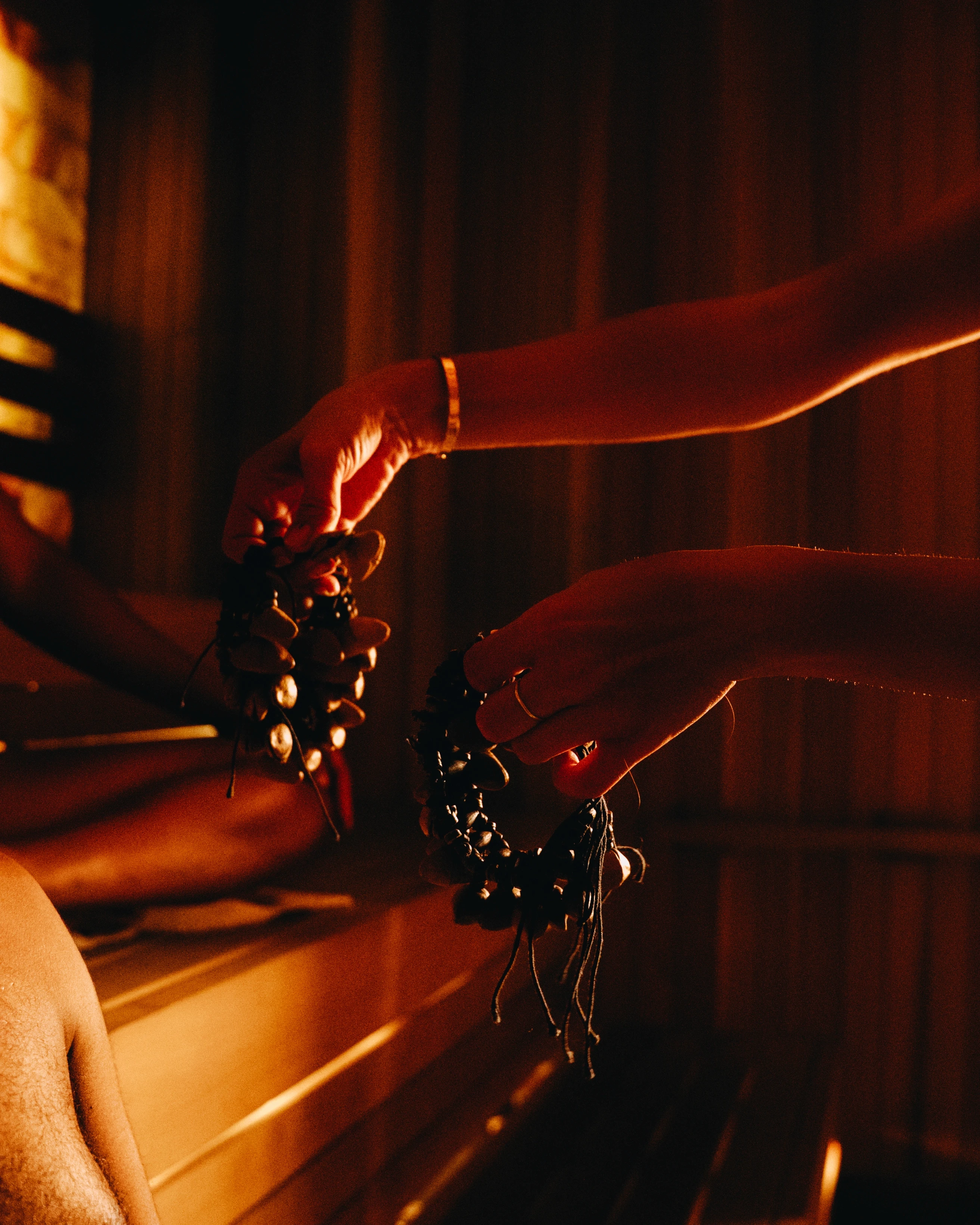
The question is not which is better. The question is: what are you looking for when you step into heat?

A wave of heat rolls over you. The scent of eucalyptus fills the air. In the darkness, you hear the rhythmic whoosh of a towel cutting through steam. This is Aufguss.
A wave of heat rolls over you. The scent of eucalyptus fills the air. In the darkness, you hear the rhythmic whoosh of a towel cutting through steam. This is Aufguss.
Your questions.
Answered.
Not sure what to expect? These answers might help you feel more confident as you begin.
Didn’t find your answer? Send us a message, we’ll respond with care and clarity.
What is a modern bathhouse?
A modern bathhouse keeps the architecture of the old idea, hot room, cold water, somewhere to rest, and lets the rhythm of the city around it shape the rest. Ours is built for Vancouver, on Davie Street, in the West End.
What is a modern bathhouse?
A modern bathhouse keeps the architecture of the old idea, hot room, cold water, somewhere to rest, and lets the rhythm of the city around it shape the rest. Ours is built for Vancouver, on Davie Street, in the West End.
Is the cold plunge at your bathhouse communal?
Is the cold plunge at your bathhouse communal?
Yes. Our cold pools are shared, with multiple temperature options so you can find one that meets you where you are. Communal plunging is part of what makes a bathhouse a bathhouse.
Is the bathhouse a welcoming space for the queer community?
Is the bathhouse a welcoming space for the queer community?
Yes. The West End is home to us and to our queer neighbours, and the bathhouse is built for everyone who walks in. We also host queer nights on a regular rotation, which you can find on the Classes calendar.
What's the etiquette inside the bathhouse?
What's the etiquette inside the bathhouse?
Phones stay in lockers. Voices stay low. Sit or lie on a towel inside the sauna, move at your own pace between rooms, and leave the space the way you'd want to find it. The room works because everyone in it is paying a little attention.
Do you offer Russian Banya at the bathhouse?
Do you offer Russian Banya at the bathhouse?
We run banya-inspired programming including venik work on select dates. The full ritual has its own page if you want to read about it before you book.
Do I need to book ahead, or can I walk in?
Do I need to book ahead, or can I walk in?
Walk-ins are welcome based on availability, but most guests book ahead through our app or website to lock in their preferred session time.
Your questions.
Answered.
Not sure what to expect? These answers might help you feel more confident as you begin.
What do I need to bring?
Please bring a bathing suit and a reusable water bottle. We provide two towels per guest, shower products, and secure lockers.
What do I need to bring?
Please bring a bathing suit and a reusable water bottle. We provide two towels per guest, shower products, and secure lockers.
Do I need a reservation?
Do I need a reservation?
Walk-ins are welcome, but we recommend booking through our app or website to check availability and join the waitlist.
Where can I park?
Where can I park?
Street parking is limited. We offer valet parking behind AetherHaus from 11:00–23:00. There is also some street parking available on Davie and nearby side streets.
What is Open Haus?
What is Open Haus?
Open Haus is a self-guided circuit through our saunas, plunge pools, and tea lounge. Our guides add essential oils to the stove throughout the day. The atmosphere shifts between silent, casual, and social, depending on the session.
What is your Haus Etiquette?
What is your Haus Etiquette?
Phones must be stored away. Please keep conversation soft, sit or lie on a towel, and move mindfully through the space. We ask that guests respect others’ experience and refrain from bringing outside food or drinks - complimentary tea is provided.
Can I visit if I am pregnant?
Can I visit if I am pregnant?
We advise against hot and cold therapy during pregnancy unless approved by your healthcare provider.
Didn’t find your answer? Send us a message, we’ll respond with care and clarity.
Your questions.
Answered.
Not sure what to expect? These answers might help you feel more confident as you begin.
Didn’t find your answer? Send us a message, we’ll respond with care and clarity.
What is a modern bathhouse?
A modern bathhouse keeps the architecture of the old idea, hot room, cold water, somewhere to rest, and lets the rhythm of the city around it shape the rest. Ours is built for Vancouver, on Davie Street, in the West End.
What is a modern bathhouse?
A modern bathhouse keeps the architecture of the old idea, hot room, cold water, somewhere to rest, and lets the rhythm of the city around it shape the rest. Ours is built for Vancouver, on Davie Street, in the West End.
Is the cold plunge at your bathhouse communal?
Is the cold plunge at your bathhouse communal?
Yes. Our cold pools are shared, with multiple temperature options so you can find one that meets you where you are. Communal plunging is part of what makes a bathhouse a bathhouse.
Is the bathhouse a welcoming space for the queer community?
Is the bathhouse a welcoming space for the queer community?
Yes. The West End is home to us and to our queer neighbours, and the bathhouse is built for everyone who walks in. We also host queer nights on a regular rotation, which you can find on the Classes calendar.
What's the etiquette inside the bathhouse?
What's the etiquette inside the bathhouse?
Phones stay in lockers. Voices stay low. Sit or lie on a towel inside the sauna, move at your own pace between rooms, and leave the space the way you'd want to find it. The room works because everyone in it is paying a little attention.
Do you offer Russian Banya at the bathhouse?
Do you offer Russian Banya at the bathhouse?
We run banya-inspired programming including venik work on select dates. The full ritual has its own page if you want to read about it before you book.
Do I need to book ahead, or can I walk in?
Do I need to book ahead, or can I walk in?
Walk-ins are welcome based on availability, but most guests book ahead through our app or website to lock in their preferred session time.