Sauna Rituals: Culture, Science, and the Case for Forgetting the Timer
Sauna Rituals: Culture, Science, and the Case for Forgetting the Timer
Sauna rituals are centuries-old cultural practices of cycling between heat, cold, and rest. Found across Finnish, Russian, German, Turkish, and Japanese traditions, they are rooted in community, presence, and physical restoration.
Sauna rituals are centuries-old cultural practices of cycling between heat, cold, and rest. Found across Finnish, Russian, German, Turkish, and Japanese traditions, they are rooted in community, presence, and physical restoration.
Published on:
Published on:
In 2020, UNESCO inscribed Finnish sauna culture on its Representative List of the Intangible Cultural Heritage of Humanity (UNESCO, 2020). That decision was not about temperature protocols or recovery metrics. It was about recognizing something that cultures around the world have understood for centuries: heat, water, and human connection can restore something essential.
These traditions existed long before anyone measured heart rate variability or counted heat shock proteins. They survived because people felt something in the heat that mattered.
As someone who has spent more than a decade guiding people through heat and cold, I have seen this firsthand. The research is real and worth understanding. But the most important thing you can bring into a sauna is not a timer. It is your attention.
This guide explores the world's major sauna rituals, what modern research reveals about their effects, and why the traditions that have endured the longest were never built on protocols.
The World's Major Sauna Rituals
Sauna culture is not a single tradition. It is a family of practices that developed independently across continents, each shaped by climate, spirituality, and community needs. What connects them is a shared understanding: the body knows how to heal when given the right conditions.
Finnish Loyly: The Spirit of Steam
The Finnish word loyly refers to the steam that rises when water is poured over heated stones. It translates roughly to "spirit" or "breath." This is not metaphorical. For Finns, the steam itself is the experience.
The core of Finnish sauna culture is the thermic cycle: heat, cold, rest, repeat. Bathers enter a dry sauna heated to between 80 and 100 degrees Celsius, pour water over the kiuas (stove), and sit in the rising steam. After a period in the heat, they cool down in a lake, shower, or snowbank. Then they rest. Then they return.
The vihta (or vasta, depending on the region) is a bundle of fresh birch branches used to gently brush the skin during a sauna session. This practice stimulates circulation and carries a distinctly earthy, green scent that many Finns describe as the smell of summer.
Finland has approximately 3.2 million saunas for a population of 5.5 million people. Nearly 90 percent of the Finnish population saunas at least once a week (Finnish Heritage Agency, 2020). Historically, the sauna served as a place of birth, healing, and preparation of the dead. It was the first structure built when establishing a homestead.
UNESCO recognized this tradition in December 2020, making it Finland's first element on the Intangible Cultural Heritage list. Estonia's smoke sauna tradition of Vorumaa received similar recognition in 2013 (UNESCO, 2013).
The Russian Banya: Steam, Community, and Surrender
The Russian banya is a steam bath tradition built on intensity and communal bonding. Where Finnish saunas tend toward dry heat, the banya embraces high humidity, dense steam, and a more vigorous physical element.
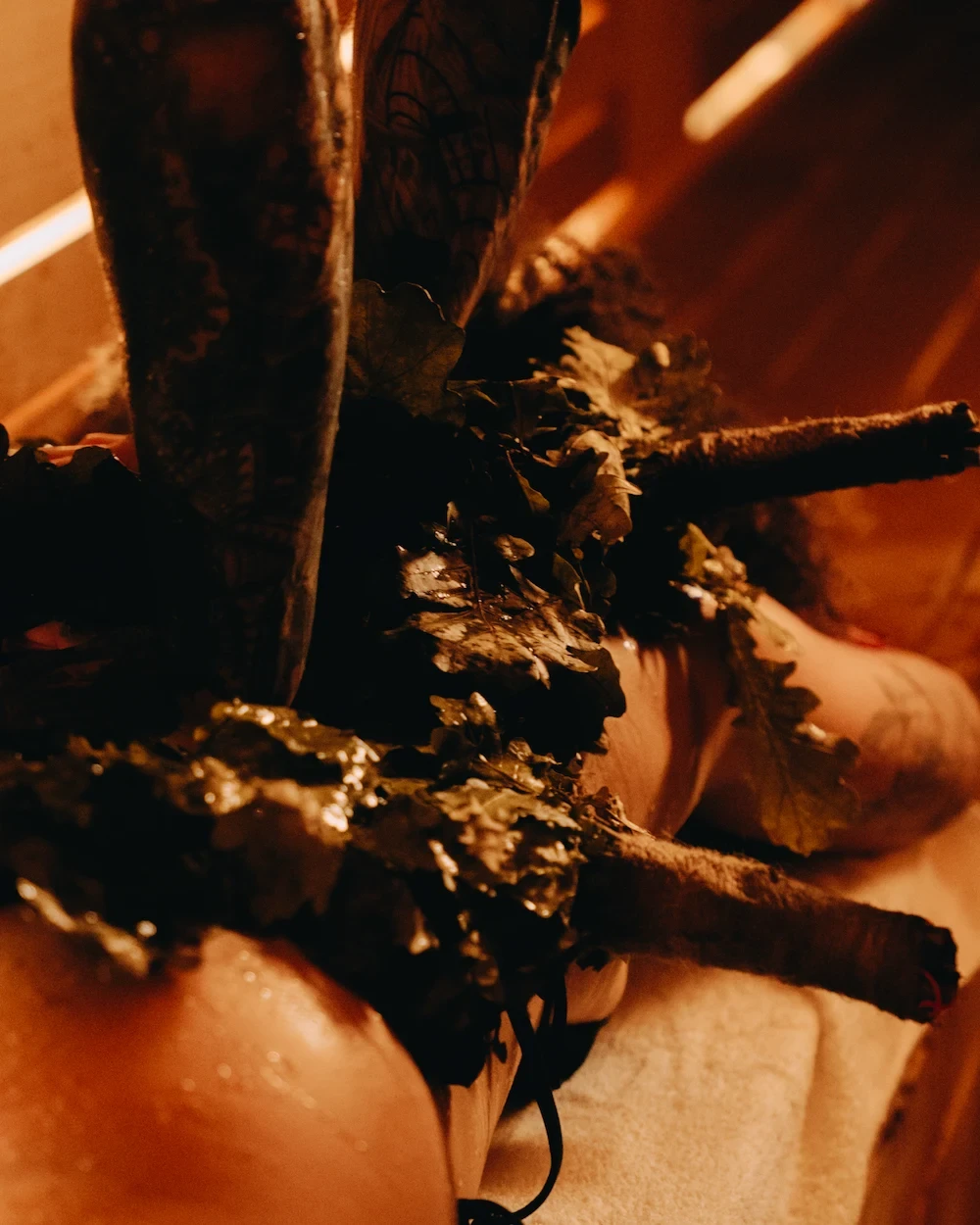
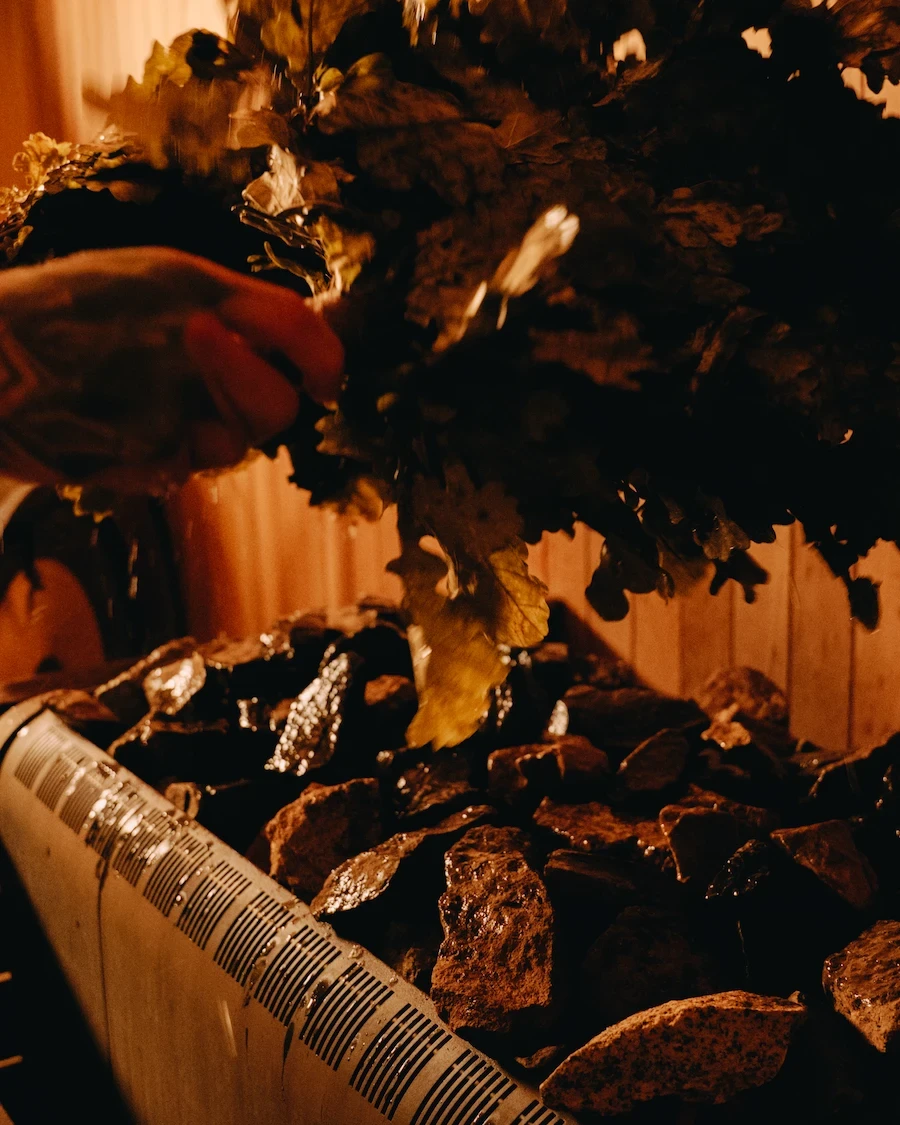
At the heart of the banya is the venik massage. Bundles of birch, oak, or eucalyptus branches are soaked in hot water and used to rhythmically beat and sweep the body. This is not punishment. It is a form of deep circulatory stimulation, opening the pores and releasing tension from the muscles. A skilled banshchik (banya attendant) can turn a venik session into something between a massage and a meditation.
Banya culture is deeply social. Conversations happen between rounds. Laughter echoes off the walls. Tea is shared in the cooling room. The experience is as much about the people beside you as it is about the heat.
At AetherHaus, our roots draw directly from Slavic and banya traditions. We offer private banya experiences with venik massage for those who want to feel this practice in its full expression. For a deeper look at where this tradition comes from, explore our guide to Russian banya culture and how it compares to other European heat traditions in our banya vs aufguss breakdown.
German Aufguss: Sauna as Sensory Art
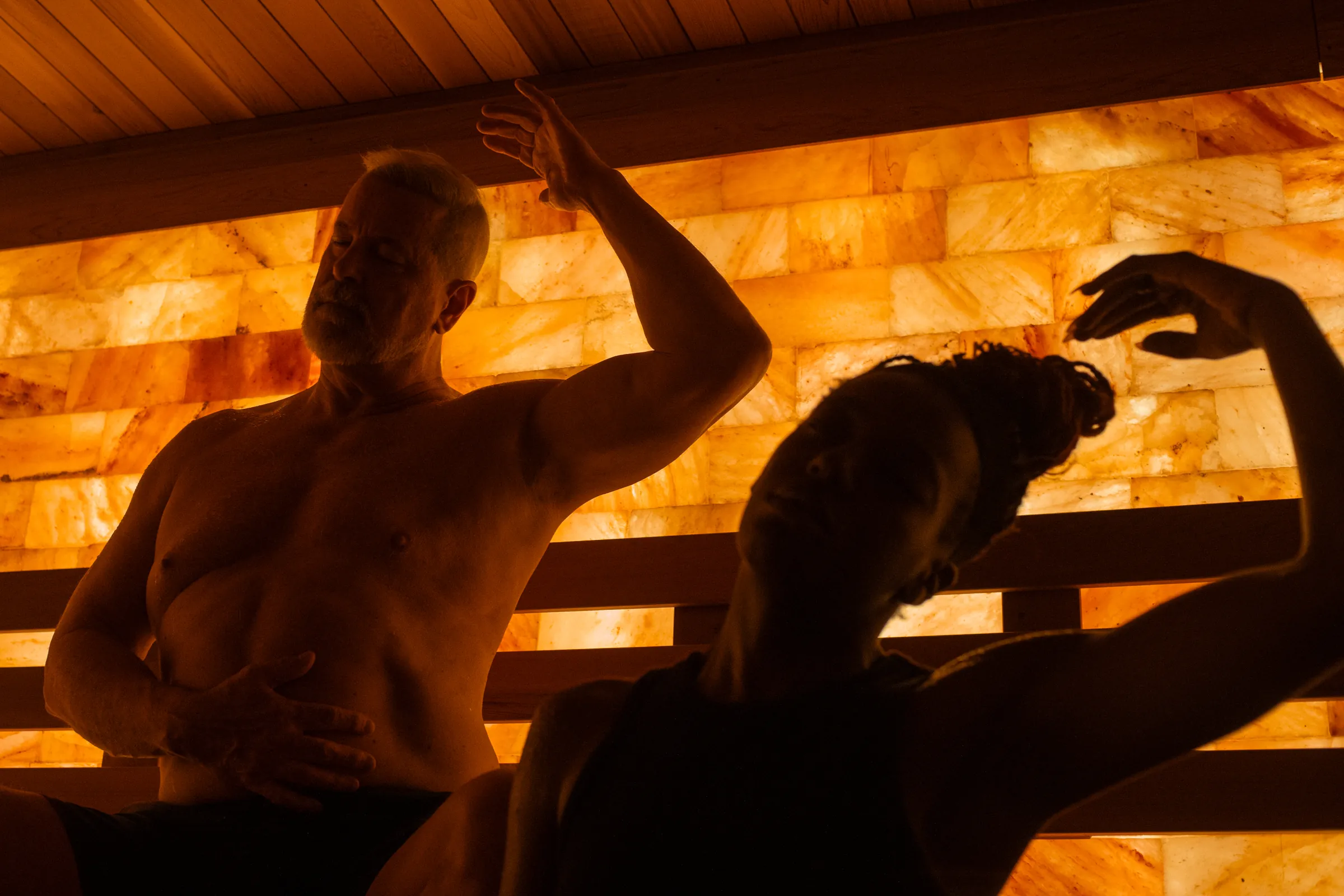
Aufguss is a German sauna ceremony where an Aufgussmeister (infusion master) pours water infused with essential oils over heated stones, then uses rhythmic towel movements to distribute waves of steam throughout the room. The result is a multi-sensory experience that blends heat, aroma, movement, and often music into something closer to performance art than passive bathing.
In traditional German saunas, Aufguss is a communal event. Bathers gather for a scheduled session, the Aufgussmeister takes the stage, and the room transforms. International Aufguss competitions now draw performers from across Europe, judged on technique, creativity, and audience experience.
At AetherHaus, we practise Aufguss every session night. Our approach draws from the German tradition but carries its own rhythm. We perform in darkness. The music leans psychedelic and ambient. Breathwork is woven into the heat waves. Aroma diffusion shifts with each round.
In my experience, the most powerful moments in an Aufguss are not the hottest. They are the quietest. When the towel pauses, the room holds its breath, and something shifts. That is where the ritual lives.
For a deeper understanding of this tradition, read our guide on what is Aufguss, or learn more about the path to becoming a certified practitioner in our article on Aufguss training.
Other Global Traditions Worth Knowing
Sauna rituals extend far beyond Northern and Eastern Europe. Each of these traditions carries its own philosophy and practice.
Turkish Hammam centres on cleansing and purification. Bathers move through marble rooms of increasing temperature, receive a full-body scrub with a kessa glove and black soap, and finish with cool water. Rooted in Islamic bathing culture and Ottoman architecture, the hammam is as much about hygiene as it is about spiritual renewal.
Japanese Onsen are natural hot springs heated by volcanic activity. Etiquette is central: bathers wash thoroughly before entering, maintain quiet, and respect the stillness of the space. The practice emphasizes purity, nature, and simplicity.
Korean Jjimjilbang are large public bathhouses with multiple temperature rooms, body scrubs, communal sleeping areas, and food. They function as social hubs where families and friends spend hours together.
Temazcal is a Mesoamerican sweat lodge used for spiritual purification and healing across Indigenous Mexican and Central American traditions. Guided by a temazcalero, the ceremony uses volcanic stones, herbal infusions, and prayer.
What connects all these traditions is not temperature or duration. It is the shared understanding that heat, water, and community can restore something essential in the body and between people.
What the Research Shows About Sauna Rituals
The science of sauna bathing has grown significantly over the past decade. Much of the strongest evidence comes from Finland, where large-scale population studies have tracked sauna habits across decades. Here is what the data reveals.
Cardiovascular and Mortality Research
The most widely cited sauna study followed 2,315 Finnish men over a median of 20.7 years. Researchers at the University of Eastern Finland found that men who used the sauna four to seven times per week had a 63 percent lower risk of sudden cardiac death and a 40 percent reduction in all-cause mortality compared to men who used the sauna once per week (JAMA Internal Medicine, 2015).
A 2018 follow-up study expanded the population to include women. Researchers tracked 1,688 participants (51.4 percent women) over 15 years and found that both frequency and duration of sauna bathing were independently linked to reduced cardiovascular mortality (BMC Medicine, 2018).
A comprehensive review published in the Mayo Clinic Proceedings synthesized the evidence across multiple studies. The authors reported that sauna bathing is associated with reduced risk of hypertension, stroke, cardiovascular disease, and neurocognitive disease. The dementia findings were particularly notable: men with four to seven weekly sauna sessions had a 66 percent lower risk of dementia and a 65 percent lower risk of Alzheimer disease compared to those with one session per week (Mayo Clinic Proceedings, 2018).
Mental Health, Pain, and Immune Function
The research extends beyond cardiovascular outcomes. A systematic review of 40 clinical studies involving 3,855 participants found that regular dry sauna bathing was associated with benefits for rheumatic diseases, including ankylosing spondylitis, fibromyalgia, and chronic pain syndromes, as well as improvements in exercise performance and chronic fatigue (PMC, 2018).
A 2024 study from Lulea University in northern Sweden surveyed 1,180 adults and found that regular sauna bathers reported lower incidence of high blood pressure, less physical pain, higher satisfaction with sleep, better mental health, and more energy. Interestingly, the benefits were most evident at a frequency of one to four times per month, suggesting that more is not always better (International Journal of Circumpolar Health, 2024).
Emerging research from UCSF has begun exploring sauna and heat therapy as a treatment for clinical depression. Researchers found that people with depression tend to have higher resting body temperatures and theorize that heat therapy may trigger a rebound cooling effect that supports mood regulation (Global Wellness Institute, 2024).
A randomized controlled trial also found that adding regular sauna sessions after exercise supplemented improvements in cardiorespiratory fitness, reduced systolic blood pressure, and lowered total cholesterol more than exercise alone (American Journal of Physiology, 2022).
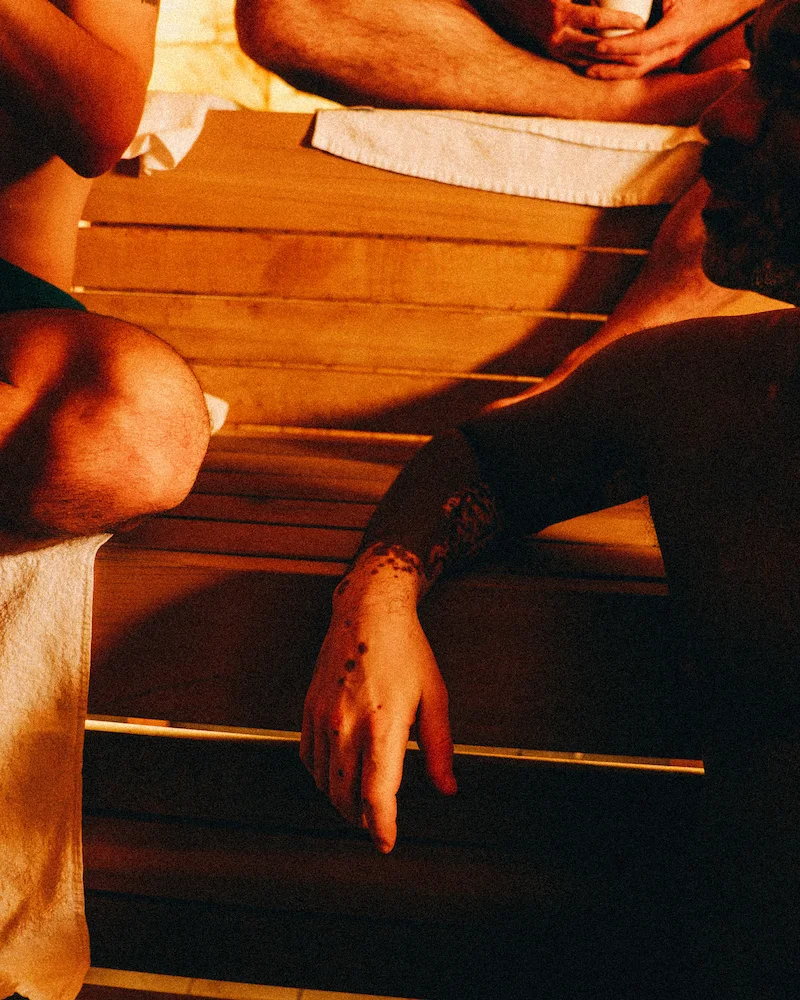
And Here Is What We Think You Should Do With All of This
The numbers above are real. The research is compelling. If you read those studies and feel motivated by the data, that is completely valid.
But here is what we have learned from actually being in the heat, night after night, guiding hundreds of people through sauna rituals: the research tells you what happens to populations over decades. Your body tells you what is happening right now.
I was diagnosed with ankylosing spondylitis at 15. My father has the same condition. His spine is fully fused. I spent my childhood watching him navigate pain while raising a family. By my mid-20s, my own pain was unbearable. I found the Wim Hof Method out of desperation, flew to Spain for a training expedition, and came home to Vancouver where I started doing ice baths every second day in my tiny apartment using 50 ice trays.
What they taught us at the Wim Hof camp was that it was not about time. It was about sensation and feeling. With an autoimmune condition, you have to be mindful of where your nervous system is at each day. Some days I was in the cold for 30 seconds. Other days, several minutes. I never measured the temperature. The goal was simply to get cold enough that the body felt a gentle stress, enough for thermal regulation to do its work.
After eight months, my pain was decreasing while my energy levels increased. Eventually, I was able to get off my immunosuppressant medication entirely. I could snowboard again, work out again, climb mountains again.
I share this not as a protocol. I share it because the research on ankylosing spondylitis and sauna bathing exists (PMC, 2018). And so does the lived experience of someone who used these practices to reclaim his life without ever looking at a timer.
The Swedish study I mentioned earlier found that benefits plateaued around one to four sessions per month. Your body already knows this. Not every practice needs to be maximized. Not every session needs to be tracked.
These practices do not need to become another thing you are "doing right" or tracking in an app. There is no perfect duration. Your body will tell you when it is time.
For a deeper exploration of hot and cold cycling, visit our guide on contrast therapy.
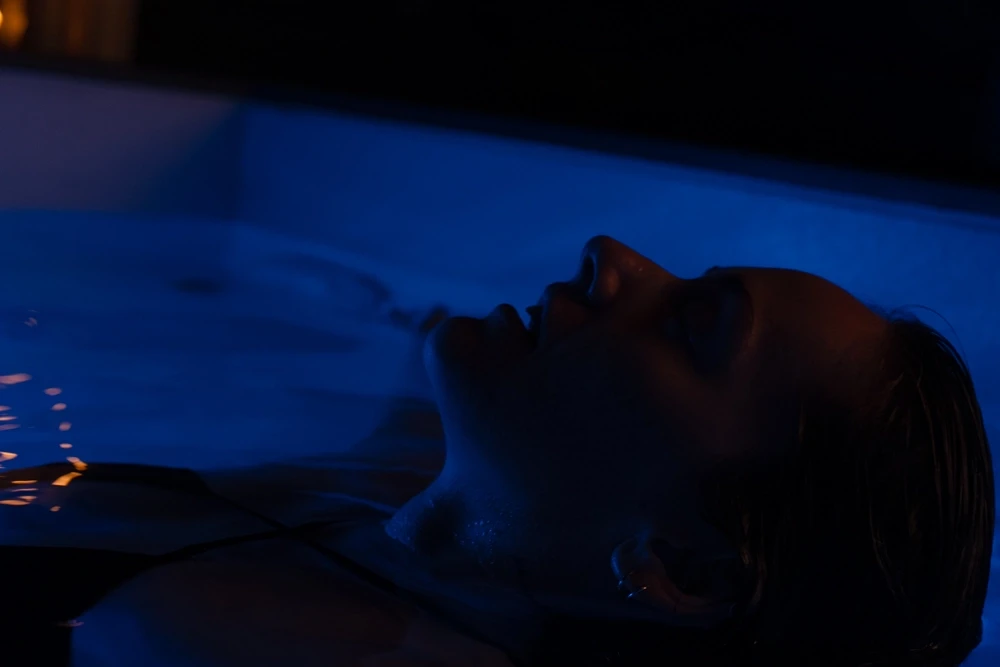
The Thermic Cycle: The Rhythm Beneath Every Sauna Ritual
Beneath every sauna tradition, from Finland to Japan, lies the same fundamental rhythm: heat, cold, rest, repeat. This pattern is called the thermic cycle, and it is the oldest recovery protocol on earth.
Every culture has its own version. Finns plunge into frozen lakes. Russians roll in snow. Germans cool in outdoor air. Japanese bathers rinse under cold streams between onsen soaks. The mechanism is the same: expose the body to heat, contract it with cold, and let it rest in the space between.
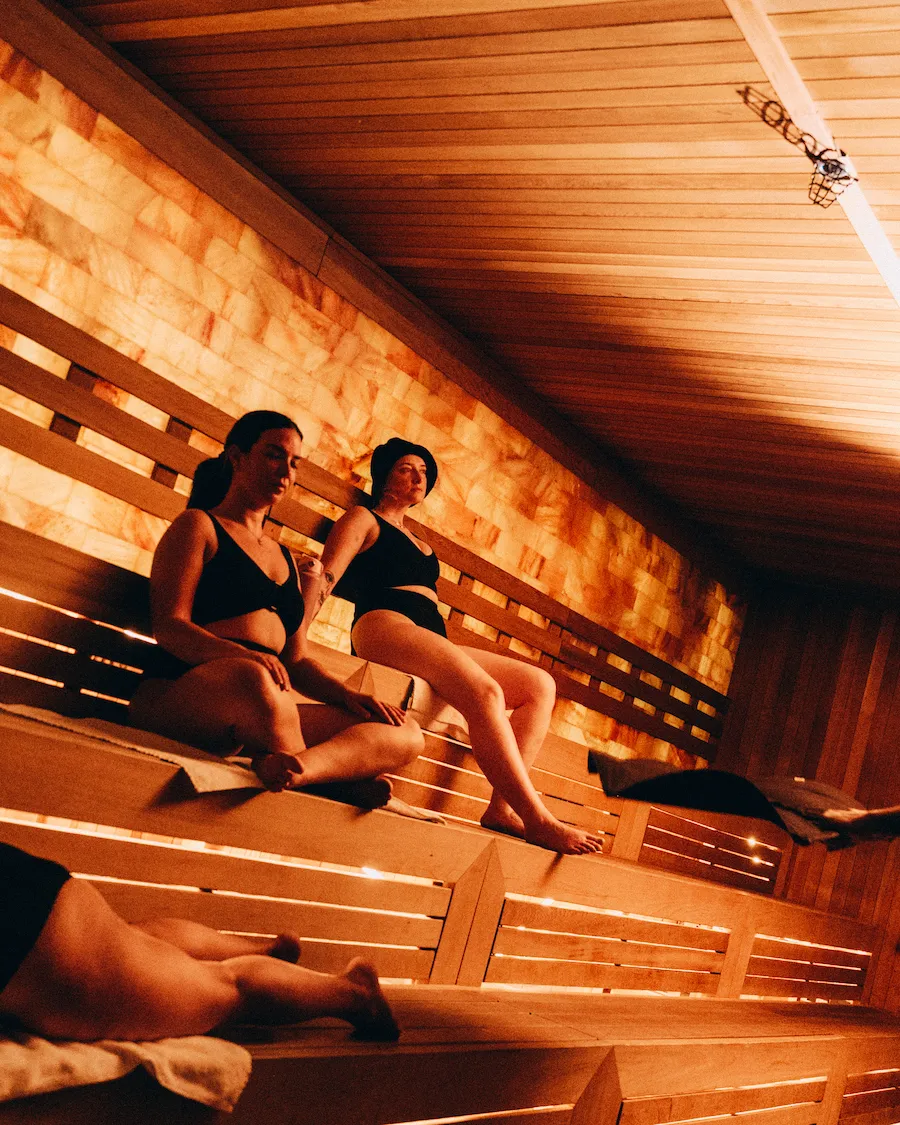
At AetherHaus, the cycle moves through our Himalayan salt sauna, into the cold plunge pools, and out to the tea lounge and library. This is the rhythm of every session we offer.
Here is what the cycle feels like when you let your body lead:
Heat. Enter the sauna. Let the warmth arrive gradually. When your body begins to feel a gentle challenge, not panic, not comfort, somewhere between, you are in the right place.
Cold. Step into the cold plunge. The initial shock will pass. Stay present with your breath. Exit when your body signals readiness, not when a timer dictates.
Rest. This is where the integration happens. Sit. Breathe. Let the body recalibrate. Many people report that this phase is where they feel the most profound shift.
Repeat. If it feels right, return to the heat. If it does not, honour that.
This is not about optimization. It is about presence.
If you are new to cold exposure, our guide on how to do your first cold plunge safely walks you through the experience with the same sensation-based approach.
How to Build Your Own Sauna Ritual
You do not need a script. You do not need an app. You need a willingness to listen.
Here are the principles we return to when guiding people through their first sauna experiences at AetherHaus:
Start with intention, not a stopwatch. Before you enter the heat, take a breath. Notice where you are. Set aside whatever you were carrying before you walked in.
Follow the thermic cycle. Heat, cold, rest. The pattern is ancient for a reason.
Listen before you measure. Your body is more precise than any protocol. If something feels like too much, it probably is. If you feel drawn to stay longer, trust that.
Add elements that ground you. Essential oils. Music. Silence. A cup of tea between rounds. These are not extras. They are part of the ritual.
Make it communal when you can. Sauna rituals across every culture share one thing: they are richer with others present.
Release the need to do it right. There is no optimal protocol. There is only your experience today.
In my experience guiding hundreds of people through their first sauna sessions, the ones who let go of the numbers and tune into sensation always leave with something deeper. The ones who spend the session watching the clock tend to miss it.
For breathwork techniques that complement sauna rituals, explore our guide on breathwork for cold plunge.
If you would like to experience these traditions guided by practitioners who live them, explore our sessions at AetherHaus on Davie Street in Vancouver.
Frequently Asked Questions
What is the most common sauna ritual in the world?
The Finnish sauna tradition is the most widely practised. Finland has approximately 3.2 million saunas for a population of 5.5 million people, and nearly 90 percent of Finns sauna at least once a week (UNESCO, 2020). The core ritual involves cycling between heat, cold water or fresh air, and rest.
What is an Aufguss sauna ritual?
Aufguss is a German sauna ceremony where an Aufgussmeister pours water infused with essential oils over heated stones, then uses rhythmic towel movements to distribute steam throughout the room. It combines heat, aroma, and often music into a multi-sensory experience. Learn more in our guide on what is Aufguss.
Are sauna rituals safe for beginners?
Sauna rituals are generally safe for healthy adults. The most important guideline is to listen to your body and exit when you feel ready. Stay hydrated before, during, and after. If you have a cardiovascular condition or are pregnant, consult your healthcare provider first.
Do I need to follow a specific protocol for sauna health benefits?
Research suggests that regular sauna use is associated with health benefits, but no single optimal protocol has been established (Mayo Clinic Proceedings, 2018). The traditions that have endured for centuries rely on sensation and intuition, not timers.
What is the thermic cycle in sauna bathing?
The thermic cycle is the traditional pattern of moving between heat, cold, rest, and rehydration. This cycle forms the foundation of sauna rituals across Finnish, Russian, German, and many other traditions. Read more in our guide on contrast therapy.
Can sauna rituals help with chronic pain?
A systematic review of 40 clinical studies found that regular sauna bathing may benefit people with rheumatic diseases such as fibromyalgia, rheumatoid arthritis, and ankylosing spondylitis, as well as chronic pain and fatigue syndromes (PMC, 2018). Always consult a healthcare provider for your specific condition.
What is the difference between a banya and a Finnish sauna?
The Russian banya typically uses higher humidity and more intense steam than the dry Finnish sauna. Banya culture also centres on the venik massage, a practice of rhythmic brushing with birch or oak branches, and is traditionally a deeply social, communal experience. Explore the full comparison in our article on banya vs sauna.
Key Takeaways
Sauna rituals are ancient cultural practices, not modern trends, spanning Finnish, Russian, German, Turkish, Japanese, and Mesoamerican traditions. Finnish sauna culture earned UNESCO Intangible Cultural Heritage recognition in 2020.
A landmark 20-year Finnish study found that frequent sauna use was associated with a 63 percent lower risk of sudden cardiac death and a 40 percent reduction in all-cause mortality (JAMA Internal Medicine, 2015).
Additional research links regular sauna bathing to reduced risk of dementia, improved cardiovascular function, less chronic pain, and better mental health.
The most enduring sauna traditions worldwide are built on sensation and intuition, not timers, temperatures, or prescriptive protocols.
The thermic cycle, heat, cold, rest, rehydrate, repeat, is the universal rhythm connecting all major sauna traditions.
Experience Sauna Rituals at AetherHaus
Reading about sauna rituals is one thing. Feeling them is another.
At AetherHaus on Davie Street in Vancouver, we bring these traditions to life every night. Our Himalayan salt sauna, cold plunge pools, and tea lounge create the space. Our guides, trained in Aufguss, banya, breathwork, and sound, hold the ritual.
Whether it is your first time in a sauna or your thousandth, you are welcome here.
In 2020, UNESCO inscribed Finnish sauna culture on its Representative List of the Intangible Cultural Heritage of Humanity (UNESCO, 2020). That decision was not about temperature protocols or recovery metrics. It was about recognizing something that cultures around the world have understood for centuries: heat, water, and human connection can restore something essential.
These traditions existed long before anyone measured heart rate variability or counted heat shock proteins. They survived because people felt something in the heat that mattered.
As someone who has spent more than a decade guiding people through heat and cold, I have seen this firsthand. The research is real and worth understanding. But the most important thing you can bring into a sauna is not a timer. It is your attention.
This guide explores the world's major sauna rituals, what modern research reveals about their effects, and why the traditions that have endured the longest were never built on protocols.
The World's Major Sauna Rituals
Sauna culture is not a single tradition. It is a family of practices that developed independently across continents, each shaped by climate, spirituality, and community needs. What connects them is a shared understanding: the body knows how to heal when given the right conditions.
Finnish Loyly: The Spirit of Steam
The Finnish word loyly refers to the steam that rises when water is poured over heated stones. It translates roughly to "spirit" or "breath." This is not metaphorical. For Finns, the steam itself is the experience.
The core of Finnish sauna culture is the thermic cycle: heat, cold, rest, repeat. Bathers enter a dry sauna heated to between 80 and 100 degrees Celsius, pour water over the kiuas (stove), and sit in the rising steam. After a period in the heat, they cool down in a lake, shower, or snowbank. Then they rest. Then they return.
The vihta (or vasta, depending on the region) is a bundle of fresh birch branches used to gently brush the skin during a sauna session. This practice stimulates circulation and carries a distinctly earthy, green scent that many Finns describe as the smell of summer.
Finland has approximately 3.2 million saunas for a population of 5.5 million people. Nearly 90 percent of the Finnish population saunas at least once a week (Finnish Heritage Agency, 2020). Historically, the sauna served as a place of birth, healing, and preparation of the dead. It was the first structure built when establishing a homestead.
UNESCO recognized this tradition in December 2020, making it Finland's first element on the Intangible Cultural Heritage list. Estonia's smoke sauna tradition of Vorumaa received similar recognition in 2013 (UNESCO, 2013).
The Russian Banya: Steam, Community, and Surrender
The Russian banya is a steam bath tradition built on intensity and communal bonding. Where Finnish saunas tend toward dry heat, the banya embraces high humidity, dense steam, and a more vigorous physical element.
At the heart of the banya is the venik massage. Bundles of birch, oak, or eucalyptus branches are soaked in hot water and used to rhythmically beat and sweep the body. This is not punishment. It is a form of deep circulatory stimulation, opening the pores and releasing tension from the muscles. A skilled banshchik (banya attendant) can turn a venik session into something between a massage and a meditation.
Banya culture is deeply social. Conversations happen between rounds. Laughter echoes off the walls. Tea is shared in the cooling room. The experience is as much about the people beside you as it is about the heat.
At AetherHaus, our roots draw directly from Slavic and banya traditions. We offer private banya experiences with venik massage for those who want to feel this practice in its full expression. For a deeper look at where this tradition comes from, explore our guide to Russian banya culture and how it compares to other European heat traditions in our banya vs aufguss breakdown.
German Aufguss: Sauna as Sensory Art
Aufguss is a German sauna ceremony where an Aufgussmeister (infusion master) pours water infused with essential oils over heated stones, then uses rhythmic towel movements to distribute waves of steam throughout the room. The result is a multi-sensory experience that blends heat, aroma, movement, and often music into something closer to performance art than passive bathing.
In traditional German saunas, Aufguss is a communal event. Bathers gather for a scheduled session, the Aufgussmeister takes the stage, and the room transforms. International Aufguss competitions now draw performers from across Europe, judged on technique, creativity, and audience experience.
At AetherHaus, we practise Aufguss every session night. Our approach draws from the German tradition but carries its own rhythm. We perform in darkness. The music leans psychedelic and ambient. Breathwork is woven into the heat waves. Aroma diffusion shifts with each round.
In my experience, the most powerful moments in an Aufguss are not the hottest. They are the quietest. When the towel pauses, the room holds its breath, and something shifts. That is where the ritual lives.
For a deeper understanding of this tradition, read our guide on what is Aufguss, or learn more about the path to becoming a certified practitioner in our article on Aufguss training.
Other Global Traditions Worth Knowing
Sauna rituals extend far beyond Northern and Eastern Europe. Each of these traditions carries its own philosophy and practice.
Turkish Hammam centres on cleansing and purification. Bathers move through marble rooms of increasing temperature, receive a full-body scrub with a kessa glove and black soap, and finish with cool water. Rooted in Islamic bathing culture and Ottoman architecture, the hammam is as much about hygiene as it is about spiritual renewal.
Japanese Onsen are natural hot springs heated by volcanic activity. Etiquette is central: bathers wash thoroughly before entering, maintain quiet, and respect the stillness of the space. The practice emphasizes purity, nature, and simplicity.
Korean Jjimjilbang are large public bathhouses with multiple temperature rooms, body scrubs, communal sleeping areas, and food. They function as social hubs where families and friends spend hours together.
Temazcal is a Mesoamerican sweat lodge used for spiritual purification and healing across Indigenous Mexican and Central American traditions. Guided by a temazcalero, the ceremony uses volcanic stones, herbal infusions, and prayer.
What connects all these traditions is not temperature or duration. It is the shared understanding that heat, water, and community can restore something essential in the body and between people.
What the Research Shows About Sauna Rituals
The science of sauna bathing has grown significantly over the past decade. Much of the strongest evidence comes from Finland, where large-scale population studies have tracked sauna habits across decades. Here is what the data reveals.
Cardiovascular and Mortality Research
The most widely cited sauna study followed 2,315 Finnish men over a median of 20.7 years. Researchers at the University of Eastern Finland found that men who used the sauna four to seven times per week had a 63 percent lower risk of sudden cardiac death and a 40 percent reduction in all-cause mortality compared to men who used the sauna once per week (JAMA Internal Medicine, 2015).
A 2018 follow-up study expanded the population to include women. Researchers tracked 1,688 participants (51.4 percent women) over 15 years and found that both frequency and duration of sauna bathing were independently linked to reduced cardiovascular mortality (BMC Medicine, 2018).
A comprehensive review published in the Mayo Clinic Proceedings synthesized the evidence across multiple studies. The authors reported that sauna bathing is associated with reduced risk of hypertension, stroke, cardiovascular disease, and neurocognitive disease. The dementia findings were particularly notable: men with four to seven weekly sauna sessions had a 66 percent lower risk of dementia and a 65 percent lower risk of Alzheimer disease compared to those with one session per week (Mayo Clinic Proceedings, 2018).
Mental Health, Pain, and Immune Function
The research extends beyond cardiovascular outcomes. A systematic review of 40 clinical studies involving 3,855 participants found that regular dry sauna bathing was associated with benefits for rheumatic diseases, including ankylosing spondylitis, fibromyalgia, and chronic pain syndromes, as well as improvements in exercise performance and chronic fatigue (PMC, 2018).
A 2024 study from Lulea University in northern Sweden surveyed 1,180 adults and found that regular sauna bathers reported lower incidence of high blood pressure, less physical pain, higher satisfaction with sleep, better mental health, and more energy. Interestingly, the benefits were most evident at a frequency of one to four times per month, suggesting that more is not always better (International Journal of Circumpolar Health, 2024).
Emerging research from UCSF has begun exploring sauna and heat therapy as a treatment for clinical depression. Researchers found that people with depression tend to have higher resting body temperatures and theorize that heat therapy may trigger a rebound cooling effect that supports mood regulation (Global Wellness Institute, 2024).
A randomized controlled trial also found that adding regular sauna sessions after exercise supplemented improvements in cardiorespiratory fitness, reduced systolic blood pressure, and lowered total cholesterol more than exercise alone (American Journal of Physiology, 2022).
And Here Is What We Think You Should Do With All of This
The numbers above are real. The research is compelling. If you read those studies and feel motivated by the data, that is completely valid.
But here is what we have learned from actually being in the heat, night after night, guiding hundreds of people through sauna rituals: the research tells you what happens to populations over decades. Your body tells you what is happening right now.
I was diagnosed with ankylosing spondylitis at 15. My father has the same condition. His spine is fully fused. I spent my childhood watching him navigate pain while raising a family. By my mid-20s, my own pain was unbearable. I found the Wim Hof Method out of desperation, flew to Spain for a training expedition, and came home to Vancouver where I started doing ice baths every second day in my tiny apartment using 50 ice trays.
What they taught us at the Wim Hof camp was that it was not about time. It was about sensation and feeling. With an autoimmune condition, you have to be mindful of where your nervous system is at each day. Some days I was in the cold for 30 seconds. Other days, several minutes. I never measured the temperature. The goal was simply to get cold enough that the body felt a gentle stress, enough for thermal regulation to do its work.
After eight months, my pain was decreasing while my energy levels increased. Eventually, I was able to get off my immunosuppressant medication entirely. I could snowboard again, work out again, climb mountains again.
I share this not as a protocol. I share it because the research on ankylosing spondylitis and sauna bathing exists (PMC, 2018). And so does the lived experience of someone who used these practices to reclaim his life without ever looking at a timer.
The Swedish study I mentioned earlier found that benefits plateaued around one to four sessions per month. Your body already knows this. Not every practice needs to be maximized. Not every session needs to be tracked.
These practices do not need to become another thing you are "doing right" or tracking in an app. There is no perfect duration. Your body will tell you when it is time.
For a deeper exploration of hot and cold cycling, visit our guide on contrast therapy.
The Thermic Cycle: The Rhythm Beneath Every Sauna Ritual
Beneath every sauna tradition, from Finland to Japan, lies the same fundamental rhythm: heat, cold, rest, repeat. This pattern is called the thermic cycle, and it is the oldest recovery protocol on earth.
Every culture has its own version. Finns plunge into frozen lakes. Russians roll in snow. Germans cool in outdoor air. Japanese bathers rinse under cold streams between onsen soaks. The mechanism is the same: expose the body to heat, contract it with cold, and let it rest in the space between.
At AetherHaus, the cycle moves through our Himalayan salt sauna, into the cold plunge pools, and out to the tea lounge and library. This is the rhythm of every session we offer.
Here is what the cycle feels like when you let your body lead:
Heat. Enter the sauna. Let the warmth arrive gradually. When your body begins to feel a gentle challenge, not panic, not comfort, somewhere between, you are in the right place.
Cold. Step into the cold plunge. The initial shock will pass. Stay present with your breath. Exit when your body signals readiness, not when a timer dictates.
Rest. This is where the integration happens. Sit. Breathe. Let the body recalibrate. Many people report that this phase is where they feel the most profound shift.
Repeat. If it feels right, return to the heat. If it does not, honour that.
This is not about optimization. It is about presence.
If you are new to cold exposure, our guide on how to do your first cold plunge safely walks you through the experience with the same sensation-based approach.
How to Build Your Own Sauna Ritual
You do not need a script. You do not need an app. You need a willingness to listen.
Here are the principles we return to when guiding people through their first sauna experiences at AetherHaus:
Start with intention, not a stopwatch. Before you enter the heat, take a breath. Notice where you are. Set aside whatever you were carrying before you walked in.
Follow the thermic cycle. Heat, cold, rest. The pattern is ancient for a reason.
Listen before you measure. Your body is more precise than any protocol. If something feels like too much, it probably is. If you feel drawn to stay longer, trust that.
Add elements that ground you. Essential oils. Music. Silence. A cup of tea between rounds. These are not extras. They are part of the ritual.
Make it communal when you can. Sauna rituals across every culture share one thing: they are richer with others present.
Release the need to do it right. There is no optimal protocol. There is only your experience today.
In my experience guiding hundreds of people through their first sauna sessions, the ones who let go of the numbers and tune into sensation always leave with something deeper. The ones who spend the session watching the clock tend to miss it.
For breathwork techniques that complement sauna rituals, explore our guide on breathwork for cold plunge.
If you would like to experience these traditions guided by practitioners who live them, explore our sessions at AetherHaus on Davie Street in Vancouver.
Frequently Asked Questions
What is the most common sauna ritual in the world?
The Finnish sauna tradition is the most widely practised. Finland has approximately 3.2 million saunas for a population of 5.5 million people, and nearly 90 percent of Finns sauna at least once a week (UNESCO, 2020). The core ritual involves cycling between heat, cold water or fresh air, and rest.
What is an Aufguss sauna ritual?
Aufguss is a German sauna ceremony where an Aufgussmeister pours water infused with essential oils over heated stones, then uses rhythmic towel movements to distribute steam throughout the room. It combines heat, aroma, and often music into a multi-sensory experience. Learn more in our guide on what is Aufguss.
Are sauna rituals safe for beginners?
Sauna rituals are generally safe for healthy adults. The most important guideline is to listen to your body and exit when you feel ready. Stay hydrated before, during, and after. If you have a cardiovascular condition or are pregnant, consult your healthcare provider first.
Do I need to follow a specific protocol for sauna health benefits?
Research suggests that regular sauna use is associated with health benefits, but no single optimal protocol has been established (Mayo Clinic Proceedings, 2018). The traditions that have endured for centuries rely on sensation and intuition, not timers.
What is the thermic cycle in sauna bathing?
The thermic cycle is the traditional pattern of moving between heat, cold, rest, and rehydration. This cycle forms the foundation of sauna rituals across Finnish, Russian, German, and many other traditions. Read more in our guide on contrast therapy.
Can sauna rituals help with chronic pain?
A systematic review of 40 clinical studies found that regular sauna bathing may benefit people with rheumatic diseases such as fibromyalgia, rheumatoid arthritis, and ankylosing spondylitis, as well as chronic pain and fatigue syndromes (PMC, 2018). Always consult a healthcare provider for your specific condition.
What is the difference between a banya and a Finnish sauna?
The Russian banya typically uses higher humidity and more intense steam than the dry Finnish sauna. Banya culture also centres on the venik massage, a practice of rhythmic brushing with birch or oak branches, and is traditionally a deeply social, communal experience. Explore the full comparison in our article on banya vs sauna.
Key Takeaways
Sauna rituals are ancient cultural practices, not modern trends, spanning Finnish, Russian, German, Turkish, Japanese, and Mesoamerican traditions. Finnish sauna culture earned UNESCO Intangible Cultural Heritage recognition in 2020.
A landmark 20-year Finnish study found that frequent sauna use was associated with a 63 percent lower risk of sudden cardiac death and a 40 percent reduction in all-cause mortality (JAMA Internal Medicine, 2015).
Additional research links regular sauna bathing to reduced risk of dementia, improved cardiovascular function, less chronic pain, and better mental health.
The most enduring sauna traditions worldwide are built on sensation and intuition, not timers, temperatures, or prescriptive protocols.
The thermic cycle, heat, cold, rest, rehydrate, repeat, is the universal rhythm connecting all major sauna traditions.
Experience Sauna Rituals at AetherHaus
Reading about sauna rituals is one thing. Feeling them is another.
At AetherHaus on Davie Street in Vancouver, we bring these traditions to life every night. Our Himalayan salt sauna, cold plunge pools, and tea lounge create the space. Our guides, trained in Aufguss, banya, breathwork, and sound, hold the ritual.
Whether it is your first time in a sauna or your thousandth, you are welcome here.
our Blog
our Blog
More insights
More insights
Explore more reflections, guidance, and practical tools to support you.
Explore more reflections, guidance, and practical tools to support you.
You step into the heat. The air is thick and still. Within a few breaths, your skin begins to flush, your shoulders soften, and a question quietly surfaces: is this the right temperature? It is a question almost everyone asks. And the answer is more interesting than a single number.
Stress does not just live in your thoughts. It settles into your shoulders, your jaw, the shallow rhythm of your breathing. It rewires your nervous system so that rest feels foreign and alertness becomes your default.
Stress does not just live in your thoughts. It settles into your shoulders, your jaw, the shallow rhythm of your breathing. It rewires your nervous system so that rest feels foreign and alertness becomes your default.
Your questions.
Answered.
Not sure what to expect? These answers might help you feel more confident as you begin.
Didn’t find your answer? Send us a message, we’ll respond with care and clarity.
What is a modern bathhouse?
A modern bathhouse keeps the architecture of the old idea, hot room, cold water, somewhere to rest, and lets the rhythm of the city around it shape the rest. Ours is built for Vancouver, on Davie Street, in the West End.
What is a modern bathhouse?
A modern bathhouse keeps the architecture of the old idea, hot room, cold water, somewhere to rest, and lets the rhythm of the city around it shape the rest. Ours is built for Vancouver, on Davie Street, in the West End.
Is the cold plunge at your bathhouse communal?
Is the cold plunge at your bathhouse communal?
Yes. Our cold pools are shared, with multiple temperature options so you can find one that meets you where you are. Communal plunging is part of what makes a bathhouse a bathhouse.
Is the bathhouse a welcoming space for the queer community?
Is the bathhouse a welcoming space for the queer community?
Yes. The West End is home to us and to our queer neighbours, and the bathhouse is built for everyone who walks in. We also host queer nights on a regular rotation, which you can find on the Classes calendar.
What's the etiquette inside the bathhouse?
What's the etiquette inside the bathhouse?
Phones stay in lockers. Voices stay low. Sit or lie on a towel inside the sauna, move at your own pace between rooms, and leave the space the way you'd want to find it. The room works because everyone in it is paying a little attention.
Do you offer Russian Banya at the bathhouse?
Do you offer Russian Banya at the bathhouse?
We run banya-inspired programming including venik work on select dates. The full ritual has its own page if you want to read about it before you book.
Do I need to book ahead, or can I walk in?
Do I need to book ahead, or can I walk in?
Walk-ins are welcome based on availability, but most guests book ahead through our app or website to lock in their preferred session time.
Your questions.
Answered.
Not sure what to expect? These answers might help you feel more confident as you begin.
What do I need to bring?
Please bring a bathing suit and a reusable water bottle. We provide two towels per guest, shower products, and secure lockers.
What do I need to bring?
Please bring a bathing suit and a reusable water bottle. We provide two towels per guest, shower products, and secure lockers.
Do I need a reservation?
Do I need a reservation?
Walk-ins are welcome, but we recommend booking through our app or website to check availability and join the waitlist.
Where can I park?
Where can I park?
Street parking is limited. We offer valet parking behind AetherHaus from 11:00–23:00. There is also some street parking available on Davie and nearby side streets.
What is Open Haus?
What is Open Haus?
Open Haus is a self-guided circuit through our saunas, plunge pools, and tea lounge. Our guides add essential oils to the stove throughout the day. The atmosphere shifts between silent, casual, and social, depending on the session.
What is your Haus Etiquette?
What is your Haus Etiquette?
Phones must be stored away. Please keep conversation soft, sit or lie on a towel, and move mindfully through the space. We ask that guests respect others’ experience and refrain from bringing outside food or drinks - complimentary tea is provided.
Can I visit if I am pregnant?
Can I visit if I am pregnant?
We advise against hot and cold therapy during pregnancy unless approved by your healthcare provider.
Didn’t find your answer? Send us a message, we’ll respond with care and clarity.
Your questions.
Answered.
Not sure what to expect? These answers might help you feel more confident as you begin.
Didn’t find your answer? Send us a message, we’ll respond with care and clarity.
What is a modern bathhouse?
A modern bathhouse keeps the architecture of the old idea, hot room, cold water, somewhere to rest, and lets the rhythm of the city around it shape the rest. Ours is built for Vancouver, on Davie Street, in the West End.
What is a modern bathhouse?
A modern bathhouse keeps the architecture of the old idea, hot room, cold water, somewhere to rest, and lets the rhythm of the city around it shape the rest. Ours is built for Vancouver, on Davie Street, in the West End.
Is the cold plunge at your bathhouse communal?
Is the cold plunge at your bathhouse communal?
Yes. Our cold pools are shared, with multiple temperature options so you can find one that meets you where you are. Communal plunging is part of what makes a bathhouse a bathhouse.
Is the bathhouse a welcoming space for the queer community?
Is the bathhouse a welcoming space for the queer community?
Yes. The West End is home to us and to our queer neighbours, and the bathhouse is built for everyone who walks in. We also host queer nights on a regular rotation, which you can find on the Classes calendar.
What's the etiquette inside the bathhouse?
What's the etiquette inside the bathhouse?
Phones stay in lockers. Voices stay low. Sit or lie on a towel inside the sauna, move at your own pace between rooms, and leave the space the way you'd want to find it. The room works because everyone in it is paying a little attention.
Do you offer Russian Banya at the bathhouse?
Do you offer Russian Banya at the bathhouse?
We run banya-inspired programming including venik work on select dates. The full ritual has its own page if you want to read about it before you book.
Do I need to book ahead, or can I walk in?
Do I need to book ahead, or can I walk in?
Walk-ins are welcome based on availability, but most guests book ahead through our app or website to lock in their preferred session time.