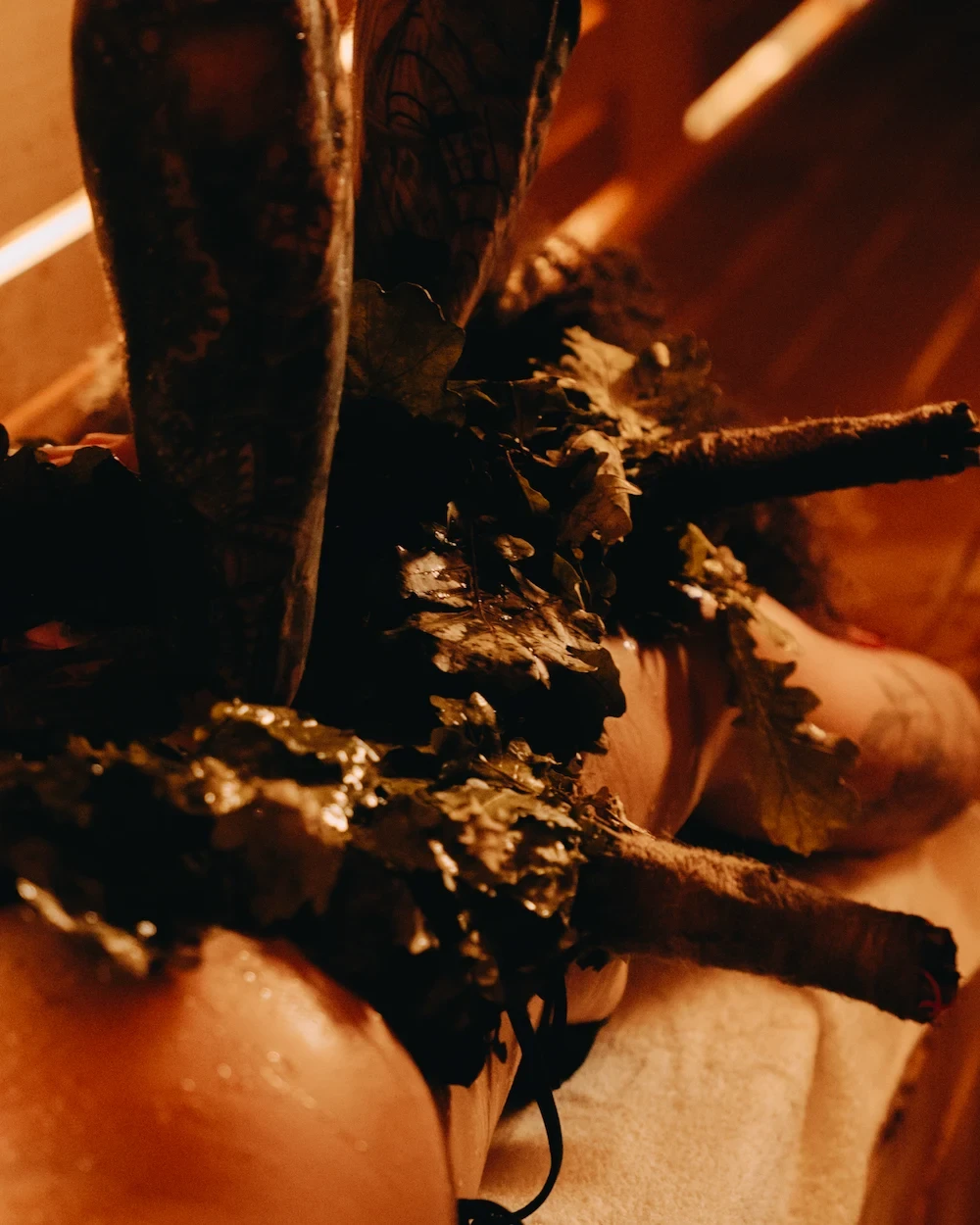
What Is Venik Massage? The Ancient Banya Ritual Explained
What Is Venik Massage? The Ancient Banya Ritual Explained
Leafy branches. Rising steam. A rhythm older than memory. Venik massage is the heart of the Russian banya, a practice where wood, fire, and water meet on the surface of the skin. It is not something to be explained so much as felt.
Leafy branches. Rising steam. A rhythm older than memory. Venik massage is the heart of the Russian banya, a practice where wood, fire, and water meet on the surface of the skin. It is not something to be explained so much as felt.
Published on:
Published on:
A venik massage is a traditional steam massage performed inside a Russian banya (bathhouse) using bundles of leafy branches called a venik. A skilled practitioner known as a banshik uses rhythmic movements to waft, press, and sweep the heated branches across the body, driving steam deep into the skin and muscles.
The practice is formally called parenie in Russian, meaning "steaming." In North American bathhouses, you may also hear it called platza. It is one of the oldest forms of bodywork still practised today, rooted in centuries of Slavic bathing culture where the banya served as a place of purification, healing, and gathering (Wikipedia, 2025).
Despite what the name might suggest, a venik massage is not a beating or a whipping. It is a deeply layered experience that combines contrast therapy, aromatherapy, and manual bodywork into a single ritual.
In my years of guiding people through banya experiences, I have watched guests arrive nervous and leave transformed. The venik is often the turning point. Something about the rhythm of the branches, the scent of the leaves, and the intensity of the steam creates a shift that is hard to put into words.
The Roots of Venik Massage in Russian Banya Culture
The Russian banya is one of the oldest bathing traditions in the world. Written accounts of the banya date back to the 12th century Primary Chronicle, where visitors described Slavic people heating wooden bathhouses to extreme temperatures and lashing themselves with young reeds (Wikipedia, 2025).
The banya has always been far more than a place to get clean. A Russian saying captures it well: "pomylsya, budto zanovo rodilsya," which translates to "washed, born again." Historically, banyas were sites of birth, mourning, celebration, and community. For over a thousand years, Russians of every social class treated bathing as a communal activity woven into the fabric of daily life (Stanford CASBS, 2021).
The venik sits at the heart of this tradition. A well-known Russian proverb states that a venik in the banya is worth more than money. It is the instrument that brings together the three core elements of the banya: wood, fire, and water.
To understand venik massage is to understand why banya culture has endured for centuries. The practice was never about optimizing performance or tracking outcomes. It was about surrendering to a process that the body already knows how to receive.
What Is a Venik?
The word venik translates from Russian as "bundle" or "bunch." In the context of the banya, a venik is a carefully assembled bouquet of leafy branches harvested during summer when the leaves are at their most fragrant and nutrient-rich.
The branches are tied together to form something that resembles a broad, leafy fan. Before use, the venik is soaked in warm water to soften the leaves and release their natural oils. The soaking water itself becomes aromatic and is sometimes poured over the hot stones to fill the steam room with scent.
Each type of venik has its own character. Choosing the right one is part of the ritual, and a skilled banshik will often select based on what they sense the guest needs.
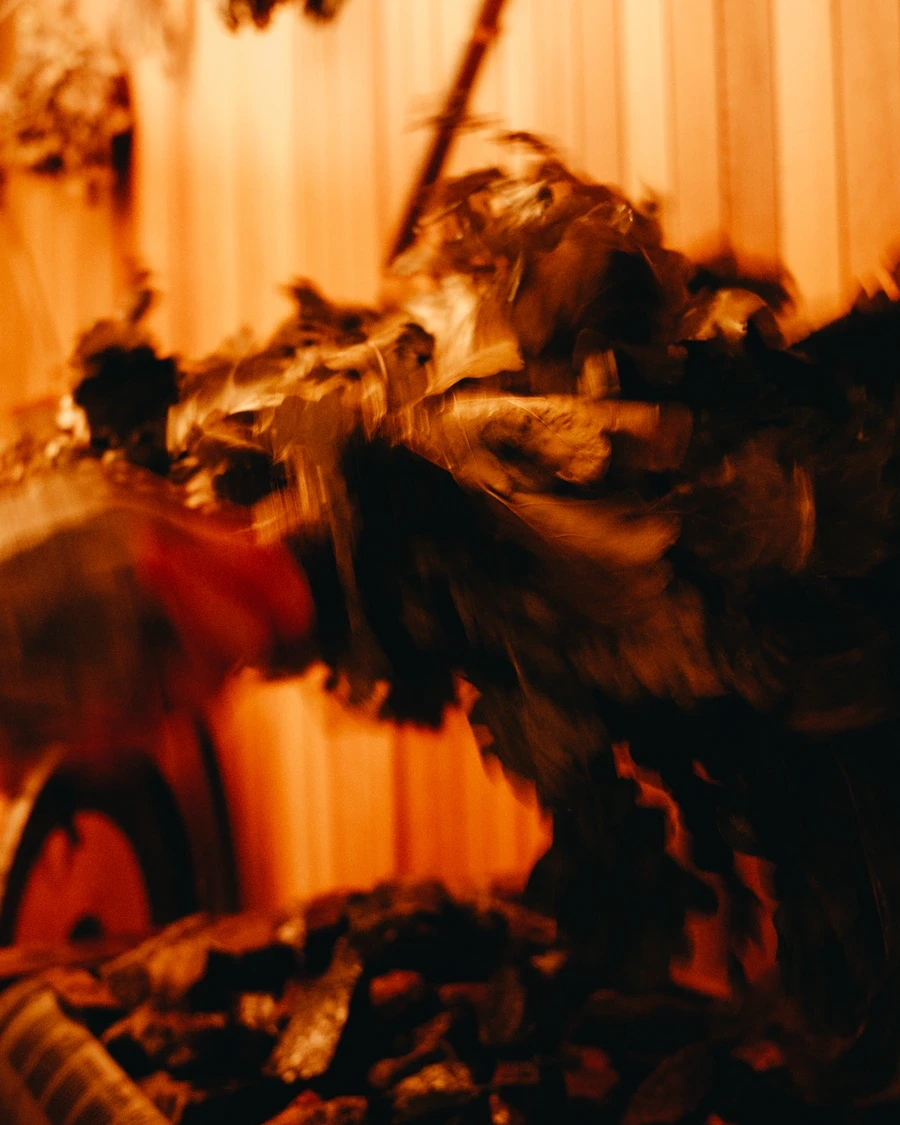
Types of Venik and Their Properties
Birch Venik
Birch is the most traditional and widely used venik in the Russian banya. The leaves are small, flexible, and release a subtle, slightly minty fragrance when heated.
Research on birch leaf extract (Betula pendula) has identified flavonoids, saponins, tannins, and volatile oils as the primary bioactive compounds (PMC, 2020). Laboratory studies have found that birch leaf extract can reduce the activity of inflammatory lymphocytes, providing a scientific basis for its long history of folk use in treating joint and muscle complaints (PubMed, 2011).
The European Medicines Agency recognizes birch leaf preparations for their traditional use in herbal medicine, noting their anti-inflammatory and diuretic properties (European Medicines Agency, 2014).
Oak Venik
Oak veniks are prized for their rich, earthy aroma. The leaves are broader and sturdier than birch, which allows them to hold more steam and deliver a more grounding sensation.
Oak leaves contain tannins and flavonoids, including quercetin, which researchers have identified as having notable anti-inflammatory and antioxidant properties (PMC, 2022). In banya tradition, oak is often chosen for its calming qualities.
Eucalyptus Venik
Eucalyptus veniks are valued for their powerful medicinal aroma. The scent opens the airways almost immediately when the branches are heated.
Eucalyptus is commonly used to support respiratory clarity during a banya session. Its essential oils create a sharp, invigorating atmosphere that contrasts with the softer scent profiles of birch and oak.
Other Varieties
Some banyas also use linden (known for promoting relaxation and circulation), juniper (whose prickly needles create a more intense exfoliating sensation), and occasionally nettle for its stimulating properties. Each brings a distinct quality to the ritual.
What Happens During a Venik Massage
The art of parenie is more skilled than it first appears. A trained banshik does not simply strike the body with branches. The practice involves a sequence of distinct techniques, each with a specific purpose.
Preparation
The venik is soaked in warm water until the leaves become soft and pliable. This process takes patience. The steam room itself is brought to the right level of heat and humidity before the ritual begins.
The guest lies face down on a bench, typically on the highest level of the steam room where the heat is most concentrated. A second venik, soaked in cool water, is sometimes placed beneath the face as a pillow. This keeps the head cool while the aromatic oils rise directly to the airways.
The Sequence of Techniques
The parenie follows a natural rhythm that builds in intensity:
Wafting: The banshik holds the venik above the body and uses broad, sweeping movements to draw hot steam down onto the skin. This is a warming phase, like being enveloped in a wave of heat
Light brushing: The leaves gently sweep across the skin from the neck to the feet and back again, spreading steam evenly and beginning to stimulate circulation
Compression: The banshik lifts the venik high to gather the hottest air at the ceiling, then presses it firmly against a specific area of the body, such as the lower back, shoulders, or knees. This concentrated application of heat penetrates deeply into muscles and joints
Rhythmic tapping: A controlled, rhythmic striking with the leafy side of the venik. The leaves cushion the contact, and the sensation is more like a deep, percussive warmth than any kind of pain
Rubbing: In the final phase, the leaves are pressed directly against the skin and moved in circular motions. This helps the skin absorb the natural oils and compounds from the leaves
The entire ritual moves in waves. Moments of gentle warmth alternate with more intense sensations. The rhythm is not mechanical. It responds to the body.
After the Steam Room
The parenie is traditionally followed by a sudden immersion in cold water. This might be a cold plunge pool, a bucket shower, or even a roll in the snow. The contrast between extreme heat and cold creates a powerful physiological response that many describe as deeply invigorating.
At AetherHaus, our private banya experience follows this traditional arc: heat, venik ritual, and cold plunge, with rest and tea in between.
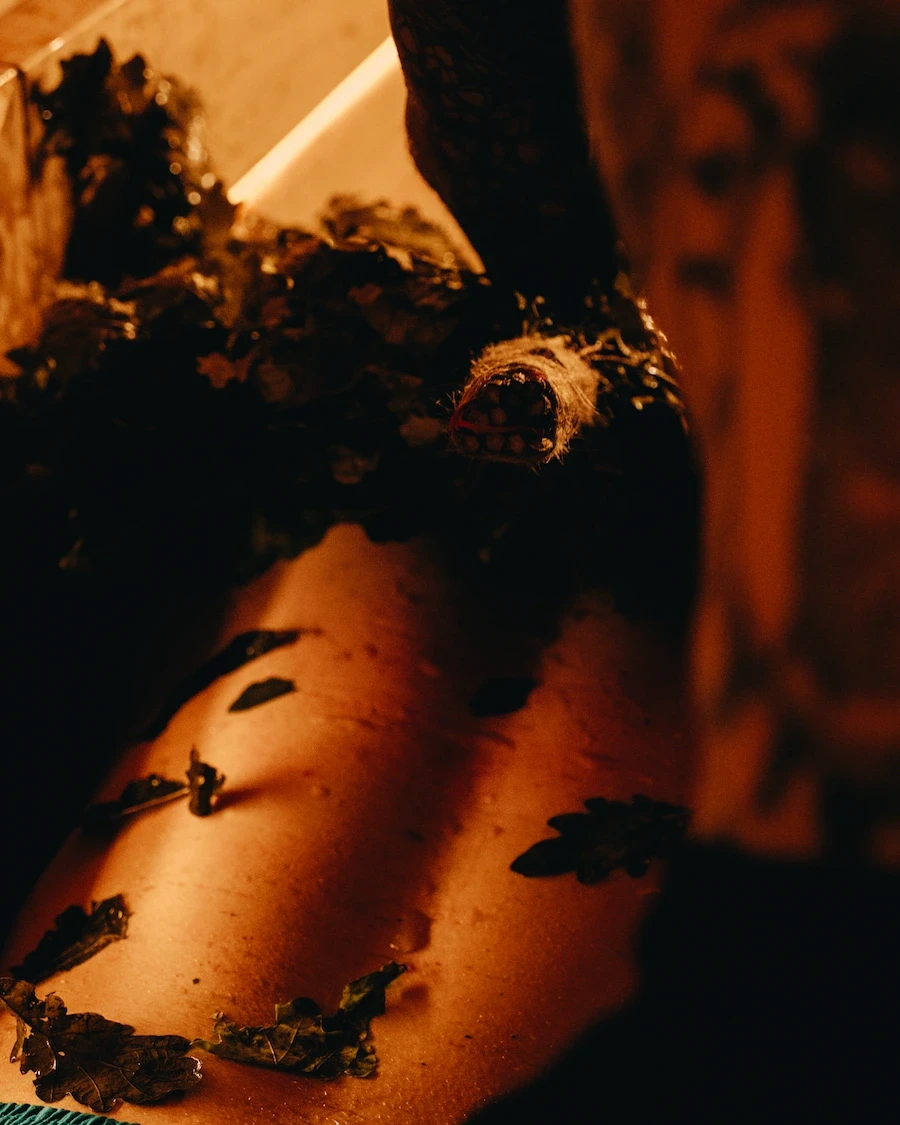
How Venik Massage Feels
Many people hesitate before their first parenie because they imagine being struck with branches. The reality is quite different.
The sensation begins as waves of warmth washing over the body. As the techniques intensify, you may feel what some describe as thousands of tiny warm fingers pressing into the skin. The heat can feel sharp at moments, almost like it is crackling against the surface, but it remains on the edge of intense rather than painful.
The aromatic oils from the leaves fill each breath. Depending on the venik, you may notice birch's clean, slightly sweet quality, or eucalyptus cutting through with its medicinal sharpness.
When the cold water comes after, it is a complete reset. Everything contracts, then releases. Many guests describe a tingling sensation that spreads through the entire body, followed by a deep calm.
In my experience guiding guests at AetherHaus, those who arrive most apprehensive often become the strongest advocates for the practice. The body tends to understand what is happening even before the mind catches up.
The Science Behind the Sensation
While traditional banya practitioners understood the venik's effects through generations of experience, modern research has begun to explore the mechanisms at work.
Compounds Released by the Leaves
When birch, oak, or eucalyptus leaves are heated in steam, they release phytoncides, which are biologically active compounds that plants produce as a natural defence against pathogens. These volatile substances enter the steam room atmosphere and are absorbed both through the skin and through breathing.
Birch leaves contain flavonoids such as hyperoside and quercetin, which demonstrate anti-inflammatory, antiviral, and antioxidant properties in laboratory studies (PMC, 2020). Oak contributes tannins with astringent and tissue-toning qualities.
Circulation and the Contrast Response
The combination of heat, mechanical stimulation from the venik, and the cold immersion that follows creates a cycle of vasodilation and vasoconstriction. Blood vessels expand in the heat and contract in the cold. This pumping action is the basis of contrast therapy, which has been studied for its effects on circulation, muscle recovery, and immune function.
Exfoliation and Skin Renewal
The direct contact of the leaves against heated skin provides a gentle physical exfoliation, removing dead skin cells and opening pores. The steam allows the natural oils from the leaves to penetrate more effectively.
This is not something that requires measurement or tracking. You simply feel it. The skin after a venik massage has a quality that is difficult to describe but immediately noticeable: soft, alive, and deeply clean.
Venik Massage vs. Aufguss: Two European Heat Traditions
People sometimes confuse venik massage with Aufguss, the German sauna ritual. While both take place in heated rooms and involve a skilled practitioner, they are distinctly different traditions.
Venik Massage (Parenie) | Aufguss | |
|---|---|---|
Origin | Russia and Eastern Europe | Germany and Austria |
Setting | Wet steam banya | Dry or semi-dry sauna |
Primary tool | Leafy branch bundles (venik) | Towel and essential oil infusions |
Contact | Direct body contact with leaves | No body contact (towel moves air) |
Focus | Individual (one-on-one with banshik) | Group ritual (one Aufgussmeister, many guests) |
After | Cold plunge or bucket shower | Cold plunge or rest |
At AetherHaus, we offer both traditions. Our Aufguss sauna rituals are group experiences led by a guide. Our private banya experience brings the intimate, one-on-one nature of the venik massage to Vancouver.
For a deeper look at how these two traditions compare and complement each other, read our guide on Banya vs. Aufguss.
What to Expect at Your First Venik Massage
If you are considering trying a venik massage, here is what the experience typically looks like.
Before You Arrive
Hydrate well in the hours beforehand
Bring a swimsuit and a reusable water bottle (towels and robes are typically provided)
Eat lightly or leave at least an hour after a meal
Leave expectations behind. This is an experience best entered with curiosity rather than a checklist
During the Experience
You will warm up in the steam room before the venik ritual begins. Your guide will check in with you throughout. The intensity can always be adjusted based on how you are feeling.
There is no set duration you need to endure. Your body will communicate when it has had enough. Some guests find their edge quickly. Others settle in and want to keep going. Both are perfectly valid.
After
Rest is part of the tradition. Sit quietly, sip tea, and let the experience integrate matters just as much as the heat itself. At AetherHaus, our tea lounge exists precisely for this purpose.
For more on preparing for your first time, see our guide on what to expect at your first banya.
A Note on Presence Over Protocol
The internet is full of advice about venik massage that reads like a protocol. Specific temperatures. Exact soaking durations. Prescribed numbers of rounds.
At AetherHaus, we approach things differently. Our guides are trained in the traditional techniques, but the practice itself is guided by attention, not by a timer. The rhythm of the venik responds to what the body is expressing in each moment.
These practices do not need to become another thing you are "doing right" or tracking in an app. There is no perfect number of rounds. Your body will tell you when it is time.
This is not about optimization. It is about presence. The venik invites you to feel what is happening, not to measure it.
Frequently Asked Questions
Does venik massage hurt?
No. Despite descriptions of "beating with branches," a properly performed venik massage is not painful. The leaves cushion the contact, and the heat is the primary sensation. The experience can be intense, but practitioners adjust the pressure and rhythm based on your comfort. Most people find it deeply relaxing.
What is the difference between parenie and platza?
Parenie is the Russian term for the full venik steam massage ritual. Platza is a term more commonly used in North American and some Eastern European bathhouses to describe the same practice. Both refer to the traditional technique of using leafy branches to massage the body inside a steam room.
What type of venik is best for beginners?
Birch is the most common choice for a first experience. The leaves are soft, flexible, and gentle on the skin. Oak provides a firmer, more grounding sensation. Eucalyptus is recommended for those seeking respiratory support. Your banshik can help you choose.
Is venik massage safe?
For most healthy adults, venik massage is safe when performed by a trained practitioner. Those with cardiovascular conditions, acute skin conditions, or who are pregnant should consult a healthcare provider before participating. This is consistent with general guidance for any intense heat therapy.
Can I do venik massage on my own?
Traditionally, friends and family perform the venik ritual for each other in home banyas. However, the full parenie technique requires skill and practice. Working with a trained banshik ensures proper steam management and technique. For your first experience, a guided session is recommended.
How is venik massage different from a regular massage?
A venik massage takes place inside a steam room and uses heated leafy branches rather than hands or tools. The steam, aromatherapy, and thermal contrast (cold plunge after) make it a multi-sensory experience that goes well beyond muscle manipulation. It is a ritual that engages the whole body and all the senses.
Where can I try venik massage in Vancouver?
AetherHaus offers private banya experiences that include the traditional venik massage at 1768 Davie Street, Vancouver, BC. Our guides are trained in the authentic techniques of Eastern European banya culture. You can book a session or learn more about our team.
Key Takeaways
Venik massage (parenie) is a centuries-old Russian banya ritual using bundles of leafy branches to massage the body with steam, heat, and natural plant compounds
Birch, oak, and eucalyptus are the most common veniks, each containing bioactive compounds such as flavonoids and tannins that have been studied for their anti-inflammatory and antioxidant properties (PubMed, 2011)
The experience is not painful. It is a layered sequence of wafting, brushing, compression, tapping, and rubbing performed by a skilled practitioner
Cold immersion follows the heat, creating a contrast therapy response that guests describe as deeply invigorating
The practice is about presence, not protocol. There is no prescribed duration or frequency. Your body guides the experience
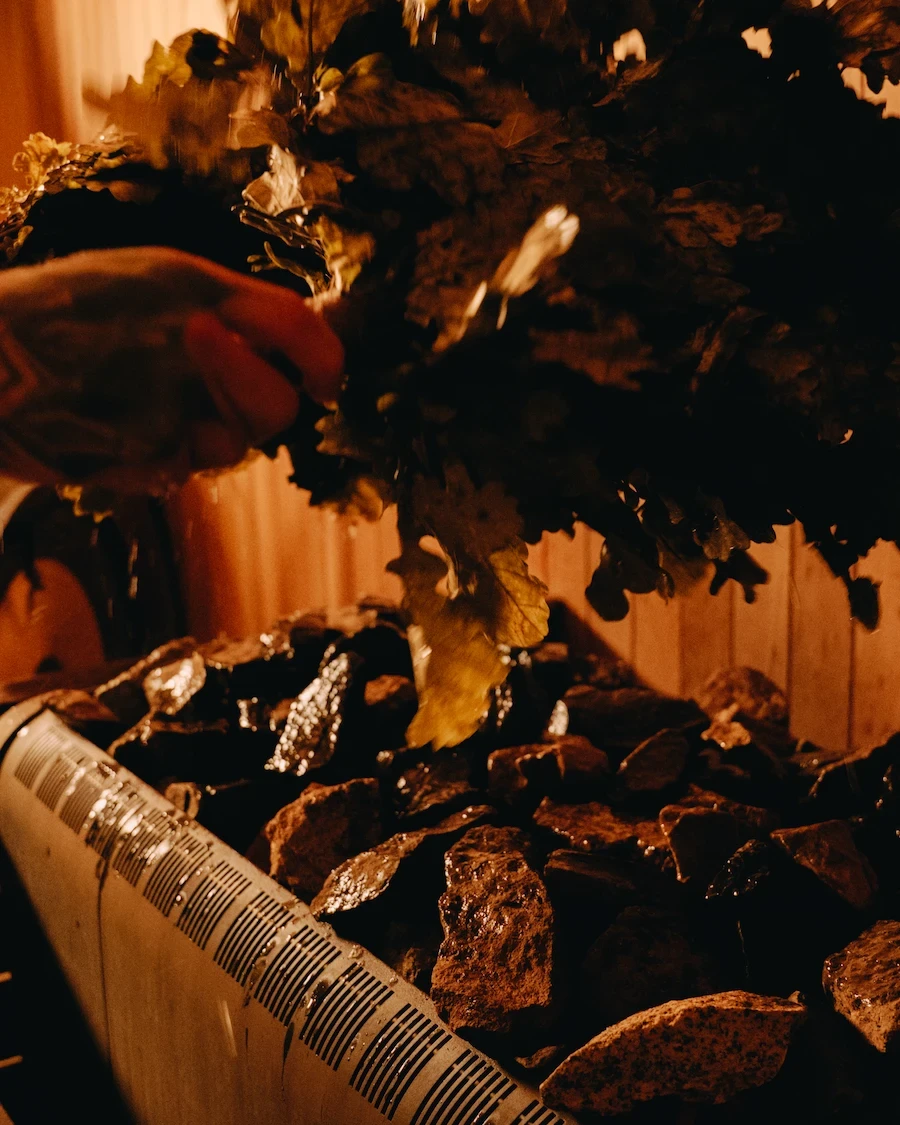
Different tools, same art. How an Aufguss unfolds trades the birch bundle for the towel.
A venik massage is a traditional steam massage performed inside a Russian banya (bathhouse) using bundles of leafy branches called a venik. A skilled practitioner known as a banshik uses rhythmic movements to waft, press, and sweep the heated branches across the body, driving steam deep into the skin and muscles.
The practice is formally called parenie in Russian, meaning "steaming." In North American bathhouses, you may also hear it called platza. It is one of the oldest forms of bodywork still practised today, rooted in centuries of Slavic bathing culture where the banya served as a place of purification, healing, and gathering (Wikipedia, 2025).
Despite what the name might suggest, a venik massage is not a beating or a whipping. It is a deeply layered experience that combines contrast therapy, aromatherapy, and manual bodywork into a single ritual.
In my years of guiding people through banya experiences, I have watched guests arrive nervous and leave transformed. The venik is often the turning point. Something about the rhythm of the branches, the scent of the leaves, and the intensity of the steam creates a shift that is hard to put into words.
The Roots of Venik Massage in Russian Banya Culture
The Russian banya is one of the oldest bathing traditions in the world. Written accounts of the banya date back to the 12th century Primary Chronicle, where visitors described Slavic people heating wooden bathhouses to extreme temperatures and lashing themselves with young reeds (Wikipedia, 2025).
The banya has always been far more than a place to get clean. A Russian saying captures it well: "pomylsya, budto zanovo rodilsya," which translates to "washed, born again." Historically, banyas were sites of birth, mourning, celebration, and community. For over a thousand years, Russians of every social class treated bathing as a communal activity woven into the fabric of daily life (Stanford CASBS, 2021).
The venik sits at the heart of this tradition. A well-known Russian proverb states that a venik in the banya is worth more than money. It is the instrument that brings together the three core elements of the banya: wood, fire, and water.
To understand venik massage is to understand why banya culture has endured for centuries. The practice was never about optimizing performance or tracking outcomes. It was about surrendering to a process that the body already knows how to receive.
What Is a Venik?
The word venik translates from Russian as "bundle" or "bunch." In the context of the banya, a venik is a carefully assembled bouquet of leafy branches harvested during summer when the leaves are at their most fragrant and nutrient-rich.
The branches are tied together to form something that resembles a broad, leafy fan. Before use, the venik is soaked in warm water to soften the leaves and release their natural oils. The soaking water itself becomes aromatic and is sometimes poured over the hot stones to fill the steam room with scent.
Each type of venik has its own character. Choosing the right one is part of the ritual, and a skilled banshik will often select based on what they sense the guest needs.
Types of Venik and Their Properties
Birch Venik
Birch is the most traditional and widely used venik in the Russian banya. The leaves are small, flexible, and release a subtle, slightly minty fragrance when heated.
Research on birch leaf extract (Betula pendula) has identified flavonoids, saponins, tannins, and volatile oils as the primary bioactive compounds (PMC, 2020). Laboratory studies have found that birch leaf extract can reduce the activity of inflammatory lymphocytes, providing a scientific basis for its long history of folk use in treating joint and muscle complaints (PubMed, 2011).
The European Medicines Agency recognizes birch leaf preparations for their traditional use in herbal medicine, noting their anti-inflammatory and diuretic properties (European Medicines Agency, 2014).
Oak Venik
Oak veniks are prized for their rich, earthy aroma. The leaves are broader and sturdier than birch, which allows them to hold more steam and deliver a more grounding sensation.
Oak leaves contain tannins and flavonoids, including quercetin, which researchers have identified as having notable anti-inflammatory and antioxidant properties (PMC, 2022). In banya tradition, oak is often chosen for its calming qualities.
Eucalyptus Venik
Eucalyptus veniks are valued for their powerful medicinal aroma. The scent opens the airways almost immediately when the branches are heated.
Eucalyptus is commonly used to support respiratory clarity during a banya session. Its essential oils create a sharp, invigorating atmosphere that contrasts with the softer scent profiles of birch and oak.
Other Varieties
Some banyas also use linden (known for promoting relaxation and circulation), juniper (whose prickly needles create a more intense exfoliating sensation), and occasionally nettle for its stimulating properties. Each brings a distinct quality to the ritual.
What Happens During a Venik Massage
The art of parenie is more skilled than it first appears. A trained banshik does not simply strike the body with branches. The practice involves a sequence of distinct techniques, each with a specific purpose.
Preparation
The venik is soaked in warm water until the leaves become soft and pliable. This process takes patience. The steam room itself is brought to the right level of heat and humidity before the ritual begins.
The guest lies face down on a bench, typically on the highest level of the steam room where the heat is most concentrated. A second venik, soaked in cool water, is sometimes placed beneath the face as a pillow. This keeps the head cool while the aromatic oils rise directly to the airways.
The Sequence of Techniques
The parenie follows a natural rhythm that builds in intensity:
Wafting: The banshik holds the venik above the body and uses broad, sweeping movements to draw hot steam down onto the skin. This is a warming phase, like being enveloped in a wave of heat
Light brushing: The leaves gently sweep across the skin from the neck to the feet and back again, spreading steam evenly and beginning to stimulate circulation
Compression: The banshik lifts the venik high to gather the hottest air at the ceiling, then presses it firmly against a specific area of the body, such as the lower back, shoulders, or knees. This concentrated application of heat penetrates deeply into muscles and joints
Rhythmic tapping: A controlled, rhythmic striking with the leafy side of the venik. The leaves cushion the contact, and the sensation is more like a deep, percussive warmth than any kind of pain
Rubbing: In the final phase, the leaves are pressed directly against the skin and moved in circular motions. This helps the skin absorb the natural oils and compounds from the leaves
The entire ritual moves in waves. Moments of gentle warmth alternate with more intense sensations. The rhythm is not mechanical. It responds to the body.
After the Steam Room
The parenie is traditionally followed by a sudden immersion in cold water. This might be a cold plunge pool, a bucket shower, or even a roll in the snow. The contrast between extreme heat and cold creates a powerful physiological response that many describe as deeply invigorating.
At AetherHaus, our private banya experience follows this traditional arc: heat, venik ritual, and cold plunge, with rest and tea in between.
How Venik Massage Feels
Many people hesitate before their first parenie because they imagine being struck with branches. The reality is quite different.
The sensation begins as waves of warmth washing over the body. As the techniques intensify, you may feel what some describe as thousands of tiny warm fingers pressing into the skin. The heat can feel sharp at moments, almost like it is crackling against the surface, but it remains on the edge of intense rather than painful.
The aromatic oils from the leaves fill each breath. Depending on the venik, you may notice birch's clean, slightly sweet quality, or eucalyptus cutting through with its medicinal sharpness.
When the cold water comes after, it is a complete reset. Everything contracts, then releases. Many guests describe a tingling sensation that spreads through the entire body, followed by a deep calm.
In my experience guiding guests at AetherHaus, those who arrive most apprehensive often become the strongest advocates for the practice. The body tends to understand what is happening even before the mind catches up.
The Science Behind the Sensation
While traditional banya practitioners understood the venik's effects through generations of experience, modern research has begun to explore the mechanisms at work.
Compounds Released by the Leaves
When birch, oak, or eucalyptus leaves are heated in steam, they release phytoncides, which are biologically active compounds that plants produce as a natural defence against pathogens. These volatile substances enter the steam room atmosphere and are absorbed both through the skin and through breathing.
Birch leaves contain flavonoids such as hyperoside and quercetin, which demonstrate anti-inflammatory, antiviral, and antioxidant properties in laboratory studies (PMC, 2020). Oak contributes tannins with astringent and tissue-toning qualities.
Circulation and the Contrast Response
The combination of heat, mechanical stimulation from the venik, and the cold immersion that follows creates a cycle of vasodilation and vasoconstriction. Blood vessels expand in the heat and contract in the cold. This pumping action is the basis of contrast therapy, which has been studied for its effects on circulation, muscle recovery, and immune function.
Exfoliation and Skin Renewal
The direct contact of the leaves against heated skin provides a gentle physical exfoliation, removing dead skin cells and opening pores. The steam allows the natural oils from the leaves to penetrate more effectively.
This is not something that requires measurement or tracking. You simply feel it. The skin after a venik massage has a quality that is difficult to describe but immediately noticeable: soft, alive, and deeply clean.
Venik Massage vs. Aufguss: Two European Heat Traditions
People sometimes confuse venik massage with Aufguss, the German sauna ritual. While both take place in heated rooms and involve a skilled practitioner, they are distinctly different traditions.
Venik Massage (Parenie) | Aufguss | |
|---|---|---|
Origin | Russia and Eastern Europe | Germany and Austria |
Setting | Wet steam banya | Dry or semi-dry sauna |
Primary tool | Leafy branch bundles (venik) | Towel and essential oil infusions |
Contact | Direct body contact with leaves | No body contact (towel moves air) |
Focus | Individual (one-on-one with banshik) | Group ritual (one Aufgussmeister, many guests) |
After | Cold plunge or bucket shower | Cold plunge or rest |
At AetherHaus, we offer both traditions. Our Aufguss sauna rituals are group experiences led by a guide. Our private banya experience brings the intimate, one-on-one nature of the venik massage to Vancouver.
For a deeper look at how these two traditions compare and complement each other, read our guide on Banya vs. Aufguss.
What to Expect at Your First Venik Massage
If you are considering trying a venik massage, here is what the experience typically looks like.
Before You Arrive
Hydrate well in the hours beforehand
Bring a swimsuit and a reusable water bottle (towels and robes are typically provided)
Eat lightly or leave at least an hour after a meal
Leave expectations behind. This is an experience best entered with curiosity rather than a checklist
During the Experience
You will warm up in the steam room before the venik ritual begins. Your guide will check in with you throughout. The intensity can always be adjusted based on how you are feeling.
There is no set duration you need to endure. Your body will communicate when it has had enough. Some guests find their edge quickly. Others settle in and want to keep going. Both are perfectly valid.
After
Rest is part of the tradition. Sit quietly, sip tea, and let the experience integrate matters just as much as the heat itself. At AetherHaus, our tea lounge exists precisely for this purpose.
For more on preparing for your first time, see our guide on what to expect at your first banya.
A Note on Presence Over Protocol
The internet is full of advice about venik massage that reads like a protocol. Specific temperatures. Exact soaking durations. Prescribed numbers of rounds.
At AetherHaus, we approach things differently. Our guides are trained in the traditional techniques, but the practice itself is guided by attention, not by a timer. The rhythm of the venik responds to what the body is expressing in each moment.
These practices do not need to become another thing you are "doing right" or tracking in an app. There is no perfect number of rounds. Your body will tell you when it is time.
This is not about optimization. It is about presence. The venik invites you to feel what is happening, not to measure it.
Frequently Asked Questions
Does venik massage hurt?
No. Despite descriptions of "beating with branches," a properly performed venik massage is not painful. The leaves cushion the contact, and the heat is the primary sensation. The experience can be intense, but practitioners adjust the pressure and rhythm based on your comfort. Most people find it deeply relaxing.
What is the difference between parenie and platza?
Parenie is the Russian term for the full venik steam massage ritual. Platza is a term more commonly used in North American and some Eastern European bathhouses to describe the same practice. Both refer to the traditional technique of using leafy branches to massage the body inside a steam room.
What type of venik is best for beginners?
Birch is the most common choice for a first experience. The leaves are soft, flexible, and gentle on the skin. Oak provides a firmer, more grounding sensation. Eucalyptus is recommended for those seeking respiratory support. Your banshik can help you choose.
Is venik massage safe?
For most healthy adults, venik massage is safe when performed by a trained practitioner. Those with cardiovascular conditions, acute skin conditions, or who are pregnant should consult a healthcare provider before participating. This is consistent with general guidance for any intense heat therapy.
Can I do venik massage on my own?
Traditionally, friends and family perform the venik ritual for each other in home banyas. However, the full parenie technique requires skill and practice. Working with a trained banshik ensures proper steam management and technique. For your first experience, a guided session is recommended.
How is venik massage different from a regular massage?
A venik massage takes place inside a steam room and uses heated leafy branches rather than hands or tools. The steam, aromatherapy, and thermal contrast (cold plunge after) make it a multi-sensory experience that goes well beyond muscle manipulation. It is a ritual that engages the whole body and all the senses.
Where can I try venik massage in Vancouver?
AetherHaus offers private banya experiences that include the traditional venik massage at 1768 Davie Street, Vancouver, BC. Our guides are trained in the authentic techniques of Eastern European banya culture. You can book a session or learn more about our team.
Key Takeaways
Venik massage (parenie) is a centuries-old Russian banya ritual using bundles of leafy branches to massage the body with steam, heat, and natural plant compounds
Birch, oak, and eucalyptus are the most common veniks, each containing bioactive compounds such as flavonoids and tannins that have been studied for their anti-inflammatory and antioxidant properties (PubMed, 2011)
The experience is not painful. It is a layered sequence of wafting, brushing, compression, tapping, and rubbing performed by a skilled practitioner
Cold immersion follows the heat, creating a contrast therapy response that guests describe as deeply invigorating
The practice is about presence, not protocol. There is no prescribed duration or frequency. Your body guides the experience
Different tools, same art. How an Aufguss unfolds trades the birch bundle for the towel.
our Blog
our Blog
More insights
More insights
Explore more reflections, guidance, and practical tools to support you.
Explore more reflections, guidance, and practical tools to support you.
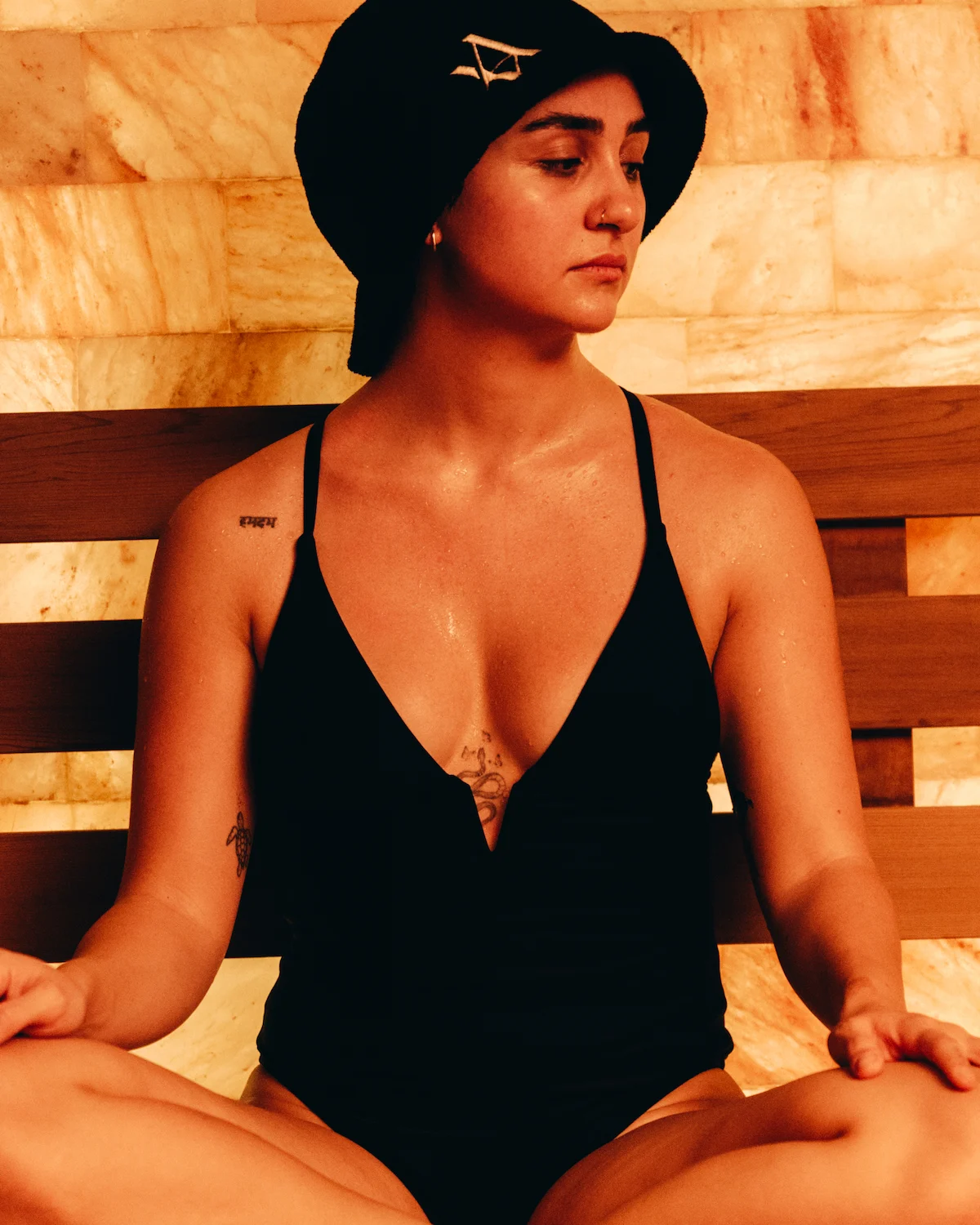
"What should I wear?" is one of the first questions people ask before stepping into a sauna for the first time. The answer is simpler than you might think.
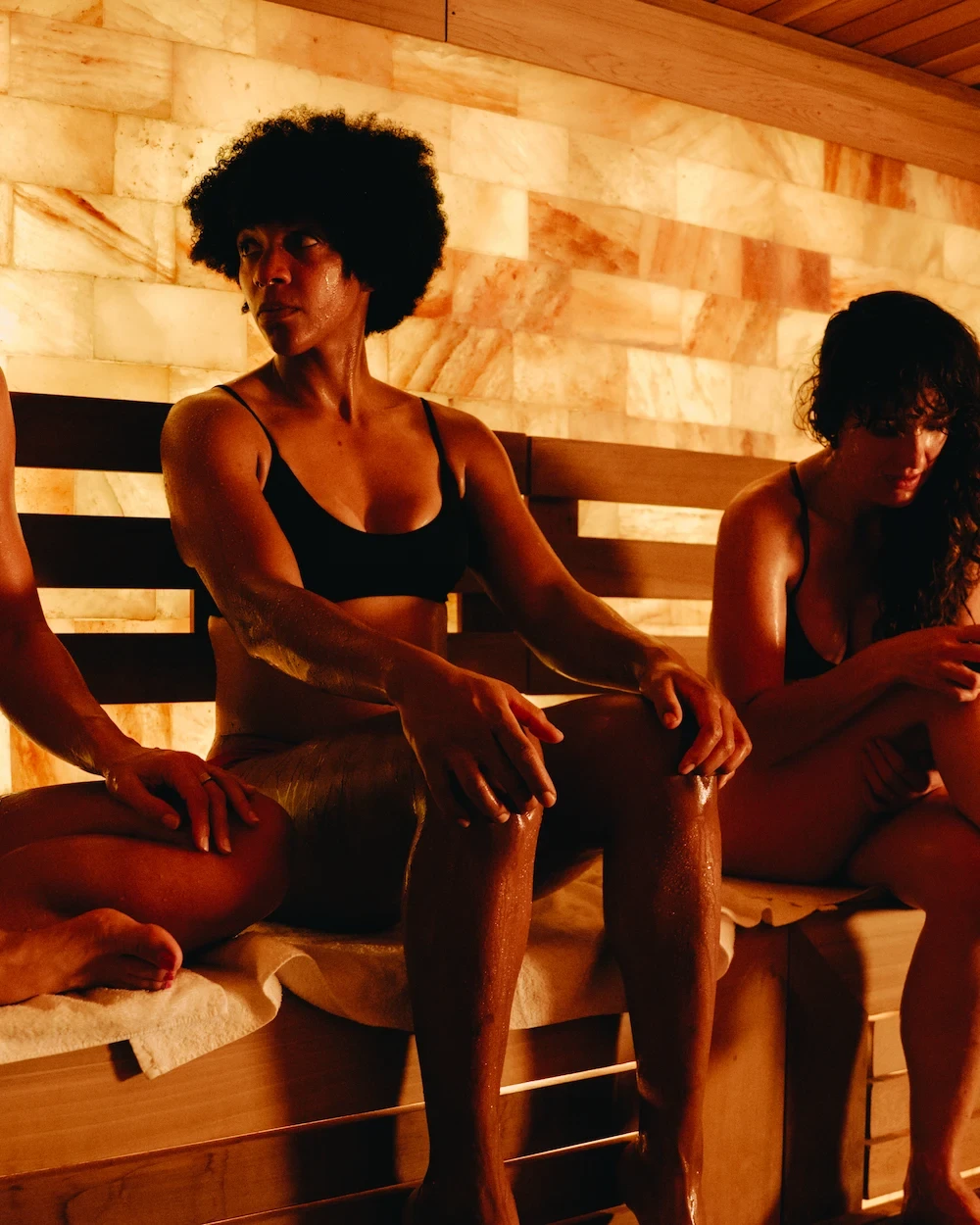
Learn the essential sauna etiquette rules for any setting. Covers hygiene, dress codes, löyly customs, cold plunge protocol, and cultural traditions from Finland, Germany, and Russia.
Learn the essential sauna etiquette rules for any setting. Covers hygiene, dress codes, löyly customs, cold plunge protocol, and cultural traditions from Finland, Germany, and Russia.
Your questions.
Answered.
Not sure what to expect? These answers might help you feel more confident as you begin.
Didn’t find your answer? Send us a message, we’ll respond with care and clarity.
What is a modern bathhouse?
A modern bathhouse keeps the architecture of the old idea, hot room, cold water, somewhere to rest, and lets the rhythm of the city around it shape the rest. Ours is built for Vancouver, on Davie Street, in the West End.
What is a modern bathhouse?
A modern bathhouse keeps the architecture of the old idea, hot room, cold water, somewhere to rest, and lets the rhythm of the city around it shape the rest. Ours is built for Vancouver, on Davie Street, in the West End.
Is the cold plunge at your bathhouse communal?
Is the cold plunge at your bathhouse communal?
Yes. Our cold pools are shared, with multiple temperature options so you can find one that meets you where you are. Communal plunging is part of what makes a bathhouse a bathhouse.
Is the bathhouse a welcoming space for the queer community?
Is the bathhouse a welcoming space for the queer community?
Yes. The West End is home to us and to our queer neighbours, and the bathhouse is built for everyone who walks in. We also host queer nights on a regular rotation, which you can find on the Classes calendar.
What's the etiquette inside the bathhouse?
What's the etiquette inside the bathhouse?
Phones stay in lockers. Voices stay low. Sit or lie on a towel inside the sauna, move at your own pace between rooms, and leave the space the way you'd want to find it. The room works because everyone in it is paying a little attention.
Do you offer Russian Banya at the bathhouse?
Do you offer Russian Banya at the bathhouse?
We run banya-inspired programming including venik work on select dates. The full ritual has its own page if you want to read about it before you book.
Do I need to book ahead, or can I walk in?
Do I need to book ahead, or can I walk in?
Walk-ins are welcome based on availability, but most guests book ahead through our app or website to lock in their preferred session time.
Your questions.
Answered.
Not sure what to expect? These answers might help you feel more confident as you begin.
What do I need to bring?
Please bring a bathing suit and a reusable water bottle. We provide two towels per guest, shower products, and secure lockers.
What do I need to bring?
Please bring a bathing suit and a reusable water bottle. We provide two towels per guest, shower products, and secure lockers.
Do I need a reservation?
Do I need a reservation?
Walk-ins are welcome, but we recommend booking through our app or website to check availability and join the waitlist.
Where can I park?
Where can I park?
Street parking is limited. We offer valet parking behind AetherHaus from 11:00–23:00. There is also some street parking available on Davie and nearby side streets.
What is Open Haus?
What is Open Haus?
Open Haus is a self-guided circuit through our saunas, plunge pools, and tea lounge. Our guides add essential oils to the stove throughout the day. The atmosphere shifts between silent, casual, and social, depending on the session.
What is your Haus Etiquette?
What is your Haus Etiquette?
Phones must be stored away. Please keep conversation soft, sit or lie on a towel, and move mindfully through the space. We ask that guests respect others’ experience and refrain from bringing outside food or drinks - complimentary tea is provided.
Can I visit if I am pregnant?
Can I visit if I am pregnant?
We advise against hot and cold therapy during pregnancy unless approved by your healthcare provider.
Didn’t find your answer? Send us a message, we’ll respond with care and clarity.
Your questions.
Answered.
Not sure what to expect? These answers might help you feel more confident as you begin.
Didn’t find your answer? Send us a message, we’ll respond with care and clarity.
What is a modern bathhouse?
A modern bathhouse keeps the architecture of the old idea, hot room, cold water, somewhere to rest, and lets the rhythm of the city around it shape the rest. Ours is built for Vancouver, on Davie Street, in the West End.
What is a modern bathhouse?
A modern bathhouse keeps the architecture of the old idea, hot room, cold water, somewhere to rest, and lets the rhythm of the city around it shape the rest. Ours is built for Vancouver, on Davie Street, in the West End.
Is the cold plunge at your bathhouse communal?
Is the cold plunge at your bathhouse communal?
Yes. Our cold pools are shared, with multiple temperature options so you can find one that meets you where you are. Communal plunging is part of what makes a bathhouse a bathhouse.
Is the bathhouse a welcoming space for the queer community?
Is the bathhouse a welcoming space for the queer community?
Yes. The West End is home to us and to our queer neighbours, and the bathhouse is built for everyone who walks in. We also host queer nights on a regular rotation, which you can find on the Classes calendar.
What's the etiquette inside the bathhouse?
What's the etiquette inside the bathhouse?
Phones stay in lockers. Voices stay low. Sit or lie on a towel inside the sauna, move at your own pace between rooms, and leave the space the way you'd want to find it. The room works because everyone in it is paying a little attention.
Do you offer Russian Banya at the bathhouse?
Do you offer Russian Banya at the bathhouse?
We run banya-inspired programming including venik work on select dates. The full ritual has its own page if you want to read about it before you book.
Do I need to book ahead, or can I walk in?
Do I need to book ahead, or can I walk in?
Walk-ins are welcome based on availability, but most guests book ahead through our app or website to lock in their preferred session time.